

At-home IPL is sold on one promise, smooth skin without the razor, and judged months later on duller things. How long the lamp lasts, how many power steps you get, whether the device reads your skin tone for you, and whether it's chilled enough that you'll actually keep using it. This comparison covers 19 at-home IPL and laser hair removal devices from Philips, Braun, Ulike, SmoothSkin, Nood, Silk'n, Foreo, Tria and CurrentBody. The shortlist sits above this article, and the full sortable sheet has every model side by side. Below, we go through it column by column and flag the specs that read better on the box than on your shins.
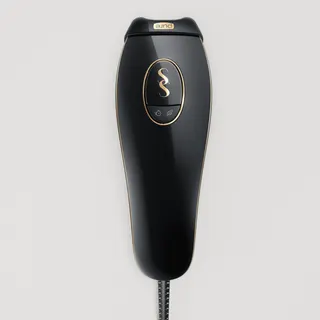
The lineup: four Philips Lumeas (the IPL 9000 Series, IPL 9900 Series, Prestige BRI954 and IPL 7000 Series BRI921); three Braun IPLs (the Silk-expert Pro 5, Skin i-expert Pro 7 and Silk-expert Pro 3); the Ulike Air 10 and Air 3; the SmoothSkin Pure Adapt and Pure Fit; the Nood Flasher 2.0 and Flasher Pro; three Silk'ns (the Silk'n 7, Motion Premium and Infinity 400K); the Foreo Peach 2; and two diode lasers, the Tria Hair Removal Laser 4X and the CurrentBody Skin Laser Hair Removal Device.
Quick answers, if you stop here:
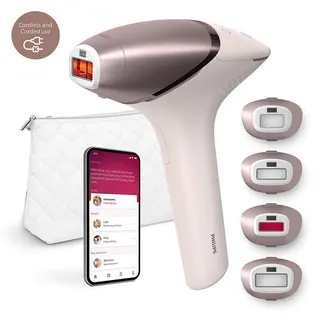
- Best overall: the Philips Lumea IPL 9000 Series. It was Good Housekeeping's top-tested pick in the US, it's one of four here you can use without a cord, and its sensor reads your skin tone.
- Best value: the SmoothSkin Pure Fit. Good Housekeeping UK named it best value, and SmoothSkin rates its lamp for unlimited flashes.
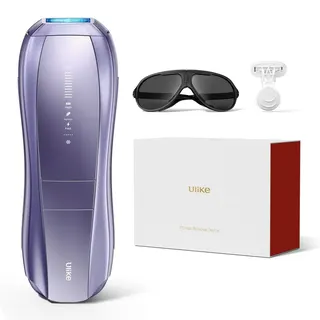
- Best for thick hair: the Ulike Air 10, Good Housekeeping's thick-hair pick, with a chilled window and a stubborn-hair mode.
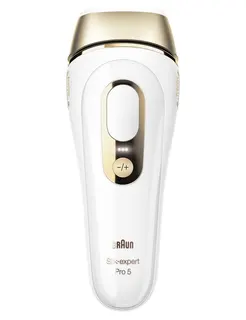
- Most adjustable: the Braun Silk-expert Pro 5, with 10 intensity levels and the top spot at both ELLE and Forbes Vetted.
Who at-home IPL works for (read this before the specs)
Every device here works by heating the pigment in the hair. That means skin tone and hair color matter more than any spec on this page. Which? says IPL isn't recommended for dark brown to black skin, because too much of the light's energy lands in the skin, which raises the risk of burns and blisters. It also works less well on blonde, red or grey hair, which has too little pigment for the light to find. A derma-pathologist quoted by Good Housekeeping says lighter skin with darker hair gets the best results.
None of these devices remove hair for good, either. Which? says studies show IPL reduces hair rather than removing it, and Dr. Baum, quoted by Good Housekeeping, calls it hair reduction for the same reason. Check each maker's skin tone and hair color chart before buying, and talk to a dermatologist first if you have a skin condition, as an expert quoted by Good Housekeeping advises.
Permanent hair removal at home, in a few weeks.
Which? says you won't find an IPL claiming permanent removal, and that studies show reduction: less hair, growing back more slowly, with top-ups every month or two.
Light type: IPL or diode laser
Seventeen of the 19 use IPL, a broad-spectrum flash. The other two, the Tria 4X and CurrentBody's device, are 810 nm diode lasers. Silk'n calls its version HPL, and Good Housekeeping describes that as the brand's take on IPL, so we list it as IPL.
The difference is focus. Which? explains that a laser uses one wavelength while IPL spreads across many, so a laser puts more of its energy into the follicle. Forbes Vetted's tester found the Tria precise enough for underarms and the lower face, but more painful than the IPLs she tried. She compared it to a rubber band snapping against the skin. The Tria's small window also makes it a slow way to do whole legs.
Slopsheets says: for legs, arms and underarms, an IPL with a big window is less work. A diode laser makes sense when you're chasing a few small patches and can put up with the snap.
Rated flashes: how long the lamp lasts
This is the lamp's rated life. Which?'s health editor says most fall between 300,000 and 600,000 flashes, and suggests taking the lifetime estimates with a pinch of salt. Hers got sluggish and hotter after about seven years of on-and-off use.
Here's how the numbers land. SmoothSkin rates the Pure Adapt and Pure Fit for unlimited flashes. Ulike says all its devices carry 1 million, and ELLE lists 999,999 for the Nood Flasher Pro. The Nood Flasher 2.0, Silk'n 7 and Motion Premium are rated for 600,000. The Foreo Peach 2 gets 500,000, the Lumea 9000 and 9900 get 450,000, and the Braun Pro 5, Pro 7 and Silk'n Infinity 400K get 400,000. The Braun Pro 3 is rated for 300,000. The Lumea Prestige and 7000 come in at more than 250,000, per Philips and Good Housekeeping UK. Neither diode laser lists a flash count.
Braun says the Skin i-expert's 400,000 flashes add up to as much as 24 years of treatments on its recommended schedule.
Don't overpay for: a bigger flash count on its own. Anything over about 400,000 is more lamp than most people will use, so pick on comfort and fit instead.
Intensity levels: how finely you can dial it
More steps make it easier to find a setting that works without hurting. The Braun Pro 5 and Pro 7, the Ulike Air 10 and both SmoothSkins have 10 levels. The Nood Flasher 2.0 has 7, and CurrentBody's laser has 6. The four Lumeas, three Silk'ns, the Foreo Peach 2, the Nood Flasher Pro and the Tria have 5. The Braun Pro 3 and Ulike Air 3 have 3.
Lab roundups don't always agree on these, because some count modes instead of levels. Good Housekeeping's US table lists the Air 10 at four, which matches its four modes, but Ulike's manual lists energy levels 1 to 10. We use the maker's figure.
Higher isn't automatically better. Good Housekeeping UK notes that a lower intensity also works less well, so you'll need more sessions if you stay down at the bottom of the dial.
The catch: ten levels only help if you climb them. Good Housekeeping's US testers found Braun's Pro 5 quick between flashes, but some said it took longer than 12 weeks to see results.
Skin-tone sensor: who picks the setting
Fifteen of the 19 read your skin and set or cap the power for you: all four Lumeas, all three Brauns, the Ulike Air 10, both SmoothSkins, all three Silk'ns and both lasers. SmoothSkin says its sensor won't let the device flash if it reads a skin tone that's unsafe for IPL. Tria's laser won't unlock until its sensor approves the area you want to treat.
The four without one are the Ulike Air 3, both Noods and the Foreo Peach 2. Good Housekeeping's US lab called the Air 10's sensor a new feature for Ulike, Nood's product pages don't list one, and Which? found no automatic skin tone detection on the Peach 2. With these, you choose the setting from the maker's chart and a patch test.
What the box won't tell you: a sensor checks your skin, but it doesn't make IPL suitable for dark skin. It mostly stops a device from firing where it shouldn't. Check the maker's chart either way.
Skin cooling: chilling the window
Five devices actively cool your skin. The Ulike Air 10 and Air 3, the Nood Flasher Pro and CurrentBody's laser have chilled treatment windows. Ulike says the Air 10 holds its window at 65°F. The Foreo Peach 2 blows cool air through ducts around the window instead.
Testers notice it. Good Housekeeping's US reviewer felt condensation forming on the Air 10's head before she started, and Good Housekeeping UK's panel called CurrentBody's laser painless. The cooling doesn't stop every reaction, though. A few of Good Housekeeping's US testers got irritation, including hives, after using the Air 10.
Pay up only if: the zap is the reason you stopped using your last device. If heat doesn't bother you, the Lumea 9000 and Braun Pro 5 do without a chiller and were still lab favorites.
Cordless: battery or plug
Only four run without a cord: the Lumea 9000, 9900 and Prestige, and the Tria 4X. The three Lumeas also work plugged in, and Philips suggests the cord for big areas like legs. Philips' support page says a fully charged Lumea gives about 130 flashes at the highest setting, roughly eight minutes of use. Good Housekeeping UK's panel liked the 9900 cordless but said it needed charging often.
Everything else plugs in. That's less of a trade-off than it sounds, because a corded device never dies halfway down a leg. In Which?'s listings, cords run from just under 1.5 m to nearly 3 m on a Braun Skin i-expert.
Which IPL hair removal device to buy
For most people, get the Philips Lumea IPL 9000 Series. Good Housekeeping's US lab put it first, its UK panel was happy with regrowth after three weeks, and it works with or without the cord. If you want unlimited flashes for less, the SmoothSkin Pure Fit was Good Housekeeping UK's best value, and the Pure Adapt was that panel's overall winner at 93 out of 100. For coarse or stubborn hair, the Ulike Air 10 is the pick, as long as you patch test first. If you want the most control, the Braun Silk-expert Pro 5 has 10 levels and three comfort modes, and the Skin i-expert Pro 7 adds Braun's app. For a small patch on the chin or underarms, the Tria 4X is the precise, painful option. If you're working through other skin and grooming tools, see our red light therapy mask sheet and our hair dryer sheet.
IPL hair removal FAQ
Does at-home IPL work on dark skin? Mostly no. Which? says people with dark brown or black skin should avoid IPL because the skin absorbs too much of the light, which raises the risk of burns and blisters. Dr. Baum, quoted by Good Housekeeping, warns that Fitzpatrick skin types 5 and 6 shouldn't have IPL, and type 4 should be cautious. For darker complexions, Dr. Rokhsar, quoted by ELLE, calls in-office lasers the safest option.
How often do you use an IPL device? It depends on the device. Which? found schedules ranging from three times a week to once a fortnight in the first phase, then a top-up every month or two. Good Housekeeping UK lists once a week for four to 12 weeks on the Braun Pro 5, and Good Housekeeping's US lab lists every two weeks for the first four treatments on the Lumea 9000. Follow your device's manual, not a general rule.
Do you need to shave before IPL? Yes. Which? says to shave before every session so the light reaches the follicle, and warns that longer hair means more heat, irritation and a burnt hair smell. Good Housekeeping UK adds that it's best to shave rather than wax or epilate, because IPL needs some hair in the follicle to target.
Do you need eye protection for at-home IPL? Contact sensors make an accidental flash unlikely, Which? says, and Philips and Braun say glasses aren't necessary. Which? still recommends looking away during each flash and never using IPL near the eyes. Its testers wore welding glasses with a shade 3 lens, and it suggests them if you're sensitive to bright light.
Sources / further reading
- Good Housekeeping: best laser and IPL hair removal devices, based on testing
- Good Housekeeping UK: best IPL and laser hair removal devices, tested by 300 women
- Which?: best IPL hair removal devices, tried and tested
- Consumer Reports: best at-home laser hair removal devices, evaluated and reviewed
- Forbes Vetted: the best at-home laser hair removal devices
- ELLE: the best IPL hair removal devices, tested and reviewed
- Ulike Air 10 user manual
- Braun: Skin i-expert Smart IPL PL7387
- Philips: Lumea IPL 9000 Series BRI958
- Philips support: Lumea battery life
- SmoothSkin: Pure Adapt
- Tria: Hair Removal Laser 4X