

Twenty-one smartwatches, and the first thing to know is that most of them won't work with your phone. Apple Watches only pair with iPhones, Samsung and Google only pair with Android, and the battery life on the box can mean 18 hours or 35 days depending on whose box it is. The shortlist and the check-price buttons sit above this article, and the full sortable sheet lines up all twenty-one side by side. Down here we work out which one actually belongs on your wrist.
The lineup: three from Apple (Watch Series 11, Watch Ultra 3, Watch SE 3). Three from Samsung (Galaxy Watch8, Galaxy Watch8 Classic, Galaxy Watch Ultra (2025)). Google's Pixel Watch 4. Seven from Garmin (Venu 4, vivoactive 6, Forerunner 970, Forerunner 570, fenix 8 AMOLED, Instinct 3 AMOLED, Venu Sq 2). Three from Amazfit (Balance 2, Active 2, T-Rex 3 Pro). Two from Fitbit (Versa 4, Sense 2). The Withings ScanWatch 2 hybrid. And the Polar Grit X2 Pro.
A note on the fall launches: Apple's Series 12 and Ultra 4, Google's Pixel Watch 5, and Samsung's Galaxy Watch9 are all brand new, and their Amazon listings haven't built a track record yet. We cover the models with real ownership history behind them. Where the new one barely changed (Apple rates the Series 12 at the same 24 hours as the Series 11, per TechRepublic's launch comparison), the older one is the smarter buy anyway.
Phone compatibility: the decision that makes itself
Start here, because it eliminates a third of the table before you look at a single other number.
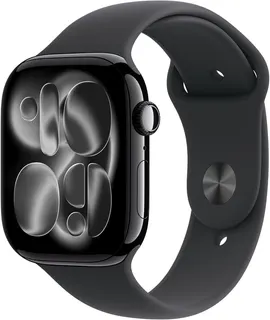
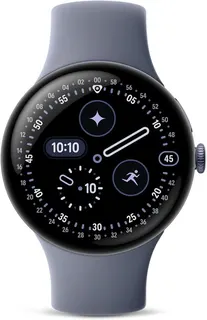
The three Apple Watches are iPhone only. They won't pair with an Android phone at all. The four Wear OS watches from Samsung and Google are Android only: the Galaxy Watch8, Watch8 Classic, Galaxy Watch Ultra, and Pixel Watch 4 all need an Android phone to set up, and none of them talks to an iPhone.
Everything else, all fourteen of them, works with both. Every Garmin, every Amazfit, both Fitbits, the Withings, and the Polar run through their maker's own app on iOS or Android. That's the quiet advantage of the fitness brands: if you switch phones next year, the watch comes with you.
There are smaller catches inside the "both" group. Amazfit's typed message replies only work on Android, and Fitbit's on-wrist calls are Android-only too, per Tom's Guide. And within Android, Samsung's ECG app runs only when the watch is paired to a Samsung Galaxy phone, so a Galaxy Watch on a Pixel loses its headline health feature.
Slopsheets says: If you own an iPhone and want the most capable smartwatch, it's an Apple Watch, full stop, because nothing else gets the same deep iOS integration. If you own an Android phone, pick between Samsung and the Pixel Watch, and lean Samsung if your phone is a Galaxy. If you might switch phones, or you care more about training than texting, the fourteen cross-platform watches are your shortlist.
Battery life: from overnight to over a month
This is the widest spread in the table, and the number most likely to decide whether you end up loving or resenting the thing.
The full smartwatches charge daily or close to it. The Apple Watch SE 3 is rated at 18 hours, the Series 11 at 24, and the Ultra 3 at 42. The Galaxy Watch8, Watch8 Classic, and Pixel Watch 4 all land at about 40 hours, with the Galaxy Watch Ultra stretching to 80. These are the watches with app stores, voice assistants, LTE options, and bright screens that stay lit, and that's where the power goes.
Then the table jumps. The Fitbits do 6 days, and the Amazfit Active 2 and Polar Grit X2 Pro reach 10. Every Garmin here sits between 11 and 18 days, with the Instinct 3 AMOLED at the top of that group. Amazfit pushes further: the Balance 2 is rated at 21 days and the T-Rex 3 Pro at 25, and TechRadar's month-long test of the Balance 2 actually hit the 21-day figure with light workout use. The Withings ScanWatch 2 tops the whole table at 35 days, a claim Tom's Guide confirmed by charging it twice in about ten weeks.
The catch is that these numbers aren't measured the same way, which is the single most misleading thing about this category.
40 hours on a Galaxy Watch8 and 40 hours on a Pixel Watch 4 are the same 40 hours.
Samsung rates its 40 hours with the always-on display off, and 30 with it on. Google rates its 40 with the display on. Same number, different watch.
Apple's figures include six hours of sleep tracking. Garmin rates its AMOLED watches with the screen waking on a wrist gesture, not left on. Turn on always-on display and the numbers fall hard.
What the box won't tell you: Battery claims only compare fairly within a brand. Across brands, check the caveat on each cell of the sheet before you sort by this column. If nightly charging sounds like a chore, skip the Apple and Wear OS watches entirely: even the Galaxy Watch Ultra, the longest-lasting of them, can't match the cheapest Garmin here.
GPS battery: how long it tracks a workout
Smartwatch-mode battery tells you how often you charge. GPS battery tells you whether the watch survives your longest workout, and for a marathon, a long ride, or a day in the hills, that's the number that matters.
Apple's watches are the shortest here: 7 hours for the SE 3, 8 for the Series 11, and 14 for the Ultra 3, which is enough for nearly any race but not for a multi-day trip. The Fitbits are rated at up to 12 hours on Google's support page, though the Google Store spec sheet for the Sense 2 lists only 5, so plan on the lower number.
The training watches are in another league. The Garmin Forerunner 570 gets 18 hours, the Forerunner 970 26, the Instinct 3 AMOLED 32, and the fenix 8 AMOLED tops the table at 47. Amazfit's T-Rex 3 Pro is rated at 38 hours and the Polar Grit X2 Pro at 43, and those two figures are for their dual-frequency modes, which normally drain faster than standard GPS.
Five cells in this column are blank, and that's honest rather than lazy. Samsung and Google don't publish a standard GPS figure for their watches, and the Withings ScanWatch 2 has no GPS chip at all: it borrows your phone's. For what it's worth, Android Central's battery test got roughly 8 to 10 hours of dual-band GPS running out of the 45mm Pixel Watch 4.
Dual-band GPS
Thirteen of the twenty-one have dual-frequency GPS, which listens on two satellite bands and holds a cleaner track between tall buildings and under tree cover. DC Rainmaker called the Forerunner 970's land GPS tracks near-perfect. The eight without it are the Apple Watch Series 11 and SE 3, the Garmin vivoactive 6 and Venu Sq 2, the Amazfit Active 2, both Fitbits, and the Withings. For a road runner in the open, single-band is fine. In a city or on a forest trail, dual-band is a real upgrade.
Pay up only if: You run ultras, hike for days, or race in cities. Then a Garmin Forerunner 970 or fenix 8, or the Amazfit T-Rex 3 Pro on a budget, earns its place. For 5Ks and gym sessions, any watch here covers the workout and the GPS column is a tiebreaker at most.
Water rating: pool fine, scuba not
Every watch here is at least 5 ATM, rated for pressure equal to 50 meters of water, which in practice means swimming laps and showering are fine. Fourteen of the twenty-one stop there.
Seven go to 10 ATM (100 meters): the Apple Watch Ultra 3, Samsung Galaxy Watch Ultra, Garmin fenix 8 AMOLED and Instinct 3 AMOLED, Amazfit Balance 2 and T-Rex 3 Pro, and Polar Grit X2 Pro. A few of them add certification for recreational diving on top: Apple and Garmin rate the Ultra 3 and fenix 8 to 40 meters, and Amazfit rates the T-Rex 3 Pro and Balance 2 to 45. The Polar is rated WR100 for frequent water use, not for scuba.
Don't overpay for: 10 ATM, unless you dive, cliff-jump, or do water sports where you hit the surface hard. A 5 ATM watch swims laps and survives the shower for years. The extra rating rides along with the rugged builds, so it's a side effect of buying an outdoor watch, not a reason to buy one.
ECG: the heart-rhythm check
An ECG app takes a single-lead heart reading from your wrist and screens it for atrial fibrillation. Twelve of these watches have one, and the split doesn't follow price the way you'd expect.
Yes: the Apple Watch Series 11 and Ultra 3, all three Samsungs, the Pixel Watch 4, the Garmin Venu 4, Forerunner 970, and fenix 8 AMOLED, the Fitbit Sense 2, and the Withings ScanWatch 2, whose ECG app is FDA-cleared. The Polar Grit X2 Pro records an ECG trace too, but per DC Rainmaker it doesn't screen for AFib and isn't FDA-cleared, so treat it as a training tool rather than a health check.
No: the Apple Watch SE 3, the Garmin Forerunner 570, vivoactive 6, Instinct 3, and Venu Sq 2, all three Amazfits, and the Fitbit Versa 4. The Forerunner 570 is the odd one out, a premium running watch that skips ECG even though, as Tom's Guide and DC Rainmaker both note, it has Garmin's newest heart-rate sensor.
The one rule: If heart-rhythm screening is the reason you're buying, choose from the twelve, and remember the Samsung ECG needs a Galaxy phone. If it isn't, don't let it decide between two otherwise equal watches.
So which smartwatch should you buy?
- Best for iPhone: Apple Watch Series 11. TechRadar calls it the most capable mainline Apple Watch yet, with a bigger battery and tougher glass. It's still a charge-it-daily watch, but nothing else works with an iPhone this well.
- Best for Android: Google Pixel Watch 4. 9to5Google praised its bright domed display, fast charging, and repairable design, and Android Central found it beat its 40-hour rating with the screen always on. Galaxy phone owners should look at the Galaxy Watch8 Classic instead, to keep the ECG app.
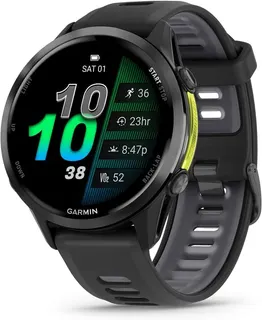
- Best for runners and training: Garmin Forerunner 970. Twenty-six hours of GPS, dual-band, ECG, a flashlight, and the chest-strap-level heart rate DC Rainmaker measured. It costs real money, but it's the watch serious runners end up with.
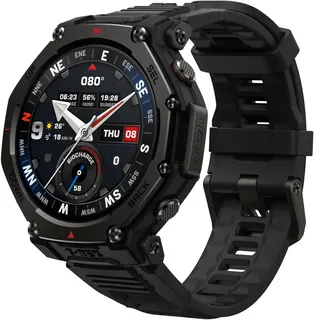
- Best value: Amazfit T-Rex 3 Pro. Twenty-five days of battery, 38 hours of dual-band GPS, a titanium bezel, and 10 ATM, and TechRadar gave it top marks for value. The tradeoff is software: no big third-party apps and no ECG.
- Best on a tight budget: Amazfit Active 2. TechRadar's five-star value pick, with 10 days of battery and a stainless steel case.
- Longest battery: Withings ScanWatch 2. Thirty-five days and an FDA-cleared ECG in a watch that looks like a watch, as long as you don't need GPS or a real screen.
The pattern across all twenty-one is simple. Your phone picks the first filter, your charging patience picks the second, and your longest workout picks the third. Everything after that is taste.
Frequently asked questions
Why aren't the Apple Watch Series 12 and Pixel Watch 5 on this list? They launched in September and August 2026, and their Amazon listings don't have a review history yet, which is part of our bar for coverage. The Series 12 keeps the Series 11's 24-hour rating and adds a longer outdoor-workout figure, per TechRepublic. We'll add the new models once owners have had time with them.
Can I use an Apple Watch with an Android phone? No. Apple Watches pair only with iPhones. If you have Android, look at the Samsung and Google watches, or any of the fourteen cross-platform watches from Garmin, Amazfit, Fitbit, Withings, and Polar.
Can I use a Samsung Galaxy Watch with an iPhone? No. Current Galaxy Watches need an Android phone, and their ECG app also requires a Samsung Galaxy phone specifically. The Pixel Watch 4 is Android-only as well.
Do I need a watch with built-in GPS? Only if you exercise outdoors without your phone. Twenty of these twenty-one have GPS on board. The Withings ScanWatch 2 doesn't, and borrows your phone's location when you carry it on a run.
Is a fitness watch like a Garmin a real smartwatch? Mostly. Garmins, Amazfits, and the Polar show notifications, track sleep and health, and some take calls and payments, but they lack the big third-party app stores of Apple and Wear OS. In exchange they run for one to four weeks on a charge instead of one to two days.
Sources / further reading
- TechRadar, Apple Watch Series 11 review
- Tom's Guide, Apple Watch Ultra 3 review
- T3, Apple Watch SE 3 review
- Apple, Apple Watch battery information
- TechRepublic, Apple Watch Series 12 vs Ultra 4
- Tom's Guide, Samsung Galaxy Watch 8 review
- TechRadar, Samsung Galaxy Watch8 Classic review
- Android Central, Samsung Galaxy Watch Ultra review
- 9to5Google, Pixel Watch 4 review
- Android Central, Pixel Watch 4 battery test
- DC Rainmaker, Garmin Forerunner 970 in-depth review
- Tom's Guide, Garmin Forerunner 570 review
- TechRadar, Garmin Venu 4 review
- TechRadar, Garmin vivoactive 6 review
- Treeline Review, Garmin fenix 8 AMOLED long-term review
- DC Rainmaker, Garmin Instinct 3 in-depth review
- Garmin, fenix 8 owner's manual specifications
- TechRadar, Amazfit Balance 2 review
- TechRadar, Amazfit Active 2 review
- TechRadar, Amazfit T-Rex 3 Pro review
- Google, Fitbit battery life support article
- Tom's Guide, Fitbit Sense 2 review
- Tom's Guide, Withings ScanWatch 2 review
- DC Rainmaker, Polar Grit X2 Pro in-depth review