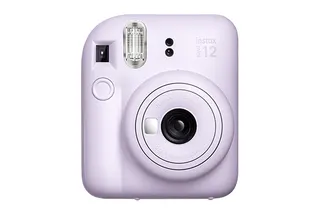
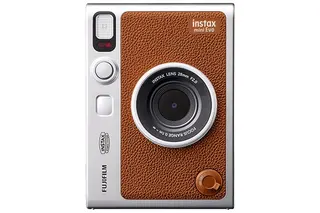
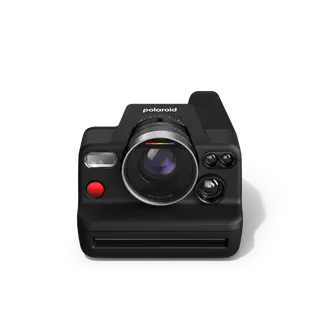
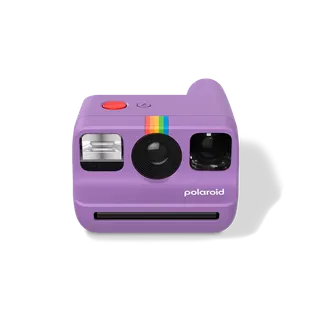


An instant camera is a strange purchase, because the camera is the cheap part. You'll spend more on film over a year than on the body, and the film you choose on day one decides your print size, your cost per shot and which cameras you can ever switch to. So we lined up 18 cameras from Fujifilm Instax, Polaroid, Leica and Kodak and compared what actually separates them: film, image size, focus, whether you can preview before printing, battery and weight. The picks and price buttons sit above this article, and the full sortable sheet has every camera side by side.
The short answer: the Fujifilm Instax Mini 12 is the right first instant camera for almost everyone. The Instax Mini Evo is the best hybrid, the one to buy if wasted prints annoy you. The Polaroid I-2 makes the best pictures in instant film, and the Polaroid Go Generation 2 is the one that actually comes along in a pocket.
Film format: the decision you're stuck with
Pick the film before you pick the camera. Instax film is format-specific: Mini only fits Mini cameras, Square only fits Square, Wide only fits Wide. Polaroid's big square cameras take both i-Type and 600 film, and the Go takes its own smaller Go film.
Across our 18 cameras it splits like this:
- Instax Mini (7 cameras): the Mini 12, 40, 41, 99, Mini Evo, Mini LiPlay+ and, surprisingly, the Leica Sofort 2. Mini is the cheapest film per shot and the easiest to find in any store.
- Instax Square (2): the SQ1 and SQ40.
- Instax Wide (3): the Wide 300, Wide 400 and Wide Evo.
- Polaroid i-Type/600 (4): the Now Generation 3, Now+ Generation 3, Flip and I-2.
- Polaroid Go (1): the Go Generation 2.
- Kodak 3×3 cartridge (1): the Mini Shot 3 Retro, which prints with dye-sublimation, not chemical film.
Buying guides that compare across brands, like Engadget's, rank film size as the main factor for the same reason: it sets both the print and the running cost. Polaroid film is the most expensive per shot, and the bigger Instax formats cost more than Mini.
Slopsheets says: If you're buying this as a gift, check which film the camera takes and put two packs in the box. A camera with no film is a paperweight on Christmas morning.
Image size: how big the picture actually is
The film name tells you nothing about how much picture you get, so here are the printed image areas from each maker's spec sheet:
- Polaroid i-Type/600: 79×79 mm
- Instax Wide: 99×62 mm
- Kodak 3×3: 76×76 mm of paper, with a white border that cuts into the image
- Instax Square: 62×62 mm
- Instax Mini: 62×46 mm
- Polaroid Go: 47×46 mm
The surprise is at the small end. The Polaroid Go makes the smallest picture here, smaller even than an Instax Mini.
For group shots and landscapes, Wide's landscape frame fits more people across. For portraits and the classic look, the i-Type square wins.
Focus: what the lens really does
This is where instant cameras get creative with their marketing. We sorted every camera into one of three honest buckets:
- Fixed focus (6): Mini 12, Mini 40, Mini 41, SQ1, SQ40 and Polaroid Go Gen 2. One fixed range, usually with a close-up or selfie setting from about 0.3 to 0.5 m.
- Zone focus (6): Mini 99, Wide 300, Wide 400, Now Gen 3, Now+ Gen 3 and Flip. Two to four preset ranges, picked by you or by the camera.
- Autofocus (6): Mini Evo, Mini LiPlay+, Wide Evo, Leica Sofort 2, Polaroid I-2, and the Kodak Mini Shot 3 Retro, by Kodak's own spec.
Two-lens autofocus on the Polaroid Now Generation 3.
Two fixed focus zones, 0.40 to 1.3 m and 1.0 m to infinity. The camera picks a lens; it never focuses in between.
That's not a scandal, since zones cover most party and travel shots fine. But it explains why the Polaroid I-2 is in a different class. Per Digital Camera World's and Engadget's reviews, its LiDAR-assisted autofocus and three-element lens produce the sharpest instant prints you can buy, with full manual and priority modes on top. The Flip sits in between: sonar ranging picks one of four fixed lenses, and Digital Camera World and TechRadar both praised how sharp that makes it for a point-and-shoot.
Preview before printing: the hybrid question
Five cameras here shoot digitally to a screen first and print only what you choose: the Mini Evo, Mini LiPlay+, Wide Evo, Leica Sofort 2 and Kodak Mini Shot 3 Retro. The other 13 are pure analog, so every press of the shutter costs a print.
Hybrids save film on blinks and bad framing, and most can print from your phone too. The trade is the instant-camera surprise, plus some digital oddities:
- Mini Evo: Tom's Guide liked its retro body and the 100 combinations of lens and film effects. The complaints are limited internal memory and an app that only transfers images you've already printed.
- Mini LiPlay+: Fujifilm's new version adds a rear selfie camera and sound prints. Digital Camera World called its sensor lo-fi, and the autofocus misses now and then.
- Wide Evo: the only hybrid that prints Wide. TechRadar loved its looks, but it is the most expensive Instax, and Digital Camera World came away less convinced.
- Leica Sofort 2: it's built on the same platform as the Mini Evo, and reviewers knock its digital image quality given what it costs.
- Kodak Mini Shot 3 Retro: it previews on a screen but stores nothing, so any shot you don't print is gone.
Pay up only if: you'll actually shoot more than a pack a month. For occasional party use, an analog Mini 12 plus a little care costs less than a hybrid saves you.
Battery: AA, CR2 or built-in
Eleven of the 18 have a rechargeable battery. Every Polaroid uses a built-in lithium-ion cell, and Polaroid rates the Now Gen 3 at up to 15 film packs per charge. So do all the hybrids. The Mini 99 is the odd one out: its removable NP-70S battery charges outside the camera in a USB-C charger, a gripe TechRadar raised in its review.
The other seven run on disposables. The Mini 12, 40 and 41 take two AAs, the Wide 300 and 400 take four, and the SQ1 and SQ40 take two CR2 lithium cells. AA power is easy to find on a trip, though four AAs make the Wide cameras heavier still.
Weight: what you'll actually carry
From lightest to heaviest:
- Under 300 g: Polaroid Go Gen 2 (239 g), Mini LiPlay+ (265 g), Mini Evo (285 g)
- 300 to 400 g: Mini 12 (306 g), Sofort 2 (320 g), Mini 40 (330 g), Mini 99 (340 g), Mini 41 (345 g), Mini Shot 3 Retro (370 g), SQ1 (390 g)
- 400 to 500 g: Now Gen 3 (448 g), Now+ Gen 3 (452 g), SQ40 (453 g), Wide Evo (490 g)
- Over 500 g: I-2 (563 g), Wide 300 (612 g), Wide 400 (616 g), Flip (648 g)
The catch: these numbers aren't all measured the same way. Fujifilm weighs its AA and CR2 cameras without batteries, while Polaroid and every built-in-battery camera include the cell. Add about 92 g to the Wide 400 and it becomes the heaviest camera here.
The Go Gen 2 is the only camera that really disappears into a jacket pocket. Tom's Guide gave it an Editor's Choice, and Digital Camera World called it irresistible despite its exposure quirks.
Which instant camera should you buy?
- First camera, or a gift for a teen: Instax Mini 12. TechRadar ranks it its best overall instant camera. Its twist-to-shoot lens makes it nearly foolproof, and Digital Camera World calls it the best value going. Overexposure in bright sun and an always-on flash are the main gripes.
- You hate wasting prints: Instax Mini Evo.
- Best image quality: Polaroid I-2, or the Flip for point-and-shoot sharpness on the same film.
- Pocketable: Polaroid Go Gen 2, with tiny prints as the price.
- Big group shots: Instax Wide 400.
- Square prints on a budget: Instax SQ1. Engadget's overall pick, the SQ40, is the same camera in a nicer body.
- More creative control on Mini film: Instax Mini 99, with color effects, vignette and double exposure, per TechRadar.
FAQ
Can you use Instax film in a Polaroid camera?
No. Instax and Polaroid films are different sizes and chemistries, and neither fits the other's cameras. The one crossover is the Leica Sofort 2, which takes Instax Mini film.
Does old Polaroid 600 film work in the new Polaroid cameras?
Yes. The Now Gen 3, Now+ Gen 3, Flip and I-2 all take both i-Type and 600 film, and the I-2 also takes SX-70 film. It doesn't work the other way round: i-Type film fits a vintage 600 camera but won't work in it, because i-Type has no battery in the pack.
Do instant cameras come with film?
Usually not. Most camera-only listings ship without film, so add a pack, or buy a bundle, if the camera is a gift.
Sources / further reading
- Engadget: The best instant cameras for 2026
- TechRadar: The best instant camera, tested
- TechRadar: Fujifilm Instax Mini 12 review
- Digital Camera World: Instax Mini 12 review
- Tom's Guide: Fujifilm Instax Mini 41 review
- TechRadar: Fujifilm Instax Mini 99 review
- Tom's Guide: Fujifilm Instax Mini Evo review
- Digital Camera World: Fujifilm Instax Mini LiPlay+ review
- Digital Camera World: Instax Square SQ40 review
- Digital Camera World: Fujifilm Instax Wide 400 review
- TechRadar: Fujifilm Instax Wide Evo review
- Digital Camera World: Fujifilm Instax Wide Evo review
- Digital Camera World: Polaroid I-2 review
- Engadget: Polaroid I-2 review
- Digital Camera World: Polaroid Flip review
- TechRadar: Polaroid Flip review
- Digital Camera World: Polaroid Go Generation 2 review
- Tom's Guide: Polaroid Go Gen 2 review
- Digital Camera World: Leica Sofort 2 review
- Polaroid: Now Generation 3 product page and specs
- Fujifilm: Instax Mini 12 specifications