

A fitness tracker is the cheap, quiet cousin of the smartwatch: a strip of silicone that counts steps, watches your heart rate and grades your sleep, then mostly stays out of your way. In 2026 the category split in two. Half the bands still have a screen. The other half, led by the Fitbit Air, Whoop and Polar Loop, threw the screen out and report to your phone instead. This comparison covers 16 fitness trackers from Fitbit, Whoop, Garmin, Amazfit, Polar, Samsung, Xiaomi and Withings, column by column. The shortlist sits above this article, and the full sortable sheet lines every band up side by side.
The lineup: three Fitbits (the screenless Fitbit Air, the Charge 6 and the Inspire 3); the Whoop 5.0 and Whoop MG; the Polar Loop; two Amazfits (the screenless Helio Strap and the Band 7); five Garmins (the vivosmart 5, Lily 2 Active, Lily 2, vivofit 4 and the arm-worn Index Sleep Monitor); the Samsung Galaxy Fit3; the Xiaomi Smart Band 10; and the Withings ScanWatch Light, a hybrid watch that tracks like a band.
Quick answers, if you only read this far:
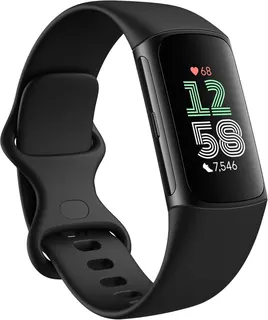
- Best overall: the Fitbit Charge 6. It's the only band here with built-in GPS, an ECG app and a color screen all at once.
- Best screenless tracker: the Fitbit Air. Core tracking is free, it is smaller and lighter than the other screenless straps, and Tom's Guide calls it the best Whoop alternative for most people.
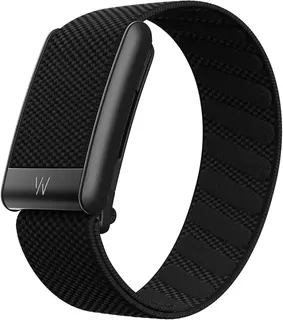
- Best for recovery coaching: the Whoop 5.0, if you're fine paying for a membership every year.
- Best budget band: the Samsung Galaxy Fit3 for Android owners, or the Amazfit Helio Strap if you'd rather skip the screen.
Subscription: the column that decides the real price
Start here, because it changes what every other column costs you. The sheet sorts bands three ways: None (no paid tier exists), Optional (core tracking is free and a paid tier adds coaching or extras) and Required (the band does nothing useful without a membership).
Only two trackers are Required, and both are Whoops. You can't buy a Whoop 5.0 or Whoop MG on its own. The hardware comes bundled with a yearly membership, and the MG only comes with Whoop's top tier. Tom's Guide liked the Whoop 5.0's depth of health insights but called it expensive. the5krunner gave it an Editor's Choice and still named the ongoing subscription as its one serious objection.
Twelve bands are Optional. The Fitbits work without Google Health Premium, which mostly adds an AI coach and longer trends. Garmin Connect is free and Connect+ is a bolt-on. Polar's Fitness Program, Amazfit's Zepp Aura and Withings+ work the same way. One fresh wrinkle: reports in October 2026 said new Withings accounts now need Withings+ to sync automatically to Apple Health or Google's health apps. The ScanWatch Light still tracks for free, but check that if you live in one of those apps.
The Samsung Galaxy Fit3 and Xiaomi Smart Band 10 are the two with no paid tier at all.
Slopsheets says: sort by subscription before you sort by anything else. A Required membership costs you more every year you wear the band, so the cheapest tracker at checkout can be the most expensive one you own.
Display: screen, no screen, or barely a screen
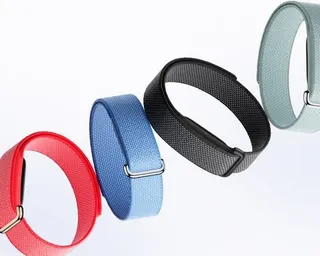
Six of the 16 are screenless: the Fitbit Air, both Whoops, the Polar Loop, the Amazfit Helio Strap and the Garmin Index Sleep Monitor. You check your stats on your phone, and the band itself is just a sensor pod on a strap. The upside is a slimmer band you forget you're wearing, and nothing lights up in a dark bedroom. The downside is that you can't glance at the time, your pace or a text.
Five bands have AMOLED color screens: the Charge 6, Inspire 3, Galaxy Fit3, Xiaomi Smart Band 10 and Amazfit Band 7. Four have monochrome displays: the Garmin vivosmart 5, Lily 2, Lily 2 Active and the small grayscale subdial on the Withings ScanWatch Light. The Garmin vivofit 4 has a tiny, always-on color memory-in-pixel screen, which is why its battery math looks so strange (more on that below).
The Lily 2 and Lily 2 Active blur the line a bit. Their grayscale touchscreen hides under a patterned lens until you tap it, so the band looks screenless at rest. The sheet counts them as monochrome because the screen is really there.
What the box won't tell you: screenless doesn't mean simpler. The Air, Whoop and Helio Strap lean harder on their apps than any screened band here, so a buggy app hurts more. the5krunner found the Fitbit Air's app still felt unfinished, and TechRadar's biggest complaint about the Polar Loop was the Polar Flow software.
Battery life: claimed days, and what testers got
Battery is the maker's own claim for typical use, in days, and the range is wide. The Garmin vivofit 4 is the outlier: Garmin says it runs a year or more on two replaceable coin cells, and it never needs a charger because it has no heart-rate sensor to feed.
Leave out the vivofit and the Withings ScanWatch Light leads at 35 days, which is the hybrid-watch dividend: a watch face with hands burns almost nothing. Next come the Xiaomi Smart Band 10 at 21 days, the Amazfit Band 7 at 18, both Whoops at 14 and the Galaxy Fit3 at 13 (with its always-on display off; Samsung says about 3.5 days with it on). The Inspire 3 and Helio Strap claim 10, the Lily 2 Active 9 and the Polar Loop 8. The Fitbit Air, Charge 6, vivosmart 5 and Index Sleep Monitor sit at 7, and the Lily 2 brings up the rear at 5.
Treat the top of that list with some suspicion. Testers rarely hit the long claims.
It cuts the other way too. TechRadar found the Amazfit Helio Strap's 10-day claim accurate or even conservative, and DC Rainmaker got 8 to 9 nights from the Garmin Index Sleep Monitor against Garmin's 7. Tom's Guide beat the Fitbit Air's 7 days with 15% left at the end of the week. The bands with modest claims tend to hit them.
GPS: built-in, borrowed from your phone, or none
This is the column most people misread. Built-in means the band has its own GPS chip and can map a run with your phone left at home. Connected means it borrows your phone's GPS, so the phone has to come along. None means no route mapping at all.
That makes those two the only real choices for phone-free runners. DC Rainmaker said the Lily 2 Active should realistically have been called the Lily 3, because GPS turns it from a fashion band into a proper run tracker. Garmin rates it for about 9 hours of GPS.
Twelve bands use connected GPS. It works, with caveats. Tom's Guide noted that the Inspire 3's connected GPS only kicks in when you start a workout on the band, and Android Central found the Amazfit Band 7's connection sometimes unreliable. The Garmin vivofit 4 and Index Sleep Monitor have no GPS at all. The Index is a sleep band worn on the upper arm at night, and it doesn't even count steps.
Pay up only if: you run or ride without your phone. If the phone is always in your pocket anyway, connected GPS covers you and opens up the cheaper half of the sheet.
Water rating: almost all of them swim
Thirteen of the 16 carry a 5 ATM rating, which in practice means pool laps and showers are fine. The Polar Loop is rated 3 ATM (Polar's WR30), still fine for swimming, though TechRadar notes it tracks heart rate in the water without any swim metrics. The two Whoops don't use ATM at all. Whoop rates them IP68, submersible to 10 meters for up to 2 hours, which is enough for the pool and the ocean.
This column mostly rules nothing out. If swimming is the main event, look past the rating at whether the band actually counts laps, because several screenless bands just log a heart rate.
ECG: two bands can take one
An ECG app records your heart's electrical rhythm on demand and can flag signs of atrial fibrillation. Only two trackers here offer one: the Fitbit Charge 6 and the Whoop MG. On the MG, ECG is tied to Whoop's top membership tier. the5krunner found its readings matched in four normal-rhythm tests.
Several other bands, including the Fitbit Air, do passive AFib checks with the optical sensor. That's useful, but it isn't an ECG, and the sheet doesn't count it as one.
The Whoop MG is a medical-grade health monitor with ECG and blood pressure insights on your wrist.
The ECG is FDA-cleared, but the blood pressure figures are estimates that need a cuff to calibrate. Reviewers treat them as a beta feature, and TechRadar called the MG poor value at its price.
Don't overpay for: blood pressure on a band. If heart rhythm is the worry, the Charge 6 gives you an ECG app without a top-tier membership.
Which fitness tracker should you buy?
- You want one band that does everything: the Fitbit Charge 6. It has built-in GPS, an ECG app and an AMOLED screen, and Tom's Guide still names it the tracker to beat. Google launched the Fitbit Edge as its successor in October 2026. We'll add the Edge once it has a track record.
- You want no screen and no bill: the Fitbit Air or the Amazfit Helio Strap. TechRadar called the Helio Strap terrific value and generally very accurate. The Air is lighter and more comfortable, though its app is rougher.
- You train hard and want coaching: the Whoop 5.0. Pick the Whoop MG only if you specifically want the ECG.
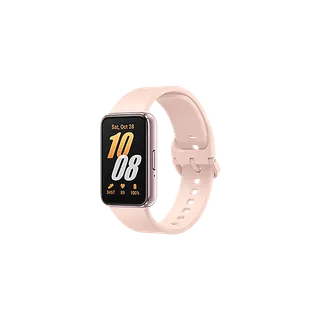
- You're on Android and on a budget: the Samsung Galaxy Fit3. TechRadar called it brilliant value for Samsung phone owners. It doesn't work with iPhones.
- You want it to look like jewelry or a watch: the Garmin Lily 2 Active for GPS, or the Withings ScanWatch Light for a month of battery behind real watch hands.
- You hate charging things: the Garmin vivofit 4. It's a step counter with a year-long battery and nothing else, so no heart rate and, per Tom's Guide, poor sleep tracking.
Every score on the sheet is an AI score: a model's judgment from published reviews, weighing app quality, accuracy reports, subscription cost and value against the rest of this field. It isn't hands-on testing.
Sources / further reading
- Tom's Guide: Fitbit Air review
- the5krunner: Fitbit Air review
- the5krunner: Fitbit Edge, all you need to know
- Tom's Guide: Fitbit Inspire 3 review
- TechRadar: Samsung Galaxy Fit 3 review
- Tom's Guide: Galaxy Fit3 vs Fitbit Inspire 3
- Tom's Guide: Xiaomi Smart Band 10 review
- TechRadar: Xiaomi Smart Band 10 review
- Tom's Guide: Whoop 5.0 review
- the5krunner: Whoop 5.0 and MG accuracy tests
- TechRadar: Whoop MG review
- TechRadar: Polar Loop review
- DC Rainmaker: Polar Loop first thoughts
- TechRadar: Amazfit Helio Strap review
- Android Central: Amazfit Band 7 review
- DC Rainmaker: Garmin Index Sleep Monitor in-depth review
- DC Rainmaker: Garmin vivosmart 5 in-depth review
- DC Rainmaker: Garmin Lily 2 Active in-depth review
- TechRadar: Garmin Lily 2 review
- Tom's Guide: Garmin vivofit 4 review
- Gizmodo: Withings ScanWatch Light review