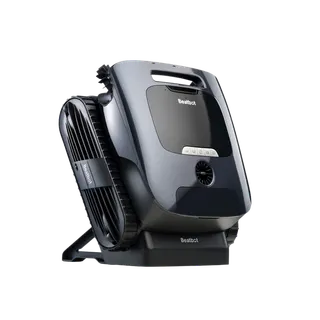
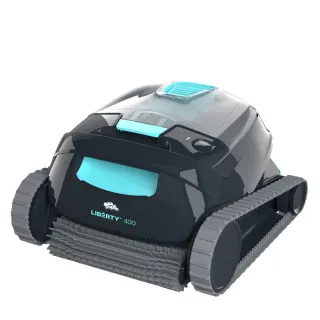
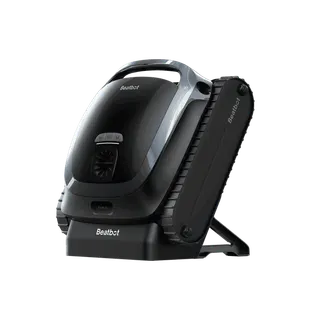
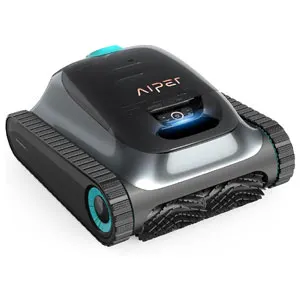


Six cordless pool robots, one chore nobody wants: drag a machine to the pool, drop it in, and trust it to scrub the floor, the walls, and the waterline while you do something better with your afternoon. Cutting the cord is the whole appeal: no float, no tangle, no dragging 50 feet of cable across the deck. What you give up is runtime and, sometimes, the honesty of the spec sheet. Below we go spec by spec on the numbers that actually change your Saturday, and we check the brochure against what the testing labs found in the water.
The lineup: the Beatbot AquaSense 2 Ultra, the Beatbot AquaSense 2, the Aiper Scuba X1, the Aiper Scuba S1, the Dolphin Liberty 400, and the Polaris Freedom. The shortlist and the "check price" buttons live above this article, and the full sortable sheet has all six side by side. Down here we argue about what the specs mean.
How long does each one actually run per charge?
On a single charge the Beatbot AquaSense 2 Ultra leads at up to 300 minutes of floor cleaning, then the AquaSense 2 at 240, the two Aipers at 180 each, and the Dolphin Liberty 400 and Polaris Freedom at 150. Runtime is the tax you pay for going cordless, so read the mode next to the number. Beatbot's own product page rates the Ultra at up to five hours on the floor, dropping to about four and a half when it adds walls and the waterline, so the headline figure and the everything-mode figure aren't the same run. Beatbot also advertises a ten-hour number on the Ultra, but that's surface skimming only. It is not vacuuming your pool floor for ten hours.
The mid-tier AquaSense 2 is rated at four hours of floor cleaning, and Freshly Charged's hands-on test clocked roughly three and a half hours of real mixed cleaning, which is the honest way to read every robot here: the manufacturer's max is a floor-only, fresh-battery, best-case figure, and a full floor-plus-walls-plus-waterline cycle runs shorter. The Dolphin and the Polaris both quote a 2.5-hour cycle, which is enough for one thorough pass of an average residential pool but not for lingering.
Slopsheets says: If your pool is big or you want walls and waterline every time, the two Beatbots buy you the most margin. For a standard backyard pool that gets cleaned on a schedule, 150 minutes from the Dolphin or Polaris finishes the job. You just won't leave it running all day.
Do they really clean the walls and waterline, or just the floor?
All six are sold as floor, wall, and waterline cleaners, but "climbs the wall" on the box and "actually scrubs the waterline" in the water are two different claims. This is where the slop lives, so it's worth slowing down. The waterline is the dirtiest band in any pool; skip it and you're still out there with a brush.
Beatbot leans hardest on this, marketing dual-pass waterline scrubbing on the AquaSense 2 and a five-function system on the Ultra, and reviewers at The Pool Nerd confirm both reach the waterline and corners in testing. The Polaris Freedom gives you four explicit modes: floor, floor-plus-walls-plus-waterline, waterline-only, and a smart cycle. PCWorld's lab review measured around 95% coverage, which is strong. The Aipers are the cautionary tale: both the Scuba X1 and Scuba S1 are engineered and sold to climb walls and hit the waterline, but PCWorld and The Pool Nerd each found real coverage gaps in the water, with debris left behind on more than one run. Even the Dolphin isn't unanimous: Maytronics lists floor, walls, and waterline, while one independent review disputed how well it holds the waterline.
Both Aiper Scuba models are sold as wall-and-waterline cleaners that climb up and scrub the dirtiest band in the pool.
PCWorld and The Pool Nerd each found real coverage gaps on the Scuba X1 and S1, with debris left behind on more than one run.
What the box won't tell you: Treat "cleans the waterline" as a capability, not a guarantee. The Beatbots and the Polaris earned the claim in testing; the Aipers carry it on the spec sheet but stumbled in the water. If the waterline is your reason for buying, weight your decision toward the ones labs actually watched finish the band.
Which ones navigate, and which ones just bounce?
Four of the six plan a path; two mostly wander. Navigation is the single spec that separates a robot that finishes from one that leaves a triangle of dirt in the deep end. The Beatbot AquaSense 2 Ultra is the standout: it builds an actual map with an onboard 4K camera and a stack of sensors, so it drives deliberate patterns instead of ricocheting. The cheaper AquaSense 2 drops the camera but keeps systematic path planning (S-shaped passes on the floor, N-shaped on the walls), which Freshly Charged confirmed is orderly rather than random. The Dolphin Liberty 400 runs Maytronics' long-standing CleverClean scanning, the same systematic logic that made corded Dolphins the benchmark.
Then there's the twist nobody markets: Aiper's navigation is uneven across its own line. PCWorld found the cheaper Scuba S1 running tidy lawnmower rows, but The Pool Nerd watched the pricier, flagship Scuba X1 bounce around the pool more or less at random despite the fancier "WavePath" branding. The Polaris Freedom is honest about it: Doheny's spec sheet flatly says it isn't gyroscopic or mapping; its "smart" mode learns the ideal cleaning time, not a route.
The one rule: For a hands-off clean, buy navigation, not marketing copy. The Beatbot Ultra's camera mapping is the real thing, the AquaSense 2 and Dolphin plan their routes, and, strange but true, Aiper's budget S1 navigates better than its flagship X1. The Polaris cleans well enough by brute persistence, but it isn't drawing a map.
Weight: how much are you actually lifting out of the water?
The Aiper Scuba S1 is the lightest at about 16 lb; the Beatbot AquaSense 2 Ultra is the heaviest at 29.1. This is the spec people forget until the first time they fish a soaked robot off the bottom by its handle. Waterlogged, every one of these is heavier and more awkward than the number suggests. The full ranking:
- Aiper Scuba S1: ~16 lb
- Dolphin Liberty 400: 17.9 lb
- Polaris Freedom: 20 lb
- Beatbot AquaSense 2: 23.1 lb
- Aiper Scuba X1: 26.4 lb
- Beatbot AquaSense 2 Ultra: 29.1 lb
There's a clean pattern here: the machines that do the most weigh the most. The Ultra's camera, bigger battery, and extra motors are exactly why it's the one you'll least enjoy lifting. If a bad back or a deep in-ground pool is part of your reality, the Dolphin at 17.9 lb is the sweet spot: light, but not a stripped-down cleaner.
Before you lift: Don't underrate this row. A four-pound difference on the spec sheet feels like a lot more when you're leaning over the coping with a dripping robot. Light-and-capable is the Dolphin; do-everything-but-heavy is the Ultra.
Battery capacity: why the biggest mAh isn't a free lunch
Battery size tracks runtime loosely, not exactly, led by the Ultra's 13,400 mAh and trailed by the two Aipers at 7,800. The full ranking:
- Beatbot AquaSense 2 Ultra: 13,400 mAh
- Dolphin Liberty 400: 10,400 mAh
- Beatbot AquaSense 2: 10,000 mAh
- Polaris Freedom: 9,600 mAh
- Aiper Scuba X1: 7,800 mAh
- Aiper Scuba S1: 7,800 mAh
A bigger battery is only as good as what's draining it. The Ultra's 13,400 mAh hauls a camera, more sensors, and more motors, so its huge pack doesn't translate into proportionally more cleaning; it funds more cleaning systems. The Dolphin is the quiet efficiency story: 10,400 mAh into a lighter, simpler machine is why it gets a full 2.5-hour cycle without the Ultra's bulk. Note one honesty flag: Aiper doesn't publish an official mAh figure for the Scuba X1, so the 7,800 above comes from a third-party teardown rather than the manufacturer, worth confirming if the exact number matters to you.
Don't overpay for mAh: Read this row next to weight and motors, not on its own. More milliamp-hours on a heavier, sensor-loaded robot can still mean the same time in the water as a lean one with a smaller pack. Capacity is a means; runtime is the number that pays you back.
So which cordless pool robot should you buy?
- Do the most, clean everything, map the pool: Beatbot AquaSense 2 Ultra, longest runtime, biggest battery, and the only real camera mapping here. It's also the priciest and the heaviest, at 29.1 lb.
- Smart navigation without the bulk: Dolphin Liberty 400, systematic CleverClean scanning from the most reliable brand in the category, at a back-friendly 17.9 lb.
- Most robot for the money: Beatbot AquaSense 2, four hours of floor runtime, a 10,000 mAh battery, and orderly path planning for well under the Ultra.
- Lightest lift: Aiper Scuba S1, about 16 lb and easy to handle, as long as you accept the coverage gaps labs have flagged.
- Waterline coverage that tested well on a budget-brand pedigree: Polaris Freedom, roughly 95% coverage in PCWorld's test and four cleaning modes, even though it doesn't map a route.
- The one to think twice about: Aiper Scuba X1, capable on paper, but reviewers caught the flagship wandering where the cheaper S1 didn't.
Every one of these cuts the cord, so the real trade is runtime and navigation against weight and price. Decide how big your pool is, how much you'll lift, and whether you want a machine that maps or one that muscles through, and the list gets short fast.
Frequently asked questions
Which cordless pool robot runs the longest per charge? The Beatbot AquaSense 2 Ultra, at up to 300 minutes of floor cleaning (about 270 with walls and waterline added). The AquaSense 2 does up to 240, the Aiper Scuba X1 and S1 up to 180 each, and the Dolphin Liberty 400 and Polaris Freedom about 150.
Do cordless pool cleaners really clean the waterline? Some do it well, some only on paper. In lab testing, the Beatbot models and the Polaris Freedom handled the waterline convincingly; both Aiper Scuba models are sold as waterline cleaners but were caught leaving debris in independent tests.
Which one has the smartest navigation? The Beatbot AquaSense 2 Ultra maps the pool with an onboard camera. The AquaSense 2 and the Dolphin Liberty 400 use systematic path planning. The Polaris Freedom and, per reviewers, the Aiper Scuba X1 mostly move without mapping a route.
Which cordless pool cleaner is the lightest to lift out? The Aiper Scuba S1 at about 16 lb, just under the Dolphin Liberty 400 at 17.9 lb. The Beatbot AquaSense 2 Ultra is the heaviest at 29.1 lb.
Is a bigger battery always better? No. A larger mAh pack often just powers more sensors, motors, and cameras rather than a proportionally longer clean. The Dolphin gets a full cleaning cycle out of 10,400 mAh precisely because it's lighter and simpler than the 13,400 mAh Ultra.
Sources / further reading
- Beatbot, AquaSense 2 Ultra product page
- Beatbot, AquaSense 2 product page
- Aiper, Scuba X1 product page
- Aiper, Scuba S1 product page
- Maytronics, Dolphin Liberty 400 product page
- Polaris, Freedom robotic cleaner product page
- The Pool Nerd, Beatbot pool cleaner reviews and comparison
- The Pool Nerd, Aiper Scuba X1 review
- Freshly Charged, Beatbot AquaSense 2 review
- PCWorld, Aiper Scuba S1 review
- PCWorld, Polaris Freedom Plus review