

Twenty pairs of earbuds, one shared accounting trick: the battery number printed on the box was measured with noise cancelling switched off. Nobody buys noise-cancelling earbuds to leave the cancelling off. So our sheet lists the ANC-on ratings, the number your commute actually runs on, next to the things the boxes mention in six-point type: which pairs hold two devices at once, which carry a codec better than AAC, and how much sweat the plastic is rated to survive. The shortlist and the check-price buttons sit above this article, and the full sortable sheet has all twenty side by side; down here we walk the twenty through the fine print.
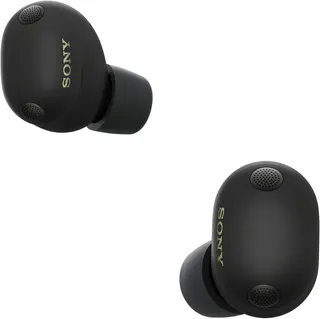
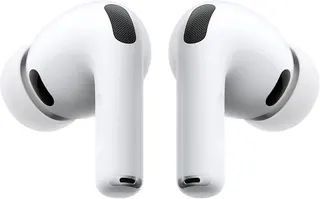
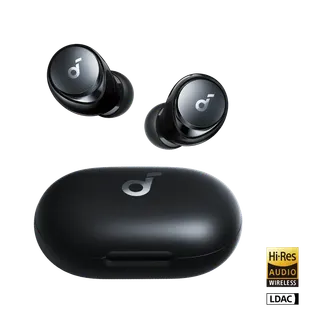
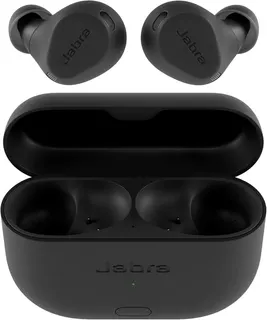
The lineup: Sony's new WF-1000XM6 and the discounted WF-1000XM5 it replaced. Apple's AirPods Pro 3 and the tip-free AirPods 4 with ANC. Bose's QuietComfort Ultra Earbuds (2nd Gen). The audiophile wing: Technics' EAH-AZ100 and Sennheiser's MOMENTUM True Wireless 4. The phone-brand buds: Samsung's Galaxy Buds3 Pro, Google's Pixel Buds Pro 2, and the OnePlus Buds Pro 3. Beats twice over (Powerbeats Pro 2 and Studio Buds+). JBL's Tour Pro 3 with the touchscreen case, Jabra's gym-proof Elite 8 Active Gen 2, and the value bench that keeps embarrassing the front row: Anker's Soundcore Liberty 5 and Space A40, Nothing's Ear (a), CMF's Buds Pro 2, EarFun's Air Pro 4, and Skullcandy's Bose-tuned Method 360 ANC.
The battery number on the box is the ANC-off number
Every brand runs the same play. Beats sells the Powerbeats Pro 2 on "up to 45 hours." Nothing headlines the Ear (a) at 42.5 hours. Jabra's site leads with 56. All three numbers are real, and all three assume you never touch the feature named on the front of the box.
Powerbeats Pro 2: up to 10 hours per charge, 45 hours with the case. Printed big, quoted everywhere.
Turn ANC on, the reason you bought them, and Beats' own spec sheet drops to 8 hours per charge and 36 total.
Measured on the honest basis, the field spreads wider than the boxes suggest. Technics rates the EAH-AZ100 at ten ANC-on hours per charge, the longest single-charge figure in the table. Sony, Apple, Google, Jabra, Beats, and both Soundcores cluster at eight. At the other end, Apple rates the AirPods 4 with ANC at four hours, the shortest here, and the Nothing Ear (a) admits to five and a half once the cancelling is running.
The ratings mostly survive contact with a lab, which is the surprise. SoundGuys' standardized test clocked the Sony WF-1000XM6 at 9 hours 41 minutes with ANC on, comfortably past Sony's own eight-hour claim, and squeezed 8 hours 49 minutes out of the modestly rated Nothing Ear (a). The JBL Tour Pro 3 also beat its sticker at 8 hours 17 minutes. The one flagship that undershot: the Bose QuietComfort Ultra Earbuds (2nd Gen), rated six hours and measured at 5 hours 34 minutes in the same test, below average for the class.
What the box won't tell you: case totals are the marketing number squared. "24 hours total" means three or four recharges of a small battery you must remember to dock, not a day of listening. Compare buds-per-charge first; the case column mostly measures how often you can procrastinate.
Twenty ANC checkboxes, and the checkbox means nothing
Every pair in this table has active noise cancelling. That column reads like unanimity and hides the biggest quality gap in the category.
The ceiling belongs to two names. SoundGuys still ranks Bose's QuietComfort Ultra (2nd Gen) as the best-in-class canceller, the deepest silence in the category, and its review of the WF-1000XM6 credits Sony's new QN3e processor and eight-microphone array with closing most of the gap while sounding better. Apple joined the front row in 2025: RTINGS' lab found the AirPods Pro 3 cancel roughly twice as much noise as the Pro 2, helped by foam-infused tips that seal like proper earplugs.
The floor is instructive. The AirPods 4 with ANC have no tips at all, and physics collects: SoundGuys measured the open fit passing most low-frequency noise straight through, which makes them office-quiet, not airplane-quiet. The audiophile wing sits mid-pack on purpose; reviews of the Technics EAH-AZ100 and Sennheiser MOMENTUM True Wireless 4 consistently note both trail Bose and Sony at cancelling while beating them at the actual listening part.
The catch: ANC strength is the one spec no box prints as a number, which is exactly why it is the spec brands are happiest to checkbox. If silence is the purchase, read a lab's attenuation measurement, not the feature list.
Multipoint: Apple counts to one, everyone else counts to two
Fourteen of the twenty hold connections to two devices at once, so a call on your phone interrupts a video on your laptop without a trip through Bluetooth settings. The Technics EAH-AZ100 goes one further and holds three, a class rarity.
The six that don't share a corporate parent or a business model. Apple's three entries (both AirPods and the Powerbeats Pro 2) and Beats' Studio Buds+ swap automatically between devices signed into the same iCloud account, which works well right up until one of your devices is a work laptop or an Android phone. Samsung plays the same trick: Digital Trends confirms the Galaxy Buds3 Pro skip standard multipoint in favor of auto-switching between Samsung devices, which does not extend to PCs. Ecosystem switching is a feature; it is not multipoint, and the table marks it accordingly.
One asterisk on the budget bench: on the Soundcore Space A40, turning LDAC on turns multipoint off, a tradeoff Soundcore documents and reviewers keep rediscovering.
Codecs: the column where the expensive half goes quiet
Sort the table by codec and the money flips. The LDAC group, the codec that carries roughly triple the data of AAC, is staffed by both Sonys, the Technics, the JBL, both Soundcores, the Nothing, and the CMF: flagships and budget-shelf buds shoulder to shoulder. Sennheiser and EarFun go further with aptX Lossless, Bose offers aptX Adaptive, OnePlus ships LHDC. And then the biggest names in the category: Apple, AAC only, on every product it sells. Google, SBC and AAC on the Pixel Buds Pro 2. Samsung's 24-bit trick uses its proprietary SSC codec, which requires a Samsung phone and falls back to AAC everywhere else. Jabra, Skullcandy, and both Beats stop at AAC too.
Before the LDAC crowd celebrates, the meter is running:
Pay up only if: your phone speaks the language. LDAC and LHDC need Android, aptX Lossless needs a recent Snapdragon phone, and an iPhone speaks AAC to every single pair in this table, including the ones with LDAC on the box. Codec support you can't use is a line item, not a feature.
Water ratings: the cheapest tough guy and the most fragile flagships
The most water-resistant earbuds in this comparison are nowhere near the most expensive. Jabra's Elite 8 Active Gen 2 carries a full IP68 (dust-tight, survives submersion) plus a grip coating designed for sweat, which is why Tom's Guide keeps calling it the best workout pick. The mid-field wears IP55 and IP54. Apple's AirPods Pro 3 land at IP57, unusually high for a mainstream flagship. And the premium ANC royalty, both Sonys, the Bose, the Technics, sit at IPX4: splash-rated, no dust rating at all, the minimum this category considers polite.
The lonely X matters. IPX4 makes no dust claim, and every rating in the table belongs to the buds, not the case; Google rates the Pixel Buds Pro 2 at IP54 but their case at IPX4, and Jabra's IP68 buds live in an IP54 box. A rating is also not a warranty: water damage claims still routinely get refused, it just tells you which pair is engineered to shrug off a rainstorm rather than merely forgive one.
Slopsheets says: buy the fine print, not the headline. Pick the ecosystem first (multipoint people and iCloud people are different species), then compare ANC-on battery ratings because that is the number you will live with, then let lab-measured cancelling break the tie. The codec column is a tiebreaker for Android owners only, and the one line nobody should skip: the Jabra is the only pair here you can rinse without a small prayer.
Sources / further reading
- SoundGuys: Sony WF-1000XM6 review and their ANC-on battery test
- RTINGS: Apple AirPods Pro 3 lab review
- SoundGuys: Apple AirPods 4 with ANC review (open-fit attenuation measurements)
- SoundGuys: Bose QuietComfort Ultra Earbuds (2nd Gen) battery testing
- What Hi-Fi: Sennheiser MOMENTUM True Wireless 4 review
- Forbes: Technics EAH-AZ100 review
- Tom's Guide: JBL Tour Pro 3 review
- Digital Trends: Samsung Galaxy Buds3 Pro review
- SoundGuys: Nothing Ear (a) review
- Nothing support: CMF Buds Pro 2 battery life by mode
- Digital Trends: Soundcore Space A40 review
- SoundGuys: Jabra Elite 8 Active Gen 2 review
- DC Rainmaker: Powerbeats Pro 2 heart-rate testing
- Apple: AirPods Pro 3 specifications