

Noise-cancelling headphones all make the same promise: put them on and the plane, the train, the open-plan office goes away. Some of them get very close. What separates the 21 pairs in this comparison is mostly what the box doesn't say: how long the battery actually lasts with ANC on, how much weight is clamped to your skull for a six-hour flight, whether your phone can use the fancy codec on the spec sheet, and what happens when the battery dies at 30,000 feet and all you have is a seatback jack.
This guide compares 21 popular over-ear ANC headphones from Sony, Bose, Apple, Sennheiser, Bowers & Wilkins, Sonos, Soundcore, JBL, Marshall, Nothing, CMF, Beats, and Skullcandy, spec by spec. The table above sorts them on rated battery with ANC on, weight, best Bluetooth codec, multipoint, whether there's a real analog jack on the headphones, and whether they play audio over a USB-C cable.
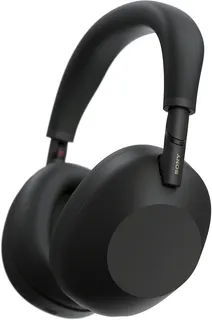
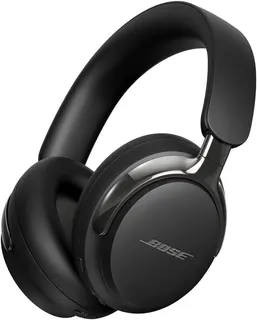
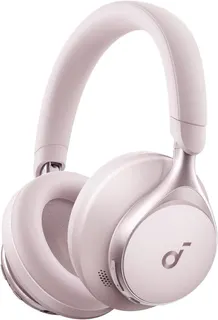
Slopsheets says: For most people the Sony WH-1000XM6 or the Bose QuietComfort Ultra Headphones (2nd Gen) is the answer, and the tiebreaker is your head: Sony for sound and calls, Bose for all-day comfort. Below that tier, the gap in cancelling closes faster than the gap in price, so a midrange pair like the Soundcore Space One gets most people most of the way.
How good is the noise cancelling? (the spec that isn't on the box)
Noise cancelling is the whole reason this category exists, and it's the one thing no manufacturer publishes as a comparable number. "Industry-leading" appears on more boxes than there are industry leaders. So ANC strength isn't a column in our table, because the only honest source for it is a lab with a dummy head and a microphone.
The labs broadly agree on the shape of the field. At the top sit the Sony WH-1000XM6 and the Bose QuietComfort Ultra Headphones (2nd Gen): SoundGuys found the XM6 out-cancels about 85% of the over-ears it has measured, and measured the 2nd-gen QC Ultra cutting outside noise by roughly 87%. The Apple AirPods Max 2 is right there too, with SoundGuys measuring about 89% attenuation. RTINGS rates the noise isolation on the Sonos Ace and the Nothing Headphone (1) as outstanding to excellent, though the Nothing pair lets more low engine rumble through.
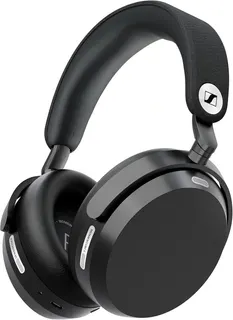
The second tier is closer than the price gap suggests. The Bowers & Wilkins Px7 S3 and the Sennheiser Momentum 5 are both very good, but per RTINGS, Tom's Guide and What Hi-Fi they sit a step behind Sony and Bose. Further down, the budget pairs hold up better than you'd expect: RTINGS calls the CMF Headphone Pro's cancelling impressive, SoundGuys measured it at about 81%, and the Soundcore Life Q30 has been a budget ANC benchmark for years. The pairs reviewers consistently call merely okay at cancelling are the Skullcandy Crusher ANC 2, the JBL Tune 770NC (which barely touches low rumble, per RTINGS), and the Marshall Monitor III A.N.C., which SoundGuys measured at about 83%: decent, not the reason to buy it.
Industry-leading noise cancelling, adaptive, AI-powered, with eight microphones doing something heroic.
Fit decides more than the mic count. A pair that doesn't seal around your glasses or your ears cancels worse than a cheaper pair that does.
Fit matters more than most buyers expect. SoundGuys found the Beats Studio Pro's small, shallow ear cups uncomfortable on average and larger heads, which also breaks the seal and weakens the ANC. Glasses wearers report the same bass and isolation loss on the Nothing Headphone (1). If you can, try a pair on before you commit.
What the box won't tell you: Every pair here cancels low, steady noise (engines, HVAC) far better than voices and clatter. Even the best ANC turns a loud office into a quiet one, not a silent one.
Battery with ANC on: from 20 hours to 70
Every manufacturer quotes two battery numbers, and the big one is almost always with noise cancelling turned off. Nobody buys these to turn the ANC off, so our table lists the rated figure with ANC on.
The long-haul end of the table is crowded with less-hyped names. The Marshall Monitor III A.N.C. is rated for 70 hours with ANC on, the Sennheiser Momentum 5 for 57 hours (and its battery is user-replaceable, which nobody else here offers), and a cluster of pairs claim 50 hours: the Sennheiser ACCENTUM Plus, JBL Live 770NC, Skullcandy Crusher ANC 2, and CMF Headphone Pro. The CMF's 50 hours assumes AAC; with LDAC streaming, Nothing rates it at 38.
The flagships are mostly a flat 30 hours: the Sony WH-1000XM6 and WH-1000XM5, Bose QuietComfort Ultra (2nd Gen), Bowers & Wilkins Px7 S3, Sonos Ace, and Sony ULT Wear. At the bottom sit the Beats Studio Pro and Bose QuietComfort Headphones at 24 hours and the AirPods Max 2 at 20.
Rated figures are measured at moderate volume, so you'll get less if you listen loud. But for the big brands, the labs often beat the claim, which makes these numbers a reasonable floor. Battery matters most if you travel: anything rated 30 hours or more covers a long-haul round trip on one charge, and the 50-hour-plus pairs only need charging every week or two of commuting.
Pay up for battery only if: you regularly forget to charge things. Past about 30 hours, the extra capacity is convenience, not capability.
Weight: 192 grams to 386
Weight is the closest thing to a comfort number on a spec sheet, and it's an imperfect one. The lightest pair in the table is the Sony WH-CH720N at 192 grams, followed by the Sennheiser ACCENTUM Plus (227 g), JBL Tune 770NC (232 g) and Bose QuietComfort Headphones (236 g). Most of the field, including both Sony flagships, the Bose QC Ultra (2nd Gen), the Marshall and the Soundcore pairs, lands between about 245 and 265 grams.
Then there's the heavy end. The Bowers & Wilkins Px7 S3 (300 g), Sonos Ace (312 g), Nothing Headphone (1) (329 g) and Skullcandy Crusher ANC 2 (332 g) are all noticeably heftier, and the AirPods Max 2 tops the table at 386 grams. Reviewers consistently name that weight, plus a firm clamp, as its biggest drawback.
But grams don't tell the whole story. The Bose QuietComfort Ultra (2nd Gen) weighs about 10 grams more than the Sony XM6, yet reviewers rate it among the most comfortable over-ears you can buy, while the XM6's main complaint is comfort: shallow, thin pads and a tighter clamp than the XM5. Pad depth, clamp force and headband padding matter as much as the scale.
The catch: A light pair with shallow cups can be less comfortable than a heavier pair with deep, soft pads. Use weight to rule out the extremes, then read what reviewers say about clamp and pads.
Bluetooth codec: LDAC, aptX, or neither (and whether your phone cares)
The codec column shows the best Bluetooth codec each pair supports beyond the universal SBC and AAC. Six pairs support Sony's LDAC: the WH-1000XM6, WH-1000XM5, ULT Wear, Soundcore Space One, Nothing Headphone (1) and CMF Headphone Pro. Three support aptX Lossless: the Sennheiser Momentum 5, Bowers & Wilkins Px7 S3 and Sonos Ace. The Bose QC Ultra (2nd Gen) and Sennheiser ACCENTUM Plus top out at aptX Adaptive. The other ten, including the AirPods Max 2, Beats Studio Pro, Bose QuietComfort Headphones and Marshall Monitor III, stick to SBC and AAC.
Here's the part the spec sheet leaves out: iPhones don't support LDAC or aptX at all. On an iPhone every pair in this table runs AAC, so the codec column is irrelevant to you. LDAC needs an Android phone with it switched on in settings, and aptX Lossless needs a phone with Qualcomm's Snapdragon Sound, which in practice means recent Snapdragon Android flagships.
Even on Android there are tradeoffs. SoundGuys notes that using multipoint on the XM6 forces a lower-bitrate codec, and the CMF Headphone Pro's battery rating drops from 50 to 38 hours over LDAC.
Don't overpay for: a codec your phone can't use. If you're on an iPhone, ignore this column completely and judge on cancelling, comfort and battery.
Multipoint: two devices at once
Multipoint lets the headphones stay connected to two sources at once, typically a laptop and a phone, so a call on your phone interrupts your laptop audio without any re-pairing. It's close to universal now: 19 of the 21 pairs support it.
The two exceptions are Apple's: the AirPods Max 2 and Beats Studio Pro. Both rely on Apple's automatic switching instead, which moves the connection between iPhone, iPad and Mac signed into the same iCloud account, but doesn't hold two connections open and does nothing for a Windows laptop or Android phone. If your devices are all Apple, it's arguably smoother. If they aren't, it's a real gap.
Wired listening: analog jack, USB-C audio, or both
Two columns cover wired listening, and they answer different questions.
Built-in analog jack tells you whether the headphones have a physical 3.5 mm or 2.5 mm socket, the thing you need to plug into an in-flight entertainment system or an old laptop. Seventeen pairs do. The Bose QC Ultra (2nd Gen), Bose QuietComfort Headphones, Sennheiser Momentum 5 and ACCENTUM Plus use a smaller 2.5 mm socket on the earcup with a 2.5-to-3.5 mm cable in the box. The four without a jack (Bowers & Wilkins Px7 S3, Sonos Ace, Marshall Monitor III and AirPods Max 2) take analog audio only through a USB-C to 3.5 mm cable. Marshall, Sonos and B&W include one; Apple sells it separately.
USB-C audio means you can plug the headphones into a phone or laptop with a USB-C cable and get digital, often lossless, audio. Eight pairs do it: the AirPods Max 2, Bose QC Ultra (2nd Gen), Sennheiser Momentum 5, Sennheiser ACCENTUM Plus, Bowers & Wilkins Px7 S3, Sonos Ace, Nothing Headphone (1) and Beats Studio Pro. On the rest, including the Sony XM6, the USB-C port only charges, which SoundGuys calls the XM6's one big missing feature.
What the box won't tell you: Several of these need power even when wired. Per RTINGS and What Hi-Fi, the Sonos Ace and Nothing Headphone (1) must be switched on to play over a cable, so a dead battery means no music. The Sony WH-1000XM5, Bose QuietComfort Headphones and Soundcore Q20i, by contrast, keep playing passively over a cable with a flat battery, just without noise cancelling.
So which noise-cancelling headphones should you buy?
- Best overall: Sony WH-1000XM6. Top-tier cancelling, the best calls in the group, LDAC, multipoint and a 3.5 mm jack. Try it on if you can, because comfort is its weak spot.
- Most comfortable for long flights: Bose QuietComfort Ultra Headphones (2nd Gen). Cancelling level with the Sony, better comfort, and both a 2.5 mm jack and USB-C audio.
- Best battery: Sennheiser Momentum 5 Wireless. 57 hours with ANC on, a battery you can replace yourself, and aptX Lossless, with cancelling a step behind Sony and Bose.
- Best value: Soundcore Space One. Good cancelling, LDAC, multipoint and 40 hours of ANC battery, at a fraction of flagship money.
- For iPhone households: the AirPods Max 2 cancels superbly and plugs into the Apple ecosystem, but it's heavy, rated for only 20 hours and has no multipoint. The Bose QC Ultra (2nd Gen) is the stronger all-rounder even for iPhone owners.
- On a tight budget: the CMF Headphone Pro and Soundcore Life Q30 both offer real cancelling and long battery at budget money.
Frequently asked questions
Are noise-cancelling headphones worth it for flying? Yes, it's the use case they're best at. Jet engine noise is low and constant, exactly what ANC cancels most effectively. For flights, pair a strong canceller with 30+ hours of battery and a way to plug into the seatback system: a built-in jack, or a USB-C to 3.5 mm cable in your bag.
Do noise-cancelling headphones work with glasses? They work, but the arms break the ear-cup seal and reduce both cancelling and bass. Deep, soft pads seal better around glasses than shallow ones. Reviewers flag shallow cups on the Nothing Headphone (1) and Beats Studio Pro.
Can I use these headphones for calls on my laptop? Yes. All 21 have microphones and work over Bluetooth, and the 19 with multipoint can stay connected to your laptop and phone at the same time. Call quality varies far more than the specs suggest: the Sony XM6 is a standout per What Hi-Fi, while several budget pairs have only average mics.
Over-ear or earbuds for noise cancelling? Over-ears generally cancel more, last longer on a charge and are more comfortable for long sessions, at the cost of bulk. Earbuds win on portability. For flights and long workdays, over-ears are still the better tool.
Sources / further reading
- SoundGuys, Sony WH-1000XM6 review
- What Hi-Fi?, Sony WH-1000XM6 review
- SoundGuys, the Sony WH-1000XM6 are missing one big feature
- SoundGuys, Sony WH-1000XM5 review
- SoundGuys, Bose QuietComfort Ultra Headphones (2nd Gen) review
- What Hi-Fi?, Bose QuietComfort Ultra Headphones (2nd Gen) review
- SoundGuys, Apple AirPods Max 2 review
- SoundGuys, Beats Studio Pro review
- What Hi-Fi?, Sennheiser Momentum 5 Wireless review
- RTINGS, Sennheiser MOMENTUM 5 review
- RTINGS, Sennheiser ACCENTUM Plus review
- RTINGS, Bowers & Wilkins Px7 S3 review
- RTINGS, Sonos Ace review
- SoundGuys, Marshall Monitor III ANC review
- RTINGS, Nothing Headphone (1) review
- RTINGS, Anker Soundcore Space One review
- RTINGS, Anker Soundcore Life Q30 review
- RTINGS, JBL Tune 770NC review
- RTINGS, CMF Headphone Pro review
- SoundGuys, CMF Headphone Pro review
- What Hi-Fi?, Sony WH-CH720N review
- Tom's Guide, Bose QuietComfort Headphones review
- SoundGuys, Skullcandy Crusher ANC 2 review