

A USB microphone plugs straight into a laptop, phone or console and makes you sound like you aren't recording inside a cereal box. That part is easy. The harder part is the spec sheet, which pushes sample rates and RGB rings while the things that decide how you sound sit lower down: what kind of capsule it uses, how much of your room it hears, whether it can grow into an XLR setup, and whether you can hear yourself while you talk. This comparison covers 20 USB microphones from Shure, RØDE, Sennheiser, Maono, Audio-Technica, HyperX, Elgato, Logitech, Razer, Samson and sE Electronics. The shortlist sits above this article, and the full sortable sheet has every model side by side. Below, we go column by column and flag the numbers that matter less than the box suggests.
The lineup: three Shures (the MV7+, MV7i and MV6); two RØDEs (the PodMic USB and NT-USB+); the Sennheiser Profile; the Maono PD200W; three Audio-Technicas (the AT2040USB, AT2020USB-X and AT2020USB-XP); the HyperX QuadCast 2 and QuadCast 2 S; the Elgato Wave:3 MK.2 and Wave Neo; the Logitech Yeti 2 and G Yeti GX; the Razer Seiren V3 Pro and Seiren V3 Mini; the Samson Q2U; and the sE Electronics NEOM USB.
Quick answers, if you stop here:
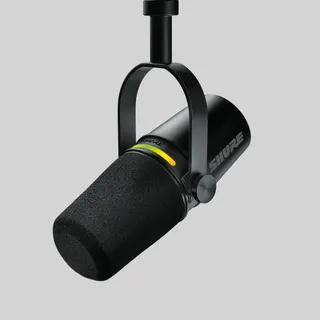
- Best overall: the Shure MV7+. It's MusicRadar's top USB mic and Tom's Guide's podcast pick, and it records over USB and XLR at the same time.
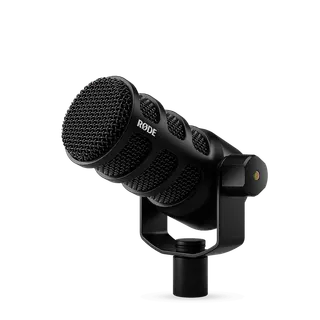
- Best voice sound: the RØDE PodMic USB. Wirecutter's listening panel preferred it to the MV7+.
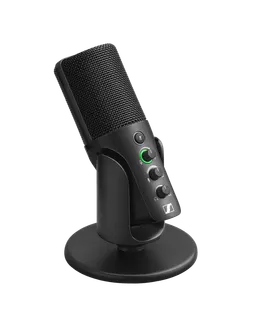
- Best for voice and music: the Sennheiser Profile, Wirecutter's top all-purpose pick.
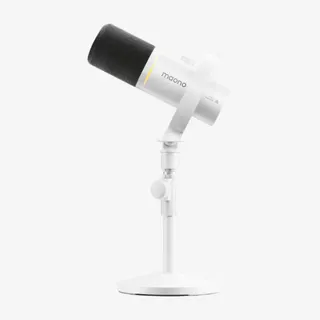
- Best value: the Maono PD200W, Wirecutter's pick for most podcasters, with USB, XLR and wireless in one body.
Capsule: dynamic or condenser
This is the column to sort first. Nine of the 20 use a dynamic capsule: the three Shures, the RØDE PodMic USB, the Maono PD200W, the Audio-Technica AT2040USB, the Razer Seiren V3 Pro, the Samson Q2U and the Logitech G Yeti GX. The other 11 are condensers.
A dynamic mic wants your mouth close and hears less of everything else, which is why podcast-first mics like the MV7+ and PodMic USB use one. The Podcast Host found the dynamic Q2U forgiving of less-than-ideal rooms. A condenser is more sensitive. Wirecutter says condensers tend to capture more treble detail, which is why it rates the Sennheiser Profile especially well for recording instruments. The trade is that a condenser also hears your keyboard, the fridge and the neighbor's leaf blower.
Slopsheets says: if you record in a normal room with hard walls, start with the dynamics. If you record music or sit in a quiet, soft room, a condenser like the Profile or NT-USB+ will give you more detail.
Processing can patch some of this. Wirecutter found the Maono PD200W's noise reduction strong enough to recommend it for noisy rooms, and the Shure MV7+'s denoiser in Shure's MOTIV Mix app "very effective." The Logitech G Yeti GX has powerful noise reduction too, but Wirecutter's panel found its sound thin.
Pickup patterns: who the mic listens to
Fourteen of the 20 have a single cardioid pattern, which hears what's in front and rejects what's behind. The Audio-Technica AT2040USB narrows that to hypercardioid, and the Logitech G Yeti GX and Razer Seiren V3 Mini to supercardioid.
Three mics switch patterns. The HyperX QuadCast 2 and QuadCast 2 S offer cardioid, omni, bidirectional and stereo. The Logitech Yeti 2 adds supercardioid and hypercardioid, plus an auto mode that TechRadar says tracks where your voice is coming from and adjusts the pickup to match.
Four pickup patterns, so one mic covers you, a guest across the table and the whole room.
TechRadar found the QuadCast 2 noticeably worse at cutting background noise on every pattern but cardioid, and said a multi-person podcast still needs a mic per person.
If you do need a second voice on one computer, the Shure MV7i takes a different route: it has a combo XLR and 1/4-inch input on the body for a second mic or an instrument, per Shure, with up to 60 dB of gain and phantom power.
XLR output: room to grow
Only five of the 20 have an XLR output alongside USB: the Shure MV7+, RØDE PodMic USB, Maono PD200W, Razer Seiren V3 Pro and Samson Q2U. That matters if you think you'll ever buy an audio interface or a podcast mixer, because the mic comes with you instead of going in a drawer.
The MV7+ can send USB and XLR at the same time, per Shure, so you can record a backup. There's a catch, though: Shure says the MV7+'s XLR output is passive, so the processing you set up in its app doesn't apply there. The Maono PD200W adds a third route, a 2.4 GHz wireless mode with a small receiver.
Pay up only if: a mixer or interface is really in your plans. If the mic will live on USB forever, the Shure MV6 puts Shure's dynamic capsule and auto level in a smaller, USB-only body.
Bit depth and sample rate: the most oversold column
Ten of the 20 top out at 24-bit/48 kHz, including the four highest-scoring mics on this sheet. Wirecutter says 24-bit/48 kHz is commonly used in professional recording. The HyperX QuadCast 2 S goes to 32-bit/192 kHz, the AT2020USB-XP and sE NEOM USB to 24-bit/192 kHz, and the Razer Seiren V3 Pro offers 32-bit float, but only through Razer's Synapse app on Windows. At the bottom, the Samson Q2U records 16-bit over USB.
High rates can even cost you features. Audio-Technica says the AT2020USB-XP's noise reduction only works at 44.1 or 48 kHz, and switches off at 192.
Headphone jack: hearing yourself
Eighteen of the 20 have a 3.5 mm headphone output for zero-latency monitoring, so you hear your own voice without the echo of a computer round trip. The two that don't are the Logitech G Yeti GX and the Razer Seiren V3 Mini. You can still monitor through your computer, but GamesRadar called the Yeti GX's missing jack a glaring omission.
Controls on the jack vary a lot. The Sennheiser Profile and Audio-Technica AT2020USB-X put headphone level and mix knobs on the front, which Wirecutter liked for music. The Elgato Wave Neo has a jack but no headphone controls on the mic, which Wirecutter called inconvenient for music recording.
What the box won't tell you: a mute button can be loud. Wirecutter singled out the Shure MV7+'s touch panel and the Wave Neo's button as two that don't put an audible thunk in the recording.
Which USB microphone to buy
For most people, get the Shure MV7+. It's a dynamic that keeps a normal room out of your voice, its denoiser works, and the XLR output means you never have to replace it. If you care most about how your voice sounds and you already have a boom arm, the RØDE PodMic USB beat it in Wirecutter's brand-concealed listening tests.
If you record music as well as talk, the Sennheiser Profile is the easy all-rounder, with clear sound, front-panel controls and a solid stand. If money is tight, the Maono PD200W costs much less, and Wirecutter's panel found it came pretty close to the PodMic USB, with noise reduction strong enough for noisy rooms. The Shure MV7i is the one to buy if a co-host or guitar needs to plug into the same computer.
Streamers who want switchable patterns and lights should look at the HyperX QuadCast 2 S, as long as they stick to cardioid. If you mostly take calls, compare noise-cancelling headphones and wireless gaming headsets too, and if you record on the move, a clip-on from our wireless microphones sheet makes more sense than anything here.
USB microphone FAQ
Do USB microphones work with an iPhone or Android phone? Many do over USB-C. RØDE says the PodMic USB works with iOS and Android devices, Shure says the MV7i is MFi certified for iPhone and iPad, and Wirecutter notes the Sennheiser Profile works with Android and USB-C iPhones.
Do I need a boom arm? For the heavy dynamics, usually. Tom's Hardware puts the PodMic USB at about 900 g, Wirecutter says it's designed to mount on a desktop swing arm, and MusicRadar notes the MV7+ has no internal shock mount to soak up desk bumps.
Can I record two people into one computer? With two separate USB mics, it depends on your software. The simpler routes in this sheet are the Shure MV7i, which takes a second XLR mic on its combo input, or a pair of Maono PD200Ws, which Maono markets for co-host recording.
Sources / further reading
- Wirecutter: the best USB microphones
- MusicRadar: best USB microphones 2026
- MusicRadar: best podcasting microphones 2026
- Tom's Guide: the best microphones in 2026
- TechRadar: Logitech Yeti 2 review
- TechRadar: HyperX QuadCast 2 review
- Tom's Hardware: Razer Seiren V3 Pro review
- The Podcast Host: Samson Q2U review
- Shure: MV7+ user guide
- GamesRadar: Logitech Yeti GX review
- Audio-Technica: AT2020USB-XP noise reduction and resolution