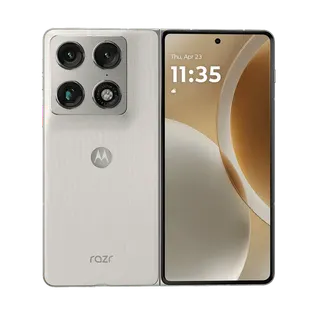
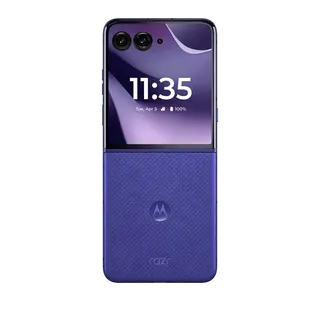
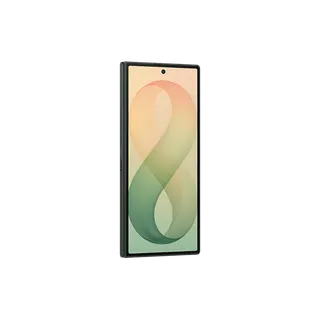
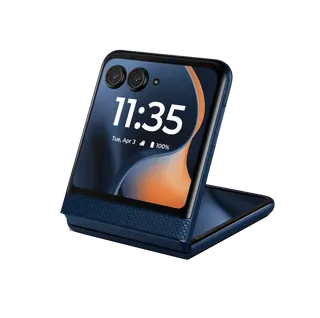


Apple started selling the iPhone Duo today, which means every foldable on the market just got a new rival and every foldable marketing page got a little louder. So we lined up 20 of them from Samsung, Motorola, Google, Apple, Honor and OnePlus, flips and book-style alike, on the things you can check: how thin it folds, how much it weighs, how big each screen is, how much battery is inside, and what the IP rating actually protects against. The picks and price buttons sit above this article, and the full sortable sheet has all 20 side by side.
The short answer: the Motorola razr fold is the best foldable phone for most people who want a tablet in their pocket, the Motorola razr ultra 2026 is the best flip phone, the Samsung Galaxy Z Fold8 Ultra is the one to get if thinness matters most, and last year's Motorola razr 2025 is the cheapest way into a foldable that reviewers still recommend.
Flip or book: pick the shape before the brand
Foldables come in two shapes, and they solve opposite problems. A flip (Galaxy Z Flip8, every razr except the fold) is a normal-size phone that folds in half to fit a small pocket, with a little cover screen for notifications. A book-style foldable (Galaxy Z Fold8, Pixel 11 Pro Fold, iPhone Duo, razr fold, Honor Magic V6) is a normal-size phone that opens into a small tablet.
Our sheet has nine flips and eleven book-styles. Comparing across the line is mostly pointless: a flip will always be lighter and have the smaller cover screen, and a book will always have the bigger inner one. Use the form factor column to filter first, then sort.
Slopsheets says: Buy a flip if you want less phone. Buy a book if you want more. Buying one for the other one's job is how people end up hating foldables.
Folded thickness: the spec every launch fights over
Thickness is the number brands now lead with, and the spread on the book side is wide. The Honor Magic V6 folds to 8.75 mm, with the Galaxy Z Fold8 Ultra and Galaxy Z Fold7 at 8.9 mm and the Honor Magic V5 at 8.8 mm. At the thick end sit the OnePlus Open (11.7 mm), the iPhone Duo (11.3 mm) and the Pixel 10 Pro Fold (10.8 mm).
Flips work differently. Every one of them is folded in half, so they all land between 13.1 mm (the Galaxy Z Flip8) and 15.85 mm (the razr 2026 and razr 2025). That produces the odd result below.
One detail the spec sheets bury: the Fold8 Ultra and the Fold7 share the same 8.9 mm thickness, 215 g weight and screen sizes, per GSMArena's spec pages. The Ultra's gains are inside (a larger battery and faster charging), not in the body.
The catch: Sub-9 mm book foldables are the ones that feel like a normal phone closed. Above 10.5 mm you will notice it in every pocket, every day.
Weight: 180 g to 258 g
The lightest phone here is the Galaxy Z Flip8 at 180 g, and most flips sit between 187 g and 199 g. Book-styles start at 201 g with the new Galaxy Z Fold8 and climb to 254 g for the iPhone Duo and 258 g for the Pixel 10 Pro Fold. Google trimmed that to 239 g on the Pixel 11 Pro Fold, which ties the OnePlus Open.
For context, 9to5Google's otherwise glowing razr fold review still lists its 243 g as a complaint. Tom's Guide's iPhone Duo hands-on likewise notes that Apple's phone isn't as thin or light as Samsung's.
Pay up only if: You will open it every day. A 250 g phone that lives open as a tablet earns its weight. One that stays closed is just a heavy phone.
Inner display: 6.7 to 8.1 inches
On the book side the inner screens run from 7.6 inches (the Galaxy Z Fold8 and iPhone Duo) to 8.1 inches (the razr fold), with most landing at 7.95 to 8.0 inches. The Fold8 is the odd one: it uses a wider, shorter passport shape, so its 7.6 inches is less about size and more about being shaped like a book you can actually read.
Flips are nearly identical inside, between 6.7 inches (the Galaxy Z Flip7 FE) and 7.0 inches (both razr ultra models). If you have used a regular large phone, you already know what a flip's inner screen feels like.
The crease is where these screens really differ, and no spec captures it. Reviewers consistently call Google's the most visible: Tech Advisor says the Pixel 11 Pro Fold's crease is improved but still the most visible of this year's foldables. GSMArena credits the Fold8 Ultra with a smaller crease than its predecessor, and Tom's Guide says the iPhone Duo's crease is visible but can't be felt.
Cover display: the screen you actually use most
On a flip, the cover screen decides whether you open the phone at all. Samsung's Flip8 and Flip7 lead at 4.1 inches, Motorola's razr+ and razr ultra models are at 4.0, the base razr 2026 and razr 2025 have 3.6, and the Flip7 FE brings up the rear at 3.4. Android Central's razr+ 2025 review calls the cover screen "the star of the show," which is the right way to think about this tier.
On a book-style, the cover screen is the phone you use when it's closed. The razr fold (6.6 inches), Honor Magic V6 (6.52), Fold8 Ultra, Fold7 and Pixel 11 Pro Fold (all 6.5) are full-size phone screens. The iPhone Duo (5.4) and Fold8 (5.5) are deliberately narrower.
Don't overpay for: A flip with a small cover screen. Below 3.7 inches you will keep flipping it open to do anything, which defeats the point of a flip.
Battery capacity, and why it doesn't predict battery life
Capacity ranges from 4,000 mAh (the Flip7 FE and razr+ 2025) to 6,660 mAh (the Honor Magic V6). The milliamp-hours matter less than you would think, because the tests keep disagreeing with them.
The book-style record belongs to the razr fold: Tom's Guide measured 14 hours 44 minutes from its 6,000 mAh battery, against 10 hours 55 minutes for the Galaxy Z Fold7. On GSMArena's active-use test the Honor Magic V6 is the standout, and among Samsung's new phones the Fold8 beats the Fold8 Ultra even though the Ultra has the bigger battery. Google's own pair shows the same thing: Tech Advisor found the Pixel 11 Pro Fold lasted 11 minutes longer than the Pixel 10 Pro Fold despite a smaller cell.
The iPhone Duo row needs a note. Apple publishes runtimes, not a capacity, so the 4,883 mAh on the sheet comes from GSMArena and Tom's Guide. The first full reviews landed this week, and Engadget's video rundown got 28 hours 48 minutes out of it, about half an hour more than the Galaxy Z Fold8 managed on the same test.
What the box won't tell you: Chip efficiency and screen tuning swing battery life by hours. Read the mAh column as a rough tier and trust lab rundown tests over it.
IP rating: the one durability number that matters
Most foldables are IP48. The 8 means they survive being submerged in fresh water, which covers the toilet, the sink and the rain. The 4 is where people get misled.
IP48: dust and water resistant, so it can handle a beach bag or a pocket full of lint.
The 4 only blocks solid objects over 1 mm. Fine sand and grit are smaller than that, and a hinge is the one part a phone can't seal shut.
Only four phones here are rated dust-tight at the IP6x level: the Pixel 11 Pro Fold and Pixel 10 Pro Fold (IP68), the iPhone Duo (IP68), and the Honor Magic V6 (IP68 and IP69). The razr fold is IP49, the Honor Magic V5 is IP58/IP59, and the Pixel 9 Pro Fold (IPX8) and OnePlus Open (IPX4, splashes only) trail the field. Even IP68 isn't a free pass on a foldable: TechRadar reported on a YouTube durability test (JerryRigEverything's, not a lab) that found sand working into the Pixel 10 Pro Fold's hinge.
The catch: If your phone goes to the beach, the playground sandbox or a job site, the IP rating column is the first one to sort.
Software support: the column that isn't on the sheet
It doesn't fit a table, but it decides how long a foldable stays usable. Samsung and Google promise seven years of OS updates on their current folds, and Motorola promises seven years for the razr fold. The razr+ 2026 gets three OS upgrades and five years of security patches, a gap TechRadar's review flags against Samsung and Google. The OnePlus Open launched in 2023 with four OS updates, so most of its window is already gone.
Sources / further reading
- Tom's Guide: Motorola Razr Ultra 2026 battery test
- Tom's Guide: Motorola Razr Fold battery test results
- Tom's Guide: Galaxy Z Fold 7 and Flip 7 battery results
- Engadget: Apple iPhone Duo review
- Tom's Guide: iPhone Duo hands-on
- 9to5Google: Motorola Razr Fold review
- GSMArena: Samsung Galaxy Z Fold8 Ultra review, lab tests
- GSMArena: Samsung Galaxy Z Fold8 review
- GSMArena: Samsung Galaxy Z Flip8 review, lab tests
- GSMArena: Honor Magic V6 review
- Tech Advisor: Google Pixel 11 Pro Fold review
- Tom's Guide: Google Pixel 10 Pro Fold review
- TechRadar: Motorola Razr Plus 2026 review
- Android Central: Motorola Razr Plus 2025 review
- Apple: iPhone Duo technical specifications
- Google Store: Pixel 11 Pro Fold specs
- Motorola: razr fold