

Every espresso machine box sells the same dream: café drinks at home, every morning, for less than a month of café visits. Some of these machines deliver it, and some deliver a learning curve with a steam wand attached. The difference is rarely the number printed biggest on the box. This comparison covers 19 home espresso machines from Breville, De'Longhi, Ninja, Philips, Jura, Gaggia and Rancilio. The shortlist and check-price buttons sit above this article, and the full sortable sheet holds every machine side by side. Down here we explain which columns change the drink in your cup.
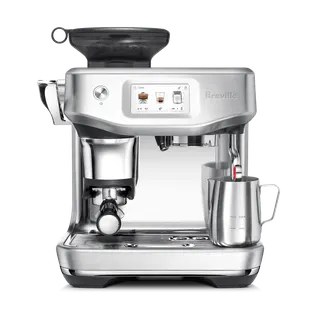
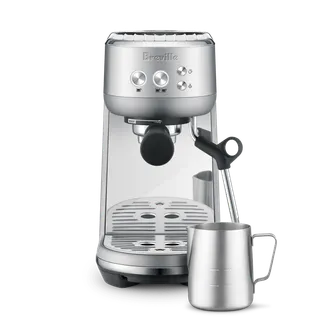
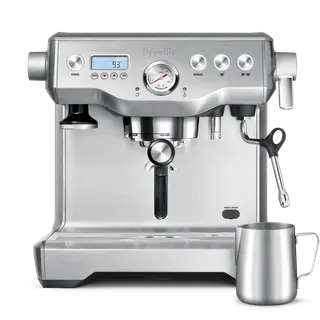
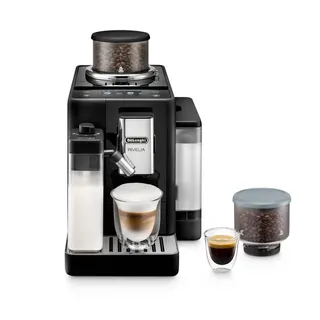
The lineup: fourteen semi-automatics, from the six-inch-wide Breville Bambino and Bambino Plus, through the grinder-equipped Barista Express, Barista Express Impress, Barista Pro, Barista Touch Impress and Oracle Jet, plus the De'Longhi La Specialista Arte and both Ninja Luxe Café models. Add the no-grinder classics (Breville Dual Boiler, Gaggia Classic Evo Pro, Rancilio Silvia and the budget De'Longhi Stilosa). Then five super-automatics that grind, brew and froth at the press of a button: the De'Longhi Magnifica Evo, Rivelia and Dinamica Plus, the Philips 3200 LatteGo and the Jura E8.
Semi-automatic or super-automatic: how much of the job do you want?
This column sorts the field before any spec does. A semi-automatic has a portafilter you fill, tamp and lock in yourself. The machine controls the water and you control the coffee. A super-automatic (also called bean-to-cup) hides all of that inside: beans go in the top, you press a button, and a drink comes out.
The semi-automatics give you better shots and more control once you learn them. The super-automatics give you consistency on the first morning and on a sleepy Tuesday. Neither one is wrong. They just suit different mornings.
The line has blurred at the top. The Breville Oracle Jet grinds, doses, tamps and textures milk for you, and you still lock in the portafilter, which is why the sheet lists it as semi-automatic. TechRadar's long-term test found it ready to pull a shot about 30 seconds after switching on, with very little left for you to get wrong.
Slopsheets says: If you want to learn espresso, buy a semi-automatic. If you want a latte without thinking about it, buy a super-automatic and stop reading reviews about tamping pressure.
Built-in grinder: the spec that decides your first month
Thirteen of the 19 machines grind their own beans. The six that don't (Bambino, Bambino Plus, Dual Boiler, Stilosa, Gaggia Classic Evo Pro and Rancilio Silvia) need a separate burr grinder that can go fine enough for espresso, and that grinder is not cheap.
It matters because espresso is unforgiving about grind size, and a grinder that can't go fine enough, or drifts between settings, makes a great machine pull sour, gushing shots. A built-in grinder solves that on day one. The trade-off is that you can't upgrade it later, and built-in grinders vary a lot. The Barista Express has 16 grind settings, the Barista Pro and Touch Impress 30, and the Oracle Jet 45. Ninja uses one grinder for both espresso and drip coffee, which reviewers say narrows the usable espresso range. Home Coffee Expert found the Luxe Café Pro struggles with light roasts.
The Impress models add a second assist: they measure the dose and tamp it for you. That fixes the messiest step on the original Barista Express, where beginners spend weeks spilling grounds and guessing.
The catch: a machine without a grinder isn't the cheap option once you add a good grinder. Price the pair before comparing it to a Barista Express.
Heating system: why some machines make you wait
The heating column runs in four tiers, and the sheet ranks it that way:
- Thermoblock (15 machines). Water is flash-heated as it passes through a heated block or coil. Breville calls its versions ThermoJet and Thermocoil. They heat in seconds, but most can't brew and steam at the same time, so you wait a beat between pulling the shot and frothing the milk.
- Single boiler (Gaggia Classic Evo Pro, Rancilio Silvia and, by De'Longhi's description, the Stilosa). One tank of hot water handles both jobs, so you switch between brew and steam temperatures. Boilers steam with more punch but take far longer to warm up.
- Heat exchanger. None in this field yet. The tier is in the sheet so one ranks correctly when it arrives.
- Dual boiler (Breville Dual Boiler only). Separate espresso and steam boilers, so it brews and steams at once.
The warm-up gap is the part that surprises people:
That doesn't make the Gaggia a bad machine. Reviewed found its predecessor, the Classic Pro, pulled the best shots in its whole roundup, and TechGearLab gave the single-boiler Rancilio Silvia its highest espresso-quality score. Boilers bring thermal mass and steam power. You just need a smart plug or a few minutes of patience.
Pay up only if: you make several milk drinks back to back. That is when a dual boiler earns its size. For one latte a morning, a thermoblock's short pause is not a real cost.
The number on the box you can ignore: pump pressure
You'll see 15, 19 and 20 bar printed across this category. None of it is a column on the sheet, on purpose.
19 bars of pressure, so it must pull richer, stronger espresso than a 15-bar machine.
Espresso is brewed at around 9 bar. The pump rating is a ceiling the machine regulates down from, not the pressure your coffee sees.
As Clive Coffee's explainer on brew pressure puts it, the advertised figure describes the pump's maximum, while the pressure at the coffee bed is set lower by the machine. What actually decides the shot is the grind, the dose and how steady the temperature stays, and the pump rating tells you nothing about any of them.
Hands-free milk: who textures the latte
Ten machines texture milk without you holding the pitcher: the Bambino Plus, Barista Touch Impress and Oracle Jet (Breville's automatic wands, with set temperatures and foam levels), both Ninja Luxe Café models (Ninja's Dual Froth whisk-and-steam system), and all five super-automatics through a carafe or LatteGo-style jug. The other nine use a manual wand.
What hands-free milk buys you is consistency. It doesn't buy speed: TechGearLab timed a full cappuccino on several of these machines, and the automatic wand didn't win.
What you get from the automatic wand is the same foam every morning while you do something else. For a household where several people make drinks, that's worth more than a minute. If you enjoy learning latte art, a manual wand is half the fun.
The automatic systems aren't all equally good, either. Home Coffee Expert found the Ninja Luxe Café Pro's milk sometimes ran hotter than set, and owners of the De'Longhi Dinamica Plus commonly complain about lukewarm milk. The Philips LatteGo jug has just two parts and no tubes, so it is the easiest system here to clean.
Don't overpay for: a hands-free wand if you only drink straight espresso or Americanos. It's a milk feature, and you'll never touch it.
Water tank: how often you refill
Tanks run from 34 ounces on the De'Longhi Stilosa to 85 ounces on the Breville Dual Boiler. Most of the field sits between 61 and 70 ounces. The Bambino and Rivelia hold 47.
For one person drinking two espressos a day, even the smallest tank lasts a while. Add milk drinks, Americanos and a second person, and the bottom of this column means daily refills. Also check where the tank comes out. A rear tank under a cabinet means sliding the machine forward every time, and reviewers flag exactly that on the La Specialista Arte. The Oracle Jet fills from the front.
Width: will it fit on the counter?
This is the spec people forget until the box arrives. The Breville Bambino is 6.3 inches wide, about the width of a hardcover book. The Bambino Plus (7.7), Gaggia (8.0) and Stilosa (8.1) are close behind. At the other end, the Dual Boiler (15.9), Oracle Jet (15.0) and Barista Touch Impress (14.2) take as much counter as a microwave.
The super-automatics are surprisingly narrow, between 9.3 and 11.0 inches, because they stack everything vertically. Measure the depth and the height under your cabinets too, since a bean hopper on top adds height.
What the box won't tell you: you'll need clearance on top to fill the beans and water, plus room in front for the knock box and pitcher. Leave a hand's width beyond the machine itself.
Which espresso machine should you buy?
- For most people who want to learn real espresso: the Breville Barista Touch Impress. Assisted dosing and tamping, a guided touchscreen and hands-free milk make it the most forgiving all-in-one here. Reviewed named it the best espresso machine overall.
- On a budget: the Breville Bambino. TechGearLab named it the best budget machine for rich shots and excellent microfoam, and Tom's Guide gives it five stars. Pair it with a good grinder. Want hands-free lattes? Step up to the Bambino Plus.
- For serious home baristas: the Breville Dual Boiler, the only machine here that brews and steams at once, with a standard 58 mm portafilter. Budget for a good grinder.
- For espresso purists on a budget: the Gaggia Classic Evo Pro. Big flavor per dollar and a proper steam wand, if you can live with the warm-up.
- For push-button drinks: the De'Longhi Rivelia, a compact super-automatic with two swappable bean hoppers. If easy cleaning matters most, the Philips 3200 LatteGo is the simpler pick.
- For hands-off espresso at the top: the Breville Oracle Jet. It's expensive and large, but TechRadar found it made fast, flavorful espresso with almost no effort.
FAQ
Is espresso from a super-automatic as good as from a semi-automatic? Usually not quite. Reviewers tend to describe super-automatic espresso as consistent and pleasant, while a well-dialed semi-automatic gets richer shots. In milk drinks, the gap shrinks a lot.
Can I use pre-ground coffee in these machines? Most semi-automatics accept it, but supermarket pre-ground coffee is usually too coarse for espresso and goes stale fast. Expect thin, fast shots, and plan on a grinder sooner rather than later.
How long does it take to learn a manual espresso machine? Plan on a few bags of beans. Assisted machines like the Impress models and the Ninja Luxe Café shorten that a lot. The Rancilio Silvia and Gaggia reward patience and punish shortcuts.
What's the difference between the Breville Bambino and Bambino Plus? The Plus adds an automatic steam wand with set temperatures and foam levels. It is a little wider, at 7.7 inches against 6.3, and holds 64 ounces of water against 47. Espresso-wise they are close relatives.
Sources / further reading
- The Best Espresso Machine, Lab Tested and Ranked, TechGearLab
- The Best Espresso Machines, Reviewed
- The best espresso machines you can buy, Tom's Guide
- Breville Oracle Jet review, TechRadar
- Breville Oracle Jet Espresso Machine Crew Review, Seattle Coffee Gear
- Ninja Luxe Cafe Pro Review, Home Coffee Expert
- Ninja Luxe Café Premier coffee machine review, Expert Reviews
- Gaggia Classic Evo Pro E24 in the Test, Kaffeemacher
- Brew Pressure vs. Pump Pressure: What 9 Bars Means, Clive Coffee
- Best espresso machines 2026, Which?