

Every action camera box promises the same three things: 8K, waterproof, all-day battery. Read the spec sheets and the gaps open up fast. One camera is rated to 20 m bare and another stops at 5 m, and the "8K" means two very different things depending on how many lenses are behind it. So we lined up 17 current action cameras from GoPro, DJI and Insta360, covering regular cameras, 360 cameras and thumb-size clip-ons, and compared what decides whether your footage survives the trip: resolution, sensor size, waterproofing without a case, battery and weight. The picks and price buttons sit above this article, and the full sortable sheet has every camera side by side.
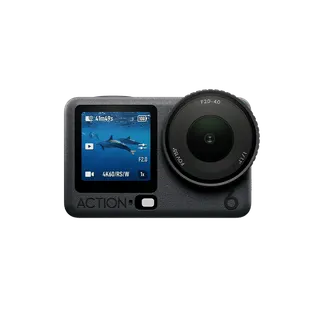
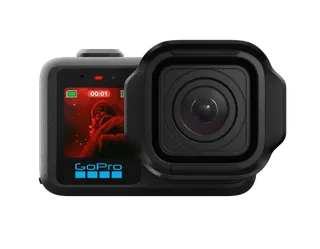
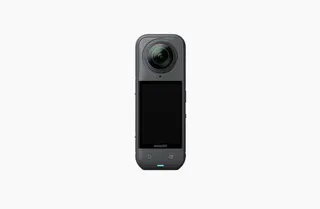
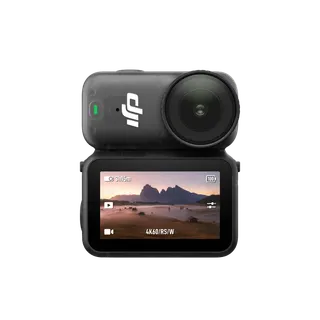
The short answer: the DJI Osmo Action 6 is the best action camera for most people. The GoPro MISSION 1 PRO shoots the best footage, if you'll pay for it. The Insta360 X5 is the 360 camera to buy, and the DJI Osmo Nano is the best of the tiny ones.
Three kinds of action camera
Before any spec, decide which kind you want, because the three kinds don't compete on the same terms.
- Standard (8 cameras): the classic brick with a front and rear screen. The Osmo Action 6, Action 5 Pro and Action 4, the MISSION 1 PRO, HERO13 Black, HERO12 Black and HERO (2024), and the Insta360 Ace Pro 2. Point it, press record, done.
- 360 (6 cameras): two back-to-back lenses record everything around you, and you pick the framing later in the app. The Insta360 X6, X5, X4 Air and X4, the DJI Osmo 360 and the GoPro MAX2. You can never miss the shot, and the selfie stick disappears from the footage.
- Mini (3 cameras): the DJI Osmo Nano and the Insta360 GO Ultra and GO 3S. A thumb-size magnetic camera that clips to your chest or cap and docks into a screen unit to charge and frame.
Slopsheets says: If you can't decide between a standard camera and a 360, ask whether you want to edit. A 360 camera rewards an hour in the app. A standard camera gives you a usable clip the moment you stop recording.
Video resolution: what the "8K" actually means
Here's how the 17 split by maximum video resolution, from each maker's spec sheet:
- 8K from one lens (3 cameras): MISSION 1 PRO, Osmo Action 6 and Ace Pro 2, all at 7680×4320. The MISSION 1 PRO runs it at 60fps, the other two top out at 30fps. The Action 6 picked up 8K in a firmware update after launch; at release it topped out at 4K.
- 8K 360 (6): all six 360 cameras record 7680×3840 across the full sphere.
- 5.3K (2): the HERO13 and HERO12 Black.
- 4K (6): the Action 5 Pro and Action 4 (both up to 3840×2880 in 4:3), the Osmo Nano, the GO Ultra, the GO 3S and the HERO (2024).
8K on a 360 camera, so it must out-resolve a 4K action camera twice over.
Those pixels are spread around a whole sphere. The flat clip you export after reframing uses only a slice of them, so it looks softer than a good single-lens 4K camera.
So compare 360 cameras with each other and standard cameras with each other, and skip the cross-type resolution math.
Sensor size: the spec that decides night footage
Resolution sells the camera, but the sensor decides how it looks once the light goes. Reviewers keep landing on the same finding: the bigger-sensor DJI and Insta360 cameras beat GoPro's HERO line in the dark. Engadget's review of the Osmo Action 6 headlined it as the action camera that excels in low light, and TechRadar's X5 review said the bigger sensors make it shine in the dark.
Biggest to smallest:
- 1-inch: GoPro MISSION 1 PRO, the largest sensor on the sheet.
- 1/1.1-inch: Osmo Action 6, plus one per lens on the Osmo 360 and Insta360 X6.
- 1/1.28 to 1/1.3-inch: Insta360 GO Ultra and X5 (per lens), Osmo Action 5 Pro, Action 4, Osmo Nano and Ace Pro 2.
- 1/1.8 to 1/2-inch: Insta360 X4 Air (per lens), HERO13 and HERO12 Black, Insta360 X4 (per lens).
- 1/2.3-inch and smaller: GO 3S, MAX2 (per lens) and HERO (2024) at 1/2.8-inch.
The Action 6 adds the first variable aperture on an action camera, f/2.0 to f/4.0, which TechRadar and Engadget both credited for its night footage. The MISSION 1 PRO goes the other way: a full 1-inch sensor, which Digital Camera World said puts GoPro back on top for image quality.
What the box won't tell you: the HERO13 Black still uses the same 1/1.9-inch sensor as the HERO12. TechRadar found its low-light video behind Insta360's. If you film after sunset, a GoPro HERO is the wrong pick.
Waterproofing: how deep without a case
Every depth here is the maker's rating for the bare camera, no dive housing. This is the number that matters on a kayak, at the pool or in the surf.
The rest of the field:
- 18 m: Osmo Action 4
- 15 m: Insta360 X5 and X4 Air
- 12 m: Insta360 Ace Pro 2
- 10 m: HERO13 and HERO12 Black, Osmo 360, Insta360 X4, Osmo Nano, GO Ultra and GO 3S
- 5 m: GoPro MAX2 and HERO (2024)
Two catches hide in the mini cameras. The Nano, GO Ultra and GO 3S ratings cover only the camera module. Their screen docks and pods aren't waterproof, so you lose your viewfinder underwater. And DJI rates the Osmo 360 for 10 m bare but doesn't recommend long underwater use without its housing.
The catch: a 360 camera's bulging lenses are the first thing to scratch on rocks or sand. If you're diving, budget for lens guards, which most makers sell separately.
Battery: why the tiny cameras run out first
We list battery capacity in mAh rather than runtime, because every brand measures minutes in a different mode and at a different temperature. Capacity is the one number they all state the same way.
The 360 cameras carry the biggest cells: the X6 at 2,600 mAh, the X5 at 2,400 and the X4 at 2,290. Among standard cameras, the MISSION 1 PRO has 2,150 mAh and the Osmo Action 6 and 5 Pro have 1,950. The bigger-sensor DJIs stretch it furthest: in Engadget's testing the Action 5 Pro ran past two hours at 4K60 and about four at 1080p.
That's the price of a 52 g camera. Engadget measured about 35 minutes of 4K60 from the Nano's camera module alone, and saw it overheat after about 20 minutes of 4K50 or faster without the dock.
Weight: what you'll actually wear
Weight matters most on a helmet, a chest mount or a long hike. Lightest to heaviest:
- Under 100 g: Insta360 GO 3S (39.1 g), DJI Osmo Nano (52 g), Insta360 GO Ultra (52.9 g), GoPro HERO (86 g)
- 140 to 160 g: Osmo Action 4 (145 g), Action 5 Pro (146 g), Action 6 (149 g), HERO12 Black (154 g), HERO13 Black (159 g)
- 160 to 190 g: Insta360 X4 Air (165 g), Osmo 360 (183 g), Ace Pro 2 (184 g)
- Over 190 g: GoPro MAX2 (195 g), Insta360 X6 (196 g), X5 (200 g), X4 (203 g), MISSION 1 PRO (207 g)
Don't overpay for: the lightest camera if you'll film for more than a few minutes at a time. The mini cameras weigh a third of a standard camera because they carry a quarter of the battery.
The HERO (2024) is the odd one: light and cheap, but Tom's Guide found it too compromised for an easy recommendation, with no in-camera stabilization and poor microphones.
Which action camera should you buy?
- Most people: DJI Osmo Action 6. Big sensor, variable aperture, 20 m bare, 50GB built in, and the review consensus from TechRadar, Engadget and Digital Camera World puts it at or near the top.
- Best footage, price no object: GoPro MISSION 1 PRO, with a 1-inch sensor and 8K60.
- On a budget: the Osmo Action 5 Pro now that it's discounted, or the Action 4 if low light matters more than resolution.
- You already own GoPro mounts: HERO13 Black. Its accessory range is still the biggest.
- Vlogging: Insta360 Ace Pro 2, for its flip-up screen and low-light processing.
- 360 video: Insta360 X5. The X6 is better on paper, but TechRadar called its price hard to swallow and found its app crash-prone at launch.
- Hands-free POV clips: DJI Osmo Nano, which Engadget found sharper than the GO Ultra for less money.
FAQ
Do I need a waterproof case for my action camera?
Not for swimming, surfing or kayaking with any camera rated 10 m or more. Only the MAX2 and HERO (2024) stop at 5 m. Use the maker's dive housing for scuba, for long sessions underwater, and for the Osmo 360, which DJI doesn't recommend using underwater for long without one.
Is a 360 camera better than a regular action camera?
Only for some people. A 360 camera never misses the moment and hides its own selfie stick, but you have to reframe every clip in the app, and the result looks softer than a good single-lens camera. If you want to press record and share, buy a standard camera.
Does 8K matter on an action camera?
Mostly as cropping room. Shooting 8K on a single-lens camera like the Action 6 or MISSION 1 PRO lets you zoom or reframe in edit and still export sharp 4K. Most people will still watch the result on a phone, where sensor size and stabilization show more than resolution.
Sources / further reading
- Engadget: DJI Osmo Action 6 review
- TechRadar: DJI Osmo Action 6 review
- Digital Camera World: DJI Osmo Action 6 review
- Digital Camera World: GoPro Mission 1 Pro review
- TechRadar: GoPro Hero 13 Black review
- Tom's Guide: GoPro Hero (2024) review
- Engadget: DJI Osmo Action 5 Pro review
- Digital Camera World: Insta360 Ace Pro 2 review
- TechRadar: Insta360 X6 review
- TechRadar: Insta360 X5 review
- Cycling Weekly: GoPro MAX2 review
- Engadget: DJI Osmo 360 review
- Engadget: DJI Osmo Nano review
- TechRadar: Insta360 GO Ultra review