

Every electric toothbrush on the shelf promises "up to 10x more plaque removal" against some unnamed manual brush, which tells you nothing about which electric brush to buy. So we skipped the box claims and lined up 18 brushes on the things you can actually check: whether it warns you when you scrub too hard, how long a charge lasts, how many modes it has (and whether that matters), how it charges, and whether it carries the American Dental Association's Seal of Acceptance. The field covers seven Oral-B models, eight Philips Sonicares, and three others from AquaSonic, Bitvae and Waterpik. The picks and price buttons sit above this article, and the full sortable sheet has every brush side by side.
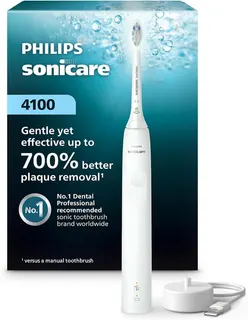
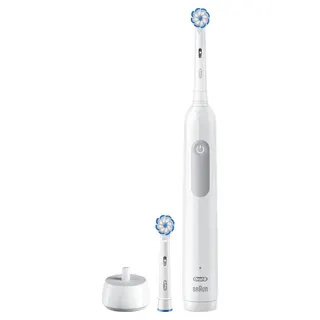
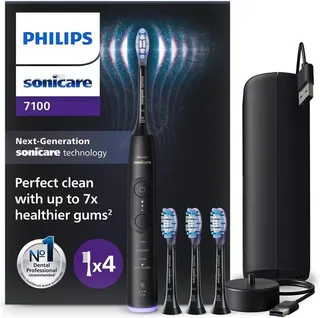
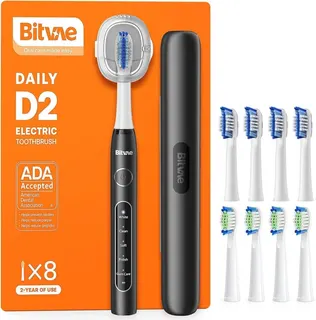
The short answer: the Philips Sonicare 4100 is the best electric toothbrush for most people, the Oral-B Pro 1000 is the best cheap oscillating brush, the Philips Sonicare 7100 is the upgrade worth paying for, and the Bitvae D2 is the budget brush that ships with years of spare heads.
Sonic or oscillating-rotating: the only real fork in the road
Every brush here works one of two ways. Oral-B's seven models use a small round head that spins back and forth (oscillating-rotating). The other eleven, every Sonicare plus AquaSonic, Bitvae and Waterpik, use a conventional brush-shaped head that vibrates side to side at high speed (sonic).
Reviewers don't crown one technology. TechRadar's best-overall pick is a Sonicare (the 7100), Expert Reviews names the Oral-B iO4 its best rotary brush, and Electric Teeth recommends models from both camps. What differs is the feel. Oral-B's round head cups each tooth and is louder and buzzier on the older Pro handles. A sonic head feels more like a manual brush that's had three espressos.
Slopsheets says: Pick the feel, not the tribe. If you've hated one type before, buy the other. Both clean well when you hold them still and let them work.
Pressure sensors: the feature that actually protects your gums
Pressing too hard can wear enamel and irritate gums, and a powered brush doesn't need your elbow grease anyway. A pressure sensor is the one spec that changes how you brush rather than how the box looks.
Not all sensors are equal. The Oral-B Pro 1000 just stops pulsing when you press too hard, with no light. The iO Series 2 lights red on overpressure but gives no "you're doing fine" signal. From the iO Series 3 up, Oral-B uses a light ring that glows red for too hard, green for right and white for too light, and Electric Teeth's iO5 review points out that it warns about too little pressure as well as too much. Sonicare's sensors mostly talk through the handle: the ExpertClean 7500, for one, vibrates a warning with no light at all, while Electric Teeth calls out the Prestige 9900's sensor as one you can see.
Pay up only if: You know you're a scrubber. Then any sensor beats none, and Oral-B's light ring (iO3 and up) is the easiest to read mid-brush. It's worth more than any app.
Cleaning modes: more buttons, same teeth
Mode count ranges from one (the Sonicare 4100 and 1100) to seven (the Oral-B iO Series 9). Most of the extra modes are the same motion at a different speed with a new name: Whitening, Gum Care, Sensitive, Polish, Deep Clean+.
Seven cleaning modes means seven times the cleaning options, so the flagship must clean better.
Electric Teeth found the iO3, with three modes, cleans just as well as the seven-mode iO9 at roughly half the price.
The one mode worth having if your gums are touchy is a Sensitive or gentler setting, and nearly everything above the entry tier has one. The Sonicare 4100 gets around its single mode with two intensity settings, which covers most people. Reviewers of the ProtectiveClean 5300 and 6100 make the same point about Sonicare's own ladder: the extra modes don't clean better than the 4100.
Don't overpay for: Mode count. If a brush has a gentle setting and a normal one, you have the modes you'll actually use.
Battery life: why "two weeks" is everyone's answer
Thirteen of the 18 brushes claim the same thing: about 14 days of brushing twice a day for two minutes. The outliers are where it gets interesting. The Oral-B iO Series 2 and AquaSonic Black Series claim four weeks, the Sonicare 7100 claims three, and Oral-B publishes no figure at all for the Pro 1000 (Electric Teeth measured about 10 days).
Then there's the Bitvae D2, which claims 60 days. That's the biggest number on the sheet and the one that held up worst under testing.
Claims can also undersell. Electric Teeth got about 41 days from the Sonicare 7100, 39 from the AquaSonic Black Series and 27 from the ExpertClean 7500. On the flip side, it usually saw about 12 days from the iO Series 9 against Oral-B's 14-day claim. The sheet records the maker's number and footnotes the tested ones where we found them.
What the box won't tell you: Any brush here lasts a long weekend trip. Battery only decides things if you travel for weeks at a time and hate packing chargers.
Charging: stands, cases and the missing plug
Most brushes sit on a plug-in charging stand. The details that matter:
- Charging travel cases come with four brushes: the iO Series 9, Sonicare 7100, ExpertClean 7500 and Prestige 9900 (the 9900's charges over USB-C). If you travel often, this is the feature that justifies a mid-range or premium brush.
- No wall plug in the box: the Sonicare 4100 and 1100 ship with a USB charging stand and no adapter, so you'll need a phone charger in the bathroom.
- Slow standard iO charger: Electric Teeth and Tech Advisor both note the stand that comes with the iO3, iO4 and iO5 takes up to about 16 hours for a full charge. Only the iO9's fast charger gets it done in about three hours.
- Waterpik Sonic-Fusion 2.0 charges in its flosser base, which also means the whole thing lives on your counter.
The ADA Seal: why no Sonicare has one
The ADA Seal of Acceptance means a company sent the ADA evidence of safety and effectiveness and the ADA signed off. It's a voluntary program, so not having it isn't proof of anything bad.
Still, the split is stark. All seven Oral-B brushes are covered by ADA seal listings (the iO Series is listed as a line), and so are the AquaSonic Black Series, Bitvae D2 and Waterpik Sonic-Fusion. None of the eight Sonicare toothbrushes turned up in the ADA's product search when we checked in October 2026; the only Philips product listed was the Sonicare Power Flosser.
The catch: Read the ADA column as "this company chose to go through the ADA," not as a cleaning score. Sonicare's absence is a paperwork choice, and reviewers rate its cleaning as highly as Oral-B's.
Which brush for which mouth
- Most people: Philips Sonicare 4100. It has the pressure sensor, a timer with 30-second pacing and a head-replacement reminder, and Electric Teeth calls it the best Sonicare most people can buy.
- Oral-B fans on a budget: Oral-B Pro 1000. Cheap heads, ADA Seal and a pressure cutoff. Live with the shorter battery.
- Want the round head but quieter: Oral-B iO Series 3. It's the iO clean and light-ring sensor without paying for app features.
- Frequent travelers: Philips Sonicare 7100, for the charging case and a battery that tested far beyond its claim.
- Kids, guests or a first electric brush: Bitvae D2 or AquaSonic Black Series, which both ship with eight heads. Neither has a pressure sensor.
- Skip unless you want the tech: the iO Series 9, DiamondClean 9000 and Prestige 9900. They clean beautifully, but reviewers consistently say the cheaper models clean just as well.
FAQ
Is a more expensive electric toothbrush better at cleaning? Not in any way reviewers could measure. Electric Teeth found the iO3 cleans as well as the iO9, reviewers of Sonicare's ProtectiveClean line say the cheaper 4100 cleans as well, and Electric Teeth calls the Prestige 9900 more than most people need. Above the entry tier you're paying for apps, cases and finish.
Do I need the app? Probably not. TechRadar and Live Science both found the DiamondClean 9000's app added little. Electric Teeth found the iO9's position tracking wasn't always accurate. Tech Advisor and Expert Reviews rated the Genius X's tracking the most accurate of those they tried, but it sits on an older handle.
How often should I replace the brush head? The ADA's general advice is every three to four months, or sooner if the bristles fray. That's why the eight-head boxes from Bitvae and AquaSonic are such good value, and why the higher cost of iO and Sonicare BrushSync heads adds up over the years.
Sources / further reading
- Electric Teeth: Best electric toothbrush 2026
- TechRadar: Best electric toothbrush 2026
- Expert Reviews: Best electric toothbrushes 2026
- Electric Teeth: Oral-B Electric Toothbrush Comparison (chart)
- Electric Teeth: Oral-B iO3 review
- Electric Teeth: Oral-B iO5 review
- Electric Teeth: Oral-B Pro 1000 review
- Tech Advisor: Oral-B iO Series 4 review
- Expert Reviews: Oral-B Genius X review
- Electric Teeth: Philips Sonicare ProtectiveClean 6100 review
- Electric Teeth: Philips Sonicare ExpertClean review
- Live Science: Philips Sonicare DiamondClean 9000 review
- Electric Teeth: AquaSonic Black Series / Vibe review
- Electric Teeth: Waterpik Sonic-Fusion 2.0 review
- ADA Seal of Acceptance: Oral-B iO Series listing