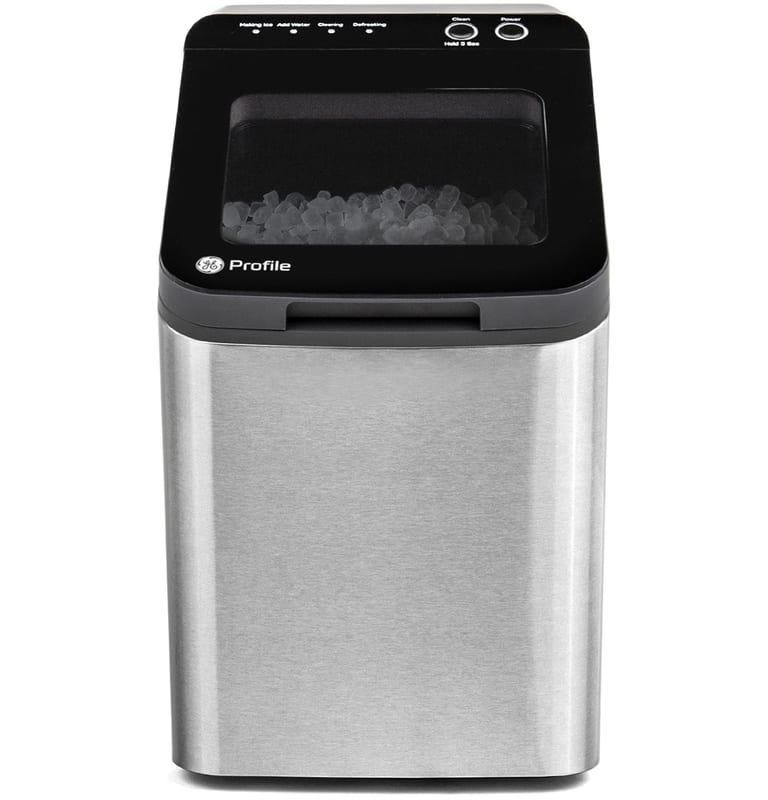
Sixteen ice machines, and every single box leads with the same spec: pounds per day. Twenty-six. Thirty-three. Forty-four. What the box is betting you won't notice is that none of these machines can hold more than about five pounds of ice at any one moment, and most hold less than two. The pounds-per-day figure is a speed, not an amount. It describes a little factory that runs all day dropping ice into an unrefrigerated basket, where it melts, drains back into the reservoir, and gets frozen again. The sortable table and the check-price buttons live above this article; down here we explain which numbers describe ice you will actually put in a glass.
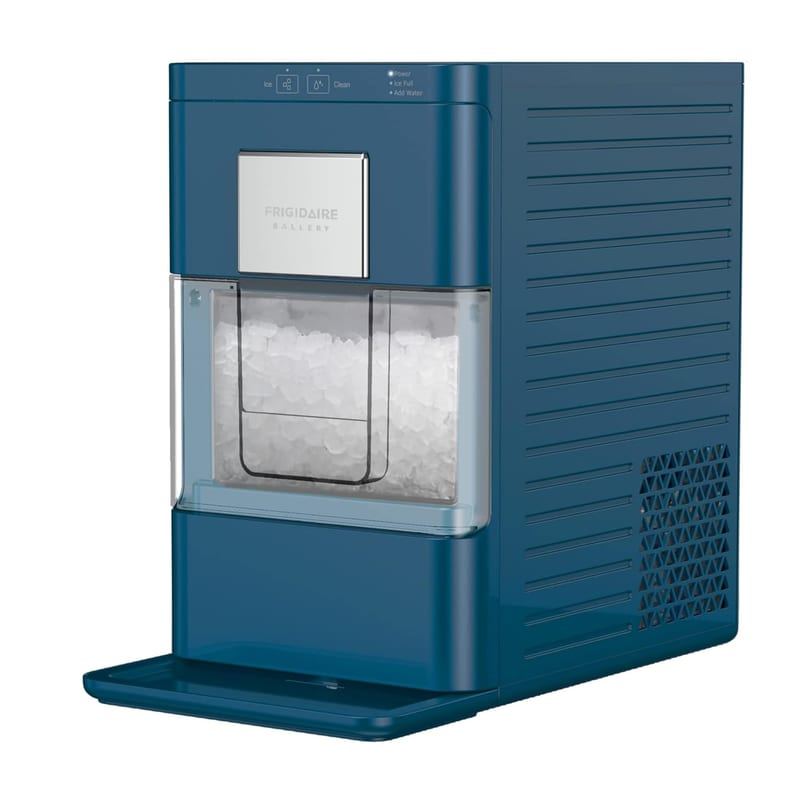
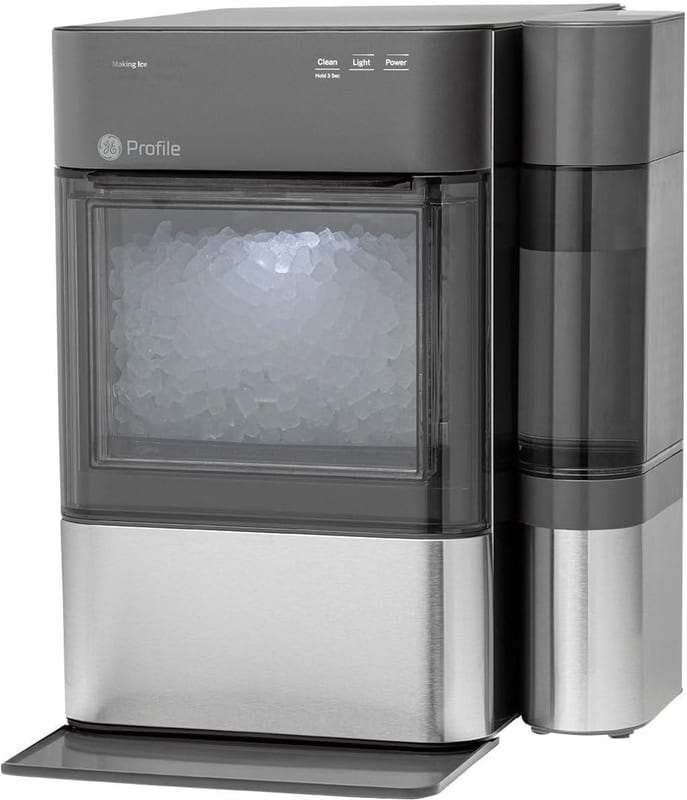
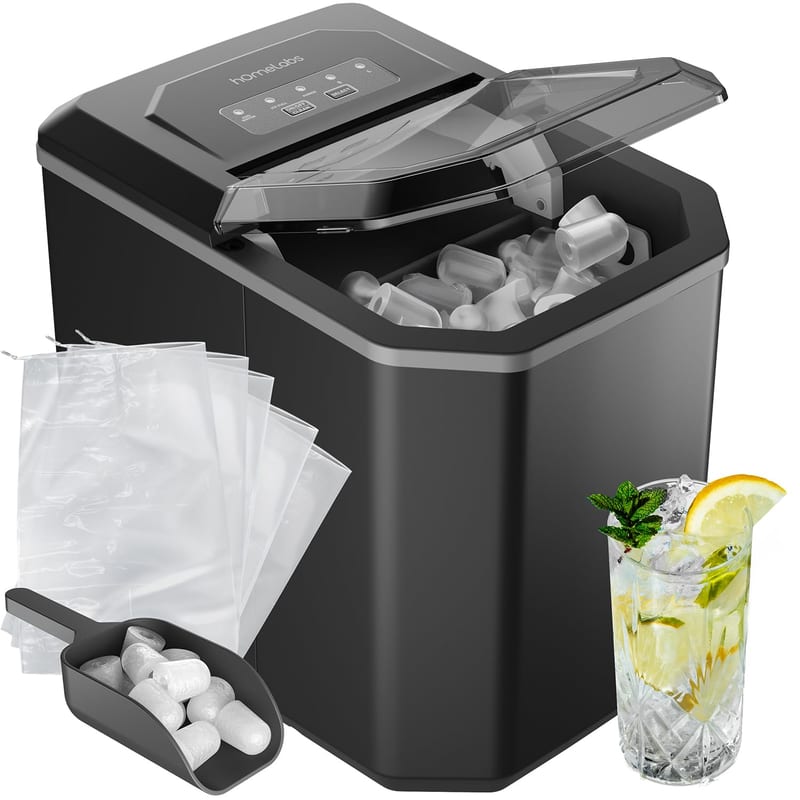
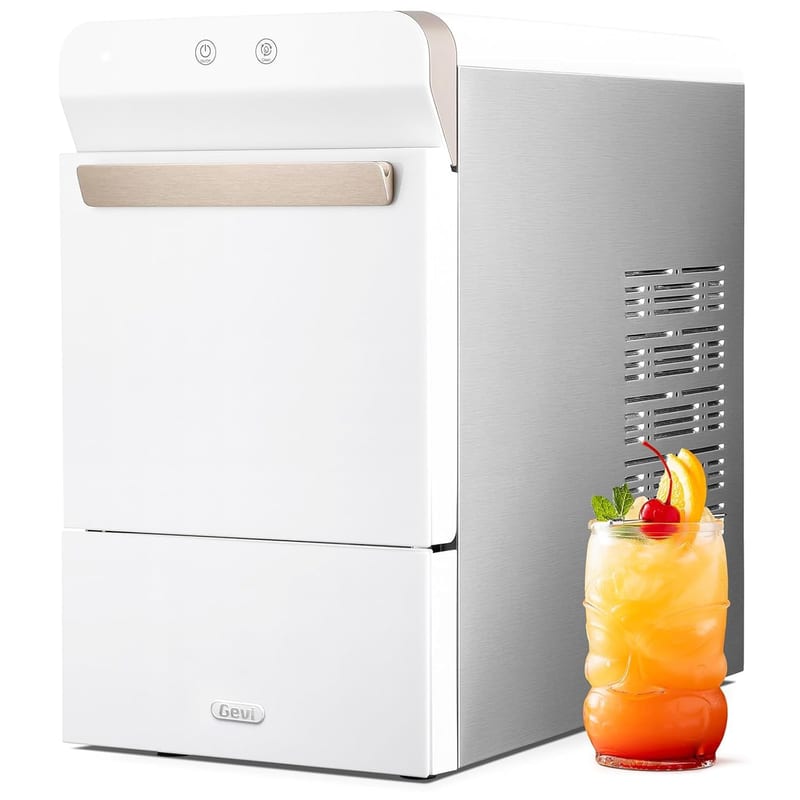
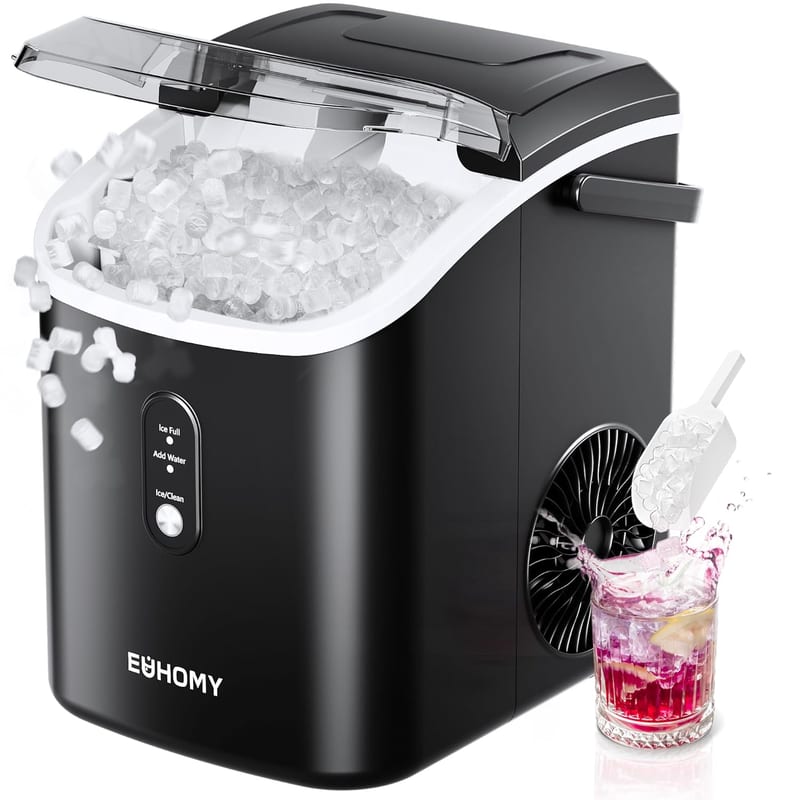
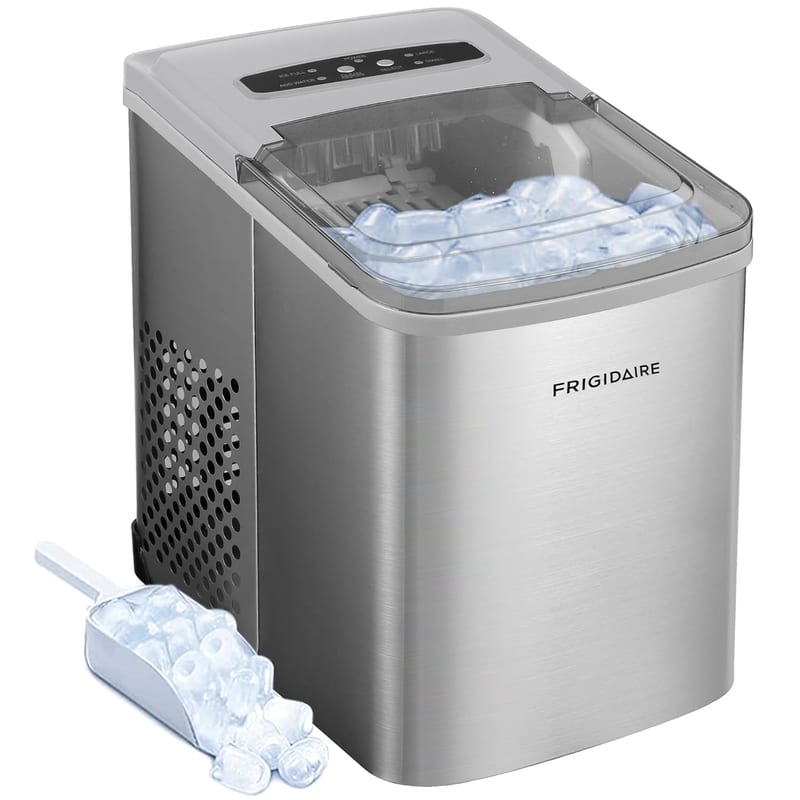
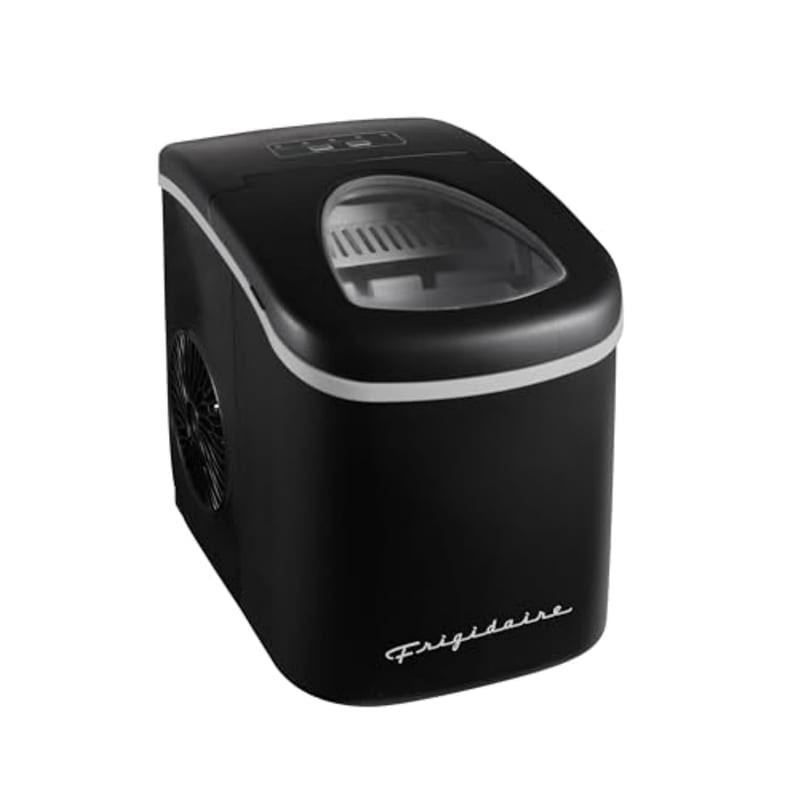
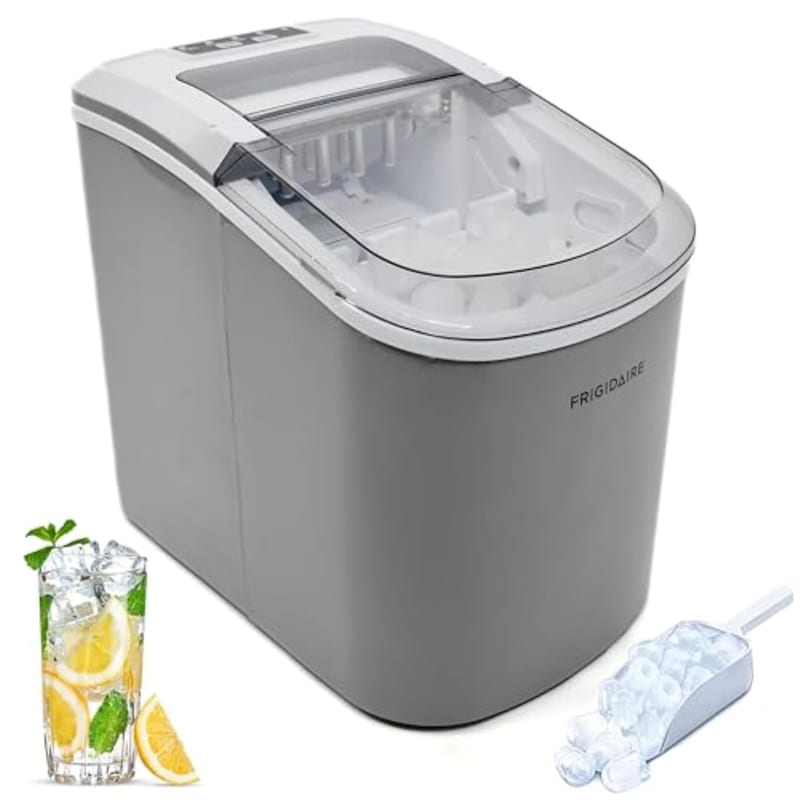
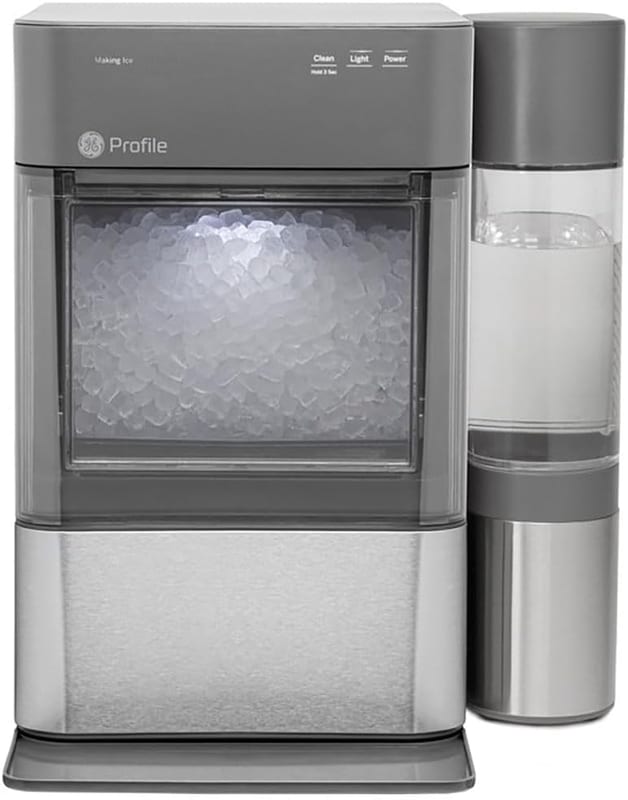
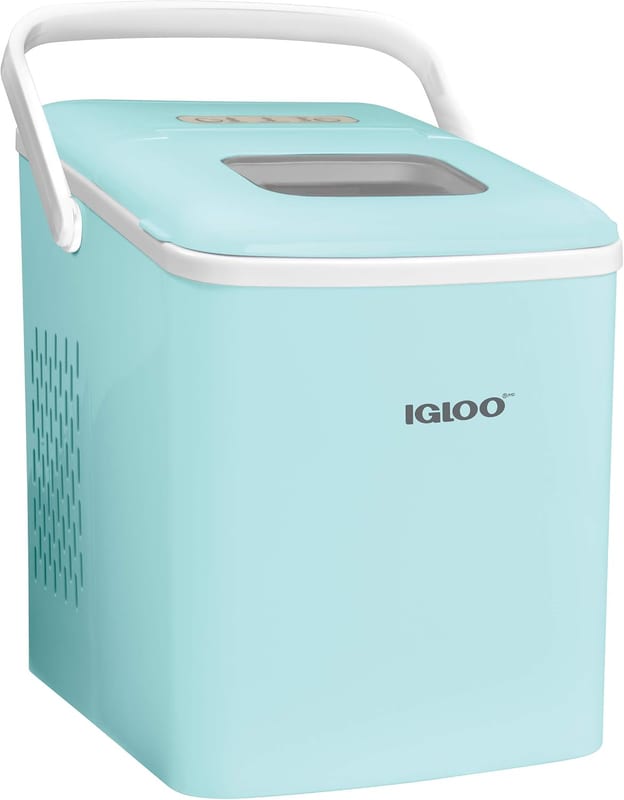
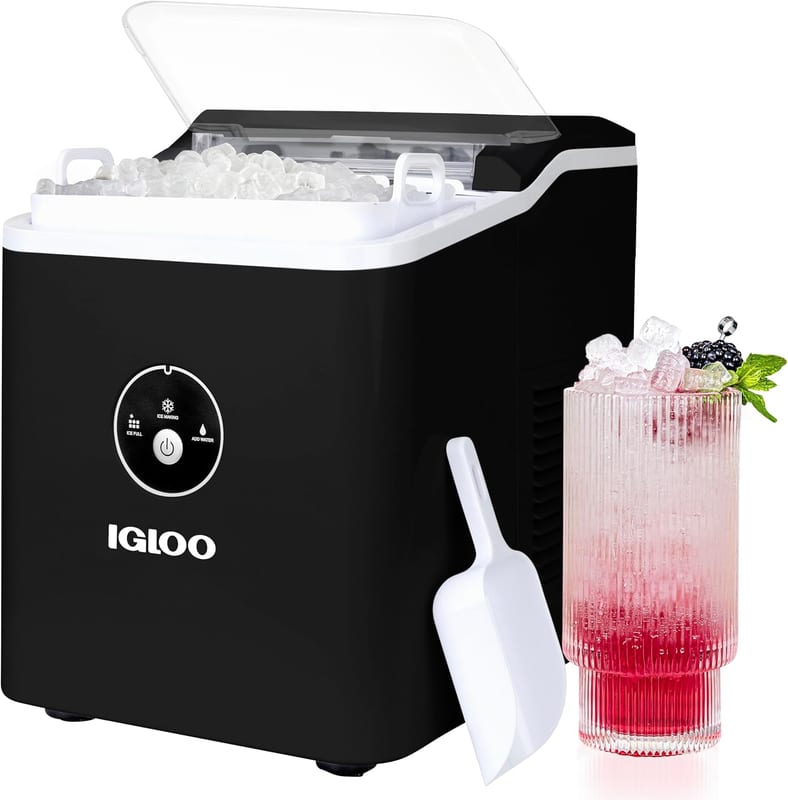
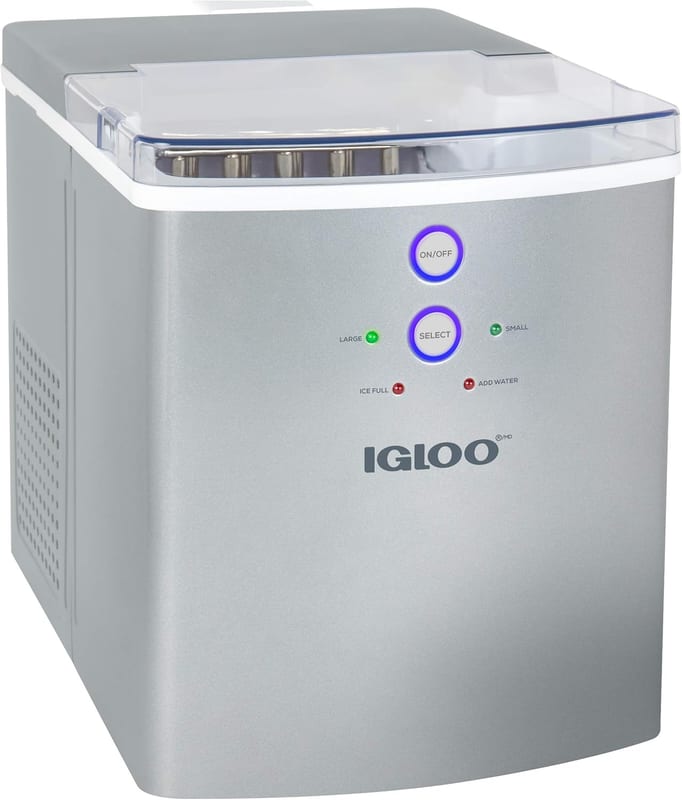
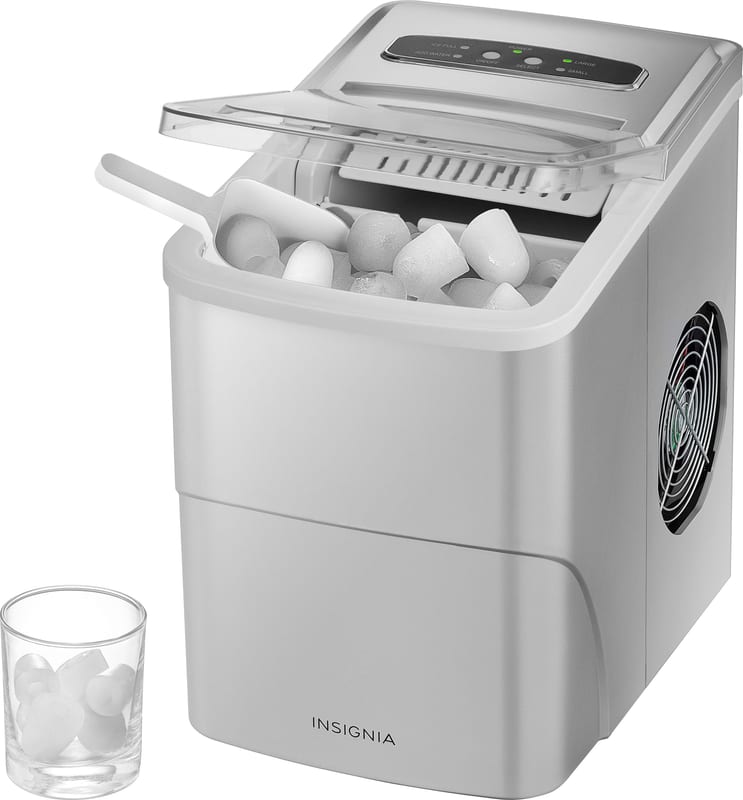
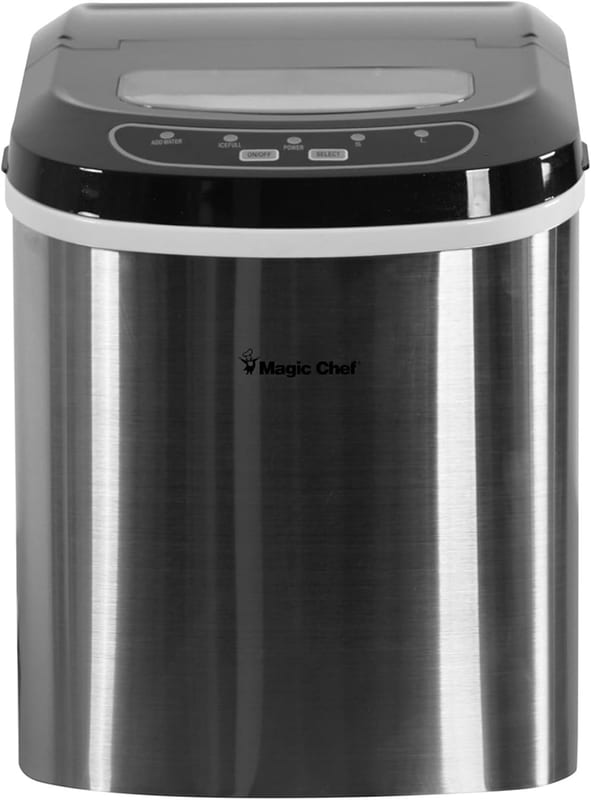
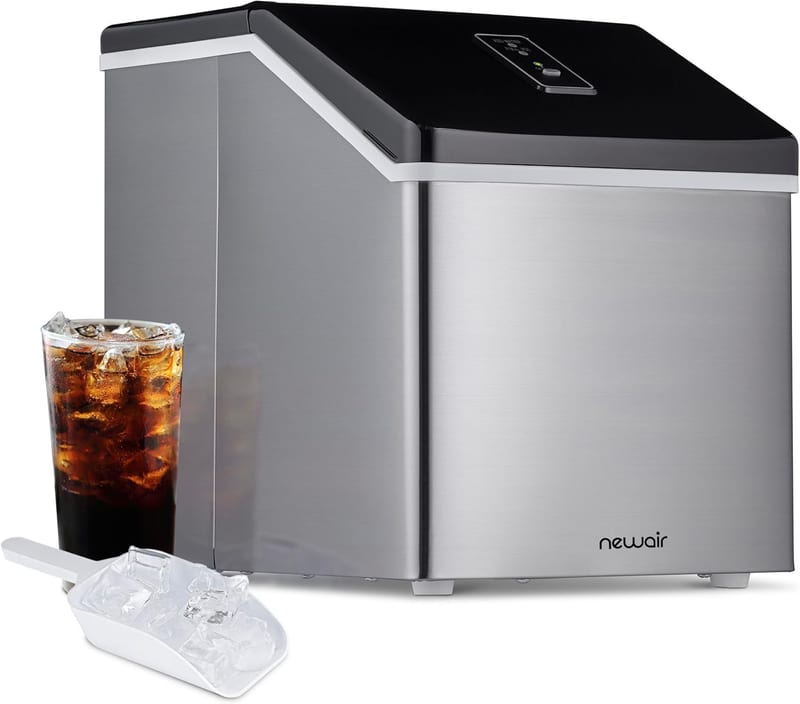
The lineup: seven nugget machines (GE Profile's original Opal 1.0, the benchmark Opal 2.0, and the big-tank Opal 2.0 XL, plus the Frigidaire Gallery EFIC255, the insulated-bin Gevi Household V2.0, the best-selling budget EUHOMY 34 lb, and the Igloo 30 lb). Eight bullet machines (Frigidaire's famous EFIC189, the stainless EFIC117-SS, and the retro EFIC128, Igloo's aqua retro 26 lb self-cleaning and larger ICEB33SL, the venerable Magic Chef 27 lb, the warrantied hOmeLabs 26 lb, and Best Buy's house-brand Insignia 26 lb). And one clear-cube outlier, the Newair ClearIce40.
Nugget, bullet, or clear: pick the ice, and the machine follows
The single most important cell in our table is the least numeric one. These three ice types come from three different freezing methods, and the method sets the price, the wait, and the texture.
Nugget ice (also sold as pebble, chewable, or "the good ice") is shaved off a chilled cylinder and compacted, which leaves it soft, porous, and pleasant to chew. It absorbs the drink around it, which is why fast-food soda and sweet tea taste different over nuggets. GE Profile invented the countertop version, and reviewers keep treating the Opal 2.0 as the reference: CNN Underscored named it the nugget machine to beat after testing, and Reviewed's lab praised the Frigidaire EFIC255 as the crisp-tasting value alternative. Nugget machines are the expensive half of this table.
Bullet ice is what the cheap half makes: hollow-tipped little torpedoes frozen around refrigerated prongs, cloudy, wet, and fast. It chills fine, melts fast, and costs a third of nugget money. Every machine here under grocery-run money is a bullet machine.
Clear cube machines freeze water in slow layers, the way a fancy cocktail bar does, which purges the cloudiness. The Newair ClearIce40 is the only one of its kind in this table, and it exists for exactly one buyer: the person who wants restaurant-clear cubes at home and will tolerate the fussiest cleaning routine here to get them.
Slopsheets says: Decide on the ice first and the budget second. Nobody who wanted chewable nugget ice was ever talked into loving bullets by a price tag, and the reverse purchase (paying nugget money when you just wanted cold drinks) is the most expensive way to discover you don't chew ice.
The pounds-per-day number is a rate, not a pile
Every output figure in our table is the manufacturer's own claim, and they cluster with suspicious neatness: 26 for the compact bullets, 30 to 38 for the nuggets, 44 for the Frigidaire EFIC255 at the top. Two honesty problems hide inside them.
First, the claims move. GE's current listings rate the Opal line at 34 to 38 pounds per day with first nuggets in about 10 minutes; earlier copy for the same hardware said 24 pounds and 20 minutes. Gevi's Amazon listing advertises 38 pounds a day while Gevi's own site rates the V2.0 at 30. Our table records the manufacturer's site figure, not the marketplace's more excitable one. When a spec can grow without the machine changing, treat it as weather, not geology.
Second, the number assumes conditions no kitchen has: cool room, constant refills, somebody emptying the bin around the clock. Owners of the Igloo ICEB33SL report that hitting anything near 33 pounds means feeding the reservoir like a tamagotchi.
What the box won't tell you: The daily number matters at the margins (a 44-pound machine refills its bin faster after a party raid than a 26-pound one), but it is a refill speed. If you are picturing a chest freezer's worth of ice by dinnertime, that is not any of these machines.
First ice: bullets in six minutes, nuggets when they feel like it
The bullet machines win the sprint, and it is not close. The Frigidaire EFIC189, EFIC128, hOmeLabs, and Insignia all claim first cubes in about 6 minutes, with the Magic Chef, EFIC117, and both Igloo bullets at 7. A syndicated Yahoo review of the EFIC189 timed it as claimed and described consistently thick, well-formed bullets, which matches its reputation as the impulse buy that actually works.
Nugget and clear machines make you wait. The EUHOMY claims 6 minutes and the Igloo nugget 8, but the fancier the machine, the longer the warm-up: 10 minutes claimed for the Opals (a figure GE used to state as 20 for the same machine, so pack patience), 15 for the Frigidaire EFIC255, the Gevi, and the Newair's first clear batch. In practice every nugget owner learns the same habit: switch it on when you start cooking, not when the glasses are already out.
The bin is the real capacity spec
Sort our table by bin storage and the whole category confesses. The compact bullets hold 1.25 to 2 pounds. The Opals and the EFIC255 hold 3. The biggest basket in the table, the Gevi's, holds 4.8. That is the entire inventory of every machine here, and in every case but one the bin is an unrefrigerated plastic basket sitting above the reservoir. Ice melts, water drains back, the machine refreezes it. It is a genuinely tidy design (nothing is wasted, and the machine never floods), but it means ice you don't use within a few hours quietly ceases to exist.
The one exception earns its price: Gevi insulates the V2.0's basket and claims 85 percent of a batch survives 12 hours, a claim The Gadgeteer's review backed with an enthusiastic long-term verdict. If your complaint with a previous machine was "the ice is always gone by evening," this is the spec that fixes it, not pounds per day.
Don't overpay for: output your bin can't hold. A 44-pound claim feeding a 3-pound basket and a 26-pound claim feeding a 2-pound basket converge on the same experience for most households: a full small basket, most of the time. Pay for output only if you empty the bin into a freezer bag as a habit.
"Self-cleaning" mostly means self-rinsing
Ten of our sixteen have a self-clean mode, and it is the most oversold checkbox in the category. What the button does is circulate water (sometimes with vinegar or citric acid you add) through the ice-making guts. Useful, and far better than nothing. What it does not do is descale the machine, dry the bin, or reach the damp corners where things grow.
Self-cleaning. Press one button and the machine takes care of itself.
The button runs a rinse cycle. Descaling, drying, and the weekly once-over are still your job, and skipping them is how an ice machine becomes a mold machine.
This is the quiet story inside the Opal's owner reviews: the machine that makes the best ice in the table is also the one with the most demanding maintenance ritual, and the loudest complaints come from owners who discovered that months of neglect had consequences you could see. Reviewed's Opal 2.0 lab notes and years of owner feedback agree on the deal: spectacular ice, in exchange for treating the cleaning cycle like a subscription you actually honor. At the other end, the Frigidaire EFIC255's one-button auto-clean is about as close to genuinely hands-off as this category gets, and the no-frills bullets (EFIC189, EFIC117, EFIC128, Magic Chef, Insignia, Igloo ICEB33SL) skip the pretense entirely: you drain them by plug and wipe them out.
The catch: Every machine here recirculates melted ice back through itself all day, which is exactly the environment scale and mildew like. Whatever you buy, the real spec is you: a weekly rinse-and-dry and a descale every few weeks. Buy the machine whose ritual you will actually perform.
App control: two machines have it, one reason to care
Exactly two machines in this table connect to Wi-Fi: the Opal 2.0 and Opal 2.0 XL, through GE's SmartHQ app. (We evaluated GoveeLife's smart nugget machine for this table and dropped it: the app story is genuinely good, but the product is too new and too thinly reviewed to clear our bar.)
The honest use case is scheduling. Nugget machines are not silent, and SmartHQ letting the Opal start an hour before you wake and sleep overnight is a real quality-of-life feature, not a gimmick. Everything else the app does, a button on the machine also does. Nothing else here connects to anything, and for machines whose entire job is "be near the sink and full of water," that is fine.
Pay up only if: the schedule matters to you. If your machine will live on a basement bar counter and run whenever, the app is a bullet point. If it lives in an open-plan kitchen ten feet from where you sleep or take calls, waking to a full bin without ever hearing the thing is the single nicest luxury in this table.
So which countertop ice maker should you buy?
- Best overall: Frigidaire Gallery EFIC255. The biggest output claim in the table, real nugget ice that Reviewed's lab liked, a true one-button self-clean, and a price that undercuts the famous machine by nearly half. It is noisier than the Opal and connects to nothing. For most kitchens, that trade is easy.
- Best if money is no object: GE Profile Opal 2.0. The reference machine: the quietest nugget maker here, UV sanitizing in the water path, app scheduling, and the ice everyone else is imitating. It demands its maintenance ritual and charges a premium, and its ice is still the one people talk about. The XL is the same machine for households that empty the tank twice a day.
- Best cheap bullet machine: hOmeLabs 26 lb. Six-minute ice, a toaster's footprint, a self-clean cycle the other budget bullets skip, and a two-year warranty in a category where "it died after 14 months" is the standard sad review. The Insignia is the same idea when it goes on sale; the EFIC189 is the default everyone's aunt already owns.
- Best at keeping ice frozen: Gevi Household V2.0. The insulated 4.8-pound basket makes it the only machine here whose evening ice was made in the morning, and the optional water-line hookup makes it the closest thing to an appliance rather than a gadget. It costs Opal-adjacent money without the Opal badge, which is the only reason it isn't the headline pick.
- The clear-ice asterisk: Newair ClearIce40. Genuinely clear cocktail cubes for a fraction of an undercounter machine's price, with the table's fussiest cleaning routine and its shakiest owner-satisfaction record. Buy it for the cubes, eyes open.
The through-line for all sixteen: the ice type decides your budget, the bin decides your experience, and the pounds-per-day number decides almost nothing. Spend your attention in that order.
Frequently asked questions
What is the difference between nugget ice and bullet ice? Nugget ice is shaved and compacted from a chilled cylinder, so it is soft, porous, chewable, and absorbs the drink around it. Bullet ice is frozen around refrigerated prongs, so it is hard, hollow, cloudy, and fast to produce. Nugget machines in this table claim 30 to 44 pounds a day and cost several times more; bullet machines claim about 26 to 33 pounds and make first ice in 6 to 7 minutes.
Why does the ice in a countertop ice maker melt? Because the storage bin is not a freezer. Every machine here except the insulated-bin Gevi V2.0 stores ice in an uninsulated or lightly insulated basket at room temperature, and melted ice drains back into the reservoir to be refrozen. Nothing is wasted, but ice you don't use within a few hours disappears. Bag it and move it to a freezer if you are stockpiling for a party.
Do countertop ice makers need a water line? No. All sixteen machines here run from a manual-fill reservoir, which is why they can sit anywhere with an outlet. The Gevi V2.0 is the exception in the good direction: it also accepts an optional water-line hookup, and the GE Opals accept side tanks that stretch the time between refills.
Are the pounds-per-day claims on ice makers real? They are manufacturer lab figures measured under favorable conditions with constant refilling and emptying. They are honest as a relative speed ranking (a 44-pound machine really does refill its bin faster than a 26-pound one) and misleading as a quantity, since no machine here stores more than 4.8 pounds at once. Some claims also drift upward over time on the same hardware, which is why our table uses the manufacturer's own site figures.
How often should you clean a countertop ice maker? More often than the marketing implies. The consistent guidance across manufacturers and owner experience: rinse and dry the reservoir and bin weekly, and descale with citric acid or vinegar every few weeks, more often with hard water. Self-clean modes circulate the solution for you but do not replace the schedule. The machines with the best ice, the nugget makers, are also the ones least forgiving of neglect.
Sources / further reading
- GE Appliances, Opal nugget ice maker lineup and specs
- GE Appliances, Opal 2.0 XL with 1-gallon side tank (XPIOX3SCSS)
- CNN Underscored, GE Profile Opal 2.0 review
- CNN Underscored, best countertop ice makers tested
- Reviewed, GE Profile Opal 2.0 lab review
- Reviewed, Frigidaire Gallery EFIC255 review
- Reviewed, the best ice machines tested
- Forbes Vetted, GE Profile Opal 2.0 review
- Forbes Vetted, Igloo countertop ice maker value review
- Frigidaire (Curtis International), EFIC255 spec page
- Frigidaire (Curtis International), EFIC189 spec page
- Frigidaire (Curtis International), EFIC128 spec page
- Yahoo, Frigidaire EFIC189 hands-on review
- Gevi Household, V2.0 countertop nugget ice maker spec page
- The Gadgeteer, Gevi Nugget Ice Maker V2.0 review
- Nostalgia Products, Igloo 26 lb self-cleaning ice maker spec page
- Newair, ClearIce40 clear ice maker spec page
- MC Appliance, Magic Chef MCIM22ST spec page