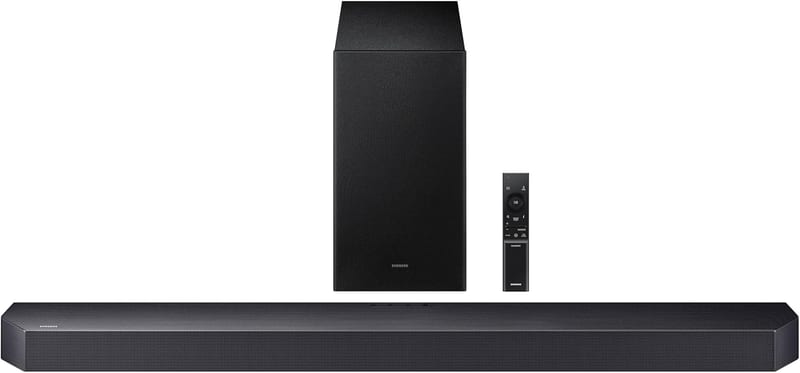
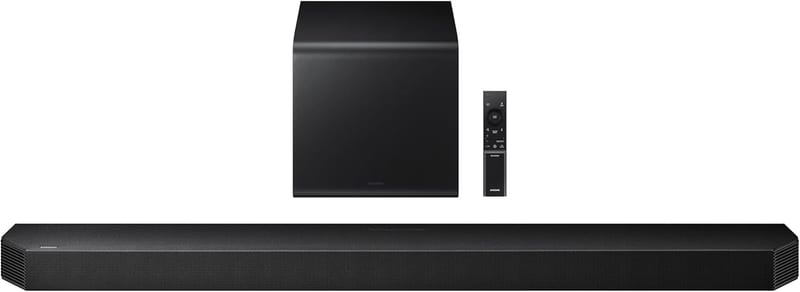
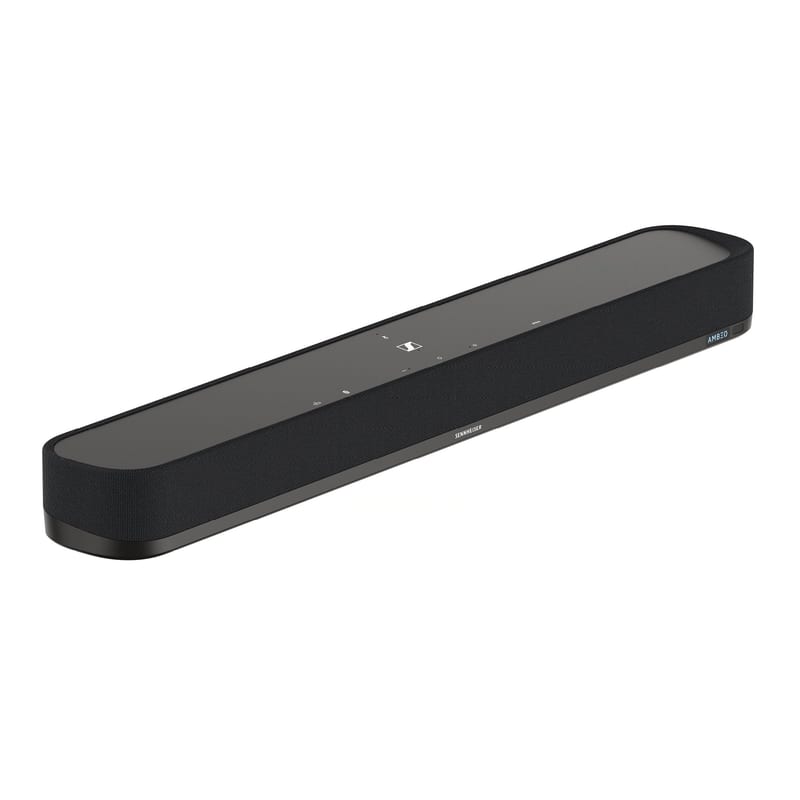
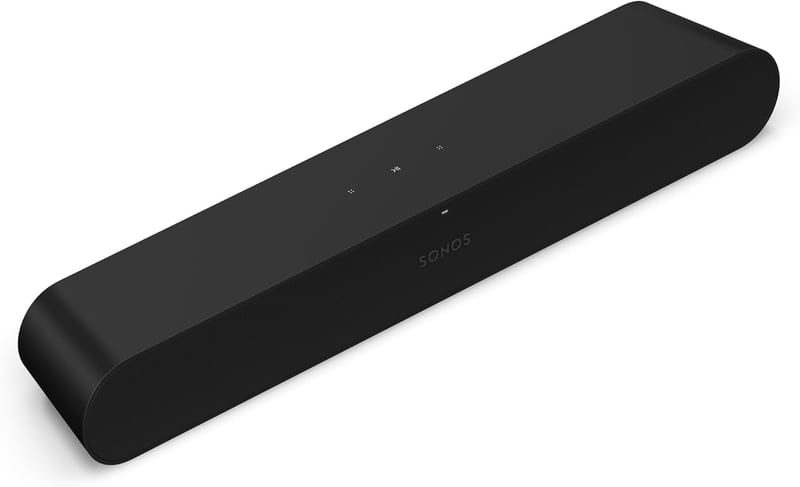
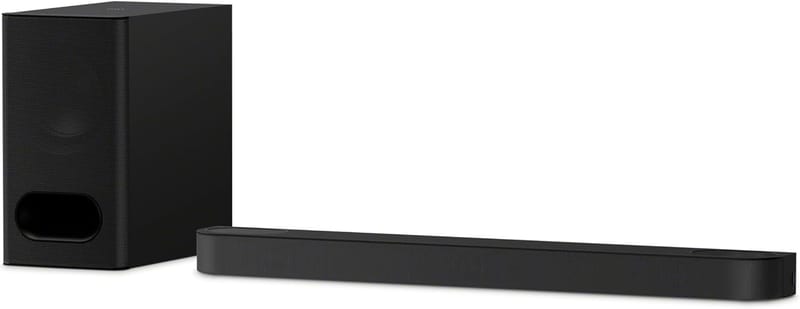
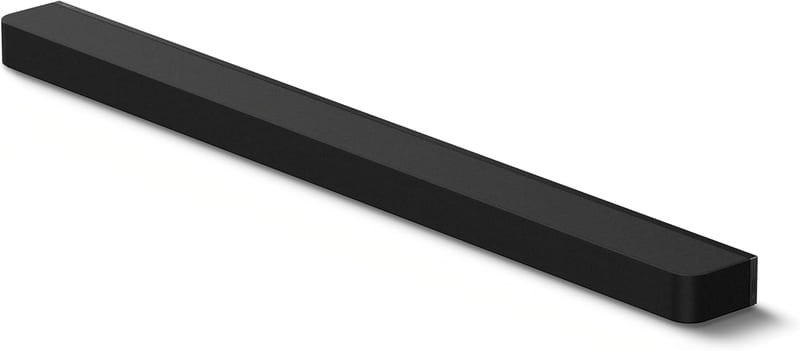

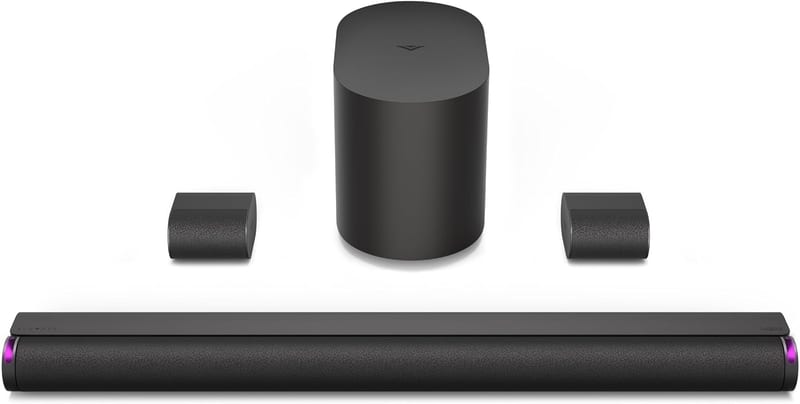
Twenty-seven soundbars, and the number on the front of the box is the least trustworthy thing about most of them. A "7.1.4" bar can be a single enclosure with no upward-firing driver in it. A "5.1" system can be one box with no subwoofer anywhere. The sortable table and the price links sit above this article. Down here I go through the columns one at a time and tell you which ones change what you hear in a real room, because installing these is what I do all week.
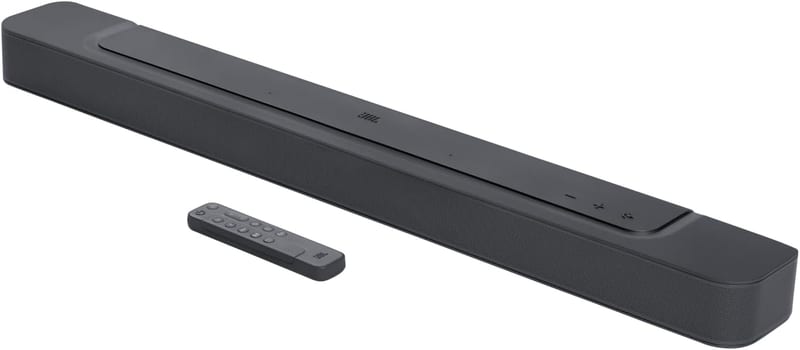
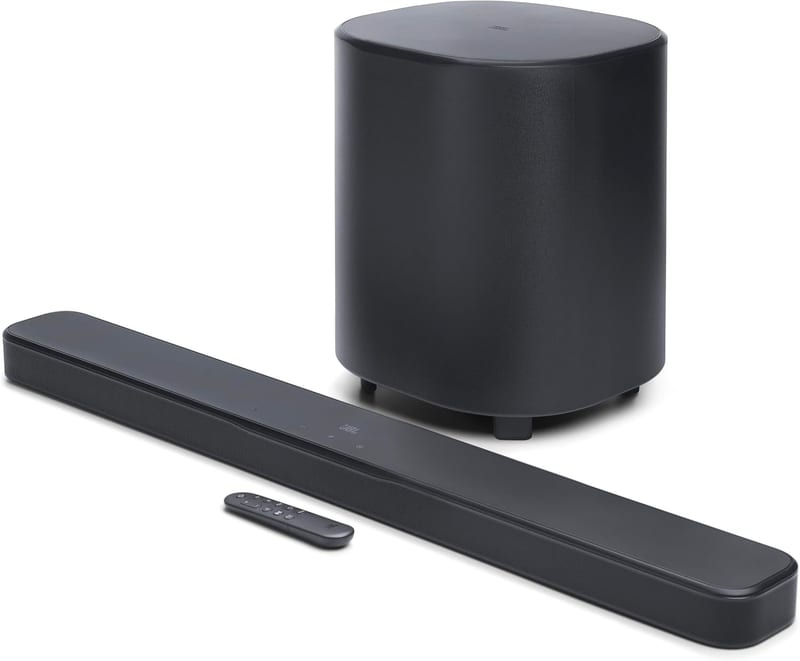
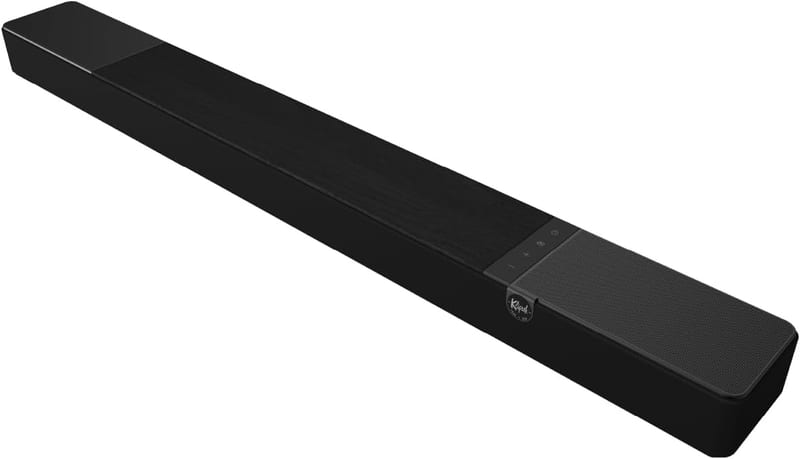
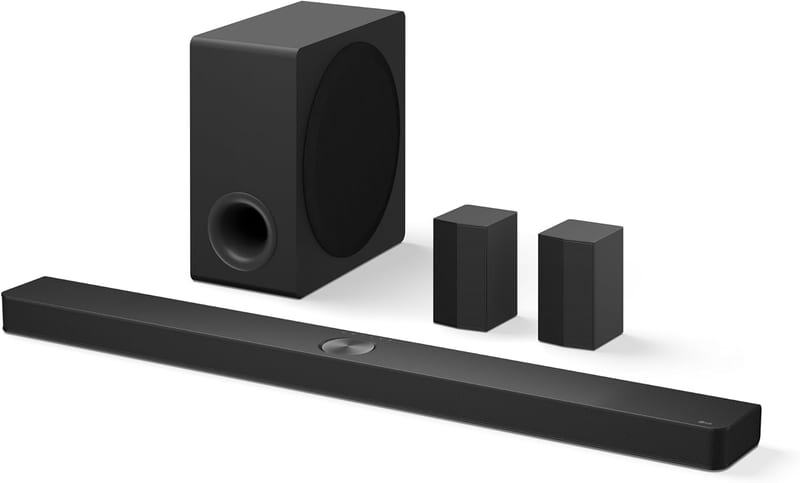
The lineup: Samsung's Q-series (HW-Q990F, HW-Q800F, HW-Q600F), Sony's BRAVIA Theater Bar 9 and Bar 6, three from Sonos (Arc Ultra, Beam Gen 2, Ray), LG's S95AR and S90TR, the Bose Smart Ultra Soundbar, three JBLs (Bar 1300XMK2, Bar 500MK2, Bar 300), two Yamahas (True X Bar 50A, SR-B40A), the Polk Audio Signa S4, the Klipsch Flexus Core 200, both Sennheiser AMBEO bars (Plus and Mini), the Denon DHT-S517, the Nakamichi Shockwafe Pro 7.1.4 SSE Max, the Hisense AX5140Q, the VIZIO Elevate SE, the TCL S45H, the Roku Streambar SE, and the Amazon Fire TV Soundbar Plus.
Channel layout: the number that means the least
Read the layout as three figures. Front channels, then subwoofers, then height channels. A 5.1.2 bar has five front and surround channels, one subwoofer and two height channels. That is the theory.
In practice manufacturers count whatever they can defend in a footnote. The spread here runs from the Sonos Ray and TCL S45H at plain 2.0 up to the Samsung HW-Q990F and JBL Bar 1300XMK2 at 11.1.4, with LG going its own way at 9.1.5 on the S95AR and 7.1.3 on the S90TR because LG puts an odd number of up-firing drivers in its bars.
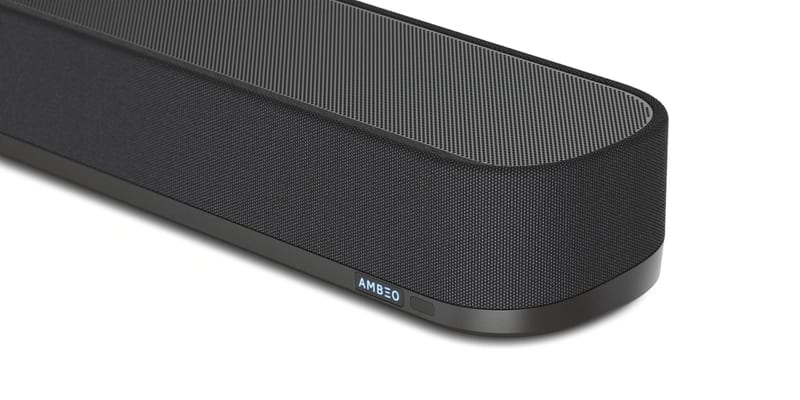
The trap sits in the middle of the table. Both Sennheiser AMBEO bars are listed as 7.1.4, and the AMBEO Mini is 27.6 inches wide with six drivers in it. There is no version of physics where six drivers in a 70cm box are eleven speakers. Sennheiser is describing the soundfield its processing aims at, not the hardware, and it says so if you read far enough down the spec sheet. Tom's Guide and TechRadar both rate these bars highly, and both are clear that the effect is synthesized.
So sort by this column to see what a brand claims, then immediately check it against the next three.
Slopsheets says: Channel layout is a shopping filter, not a spec. Use it to spot the complete systems at the top (Q990F, Bar 1300XMK2, S95AR, Nakamichi) and the honest stereo bars at the bottom (Sonos Ray, TCL S45H), then ignore everything in between until you have checked whether the height channels and the subwoofer physically exist.
Atmos height: up-firing drivers, processing, or neither
This is the column I would sort on first, and it is the one nobody prints on the front of the box.
Seventeen of these have genuine up-firing drivers: angled speakers that fire at your ceiling so the reflection arrives from above. Eight decode Dolby Atmos and then fake the height with psychoacoustic processing. Two, the Sonos Ray and the Roku Streambar SE, do not do Atmos at all and do not pretend to.
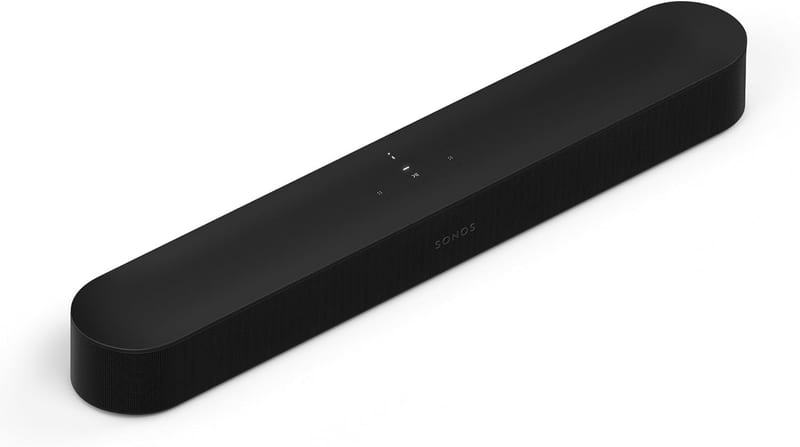
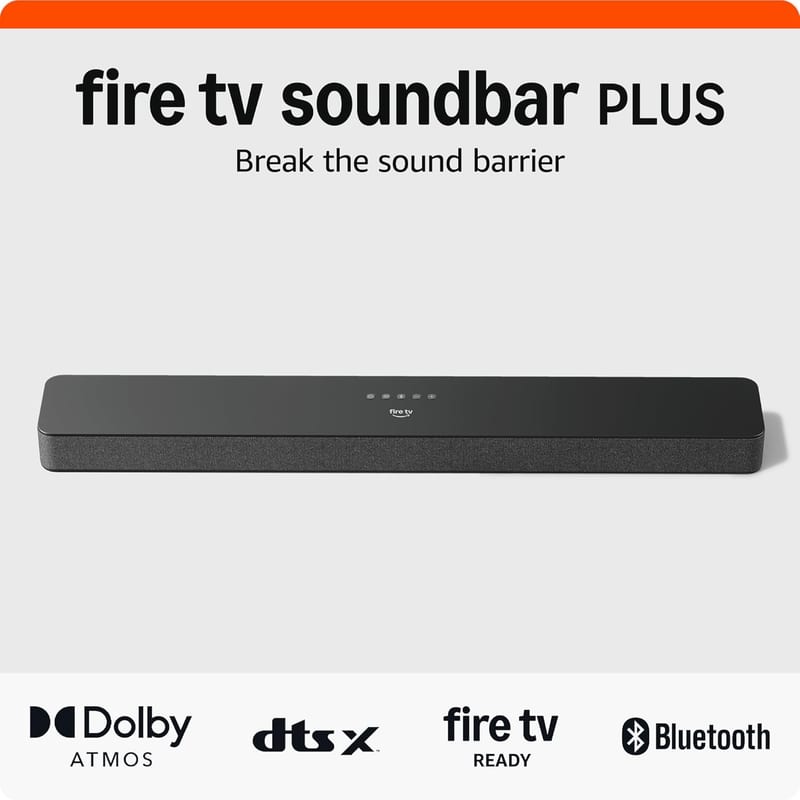
The virtual group is worth naming, because several of them are excellent bars and all of them are sold on their Atmos badge: the Sonos Beam (Gen 2), both Sennheiser AMBEO models, the JBL Bar 500MK2 and Bar 300, the Yamaha SR-B40A, the TCL S45H, and the Amazon Fire TV Soundbar Plus.
Up-firing hardware has a condition attached that virtual processing does not. Dolby's own sound bar setup guidance is blunt about it: the up-firing drivers need clear line of sight to a flat, reflective ceiling, and the effect is designed around ceilings roughly eight to ten feet high. Vaulted ceilings, exposed beams, heavy acoustic tiles, or a shelf above the TV, and you have paid for drivers that fire into nothing. In that room the processing-based bars are not the compromise, they are the correct answer. What Hi-Fi makes the same point from the listening chair: a good virtual bar beats a mediocre up-firing one.
The VIZIO Elevate SE deserves a note here because it does something no other bar in this table does. Its end speakers physically rotate to point upward when the bar detects an Atmos or DTS:X soundtrack and rotate back down for ordinary stereo. It is a gimmick that happens to be the honest solution to a real problem.
Look before you buy: Go and look at your ceiling before you spend anything. Flat drywall at normal height, buy up-firing and get the Hisense AX5140Q, the Polk Signa S4 or the Samsung HW-Q600F depending on budget. Sloped, beamed, textured, or with a shelf in the way, save the money and buy a virtual bar like the Sonos Beam or the JBL Bar 300, which spend their budget on the front channels you will actually hear.
The subwoofer: fifteen include one, twelve do not
Bass is the single biggest audible upgrade over TV speakers, and this column decides whether you get it on day one or write another check later.
A "5.1" number on the front, so a subwoofer must be coming in the carton.
Twelve of these twenty-seven ship no separate subwoofer at all. The number counts a channel, not a box you can place.
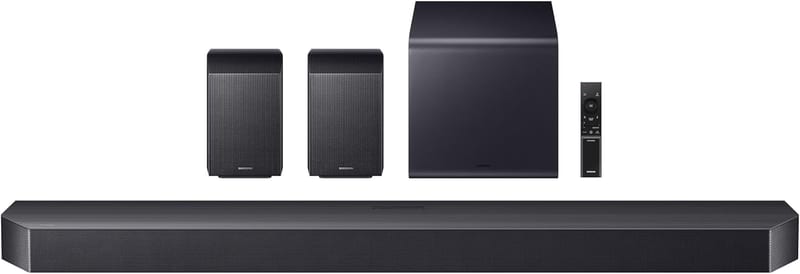
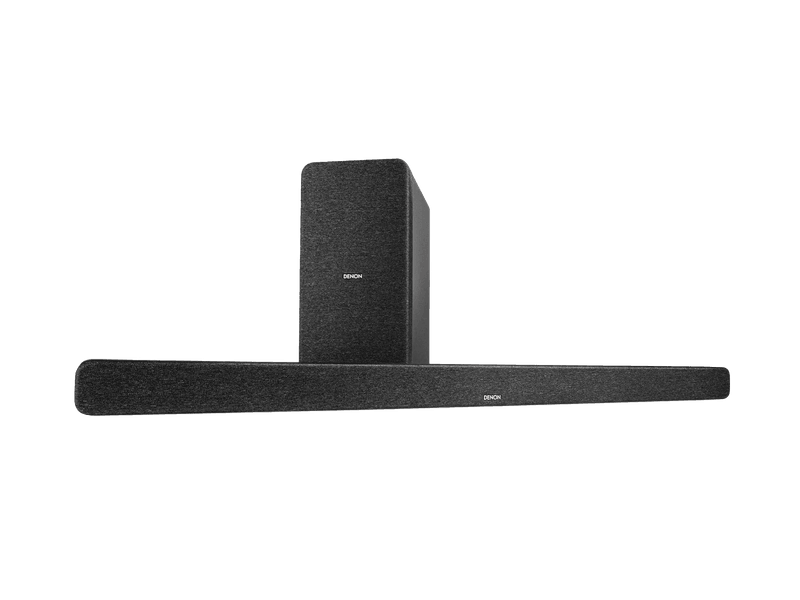
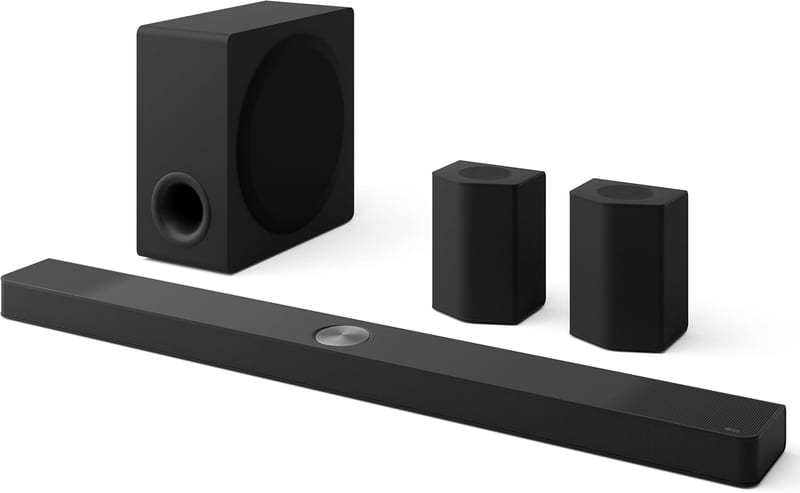
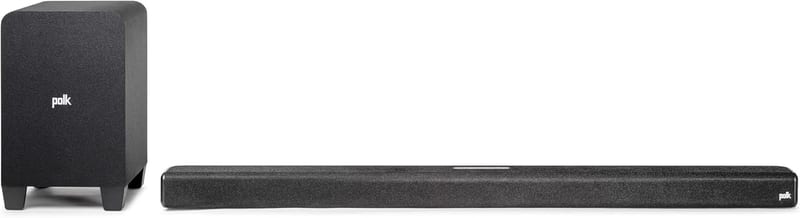
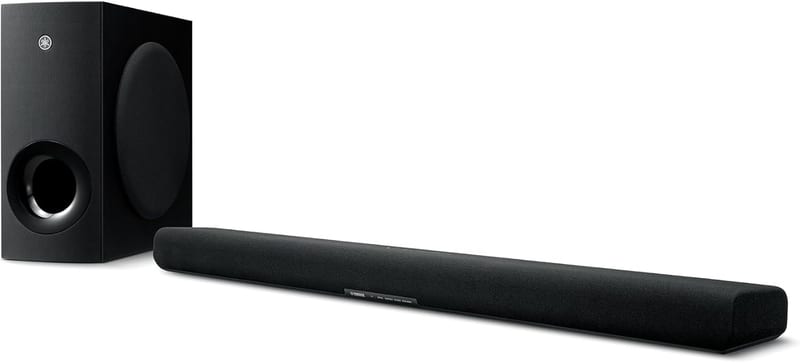
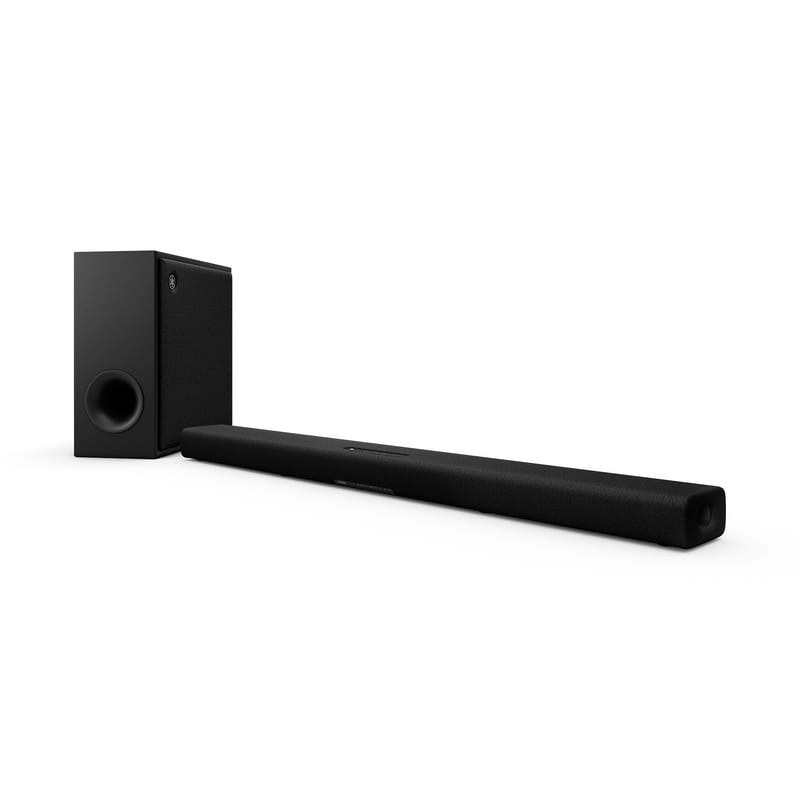
Fifteen of the twenty-seven ship a separate wireless subwoofer. Seven of those are complete systems with rears as well. The other eight are bar-plus-sub packages: the Samsung HW-Q800F and HW-Q600F, the Sony BRAVIA Theater Bar 6, the JBL Bar 500MK2, both Yamahas, the Polk Signa S4 and the Denon DHT-S517.
The twelve without a subwoofer split into two very different groups, and conflating them is the most expensive mistake in this category.
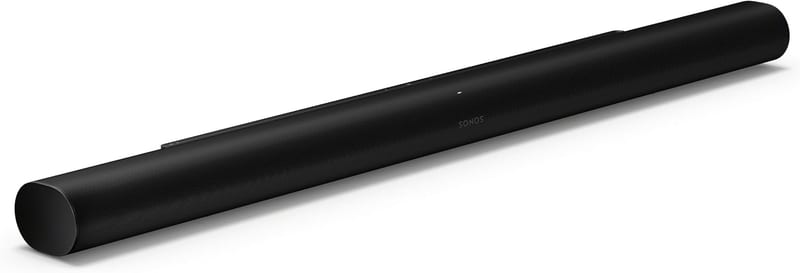
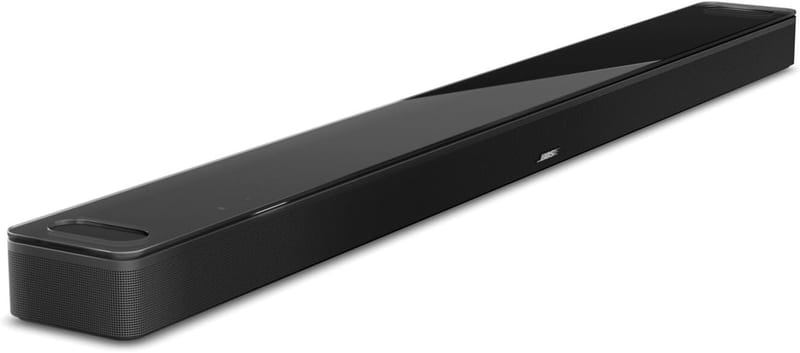
The first group is designed to work alone. The Sonos Arc Ultra carries fourteen drivers including Sonos' Sound Motion transducer, which exists specifically so the bar does not need a sub. Sennheiser quotes 38Hz from the AMBEO Plus and 43Hz from the Mini out of the bar alone. The Klipsch Flexus Core 200 has two 4-inch woofers built into it and a horn-loaded tweeter, and Klipsch sells the matching sub as an option rather than a requirement. Bose does the same with the Smart Ultra. Sony's BRAVIA Theater Bar 9 is the odd one out at the top of the price range: it is bar-only by design and the subwoofer is a separate purchase, which is not obvious when you are looking at a flagship price tag.
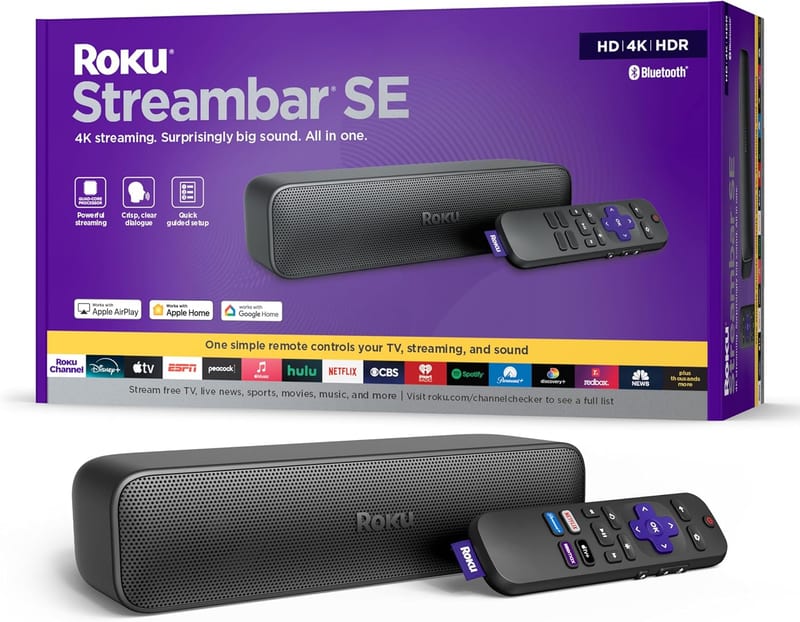
The second group simply has no low end. The TCL S45H, the Roku Streambar SE and the Sonos Ray are small stereo bars, and the Amazon Fire TV Soundbar Plus is a 3.1 bar with its bass drivers built in. These are dialogue-and-clarity upgrades over TV speakers, and that is a real thing to want. They are not home cinema.
The best money here: If a room has anywhere to hide a subwoofer, the bar-plus-sub packages are the best money in this table. The Denon DHT-S517 and the Polk Signa S4 give you real up-firing height and a wireless sub for what a bare bar costs elsewhere. Buy a one-box bar because you genuinely cannot place a subwoofer, not because the specs looked close.
Rear speakers: seven boxes contain a real surround system
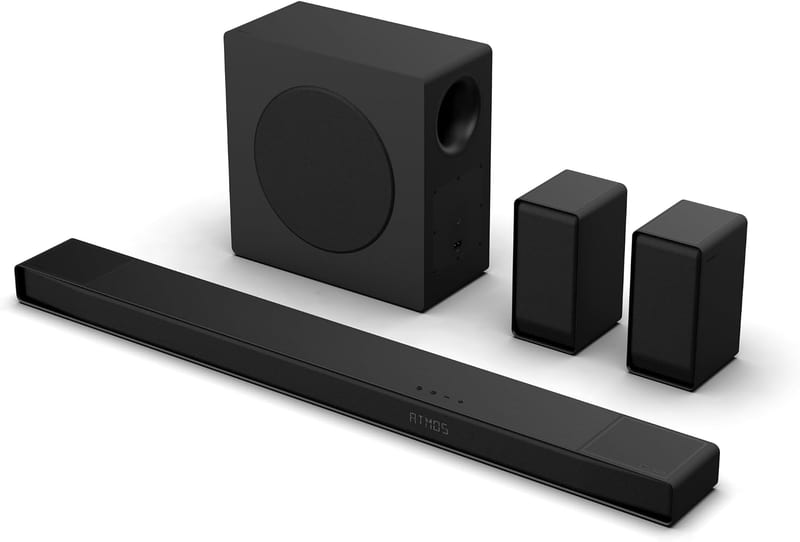
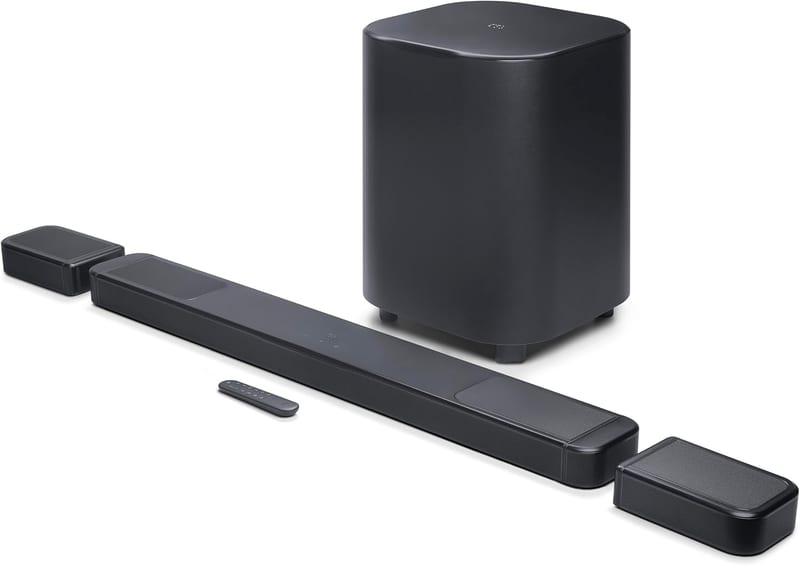
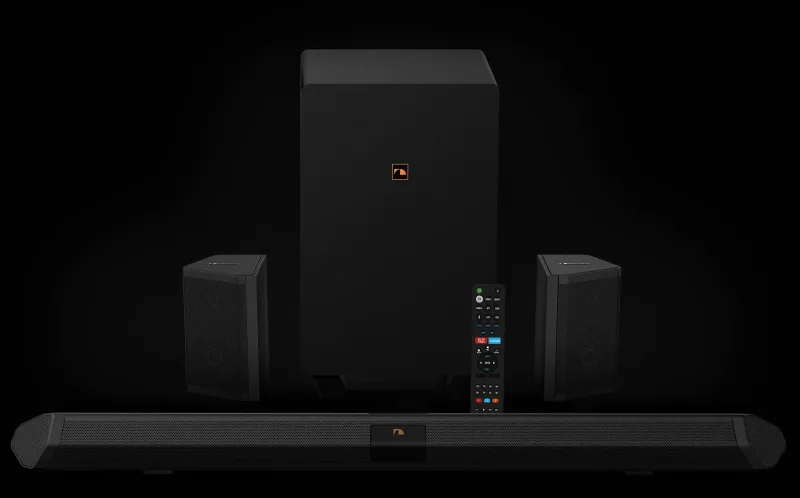
Seven products here arrive as complete surround systems: the Samsung HW-Q990F, JBL Bar 1300XMK2, LG S95AR and S90TR, Hisense AX5140Q, VIZIO Elevate SE and Nakamichi Shockwafe Pro. Everything else is a front-of-room device, whatever its channel count says.
Rears change the experience more than height channels do. Discrete sound behind you is the thing people describe as "like the cinema"; height is the thing people notice on the third demo scene. Every one of those seven uses wireless rears, which still means a power cable at each rear speaker. Nobody has solved that. Plan two outlets or two long runs of cable along the baseboard before you buy.
JBL's approach on the Bar 1300XMK2 is the cleverest workaround I have fitted. The rear speakers are battery-powered and dock into the ends of the bar to charge, so you undock them for a film and put them back afterwards. It also means the 39.3-inch width in the table is the bar alone, and the bar with both surrounds attached is considerably wider.
Also worth knowing: several bars here take rears later. Samsung's Q800F and Q600F accept Samsung's wireless rear kits, the Klipsch Flexus expands with Surrounds, Yamaha's True X Bar 50A pairs with True X portable speakers, and the Fire TV Soundbar Plus takes Amazon's own surrounds. Starting with a bar and adding rears in a year is a legitimate plan, provided you check the add-ons exist for the model you buy.
The one rule: If you want surround, buy it in the box. Piecemeal expansion always costs more than the bundle and often needs the same generation of hardware to work. The Hisense AX5140Q is the outlier in this column: sub, rears and up-firing drivers front and back, at a price the rest of this group does not compete with, and Trusted Reviews came away impressed with it for exactly that reason.
HDMI: eARC, ARC, and one bar with no HDMI at all
Twenty-five of these connect over HDMI eARC. The Roku Streambar SE is standard ARC. The Sonos Ray has no HDMI port at all and connects by optical cable only.
The gap between eARC and ARC is not marketing. Sonos' own explainer puts standard ARC at roughly 1 Mbps of compressed audio against about 37 Mbps for eARC. That bandwidth is what carries lossless Dolby TrueHD, DTS-HD Master Audio and the uncompressed Atmos on 4K Blu-ray discs. Streaming Atmos rides on Dolby Digital Plus and fits down plain ARC, so if everything you watch comes from an app, ARC is genuinely sufficient. If you own discs or a console, eARC is the difference between the soundtrack you paid for and a compressed version of it. eARC also makes lip-sync correction mandatory instead of optional, which quietly fixes the drift people blame on their TV.
The Sonos Ray's optical-only connection has a second consequence people find out after unboxing: no HDMI means no CEC, so your TV remote does not control it out of the box, and it does not decode Dolby Digital Plus, which is where streaming surround lives.
One more thing this column does not show. A handful of these bars have HDMI inputs as well as an output, so you can plug a console or player into the bar and pass video through to the TV. The Samsung HW-Q990F has two HDMI 2.1 inputs with 4K/120Hz, VRR and ALLM, the JBL Bar 1300XMK2 has three inputs, and both LGs pass 4K/120Hz. If your TV is short of good HDMI ports, that is worth more than a height channel.
The catch: Buy eARC unless the entire budget is under about a hundred dollars. Anything with only ARC or only optical is a dialogue upgrade, not a cinema system. And if you game on a console at 120Hz with a TV that has one decent port, shortlist by HDMI inputs before you shortlist by channels.
Width: measure the furniture first
The spread in this column is enormous. The Roku Streambar SE is 9.6 inches long. The Sony BRAVIA Theater Bar 9 is 51.2 inches. That is not a small difference on a TV stand, and it is the single most common reason a bar goes back to the store.
The big bars are the flagships: Sony's Bar 9 at 51.2 inches, both LGs at 49.2, the Samsung HW-Q990F at 48.5, the Sonos Arc Ultra at 46.4, the Nakamichi at 45.5 and the Klipsch Flexus Core 200 at 44. Those want a 65-inch TV or larger above them, and a stand at least as wide.
The compact end is more interesting than it looks. Under 30 inches you have the Roku Streambar SE at 9.6, the Sonos Ray at 22, the Sonos Beam (Gen 2) at 25.6 and the Sennheiser AMBEO Mini at 27.6. That is the entire shortlist for a bedroom, a 43-inch TV or a stand with legs at the ends, and only two of the four have HDMI worth having.
The measurement that catches people out is height, not width. If the bar sits in front of the screen and blocks the bottom inch of picture, or covers the TV's infrared receiver, the whole install is a problem regardless of how it sounds. Check the height of the gap under your panel and the position of your remote sensor before you order. Wall mounting solves both and creates a cable-management job you should be honest with yourself about.
Measure first: Get a tape measure out, note the width of the furniture and the gap under the TV, then sort this column and ignore everything that does not fit. A bar that is too big for the room is worse than a cheaper one that fits, every time.
What this table actually tells you
Four columns decide almost every purchase here, and none of them is the channel count. Does the height come from real drivers and does your ceiling suit them. Does a subwoofer come in the box. Do rear speakers come in the box. Is it eARC.
Answer those four honestly against your own room and the twenty-seven bars collapse into about four candidates. That is what the sortable table above is for.
Sources / further reading
- RTINGS: The Best Soundbars - independent lab measurements and rankings, including their top placement for the Samsung HW-Q990F.
- Dolby: Dolby Atmos Sound Bar Setup Guide (PDF) - Dolby's own requirements for up-firing drivers and ceilings.
- Sonos: The Beginner's Guide to HDMI, HDMI ARC, and eARC - the bandwidth difference between ARC and eARC in plain terms.
- What Hi-Fi: Best Dolby Atmos Soundbars - reviewer perspective on virtual versus up-firing height.
- Consumer Reports: Sound Bar Ratings - subscription lab testing across price tiers.
- Tom's Guide: Sennheiser AMBEO Soundbar Plus review - on what AMBEO's virtualization does and does not do.
- TechRadar: Sonos Arc Ultra review - listening notes on the Sound Motion woofer.
- Trusted Reviews: Hisense AX5140Q review - hands-on with the budget 5.1.4 system.
- Sound & Vision: Polk Audio Signa S4 review - measurements on a budget up-firing bar.