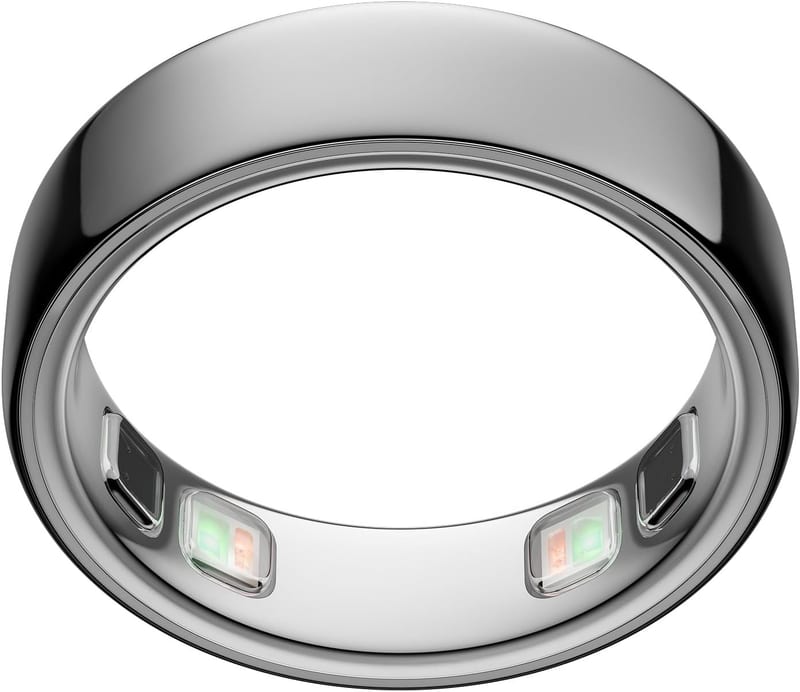
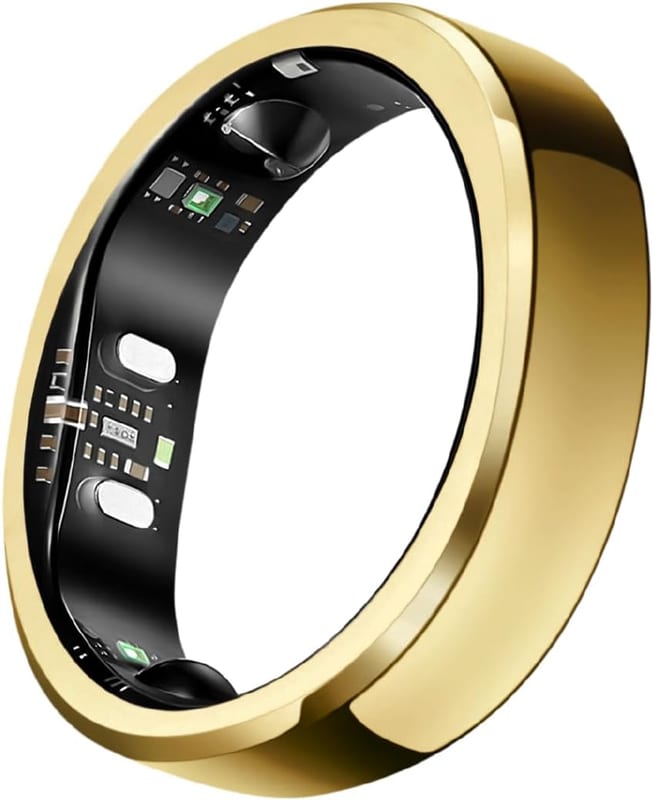
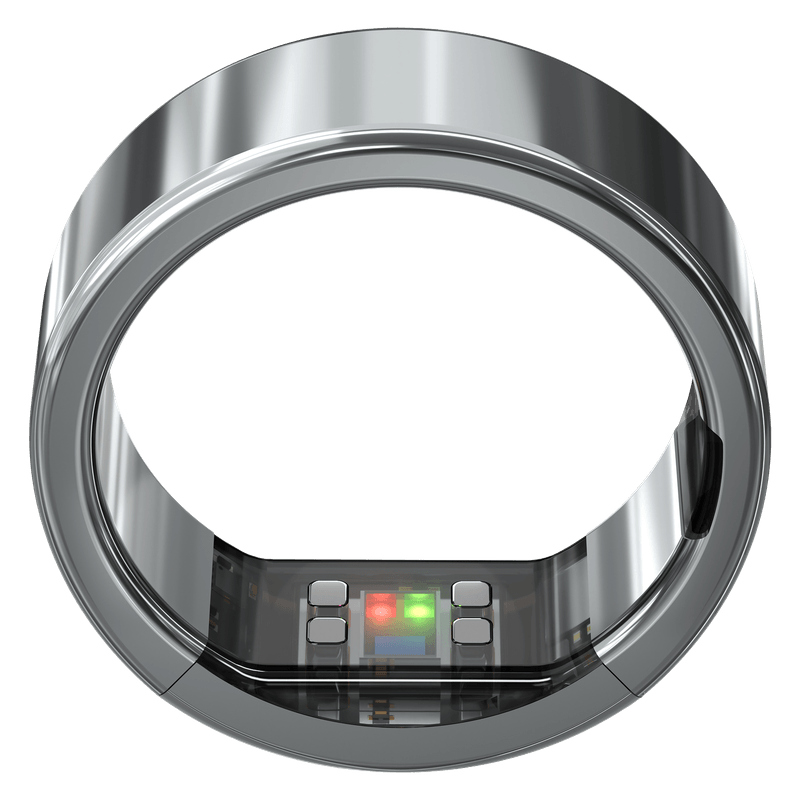
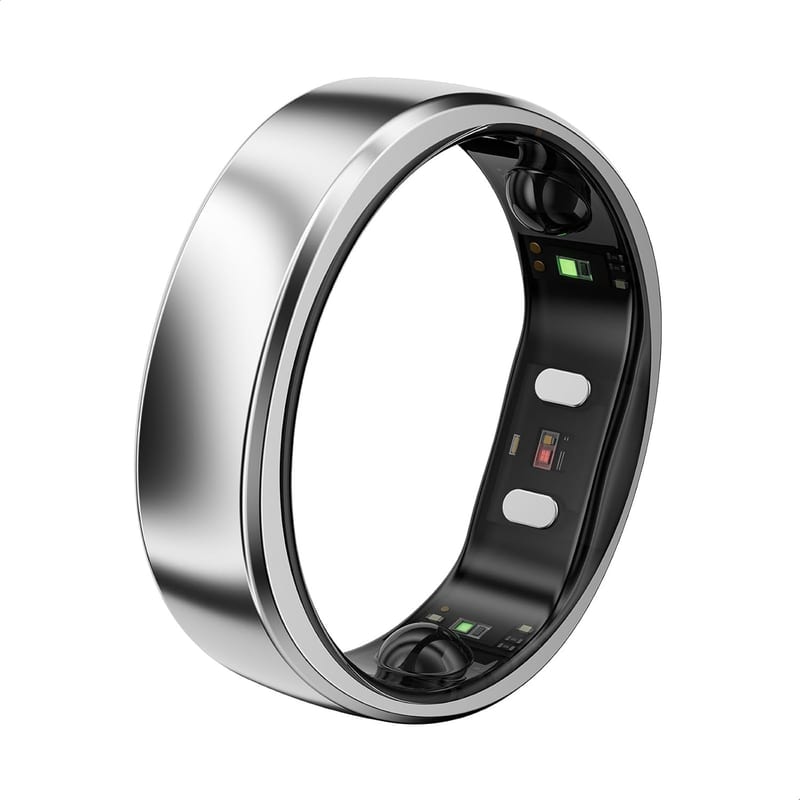
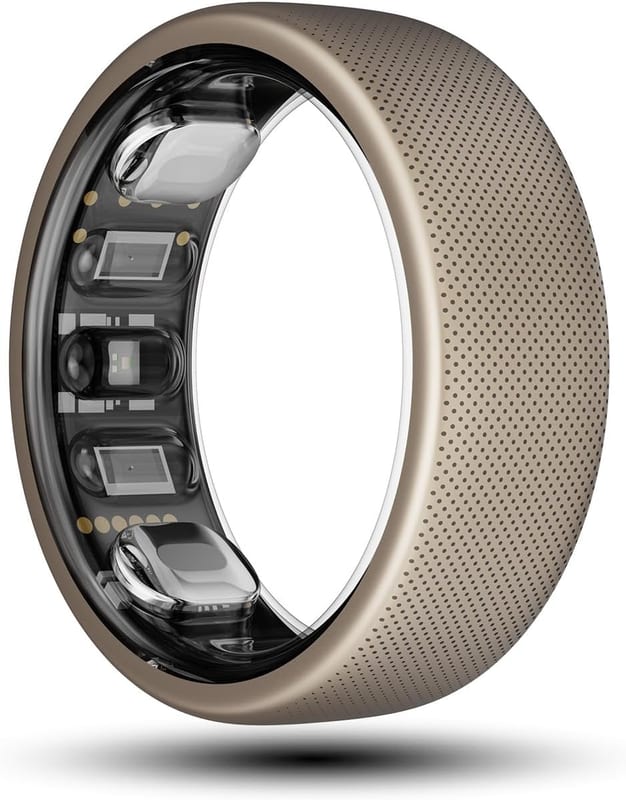
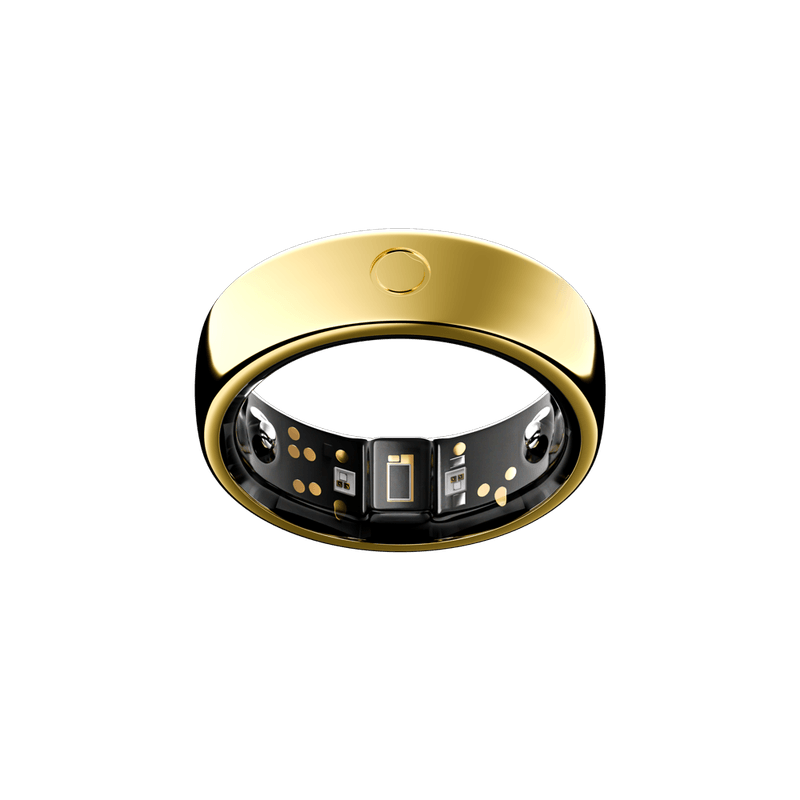
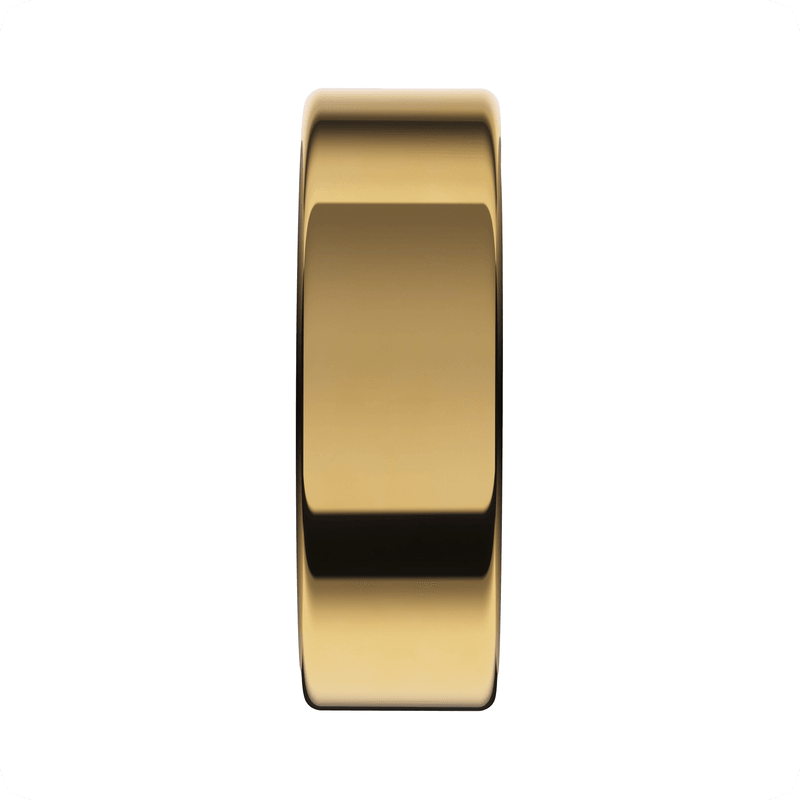
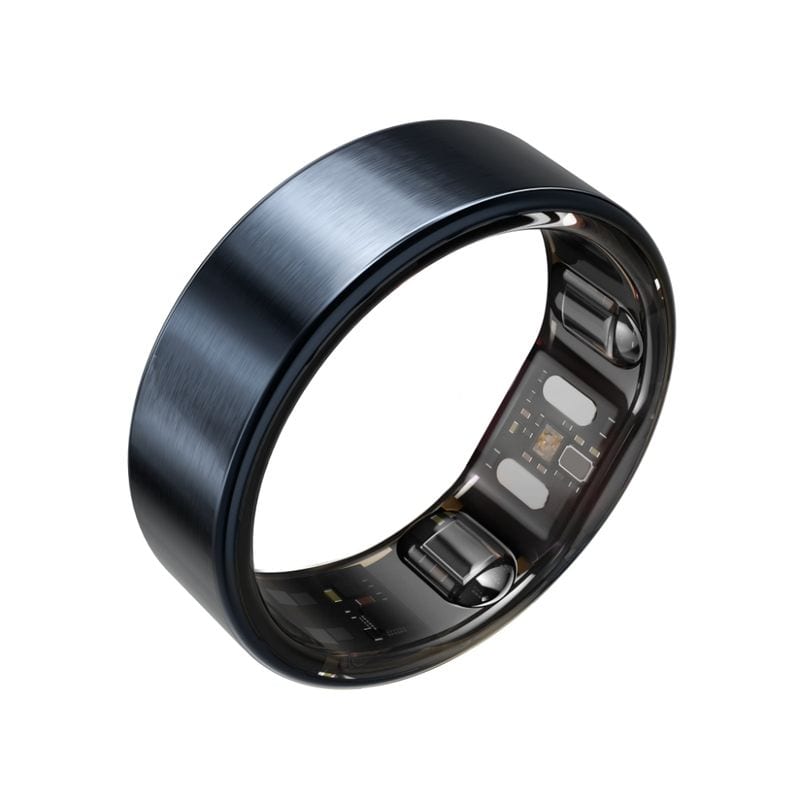
Smart rings finally got interesting in 2026. Shipments grew close to 80% year over year in 2025, and the pressure that put on the category shows: Oura shrank its ring by 40%, RingConn put a vibration motor inside one, and Ultrahuman pushed rated battery life to more than two weeks. Meanwhile the thing most people actually want from a ring, an accurate account of how badly they slept, is now table stakes on every model here.
Three specs survive contact with real life. Battery life decides how often the ring is off your finger and therefore not recording. Weight decides whether you take it off at 3am. The subscription decides whether you are still paying for this device in 2031.
Everything below is the manufacturer's own rated figure, checked against lab-grade reviews where those exist. The sortable table on this page has all 15 rings side by side. The prose is for the parts a table cannot tell you.
Battery life: four days to fifteen
The spread here is the widest of any spec in the category, and it maps almost perfectly onto how annoying a ring is to live with.
At the bottom sits the Amazfit Helio Ring at four rated days, and the Movano Evie Ring at the same. Four days means charging twice a week, which in practice means charging on a weekday evening when you are not thinking about it, and then sleeping without your sleep tracker. Amazfit compensates by pairing the Helio with the rest of the Zepp ecosystem, and Notebookcheck's testing found it undercuts the field on price hard enough to forgive a lot.
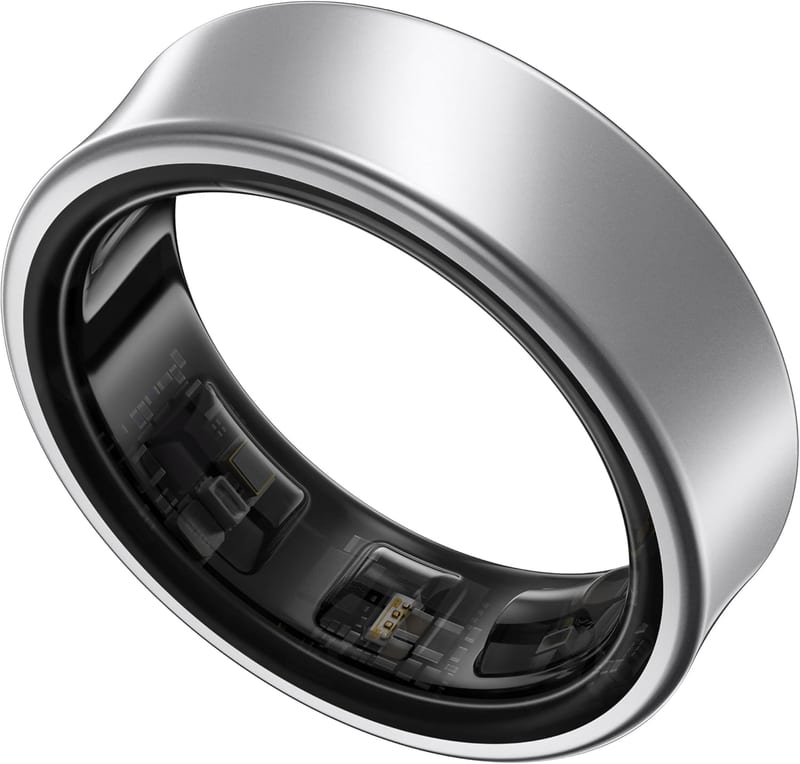
The middle of the pack, five to nine days, is where most rings land. Oura rates the Ring 5 at up to nine days and the Ring 4 at up to eight. That is a genuine engineering result given the Ring 5 is 40% smaller, and Oura says it rebuilt the battery chemistry and the firmware together to get there. DC Rainmaker's in-depth review measured six to seven real days, which is the honest number to plan around. Samsung rates the Galaxy Ring at seven days, though its own per-size table drops sizes 8 to 11 to six.
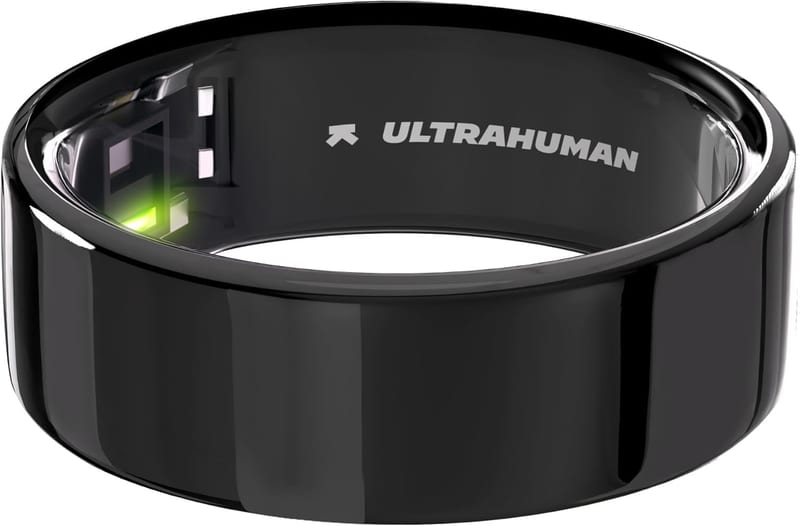
Then there is the top tier, which is now a two-horse race between RingConn and Ultrahuman. RingConn rates the Gen 3 at 11 to 14 days, and specifies the cost of its new vibration motor honestly: 10 to 12 days with vibration on, 11 to 14 with it off. Ultrahuman rates the Ring PRO at 15 days in its low-power Chill mode and about 12 in Turbo. The oldest ring in this group, the RingConn Gen 2, still rates 12 days, which tells you how long RingConn has been winning this particular argument.
Slopsheets says: Anything under five days means the ring is off your finger during sleep on a regular basis, which defeats the purpose. Treat seven rated days as the floor and expect roughly 20% less in real use.
Weight: the number you notice at 3am
Rings live on a part of the body with no tolerance for extra mass, and the numbers here are close enough that a gram matters.
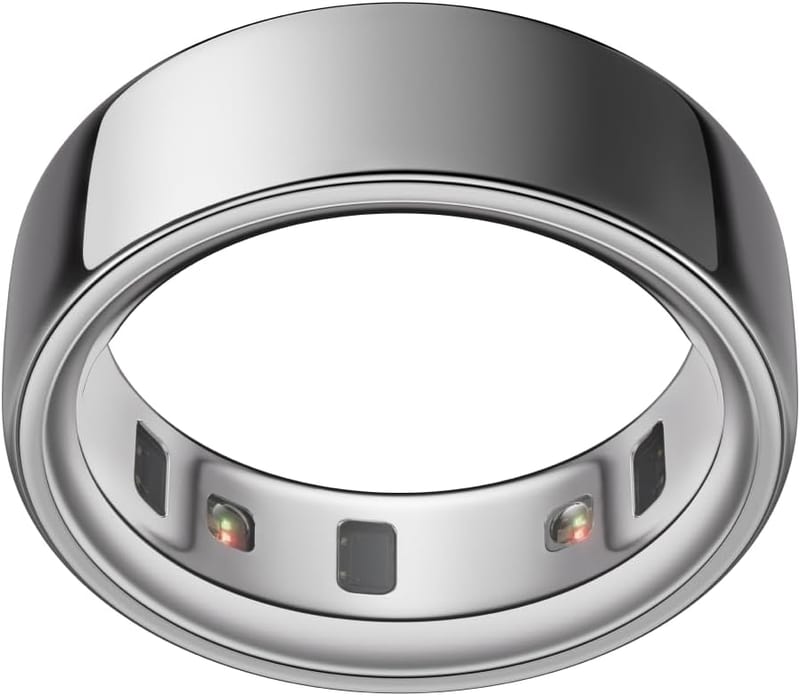
Oura's Ring 5 is the lightest thing in the group at roughly 2.3 g at a mid size, down from 4.3 g on the Ring 4. It is 6.09 mm wide and 2.28 mm thick, which is why Oura is willing to call it the world's smallest smart ring. The RingConn Gen 2 (2.5 g) and Samsung Galaxy Ring (2.8 g) are in the same class.
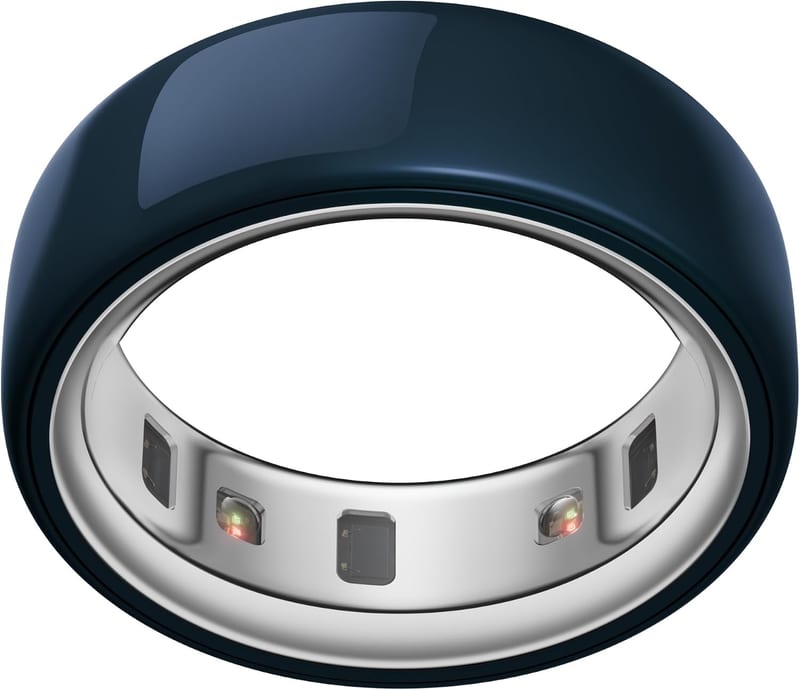
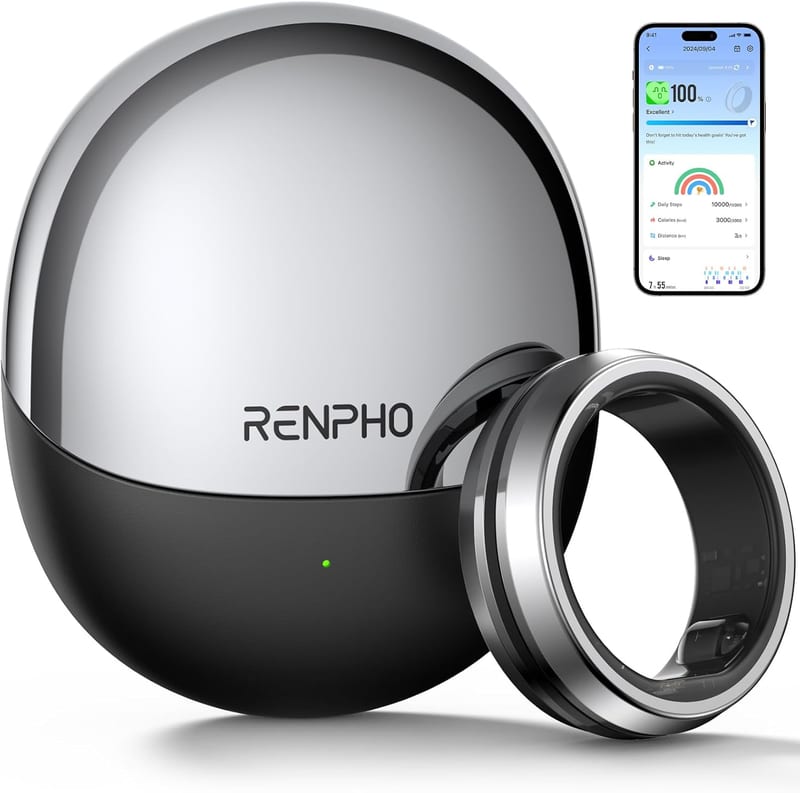
At the other end, the Oura Ring 4 Ceramic runs 5.1 to 8.1 g depending on size, roughly 6.6 g at a mid size. The zirconia ceramic exterior is harder than titanium and its colour is inherent to the material rather than a coating, so it will not wear off, but you are wearing about three times the Ring 5 for that. The RENPHO Lynx (4.5 g) sits in similar territory for a different reason, a thicker build around a bigger cell.
One caveat worth knowing before you order. Every manufacturer here except Samsung publishes weight as a range across sizes rather than a per-size table, so the figures in our table are range midpoints. If you wear a size 13, assume you are at the top of the range.
The one rule: Under 3 g is the threshold where most people stop noticing the ring exists. Above 5 g you will notice it, and if you work with your hands you will notice it a lot.
Water resistance: 100 m, 50 m, and one alarming outlier
Most of this category settled on 100 m (10 ATM) and stopped talking about it. Oura, Samsung, Ultrahuman, RingConn and Amazfit all rate their rings at 100 m, which covers swimming, showering, and doing the washing up without thinking about it.
The 50 m tier is the next step down: Circular Ring 2, RENPHO Lynx, Leep Ring 1 and the CUDIS 002. Fifty metres is still fine for swimming, though Circular qualifies its rating to a maximum of 30 minutes of immersion, which is a meaningfully different promise.
Then there is the Movano Evie Ring, rated at 1 m. That is splash resistance, not swim resistance, and it is the single biggest asterisk on an otherwise interesting product. The Evie has an open-gap band designed to flex when fingers swell, and Movano Health has FDA 510(k) clearance for its EvieMED clinical variant, so the engineering is serious. You just cannot swim in it.
The catch: The whole pitch of a ring over a watch is that you never take it off. A 1 m rating breaks that pitch. Everything else here clears the bar comfortably.
Subscriptions: the recurring cost nobody puts on the box
This is the cleanest split in the category, and it is worth more than any spec.
Oura is the only brand in this comparison that requires a paid membership for the app's core health features. All three Oura rings here (Ring 5, Ring 4, Ring 4 Ceramic) are subscription products. The rings themselves are also the most expensive hardware in the group, so you are paying twice.
Pay once for the ring and you own it, the way every other tracker on the shelf works.
Oura is the only ring here that gates core health features behind a paid membership, so you keep paying long after checkout.
Every other ring here is subscription-free: Samsung, Ultrahuman, RingConn, Amazfit, Circular, Movano, RENPHO, Leep and CUDIS. Ultrahuman sells optional add-on modules, and Circular has an in-app currency for some future features, but the core sleep, heart-rate, HRV and recovery data costs nothing after purchase in all of them.
What you give up varies. Oura's app remains the most polished implementation in the category and its sleep-staging history is the longest, which is not nothing when the entire product is an inference engine. Samsung's answer is Samsung Health with no fee at all, but the Galaxy Ring is Android-only with no iPhone support, and Samsung reserves some features for Galaxy phones specifically.
What the box won't tell you: Price the subscription over three years before you compare hardware. On that maths, a subscription-free ring at a similar price is not the cheaper option, it is a different product category.
Charging: dock or case
A small spec with a big effect on real-world uptime. Some rings ship with a plug-in dock that charges only while connected. Others ship with a battery case that holds a reserve, so a top-up does not need a socket.
Case in the box: Samsung Galaxy Ring, RingConn Gen 3, RingConn Gen 2, Ultrahuman Ring PRO, Circular Ring 2, Movano Evie, RENPHO Lynx and the Leep Ring 1. The reserves are substantial. RingConn's Gen 2 case adds over 150 days of off-grid runtime, Ultrahuman's PRO Charger adds around 45 days and stores a year of ring data locally, Leep's case adds up to 60 days, and Movano's holds ten-plus full charges.
Dock only: all three Oura rings, the Ultrahuman Ring AIR, the RingConn Gen 2 Air, the Amazfit Helio and the CUDIS 002. Oura's decision is the notable one, since the Ring 5 is a flagship and its matchbox-sized charging case is sold separately as an accessory rather than included. RingConn is explicit that the Gen 2 Air's dock is "charging only, no extra battery life", which is the main trade-down against the standard Gen 2.
The trap: A case matters most on the rings with short battery life, which is exactly where you are least likely to get one. If you travel, weight it heavily.
Materials, and what "titanium" is doing here
Almost everything in this comparison has a titanium shell over a hypoallergenic resin or epoxy interior, so this column sorts more than it separates. The exceptions are informative.
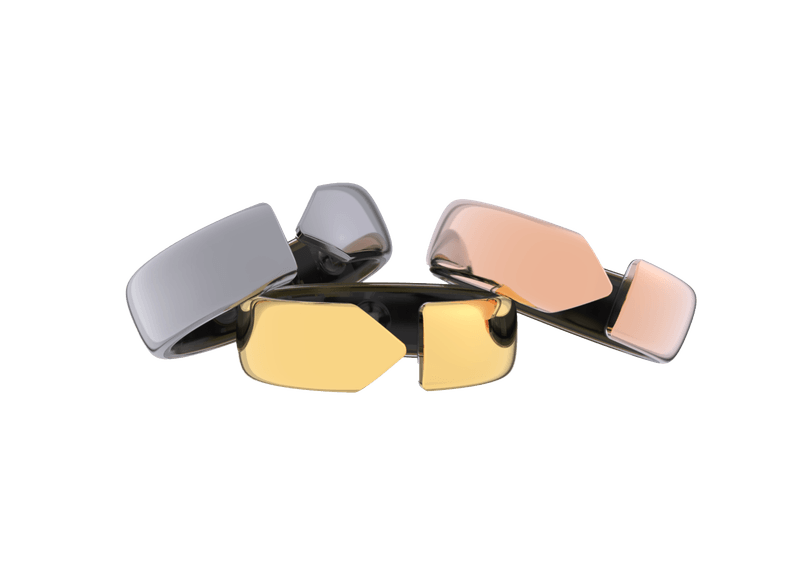
The RingConn Gen 2 Air uses stainless steel, which is heavier and cheaper. The Oura Ring 4 Ceramic wraps zirconia ceramic over a titanium inner shell, buying scratch resistance at a real weight cost. Movano's Evie uses Liquidmetal, a zirconium-based amorphous alloy, with a titanium coating over it, which is genuinely different engineering rather than a marketing word.
Ultrahuman's Ring AIR adds a tungsten-carbide-carbon coating over its titanium, and Ultrahuman's Ring PRO adds ProRelease construction, meaning the ring can be cut off in an emergency if a finger swells. That is the kind of detail that only shows up after a few years of people wearing these things through surgeries and pregnancies.
What we would actually buy
If you want the best data and you are willing to keep paying for it, the Oura Ring 5 is the ring. It is the lightest, it is the smallest, and Oura's redesigned sensor array with 12 signal pathways exists specifically to fix accuracy across different finger shapes and skin tones. Go in knowing the membership is permanent.
If the recurring fee is the dealbreaker, the RingConn Gen 3 is the strongest subscription-free flagship: 14 rated days, a reserve case, silent haptic alerts nobody else offers, and a Vascular Trends metric no competitor ships. It launched in May 2026 so its review base is still thin, but RingConn's Gen 2 has thousands of ratings behind it and the company has a track record here.
If you just want a competent sleep tracker for as little as possible, the RingConn Gen 2 Air does ten days and 100 m from a brand with a real review history. And if battery life is the whole ballgame, the Ultrahuman Ring PRO's 15 rated days is the number to beat.
Sources / further reading
- Oura: Introducing Oura Ring 5 and the Oura Ring 4 support specifications
- DC Rainmaker: Oura Ring 5 in-depth review and comparison, for measured rather than rated battery life
- Samsung Galaxy Ring support specifications and GSMArena's full spec breakdown
- RingConn's Gen 3 / Gen 2 / Gen 2 Air comparison page, the clearest first-party spec matrix in the category
- Gadgets & Wearables: RingConn Gen 3 review
- Ultrahuman Ring PRO specifications and the Ring PRO announcement
- Notebookcheck: Amazfit Helio Ring review
- TechRadar: Circular Ring 2 review
- Movano Health: FDA clearance for the EvieMED Ring
- Wareable: Leep Ring review and Forbes on the Leep Ring 1
- Trusted Reviews: CUDIS 002 review
- Live Science: RENPHO Lynx smart ring review