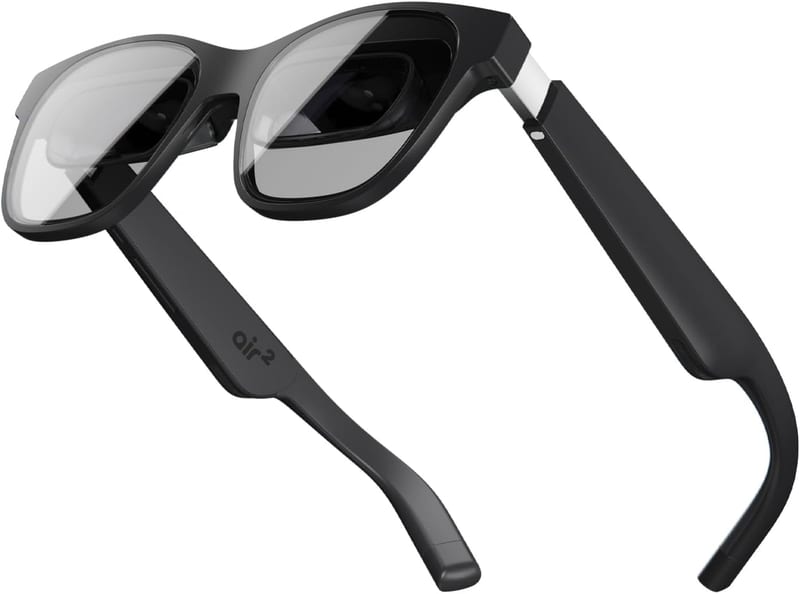
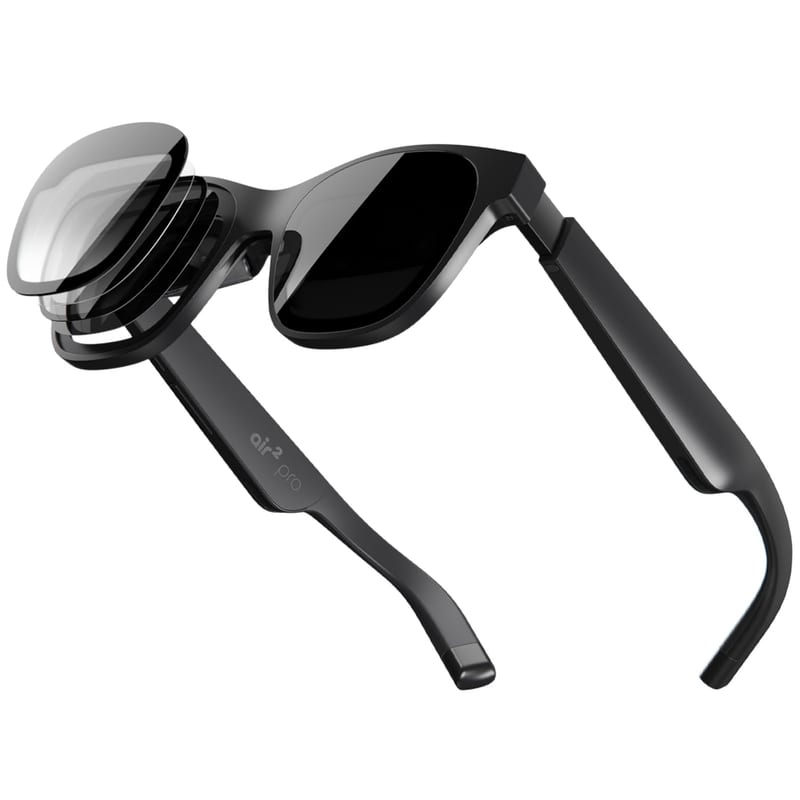
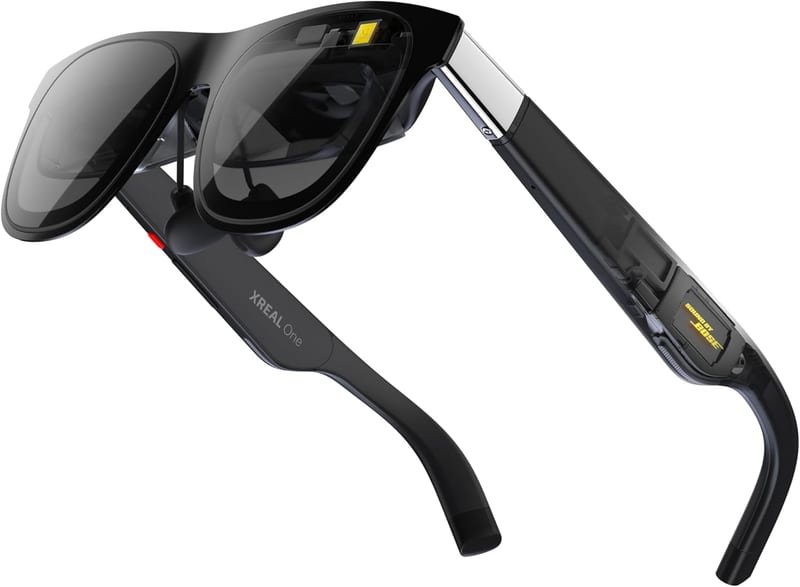
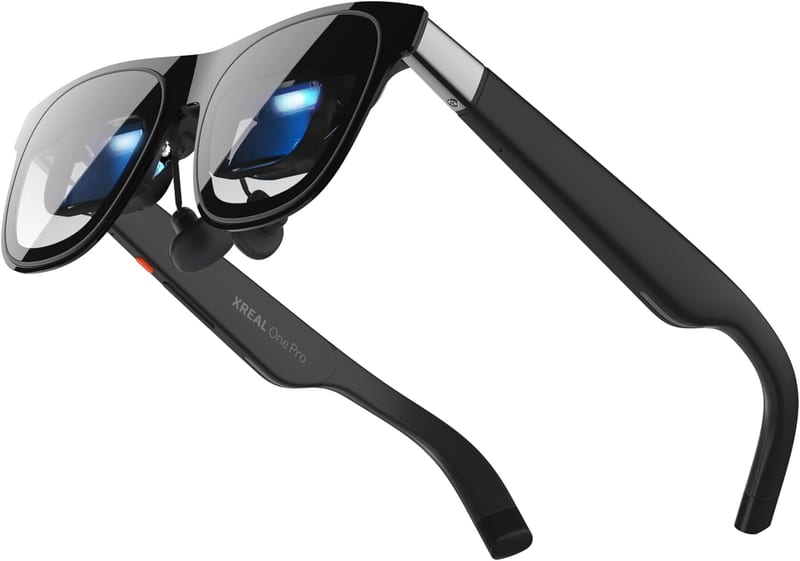
Twenty pairs of glasses that share a shelf label and almost nothing else. "Smart glasses" in 2026 covers a camera you wear on your face, a heads-up display floating text in your peripheral vision, and a pair of sunglasses that turns a phone into a cinema screen. Those are three different purchases with three different failure modes, and the spec that separates them sits in the first column of the table above this article.
The category earned the attention. IDC's shipment figures, cited across Tom's Guide's 2026 coverage, put extended-reality devices at 14.5 million units in 2025, up 41.6% year over year, with glasses responsible for nearly all of that growth. What follows is what the spec sheets say once you line them up.
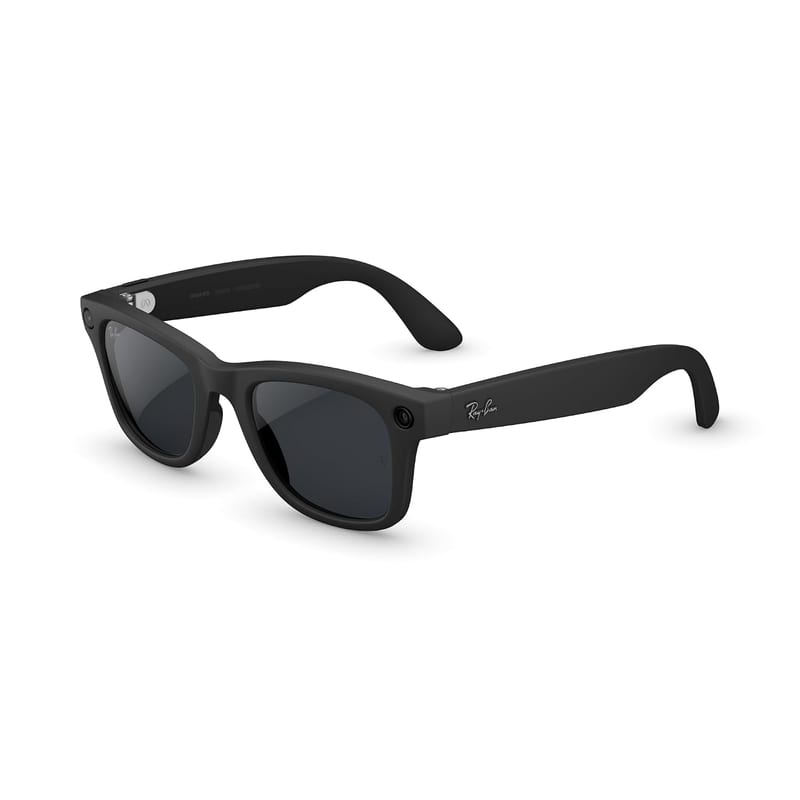
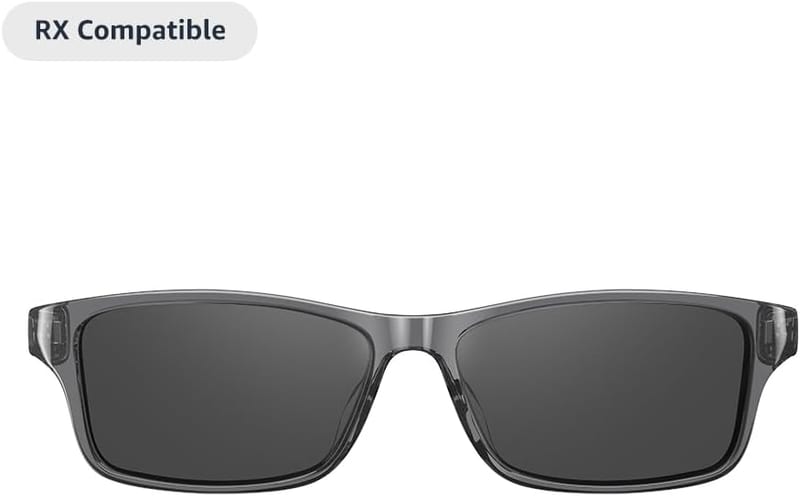
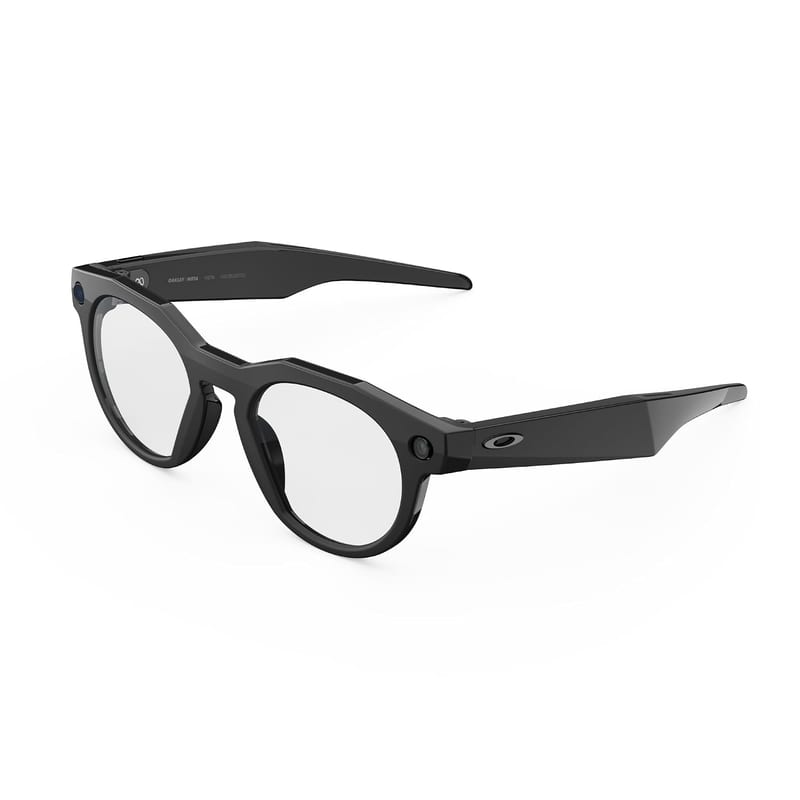
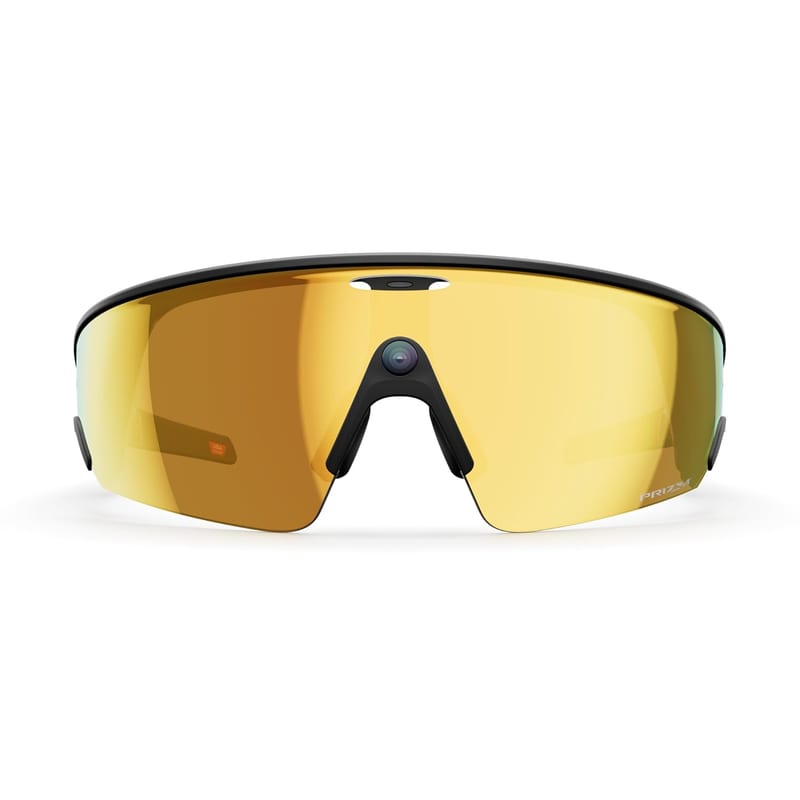
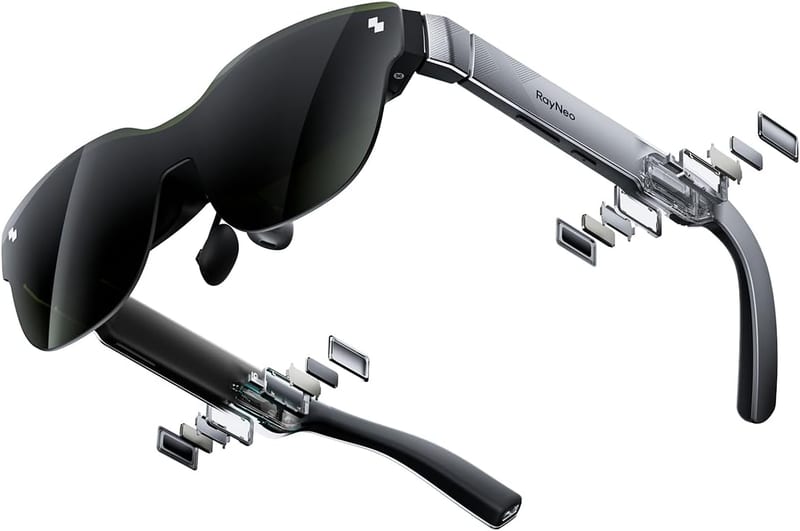
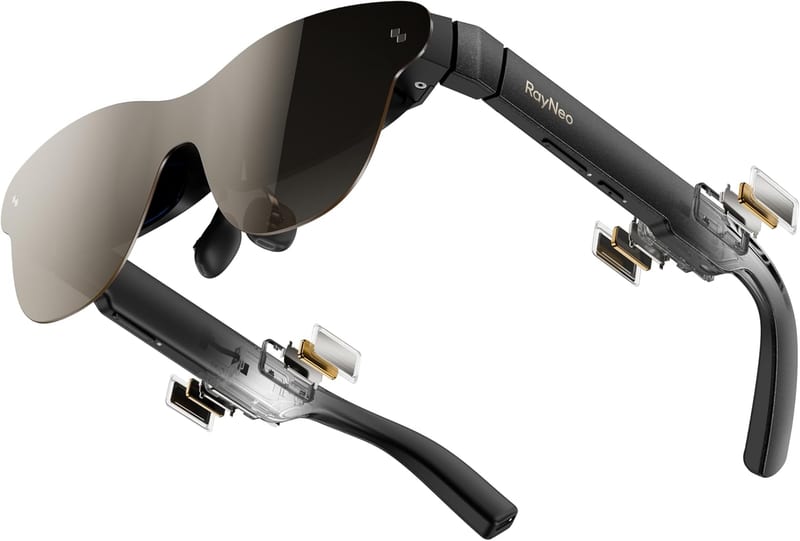
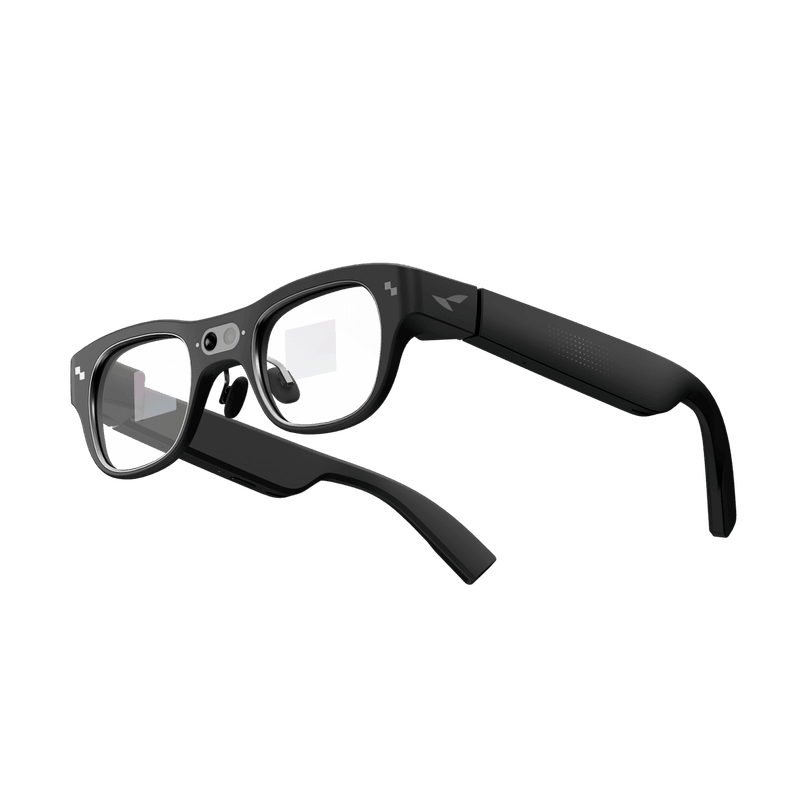
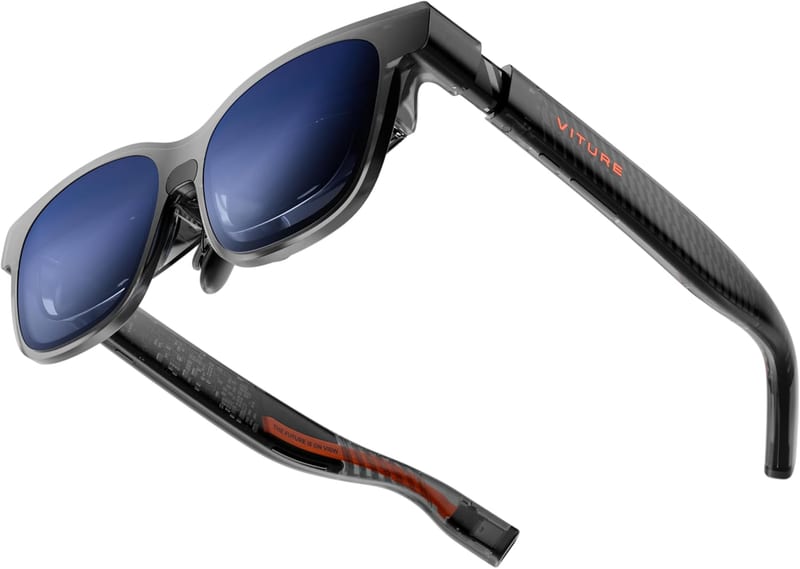
The lineup: four camera-and-audio AI glasses (Ray-Ban Meta Gen 2, Oakley Meta HSTN, Oakley Meta Vanguard, Amazon Echo Frames), four with a display built into normal eyewear (Meta Ray-Ban Display, Rokid Glasses, RayNeo X3 Pro, Even Realities G2), and twelve birdbath viewers that project a large virtual screen (five from Xreal, five from Viture, two from RayNeo).
Display type: the fork that decides everything else
Sort the table by this column and the rest of the numbers stop looking random.
None (audio only) is the biggest-selling shape. The Ray-Ban Meta Gen 2, both Oakley Meta models, and Amazon's Echo Frames have speakers, microphones, and in three of four cases a camera, but nothing to look at. You talk to them and listen. The upside is that they pass for eyewear, which is why Meta's lineup dominates this category commercially.
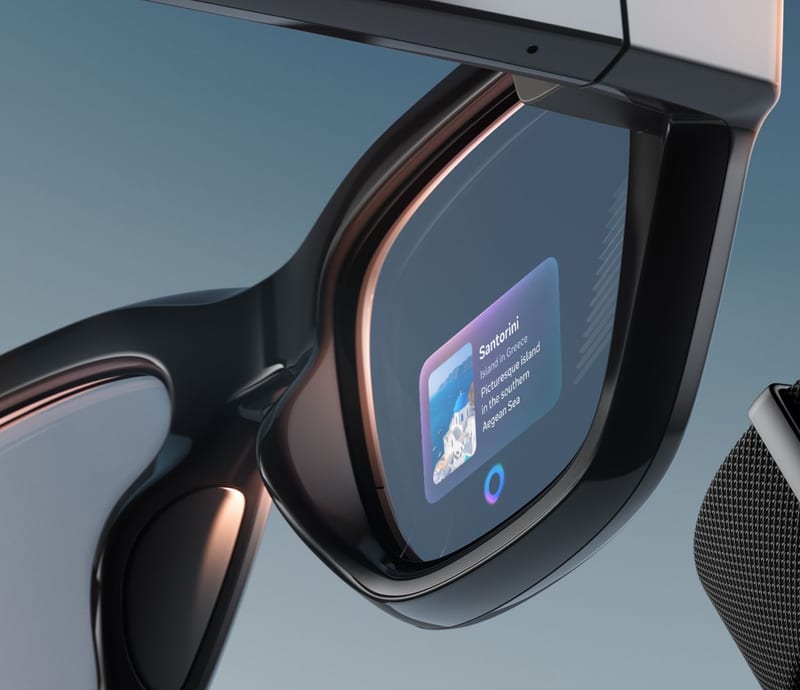
Monocular HUD is a single small screen in one lens. Only the Meta Ray-Ban Display does it here, in the right lens, driven by a reflective geometric waveguide per GSMArena's teardown of the launch specs. It shows notifications, directions, and captions, not video.
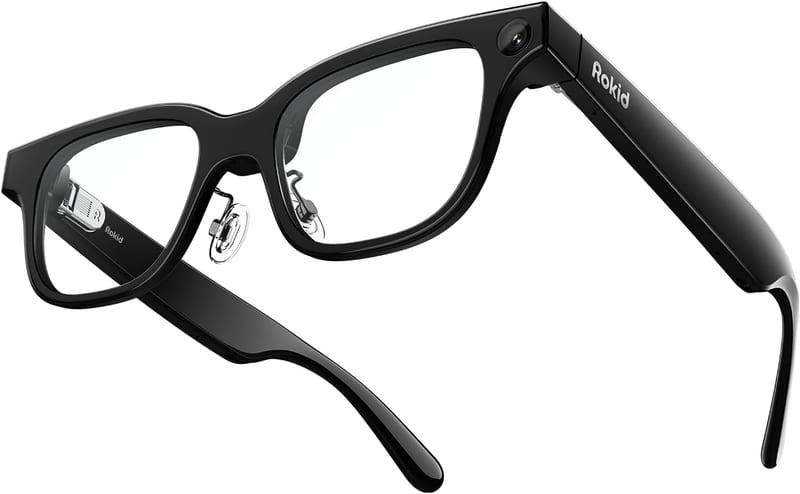
Binocular waveguide puts an image in both lenses. The Rokid Glasses, RayNeo X3 Pro, and Even Realities G2 use microLED engines feeding etched waveguides. Rokid and Even output monochrome green, RayNeo's X3 Pro manages full color, which is the harder engineering problem and part of why it is the heaviest of the three.
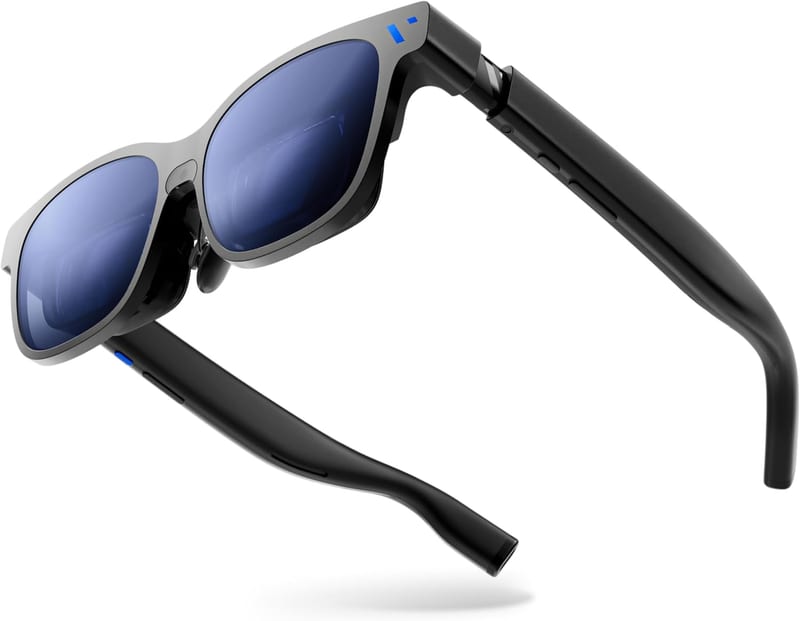
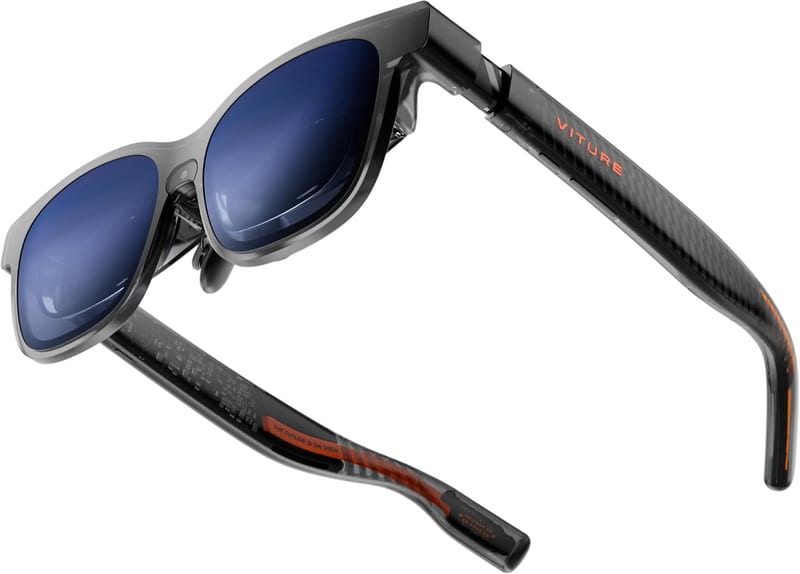
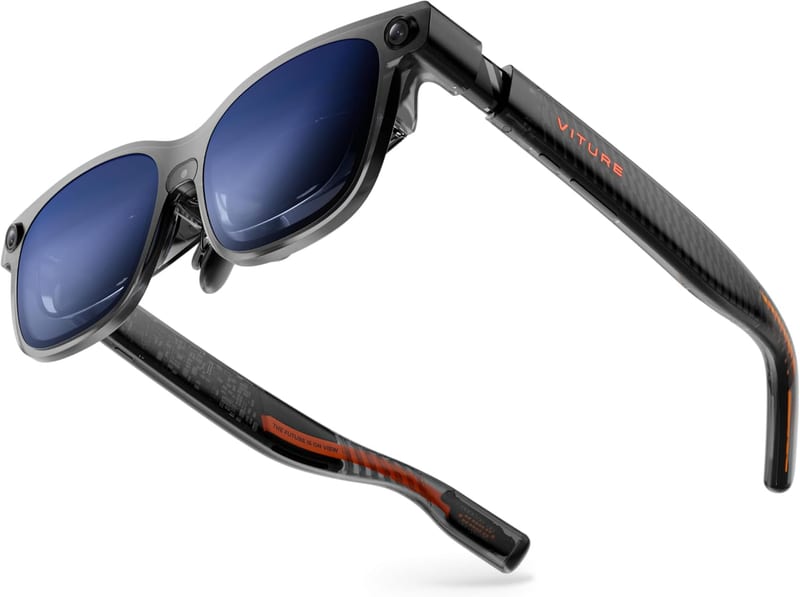
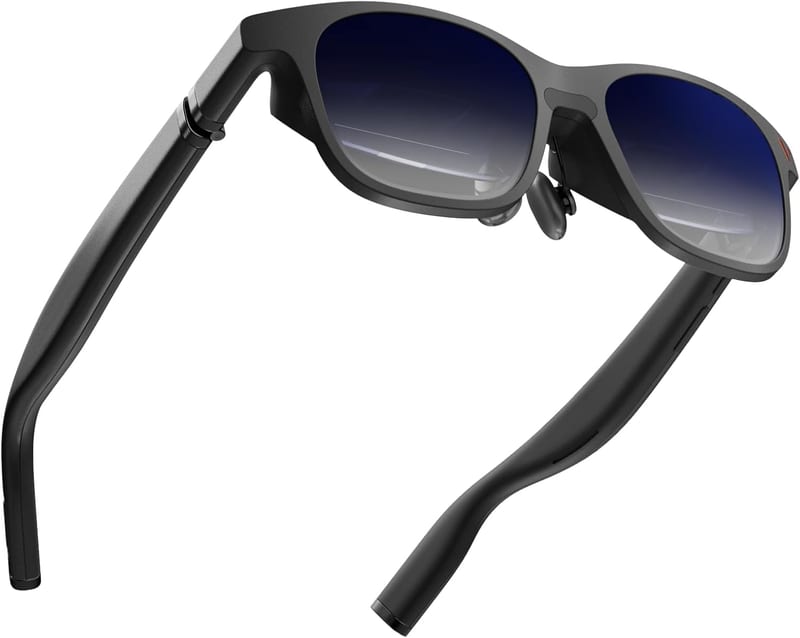
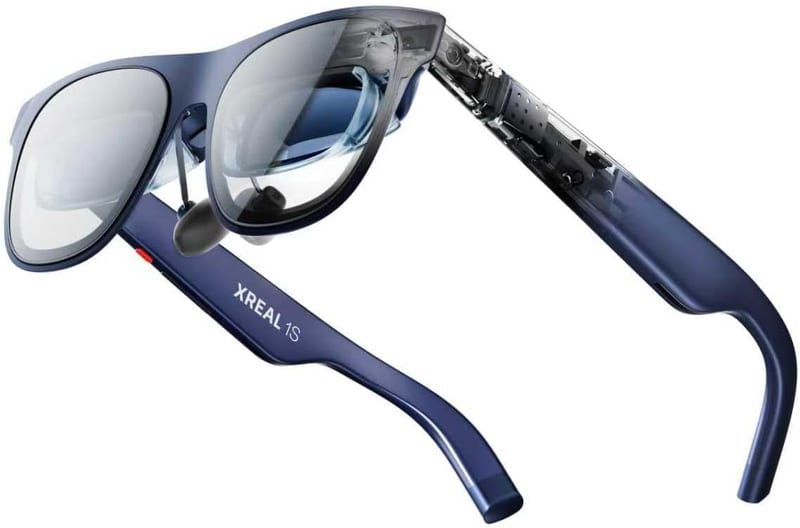
Birdbath (virtual screen) is the other twelve. These are not really glasses so much as a wearable monitor: a micro-OLED panel bounces off a curved combiner into your eye, producing a screen that appears to float a few feet away. They plug into a phone, laptop, Steam Deck, or console over USB-C and do nothing on their own.
Smart glasses, sold beside camera pairs you wear on your face all day.
Every birdbath viewer is a wearable monitor with no battery of its own. It runs off a phone or laptop over USB-C and does nothing unplugged.
Slopsheets says: Decide this row before you compare anything else. If you want a camera and an assistant on a face people will still make eye contact with, buy audio-only. If you want glanceable text without pulling out a phone, buy a waveguide. If you want to watch a film on a plane, buy a birdbath and accept that it is a display accessory, not eyewear.
Resolution per eye: two completely different scales
The table sorts this column by real pixel count rather than the label, which matters because the two halves of this category are not close.
Every birdbath viewer here runs 1920×1080 or 1920×1200 per eye. The 1200p tier (Xreal 1S, Viture Beast, and all three Luma models) buys you a 16:10 shape that matches a laptop or a Switch better than 16:9 does, which is why Xreal moved the 1S to those panels at its CES 2026 launch.
The waveguides live two orders of magnitude below that. The Meta Ray-Ban Display is 600×600, Rokid runs 480×640, RayNeo's X3 Pro 640×480, and the Even Realities G2 640×350. Those are not bad numbers, they are the correct numbers for the job: a waveguide is showing you a text card, a turn arrow, or a live translation line, and Meta quotes 42 pixels per degree, which is dense enough that the text edges look clean even though the panel is tiny.
The four audio-only pairs have no resolution at all and sort to the bottom.
The one rule: Do not cross-shop these numbers. 1200p per eye on a Viture Luma is a screen you watch; 640×350 on an Even G2 is a screen you glance at. Comparing them is like comparing a television to a wristwatch face. Within the birdbath group, though, the 1200p models are a genuine upgrade if you plan to work in them rather than only watch.
Field of view: how big the screen feels
For the viewers, this is the number that decides whether a film feels immersive or like a tablet held at arm's length. It runs from 46 to 58 degrees across the birdbath group.
The Viture Beast takes it at 58 degrees, the widest here, and Tom's Guide gave it an Editor's Choice after long-haul travel testing, calling it the best AR glasses money can buy. The Xreal One Pro follows at 57, and Xreal got there with flat "X-Prism" optics instead of a conventional birdbath prism. In the middle sit the Xreal 1S, Viture Luma Ultra, and Luma Pro at 52 and the Xreal One and Viture Luma at 50. The 46-degree floor is shared by the older Xreal Air 2 and Air 2 Pro, the Viture Pro, and both RayNeo Air 3s models.
The waveguides use the same unit for a different purpose, and the numbers are much smaller by design: 30 degrees on the Rokid Glasses and RayNeo X3 Pro, 27.5 on the Even G2, and 20 on the Meta Ray-Ban Display. A waveguide with a 58-degree window would be a distraction, not a feature. It is meant to sit at the edge of your attention.
Worth paying for: In the viewer group, the jump from 46 to 57 or 58 degrees is the most noticeable upgrade you can buy, more than the resolution bump. If you mostly watch films, the Beast and the One Pro earn the difference. If you mostly mirror a laptop for text work, the 46-degree models are sharper per square inch and cost you less screen real estate than you would guess.
Weight: what your nose is holding up
Everything here lands between 36 and 88 grams, and the range maps almost exactly onto the display type.
The Even Realities G2 is the lightest at 36 grams, which it manages by leaving out the camera and running a magnesium front with titanium temples. The audio-only glasses come next: Amazon's Echo Frames at 40, the Oakley Meta HSTN at 49 (Tom's Guide measured that in hand, against a slightly heavier figure elsewhere), and the Ray-Ban Meta Gen 2 at 52. The Rokid Glasses are the outlier worth noticing, a full binocular waveguide and a 12MP camera at 49 grams, the same as HSTN carries with no display at all.
Above 65 grams you start to feel it. The Oakley Meta Vanguard is 66, a deliberate choice for a wraparound sports frame with a bridge-mounted camera. The Meta Ray-Ban Display is 69, RayNeo's X3 Pro 76. Every birdbath viewer sits between 72 and 88 grams, with the Xreal Air 2 lightest and the Viture Beast heaviest, so the widest field of view here is also the most weight on your face.
Where it matters: Weight is a weak differentiator inside the viewer group, where 16 grams separate first from last and everything is front-heavy anyway. It is a strong one across the whole table. Under 50 grams you forget them; past 70 you will want a break after a couple of hours, which happens to match how long a film runs.
Battery: the column where twelve products score zero
This row surprises people, so read it carefully. Twelve of these twenty have no battery whatsoever. Every birdbath viewer draws power from the host over USB-C, which means their runtime is your phone's or laptop's runtime. A zero in this column is not missing data, it is the specification. Viture publishes a three-to-four-hour "suggested wearing time," but that is an eye-comfort recommendation rather than a runtime.
Among the eight that do carry a battery, the Even Realities G2 is untouchable at roughly 48 hours, which is what happens when the display is monochrome, low refresh, and there is no camera to feed. Amazon's Echo Frames claim 14 hours of moderate use, or 6 hours of continuous playback, which is the honest way to read every figure in this column.
The Meta family clusters at 8 to 9 hours of mixed use, with the Vanguard highest at 9. Meta doubled the Gen 2's endurance over the original Ray-Ban Meta, per its own launch notes. The Meta Ray-Ban Display and Rokid Glasses both land at 6, though Rokid only publishes per-activity figures (6 hours of music, 2 hours of live translation, 45 minutes of video), so 6 is the optimistic end.
The RayNeo X3 Pro is last at 3 hours, and that is its weak point rather than a rounding difference. It runs a standalone Snapdragon AR1 with no phone tether, which costs it dearly. Tom's Hardware described its real-world battery as alarming in testing.
What the box won't tell you: If you are buying a viewer, ignore this column and go check what your phone or laptop has left instead. If you are buying glasses you wear all day, the gap between the Even G2's two days and the X3 Pro's single afternoon is the widest spread of any spec in this comparison, and it will shape your day more than any pixel count.
Camera: 12 megapixels or nothing
There is no middle ground in this column. Six of these have a 12MP stills camera and the other fourteen have none.
The four with cameras that people actually buy for the camera are the Ray-Ban Meta Gen 2 and both Oakley Metas, all shooting 12MP stills and 3K video, plus the Meta Ray-Ban Display. Rokid Glasses and the RayNeo X3 Pro both use a 12MP Sony IMX681. The Oakley Meta Vanguard is the interesting one: its camera sits in the bridge rather than the corner of the frame, giving a centered first-person view, and it is the only pair here rated IP67, with Garmin and Strava integration to match its sports intent.
Two products leave the camera out as the point rather than as a cost saving. The Even Realities G2 markets itself as camera-free by design, and Amazon's Echo Frames have never had one. In a category where wearing a camera into a room is the main social friction, that is a feature you can hand to a colleague to try on.
The birdbath viewers all score zero here. Two of them (the Viture Beast and Luma Ultra) do carry front-facing sensors, but those are tracking cameras for 6DoF and hand gestures, not something you take a photo with. The Luma Ultra's RGB-plus-dual-depth array is what lets it do full 6DoF and gesture input, the only viewer in this table that can.
The camera pick: If a camera is why you are buying, the Meta and Oakley pairs are the category, and the Vanguard's bridge placement is the single best design idea among them. If a camera is the reason you have been avoiding these, the Even G2 and the Echo Frames exist precisely for you.
So which smart glasses should you buy?
- Best all-around AI glasses: Ray-Ban Meta (Gen 2). Eight hours, 12MP, and a frame nobody reads as a gadget. Gizmodo still rates it the best non-display smart glasses, and the Gen 2's doubled battery fixed the original's real complaint.
- Best for sport: Oakley Meta Vanguard. IP67, 9 hours, a bridge camera pointed where you are actually looking, and Garmin and Strava hooks. DC Rainmaker's sensor testing is the deepest look at whether the fitness side holds up.
- Best display in glasses you would wear anyway: Rokid Glasses. A binocular waveguide, a 12MP camera, and titanium hinges at 49 grams, with 89-language translation as the headline trick. Tom's Guide reviewed it favorably against the Meta Ray-Ban Display.
- Best glanceable HUD: Meta Ray-Ban Display. The most polished monocular HUD here and the only one paired with an sEMG wristband for input. Buying it is the hard part: US sales are in-store and demo-gated, and Meta paused its international rollout on supply, per Road to VR.
- Best big screen: Viture Beast at 58 degrees and 1200p per eye, with the Xreal One Pro at 57 as the alternative if you prefer Xreal's spatial anchoring. Either beats a seat-back screen without contest.
- Best value viewer: RayNeo Air 3s. Same 46-degree, 1080p formula as the older Xreal Air 2 and Viture Pro, with the edge blur that hurt the Air 2s fixed, per Tom's Hardware. Step up to the Air 3s Pro only if you use them in bright places, where its higher brightness is the whole difference.
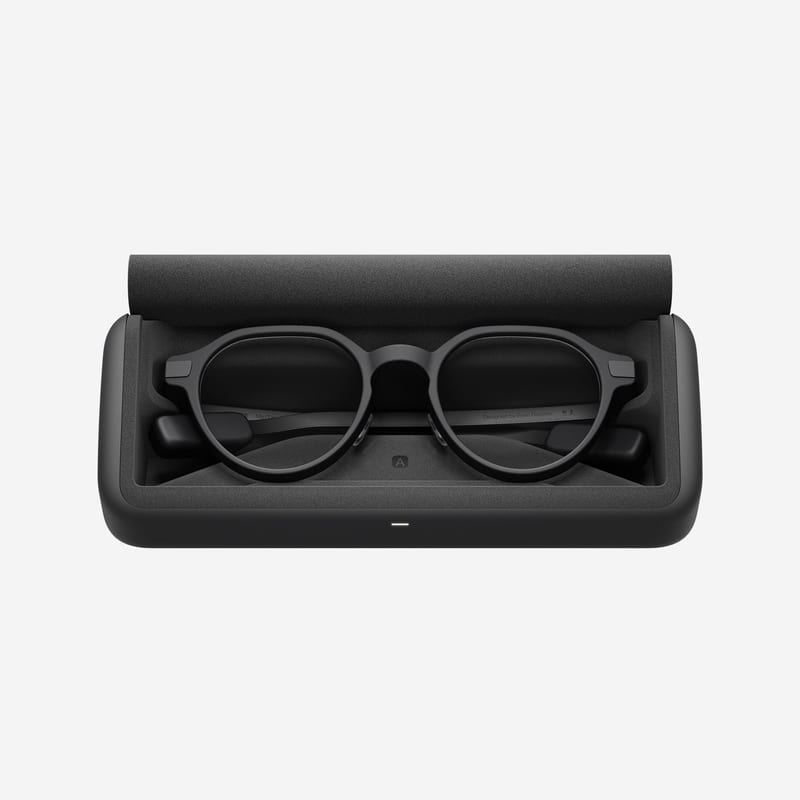
- Best all-day wear: Even Realities G2. Thirty-six grams, two days of battery, camera-free, sapphire lenses, and prescriptions from -12.00 to +12.00 built in.
The pattern across all twenty is that the label is doing too much work. Pick your row in the display column first, and within that group the choices get simple fast: field of view for viewers, weight and battery for glasses you wear, camera or deliberately no camera for how you want to be seen wearing them.
Frequently asked questions
What is the difference between AI glasses and AR glasses? AI glasses (Ray-Ban Meta, Oakley Meta, Echo Frames) have no display. You use them by talking and listening, and most add a camera. AR glasses put an image in front of your eye, either as a small waveguide HUD for text and directions or as a large birdbath virtual screen for video. They solve different problems and are not substitutes.
Do AR glasses have their own battery? The birdbath viewers do not. All twelve in this comparison draw power from whatever you plug them into over USB-C, so they last as long as your phone or laptop does. Only the eight display-free and waveguide models here carry batteries, ranging from about 3 hours on the RayNeo X3 Pro to roughly 48 on the Even Realities G2.
Can you wear smart glasses with a prescription? Yes, though how varies. The Even Realities G2 takes prescriptions from -12.00 to +12.00 directly. Several viewers build in myopia dials instead, with the Viture Luma correcting to -6.0D and the Luma Pro to -4.0D, which saves you buying inserts. The Meta and Oakley frames are sold through optical retail and take prescription lenses like any other frame.
Which smart glasses have the best field of view? The Viture Beast, at 58 degrees, followed by the Xreal One Pro at 57. Both are birdbath viewers. Waveguide glasses run far narrower on purpose, from 20 degrees on the Meta Ray-Ban Display to 30 on the Rokid Glasses, because a HUD is meant to sit at the edge of your vision rather than fill it.
Are there smart glasses without a camera? Yes. The Even Realities G2 is camera-free as a stated design decision, and Amazon's Echo Frames have never included one. Every birdbath viewer in this table also scores zero, though the Viture Beast and Luma Ultra carry sensors used for tracking rather than photography.
Sources / further reading
- Tom's Guide, the best smart glasses in 2026
- Meta, introducing Ray-Ban Meta Gen 2
- Meta, Oakley Meta Vanguard performance AI glasses
- Meta, Ray-Ban Display and the Neural Band
- Road to VR, Meta Ray-Ban Display specs breakdown
- Road to VR, Meta pauses the Ray-Ban Display international release
- Gizmodo, Ray-Ban Meta Gen 2 review
- DC Rainmaker, Oakley Meta Vanguard review
- Tom's Guide, Oakley Meta HSTN review
- Rokid, Rokid Glasses specifications
- Tom's Guide, Rokid Glasses review
- RayNeo, X3 Pro AI display glasses
- Tom's Hardware, RayNeo X3 Pro review
- Even Realities, G2 specifications
- TrustedReviews, Even Realities G2 review
- Xreal, full device specification table
- 9to5Google, Xreal 1S display upgrades at CES 2026
- Tom's Guide, Viture Beast review
- Viture, Luma Ultra specifications
- Tom's Hardware, RayNeo Air 3s review
- Tom's Hardware, RayNeo Air 3s Pro review
- GSMArena, Meta Ray-Ban Display and Ray-Ban Meta Gen 2 debut