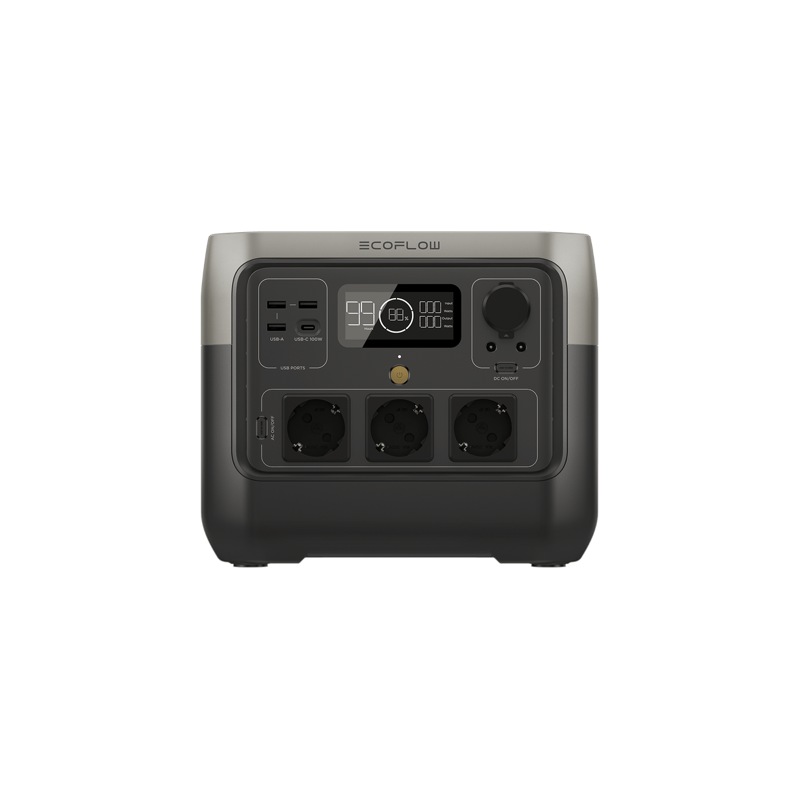
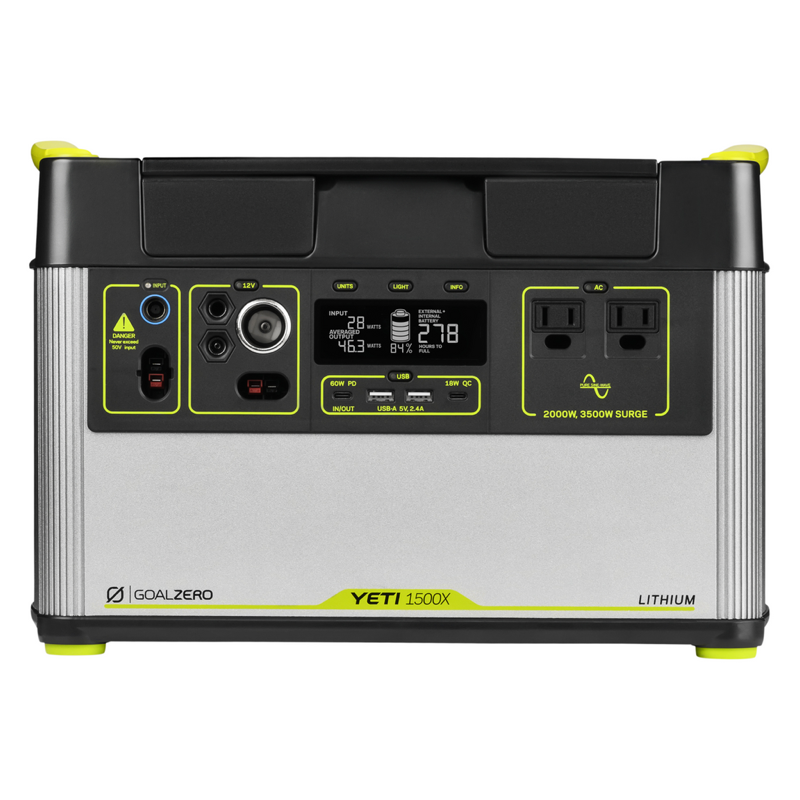
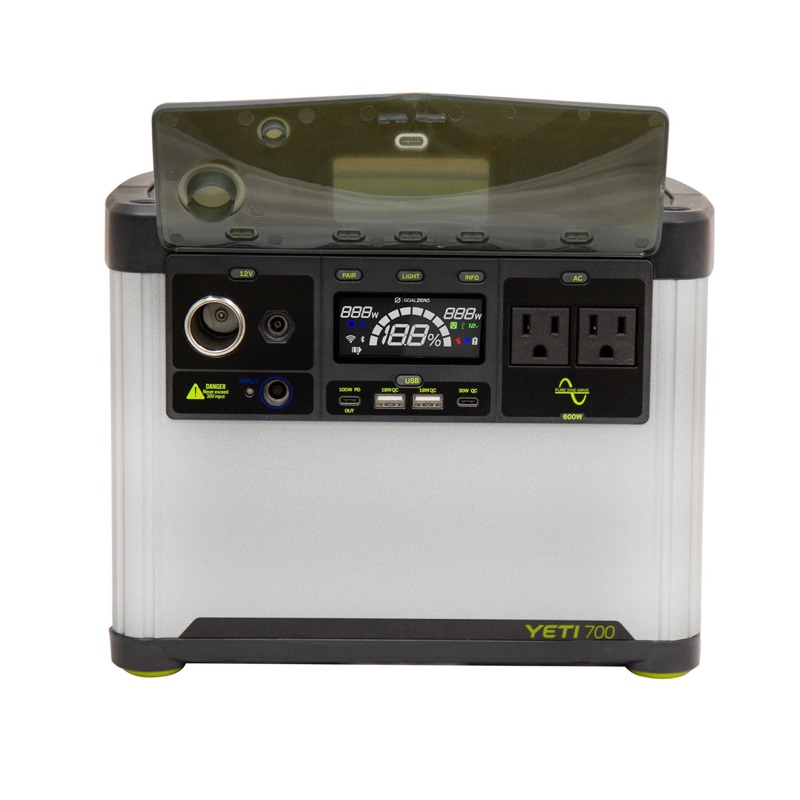
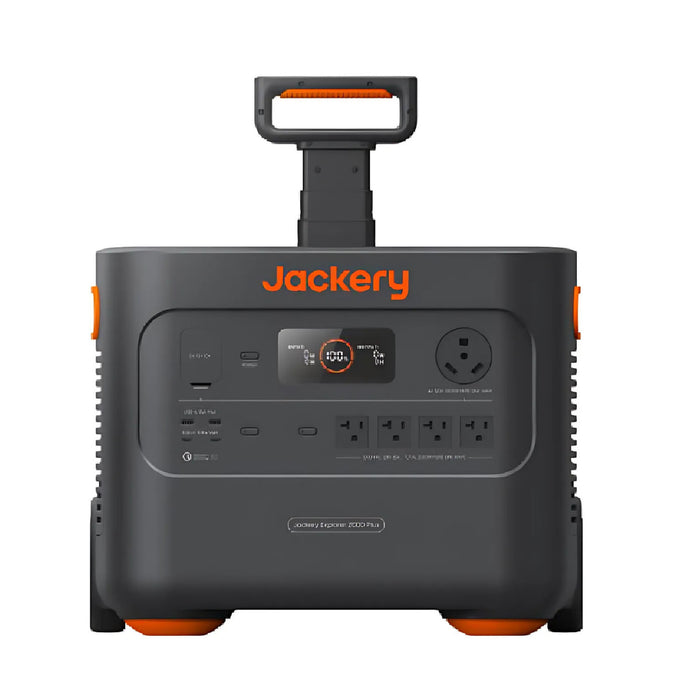
A portable power station is a large lithium battery bolted to an inverter and a screen. You fill it from a wall outlet or a solar panel, and it hands the power back through ordinary AC sockets, USB ports, and a car socket. The pitch is a generator you can run inside the tent: quiet, no fumes, no gas can. The problem is that almost every number printed on the front is the best case, measured in a lab under conditions you will rarely hit, and the gap between the box and the campsite is where people get burned.
Two truths before the specs. First, you never get the full rated capacity. The inverter, the heat, and the voltage conversion all take a cut, so a station rated at 1,024Wh gives you closer to 850 usable watt-hours in practice. In its bench testing, OutdoorGearLab found that none of the stations it measured actually delivered usable AC output matching their claimed capacity, and it weights real-world power delivery at 60 percent of its score for exactly that reason. Second, the giant watt number on the label is usually the surge figure, the half-second peak the inverter can tolerate, not the continuous output your microwave draws for two minutes straight. This comparison ranks on the continuous rating, because that is the number that decides whether the kettle trips it.
Slopsheets says: Buy on rated continuous watts and real watt-hours, not the big number on the box. Then take another 10 to 15 percent off the capacity for the inverter's cut, and size up from there.
Capacity: watt-hours, and the tax you pay to use them
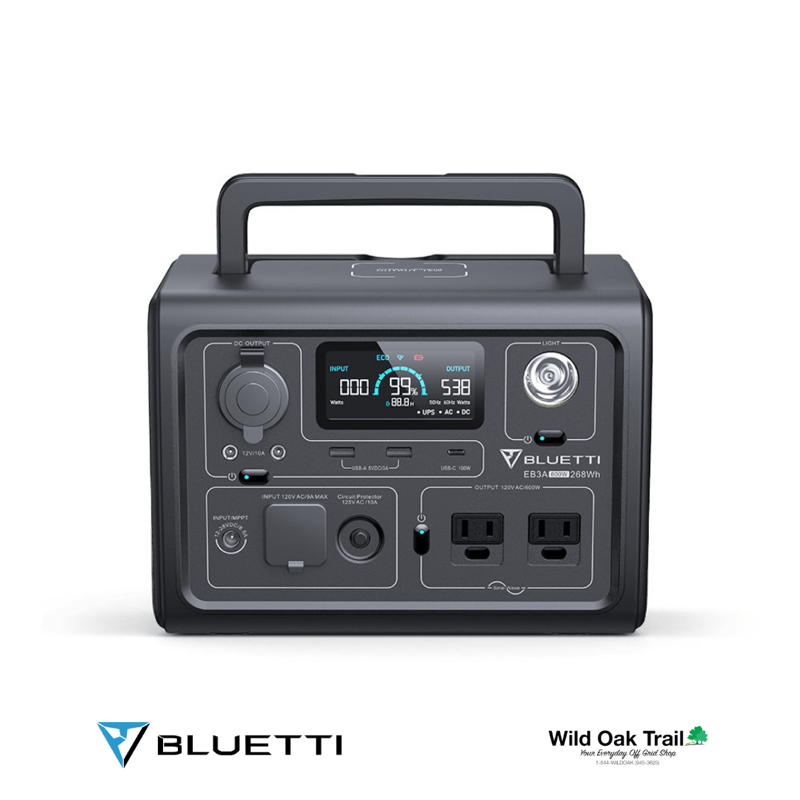
Watt-hours (Wh) are the size of the tank. A 60W fan for one hour is 60Wh; a 1,000W space heater for one hour is 1,000Wh. The units here span more than a tenfold range, from the pocket-class 268Wh Bluetti EB3A and 286Wh EcoFlow RIVER 3 Plus up to the 3,600Wh EcoFlow DELTA Pro, and that range maps almost perfectly to what each one is for.
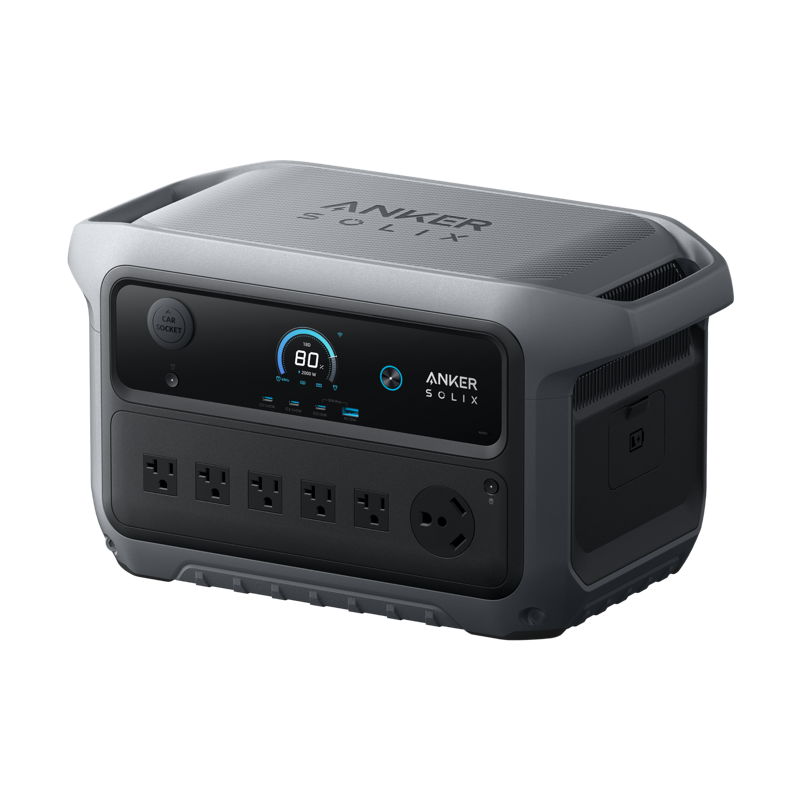
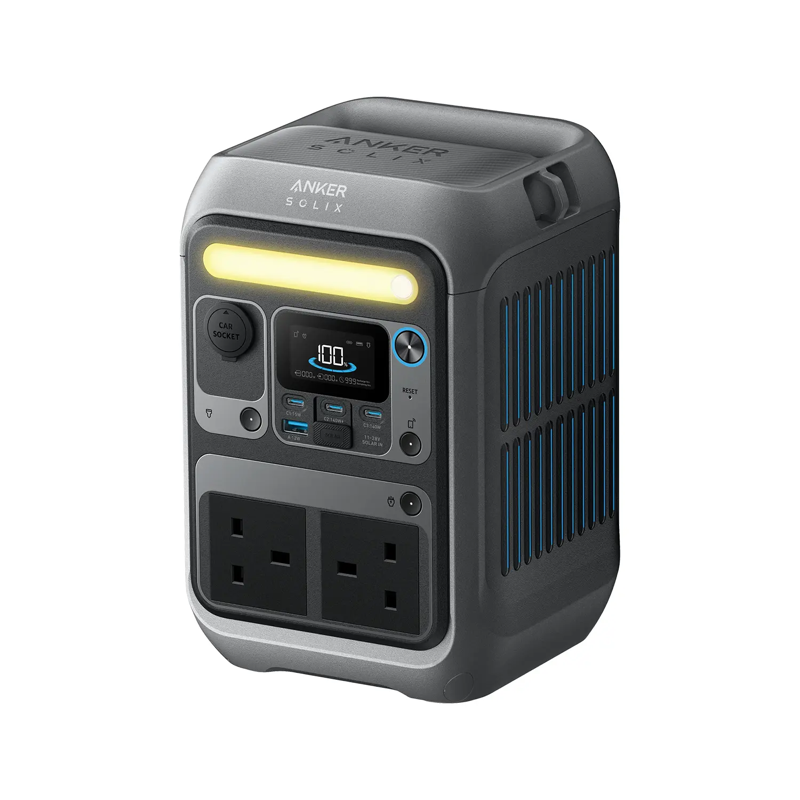
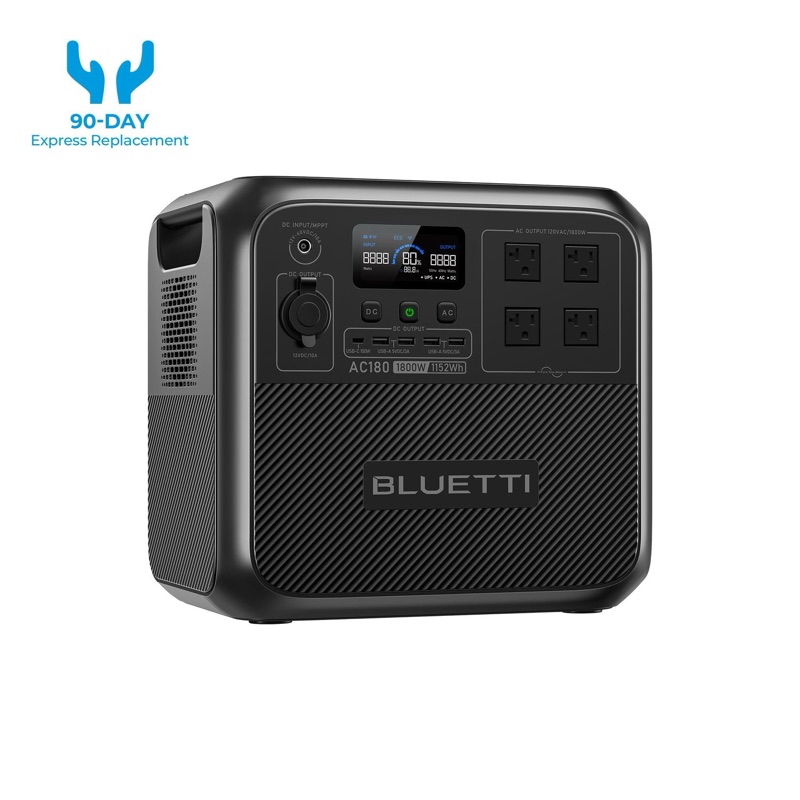
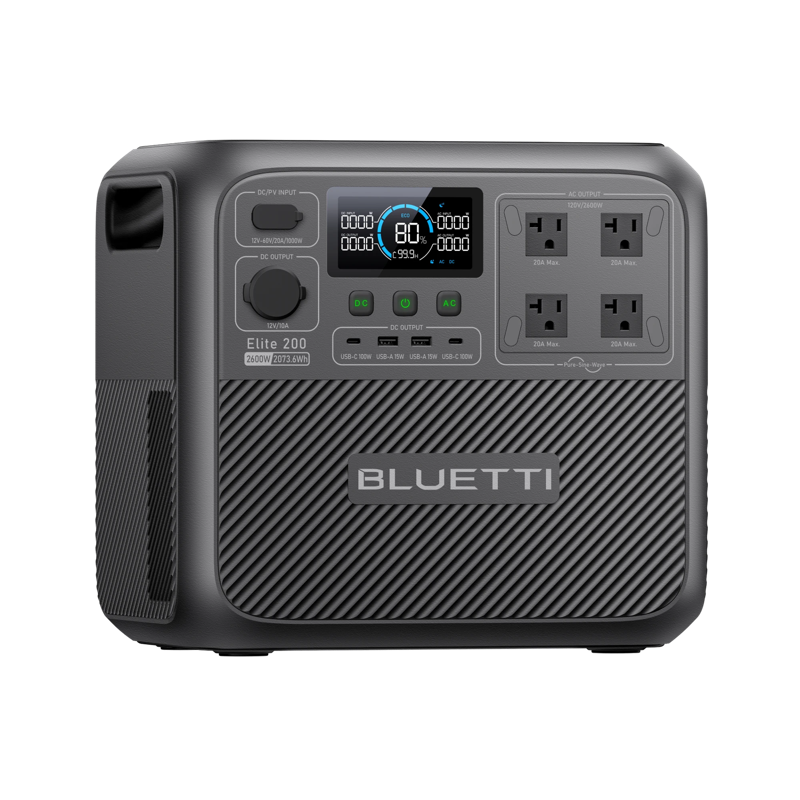
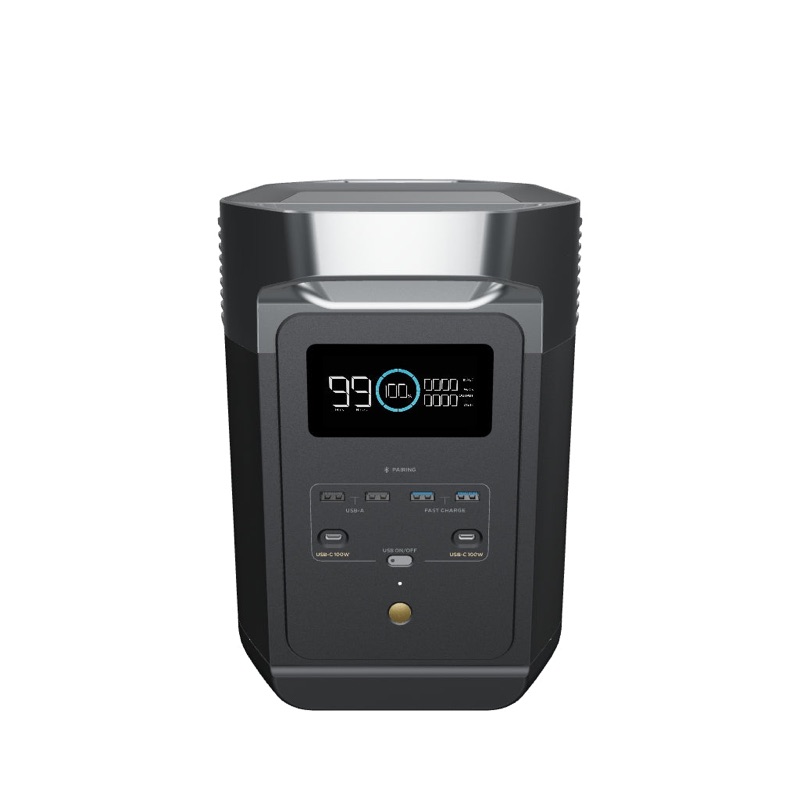
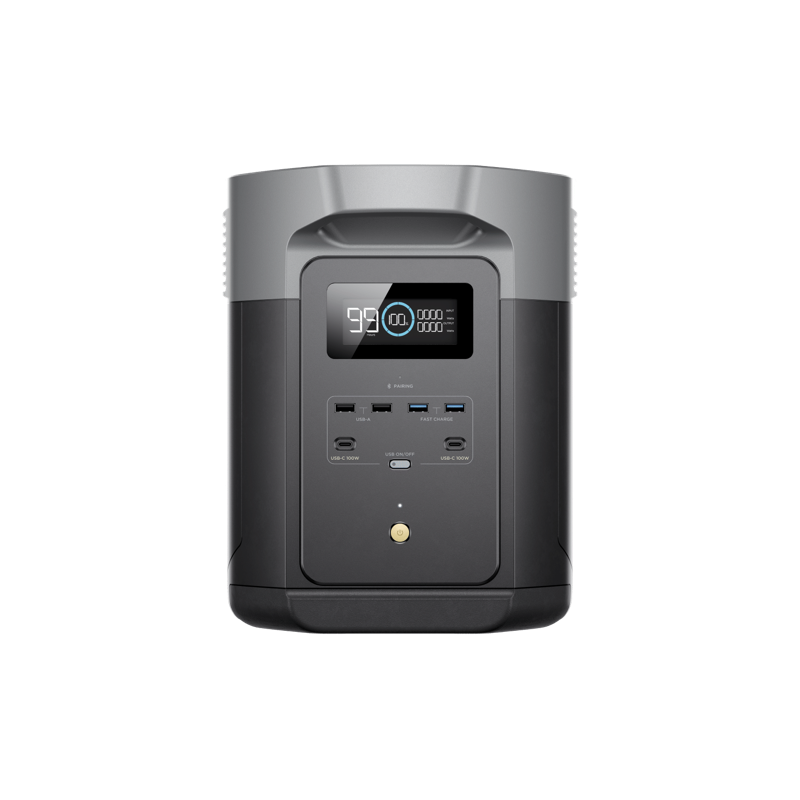
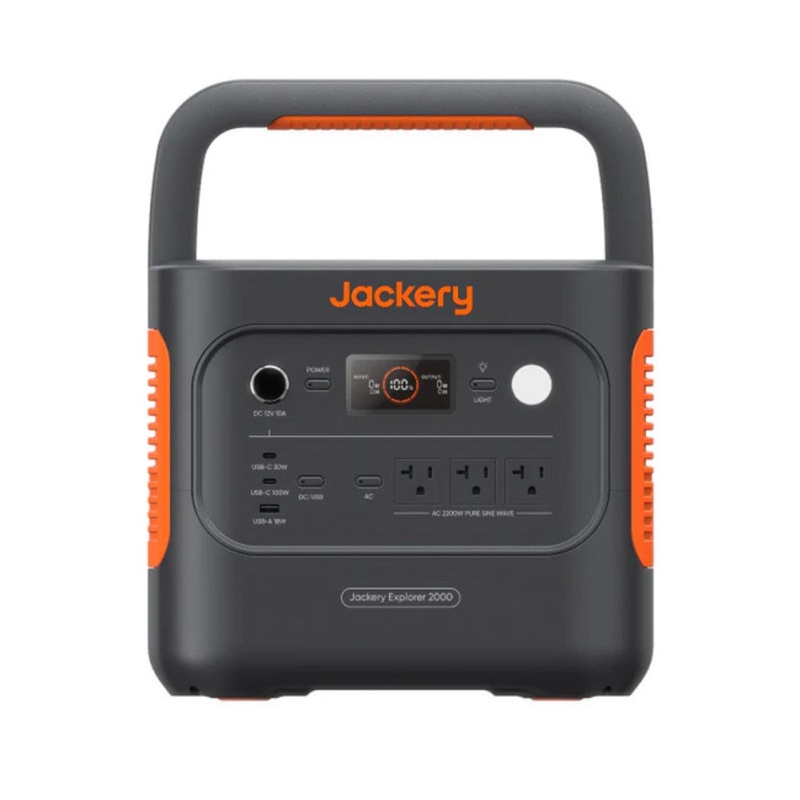
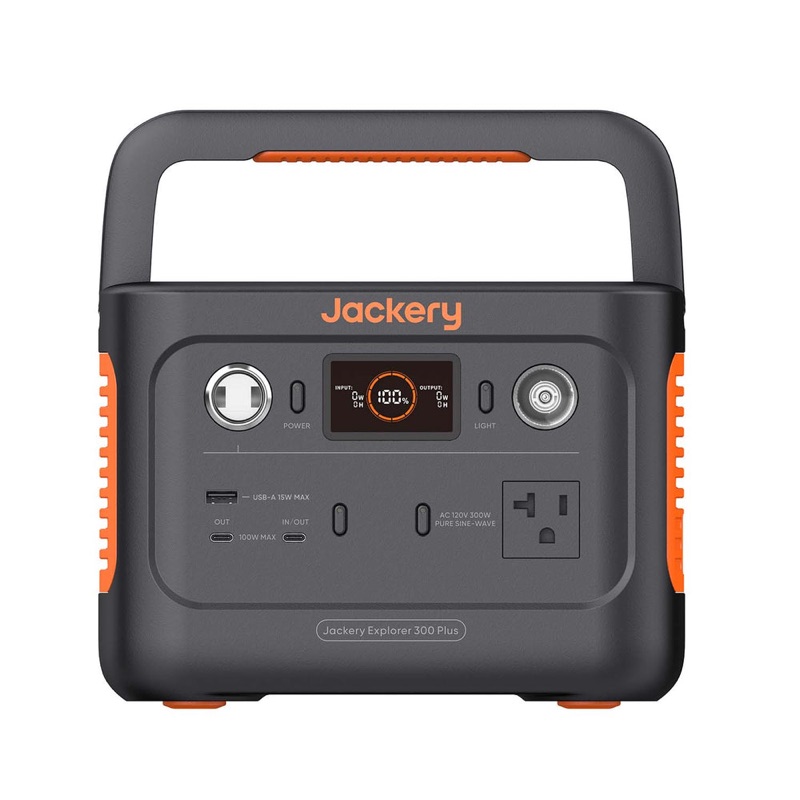
Under about 300Wh you are in phone, laptop, and camera territory: the Anker SOLIX C300, Jackery Explorer 300 Plus, and the two small EcoFlow and Bluetti units will recharge a laptop several times and run a CPAP for a night, and not much more. The 700Wh-to-1,200Wh middle, the Goal Zero Yeti 700, EcoFlow RIVER 2 Pro, DELTA 2, Jackery Explorer 1000 v2, Anker SOLIX C1000, DJI Power 1000, and Bluetti AC180, is the sweet spot for a weekend of camping or a short outage covering a fridge, a router, and phones. Above 2,000Wh, the Jackery Explorer 2000 v2 and 2000 Plus, EcoFlow DELTA 2 Max, Anker SOLIX C2000, and Bluetti Elite 200 V2, you are into home-backup and job-site duty, and the DELTA Pro sits on its own at 3,600Wh with expansion batteries that stack into the double digits of kilowatt-hours.
The honest move is to add up the watt-hours of what you actually plan to run for how long, then buy the tier above it, because the usable figure is always smaller than the sticker.
AC output: running watts vs the surge number on the box
Capacity is how long; output is how much at once. This is where the marketing gets loudest, because a surge rating always sounds better than a continuous one. The EcoFlow RIVER 3 Plus is rated at 600W continuous but advertises a boost mode near 1,200W; the RIVER 2 Pro runs 800W continuous under an "X-Boost" figure of 1,600W. Those boost modes are real, but they work by clipping the voltage, which some motors and compressors dislike, and they are not the number to plan a heater around.
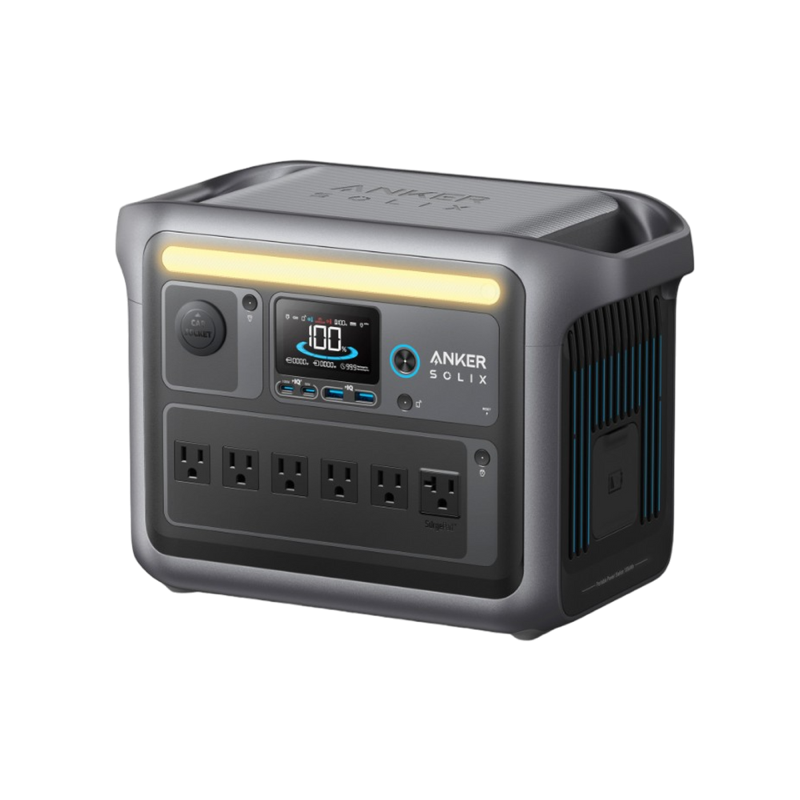
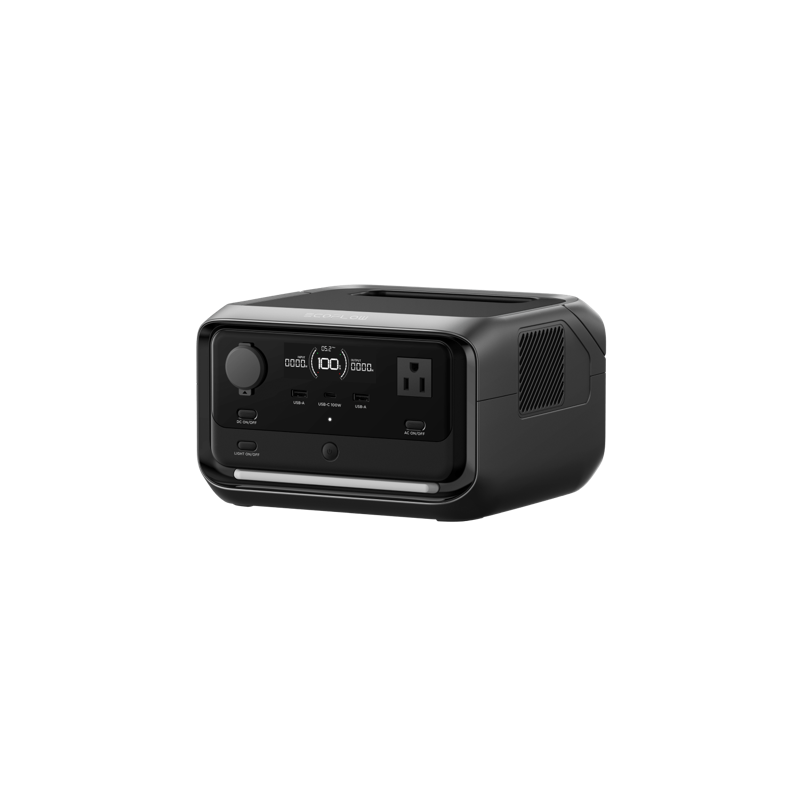
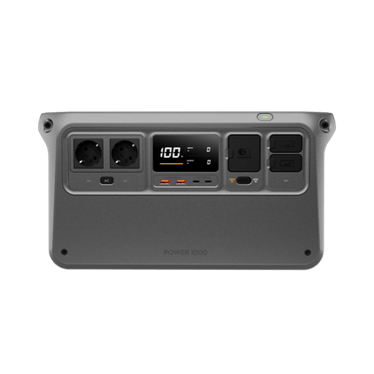
The rated continuous figures are what matter, and they climb with size. The little 300W units (Anker SOLIX C300, Jackery Explorer 300 Plus) will not run a 1,000W kettle or a hair dryer at all. The 1,800W class, the EcoFlow DELTA 2, Bluetti AC180, and Anker SOLIX C1000, clears most kitchen appliances one at a time. Above that, the Bluetti Elite 200 V2 (2,600W), Jackery Explorer 2000 Plus (3,000W), and EcoFlow DELTA Pro (3,600W) can drive a microwave and a coffee maker together, or a power tool that would stall the smaller boxes. The DJI Power 1000 is the interesting outlier: a modest 1,024Wh tank behind a stout 2,200W inverter, built to punch above its capacity for tools and appliances in short bursts.
The one rule: Match the continuous watts to your single hungriest device, then check that two things running at once stay under that ceiling. Ignore the surge number unless you are starting a motor.
Battery chemistry: LiFePO4 vs the older lithium-ion
There is one chemistry line that matters, and it splits this field cleanly. Seventeen of these eighteen stations use lithium iron phosphate, written LiFePO4 or LFP. The lone holdout is the Goal Zero Yeti 1500X, which uses an older NMC lithium-ion pack.
The difference is lifespan and heat tolerance. LiFePO4 cells are typically rated for 3,000 to 4,000 full charge cycles to 80 percent capacity, roughly ten years of weekly use, and they are more stable at high temperatures. Older NMC packs, the same broad family as a laptop battery, usually tap out around 500 to 800 cycles and are more sensitive to heat. NMC is lighter per watt-hour, which is why it hung on in early units, but the industry has moved almost entirely to LiFePO4 for stationary and backup use, and the spec sheets here reflect that. The Yeti 1500X is a capable, well-built machine, but on chemistry alone it is the old guard, and its charging (below) tells the same story.
Recharge speed: the fine print on "one hour" charging
Every brand races to print the smallest recharge number, and this is the spec most polluted by fine print, so read the note before the number. Throughout this comparison, the recharge figure is the fastest full charge from a standard 120V household outlet using the equipment in the box, which is the only apples-to-apples version of the question.
Under that rule, the Anker SOLIX C1000 is the quickest full-size unit at 58 minutes, with the EcoFlow DELTA 2 Max (66 minutes) and the small EcoFlow and DJI units close behind. Jackery's headline times, 60 minutes on the Explorer 1000 v2 and 78 on the Explorer 2000 v2, are its "Emergency Charge" mode, which is genuinely built in and needs no extra hardware, but runs the fans harder and hotter; the quiet everyday charge is closer to 1.7 hours. EcoFlow's DELTA Pro is the honest cautionary tale at the top: its famous "1.8 hour" charge needs a 240V outlet, and from a normal wall socket it takes about 2.7 hours, which is the figure listed here.
The EcoFlow DELTA Pro charges in 1.8 hours, the headline number that sells the box.
That 1.8-hour figure needs a 240V outlet. From a normal wall socket it takes about 2.7 hours.
The real outlier is the Goal Zero Yeti 1500X. On the 120W charger in the box, a full refill takes about 14 hours, an overnight-plus proposition; Goal Zero sells a faster supply that cuts it to roughly three hours, but that is a separate purchase, and the number people actually live with out of the box is the slow one. Two of the Bluetti figures (the EB3A and Elite 200 V2 full-charge times) come from independent lab measurement, since Bluetti mostly advertises a 0-to-80-percent time rather than a full one; StorageReview's bench run on the EB3A is the source there.
What the box won't tell you: A fast charge you can only reach on 240V, or with an accessory you have to buy, is not the charge time. Plan around the number the included brick delivers from a kitchen outlet.
Weight: the number that decides whether it leaves the garage
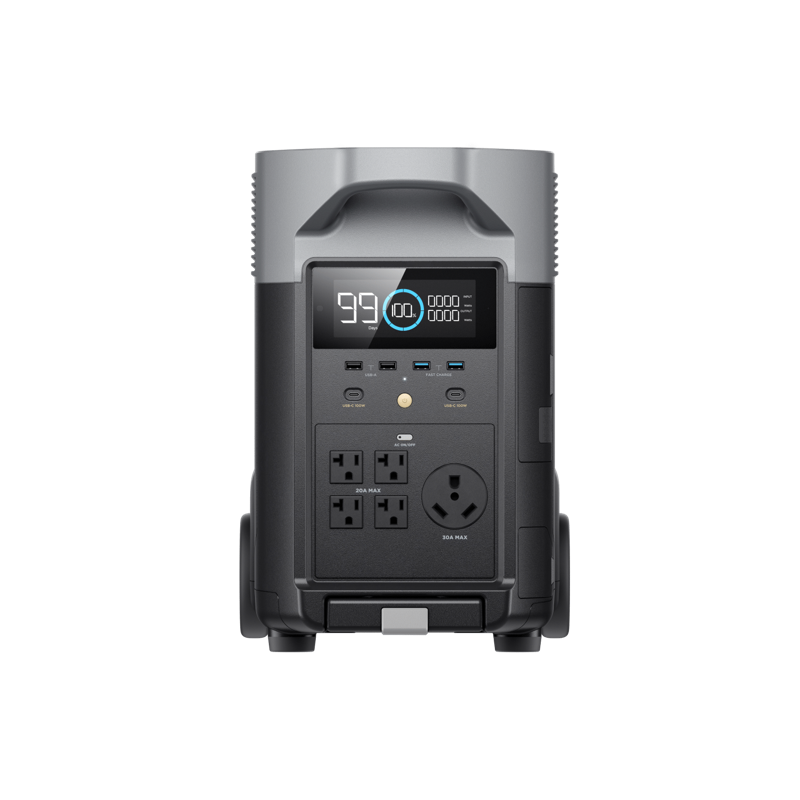
Portable is doing a lot of work in "portable power station." The spread here runs from the 8.3 lb Anker SOLIX C300 and Jackery Explorer 300 Plus, genuinely one-handed, to the 99 lb EcoFlow DELTA Pro, which has wheels and a luggage handle because it has to. Weight tracks capacity, but not evenly, and the gaps are where the buying decisions hide.
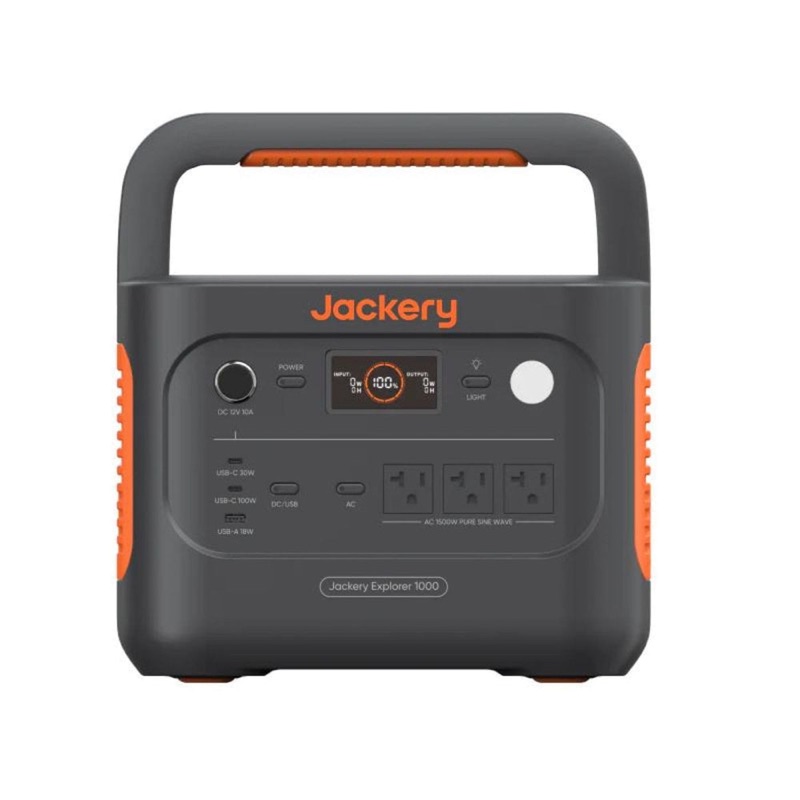
In the roughly-1kWh class, the Jackery Explorer 1000 v2 is the standout at 23.8 lb, several pounds under the 27 lb EcoFlow DELTA 2 and the 28.4 lb Anker SOLIX C1000 for a similar tank, which is the difference between a cheerful carry to the campsite and a grudging one. At the top, the two-kilowatt-hour units split sharply: the Jackery Explorer 2000 v2 (39.5 lb) and Anker SOLIX C2000 (41.7 lb) stay liftable by one determined person, while the Jackery Explorer 2000 Plus (61.5 lb) and the wheeled DELTA Pro are two-hand, plant-it-and-leave-it machines. If you will carry the thing more than you park it, weight outranks almost everything else on this page.
AC outlets: how many things you can actually plug in
Watt-hours and watts are meaningless if there is only one socket for the three things you brought. Outlet count scales with size, but some brands are stingier than their tier suggests. At the small end, the Jackery Explorer 300 Plus and Goal Zero Yeti 700 give you a single AC outlet, which forces a power strip the moment you have a laptop and a fan; the similarly sized EcoFlow RIVER 3 Plus offers three, which is the practical edge in that class.
In the mainstream tiers, the EcoFlow DELTA 2, DELTA 2 Max, and Anker SOLIX C1000 lead with six AC outlets each, enough to skip the power strip for a small campsite or a desk during an outage. The DJI Power 1000 and Goal Zero Yeti 1500X give only two, which is thin for their capacity and worth noting if you were picturing them running a household corner. Count your plugs before you buy, because adding a strip adds another point of failure and another thing to trip over in the dark.
So which portable power station should you buy?
Buy for the job, not the biggest number you can afford. Our four picks:
- Best overall, Anker SOLIX C1000. A true kilowatt of LiFePO4, 1,800W across six outlets, a sub-hour full charge, and the lightest body of any full-size unit here. OutdoorGearLab gave it their overall nod for the same reasons, and it is the one most people should stop looking after.
- Best for home backup, EcoFlow DELTA Pro. The only unit here that scales past a single box: 3,600Wh and 3,600W on wheels, stackable into days of fridge-and-lights runtime. Accept the leisurely standard-outlet charge and it is the closest thing to a whole-home cushion on this list.
- Best budget grab-and-go, EcoFlow RIVER 3 Plus. For not much more weight than the 300W crowd, it runs 600W through three outlets and refills in an hour, which makes it far more useful than a heavier single-socket rival at the same capacity.
- Best lightweight kilowatt, Jackery Explorer 1000 v2. The lightest roughly-1kWh station here at 23.8 lb, with a one-hour emergency charge, for people whose station spends more time on their shoulder than on the floor.
Frequently asked questions
How many watt-hours do I actually need? Add up the wattage of each device times the hours you will run it, then buy the next tier up to cover the 10-to-15-percent inverter loss. A phone-and-laptop weekend lives happily under 500Wh; a fridge, router, and lights through a day-long outage wants 1,000 to 2,000Wh; running larger appliances or a work site points at 2,000Wh and up.
What is the difference between continuous and surge watts? Continuous (or rated) watts are what the station delivers steadily, and it is the number that matters. Surge (or peak) watts are a brief tolerance for the spike when a motor or compressor starts. A unit rated 1,800W continuous with a 2,700W surge can run an 1,800W load all day but only tolerate the higher figure for a moment.
Is LiFePO4 really better than regular lithium-ion? For a power station, yes, on the terms that matter here. LiFePO4 cells typically last 3,000 to 4,000 charge cycles versus roughly 500 to 800 for the older NMC lithium-ion, and they handle heat better. NMC is lighter per watt-hour, but only one unit in this comparison, the Goal Zero Yeti 1500X, still uses it.
Can I run a power station while it charges? Most of these support pass-through, drawing from the wall while powering your gear, so you can leave one plugged in as an always-ready backup. It is fine occasionally, though constantly cycling a battery at full charge shortens its life over years, so it is not the ideal permanent setup.
Why does the same model charge in one hour in some reviews and three in others? Because "charging" hides several different tests: a fast mode that runs hot, a 240V outlet, or an accessory charger sold separately. The times in this comparison are all the fastest full charge from a normal 120V wall socket using the gear that ships in the box.
Sources / further reading
- OutdoorGearLab: The Best Portable Power Stations, lab-tested usable capacity, output, and charge times across the category.
- TechRadar: Best portable power stations, reviews and picks for off-grid and home backup use.
- GearJunkie: The Best Portable Power Stations, field testing for camping and van life.
- StorageReview: Bluetti EB3A Power Station Review, independent bench measurement of charge time and output.