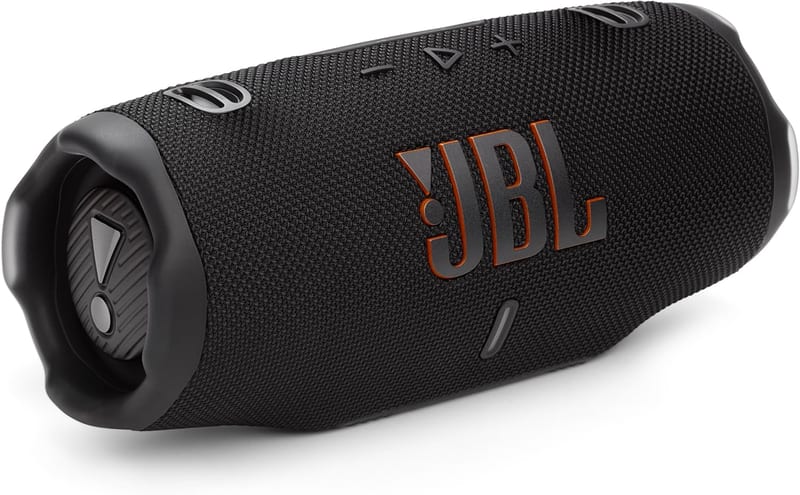
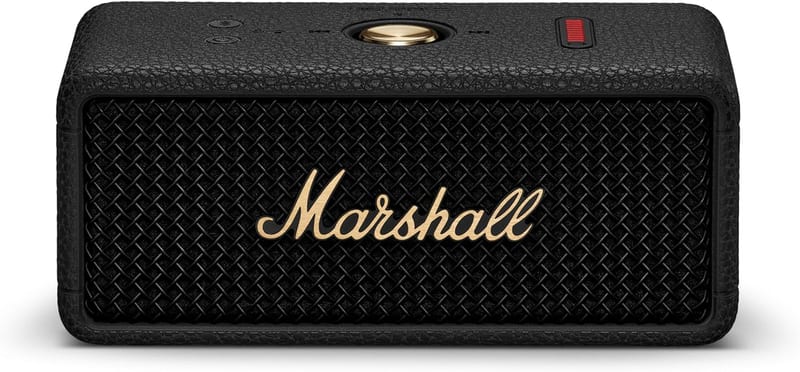
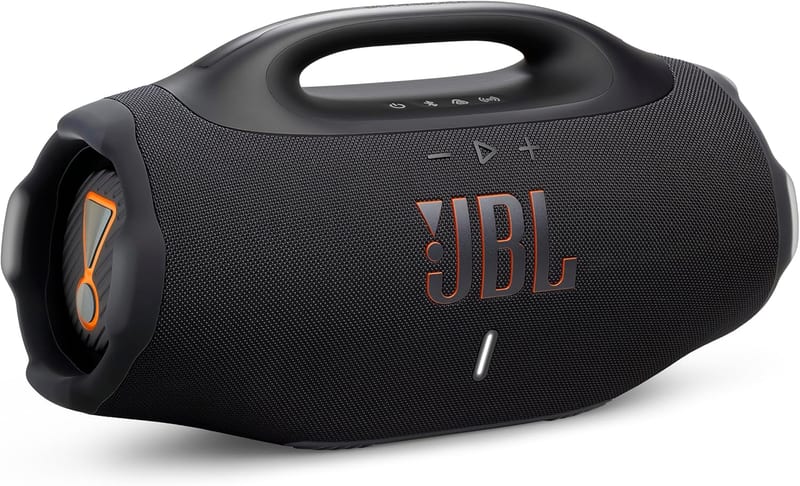
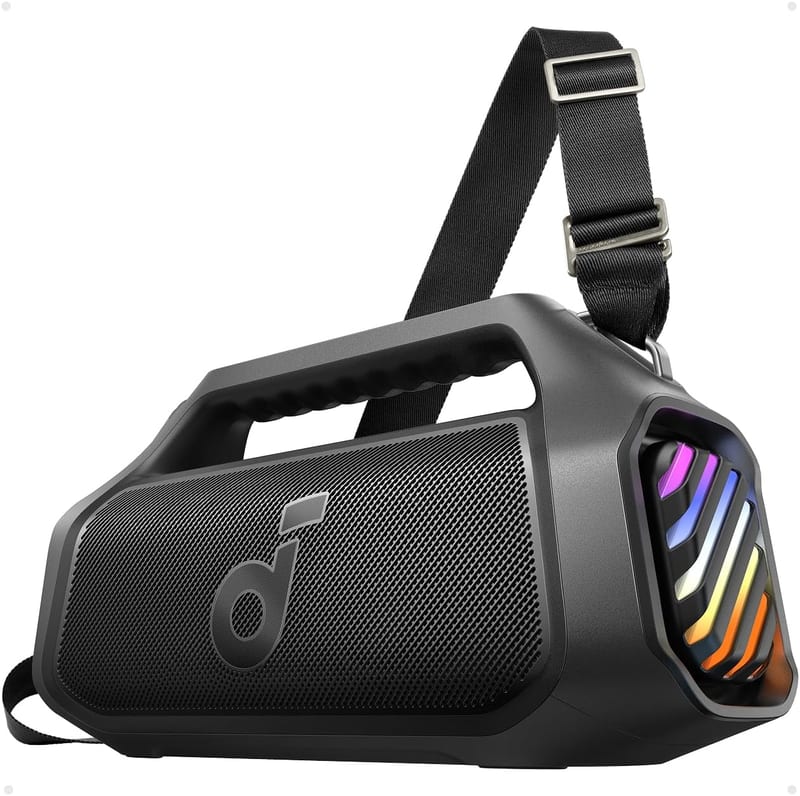
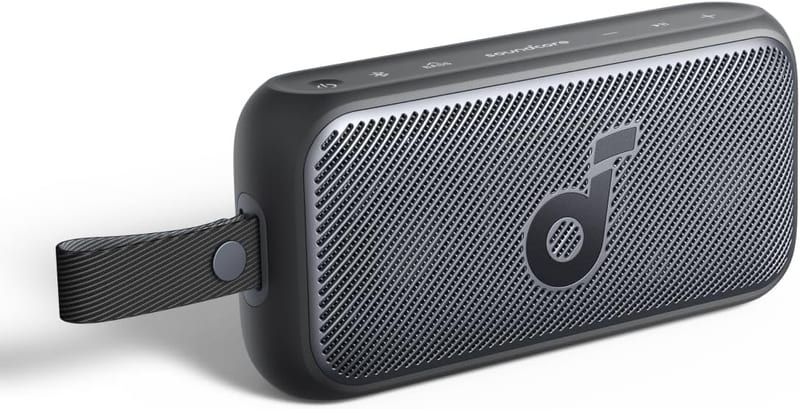
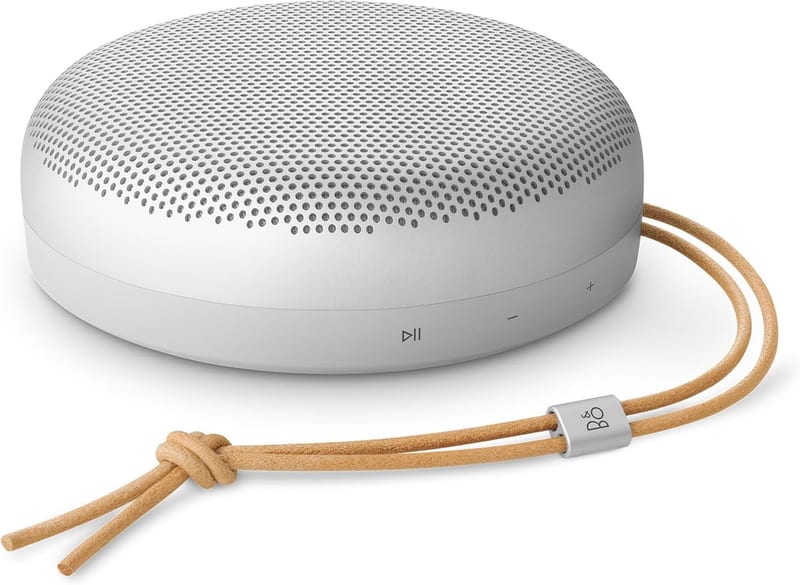
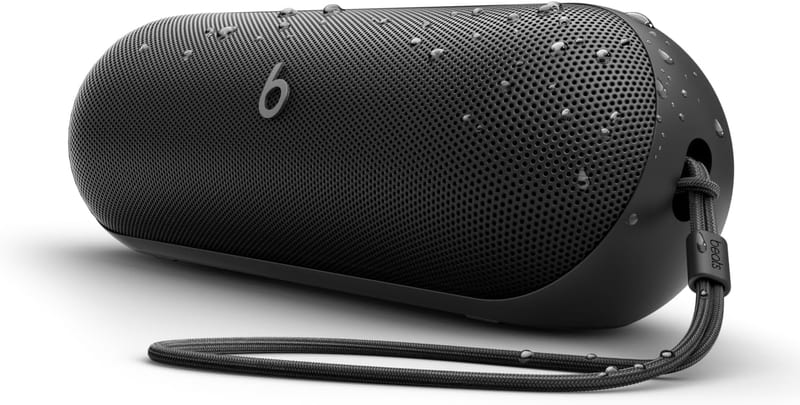
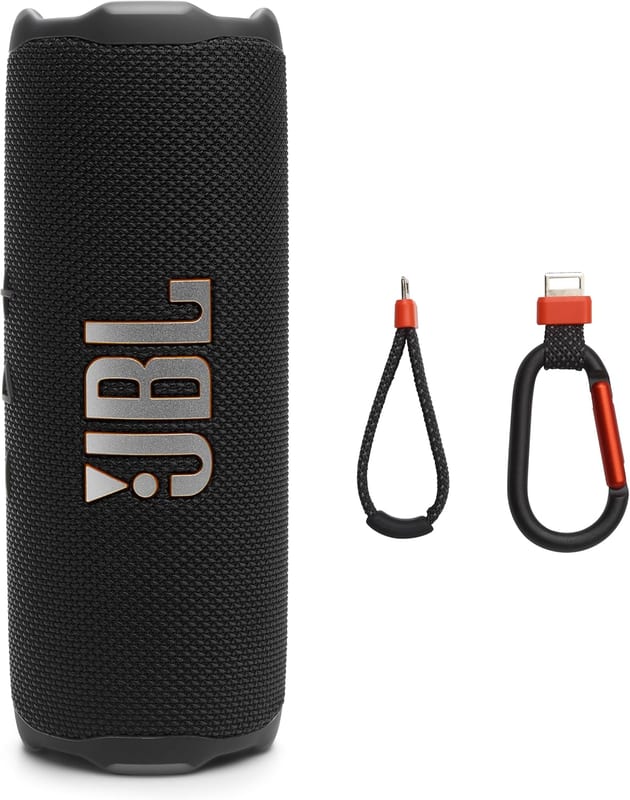
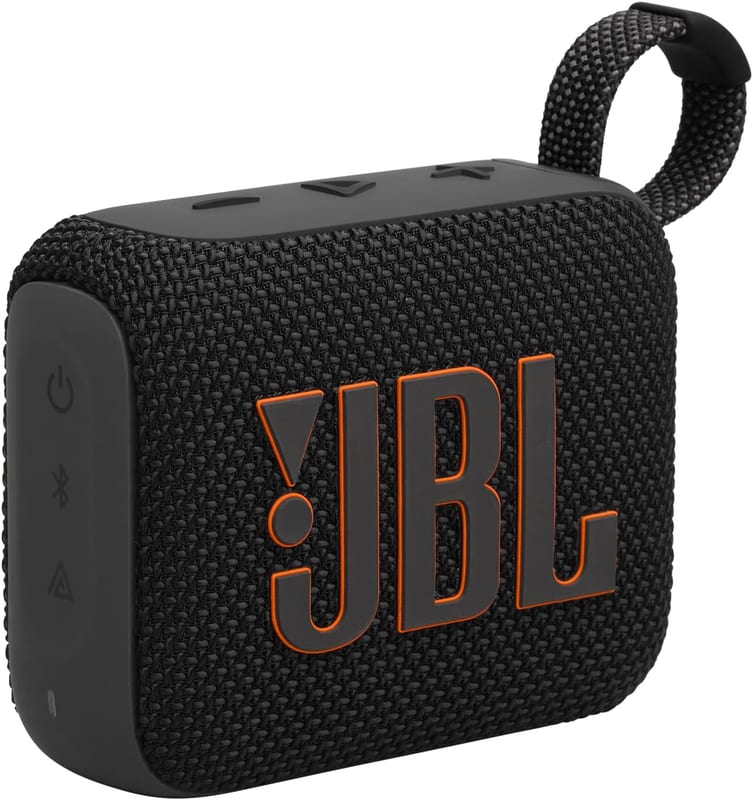
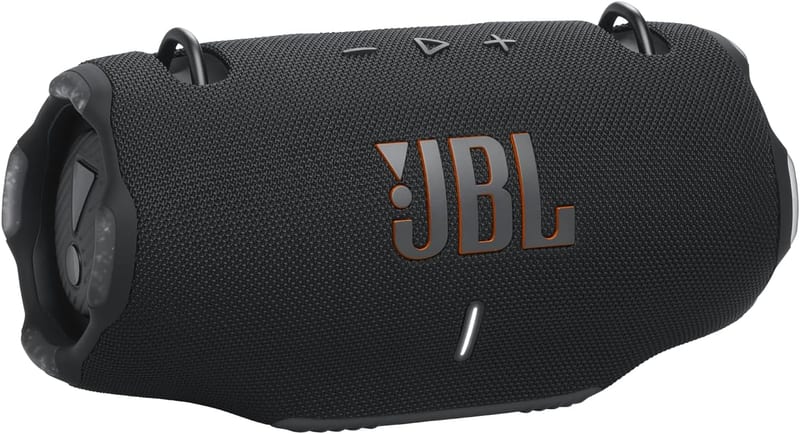
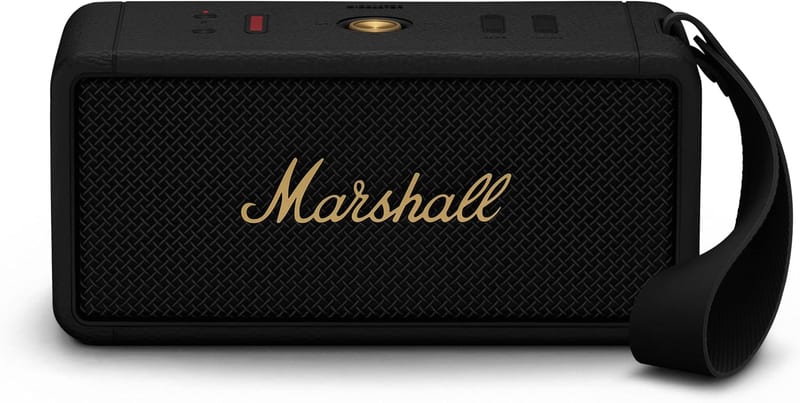
There is a specific thing that happens when you compare portable speakers, and it is the reason this table exists. You line up the battery numbers off the boxes, JBL says 16 hours for the Flip 7, Marshall says 32 for the Emberton III, and you conclude Marshall has doubled JBL. Then you read the actual spec sheet and find that JBL's 16 is 14 hours of playback plus 2 more from a boost mode that turns the volume down for you. Marshall's 32 is just 32.
Nobody is lying. The numbers are simply not the same number, and every roundup on the internet stacks them in one column anyway.
So the playtime figures in the table on this page are base ratings only. Where a manufacturer publishes a boosted figure, we used the unboosted one underneath it. That is the single biggest piece of normalization work in this category and it reorders the rankings substantially.
Six specs decide how a portable speaker actually behaves once you own it: how long it runs, what it survives, what it weighs, whether it can gang up with other speakers, whether it can rescue your phone at 4pm, and which Bluetooth version it speaks. Everything else is voicing, and voicing is a taste argument the table cannot settle for you.
Rated playtime: 7 hours to 32, once you strip the boost modes
The honest spread here runs from the JBL Go 4 at 7 hours to the Marshall Emberton III at 32.
JBL is the whole reason this section needs a caveat. Its published spec sheets separate the two figures explicitly: the Flip 7 is 14 hours plus 2 with Playtime Boost, the Charge 6 is 24 plus 4, the Xtreme 4 is 24 plus 6, the Boombox 4 is 28 plus 6, the Go 4 is 7 plus 2, the Clip 5 is 12 plus 3. The marketing everywhere else quotes the sums. Playtime Boost is a real feature and it does buy you those hours, but it does so by capping output, so comparing a boosted JBL against an unboosted Marshall is comparing a quiet speaker to a loud one.
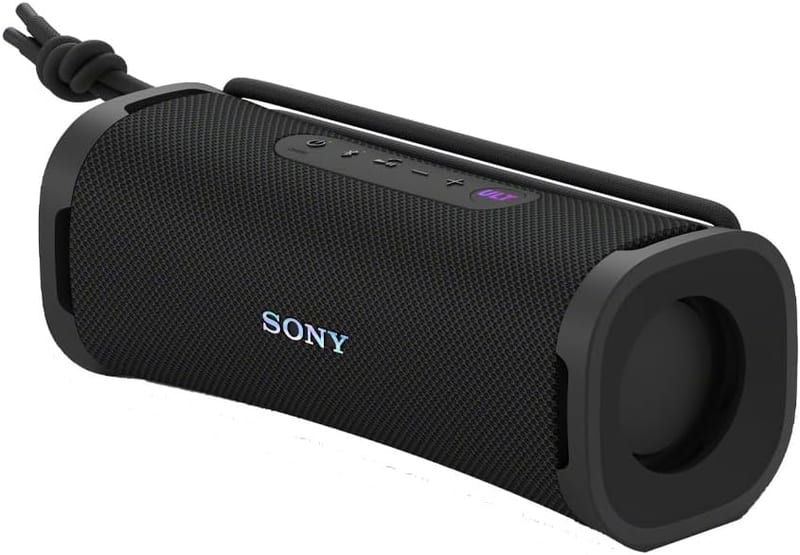
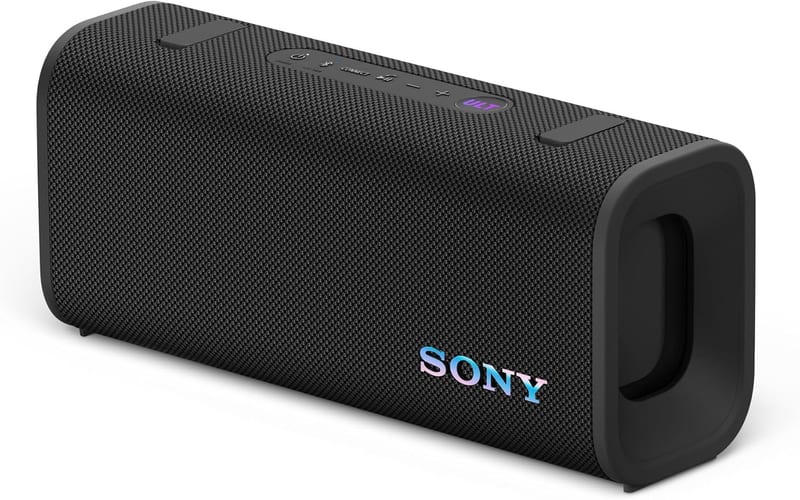
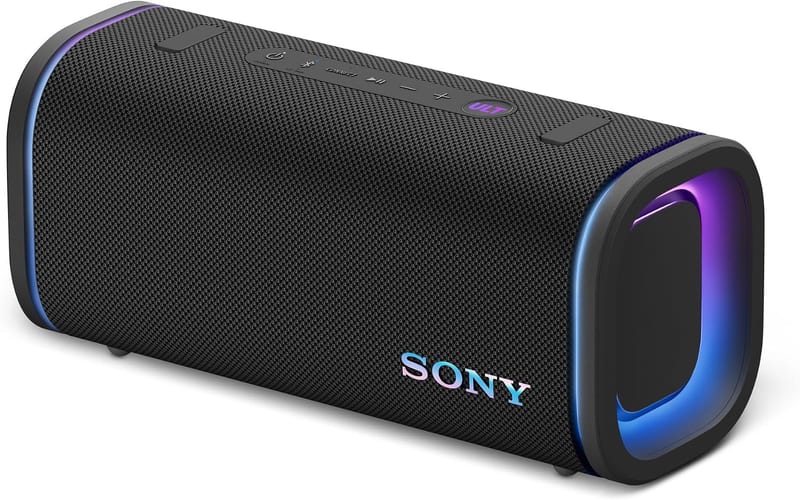
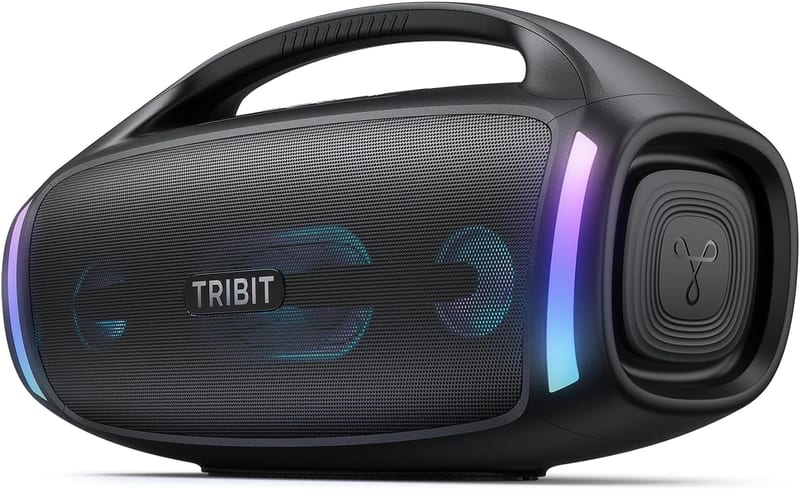
With that flattened, the top of the table is Marshall's Emberton III at 32 hours, the Tribit StormBox Blast 2 at 30, the JBL Boombox 4 at 28, and then a wide band of 24-hour speakers: the Charge 6, the Xtreme 4, the Sony ULT Field 3, the Sonos Move 2, the Beats Pill, and the Bang & Olufsen Beosound A1. The Sony ULT Field 5 edges past them at 25.
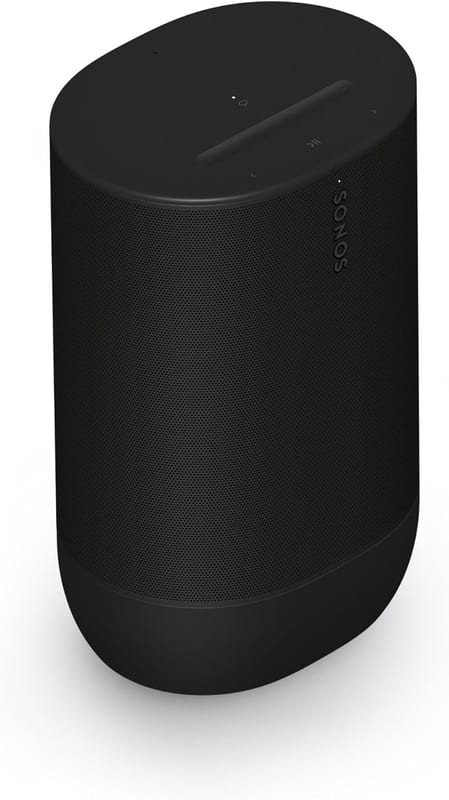
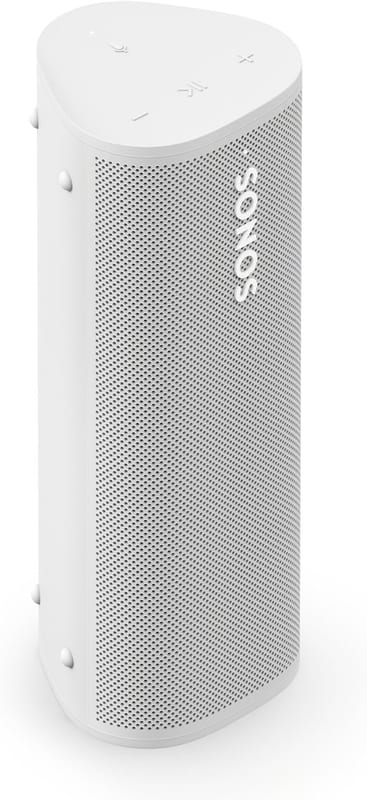
The bottom is more interesting than the top. The Sonos Roam 2 rates 10 hours, the lowest of any speaker here that costs real money, and that is the price of a speaker that is really a Wi-Fi speaker with a battery bolted on. SoundGuys' testing of the wider Sonos portable line has repeatedly found the Wi-Fi radio is what eats the budget. If the Roam 2 lives on your kitchen counter and occasionally goes outside, 10 hours is irrelevant. If it lives in a bag, 10 hours is a problem.
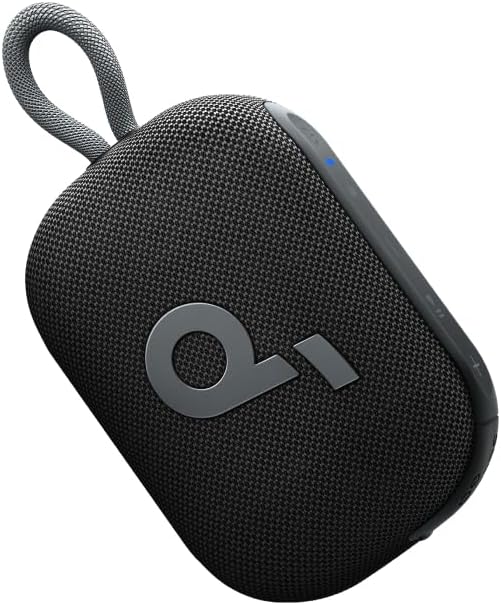
The Anker Soundcore Select 4 Go is the outlier that should embarrass most of this list. Twenty hours, in something that weighs a little over half a pound, at a price that rounds to nothing.
Slopsheets says: Treat 20 base hours as the line between a speaker you charge weekly and one you charge constantly. Anything quoting a "boost" or "extended" mode is quoting two products in one number, so find the base figure before you compare it against anything.
Water and dust: what IP67 actually buys, and the one speaker that skips it
Twenty of the 28 speakers here are IP67, which has quietly become the floor for the category. The digits are worth knowing: the first is dust, the second is water. A 6 for dust means fully sealed. A 7 for water means 30 minutes at one metre. So IP67 means sand and a dunk, which is exactly the failure mode these things face.
Three speakers go further to IP68, and they are all JBL: the Flip 7, the Charge 6, and the Boombox 4. The eighth digit means immersion deeper than one metre to the manufacturer's stated conditions. In practice, for a pool, the difference between IP67 and IP68 is close to academic, and neither one covers salt water corrosion, which is what actually kills speakers at the beach.
Two Anker units, the Motion 300 and the Boom 2 Plus, are IPX7. The X is not a failure, it means dust was never tested. Given the Boom 2 Plus is explicitly sold as a beach and pool speaker and floats, an untested dust rating on a device that will spend its life in sand is a strange gap to leave in the paperwork.
Then there is the Sonos Move 2 at IP56, the only speaker in this comparison with no immersion rating at all. IP56 is dust-protected and rated for water jets, so rain and a hose are fine. A pool is not. What Hi-Fi's review of the Move 2 makes the same point in different words: this is a patio speaker that can go camping, not a poolside speaker.
The one rule: IP67 is the number to hold out for and 20 of these clear it. The upgrade to IP68 is not worth reordering your shortlist over. The downgrade to IP56 on the Move 2 genuinely is, if water is anywhere in your plan.
Weight: the spec that decides whether it ever leaves the house
This is where the category stops being one category. The range in this table is a factor of 37, from the JBL Go 4 at 0.42 lb to the Tribit StormBox Blast 2 at 15.76 lb.
Four rough tiers emerge, and they map onto real behaviour:
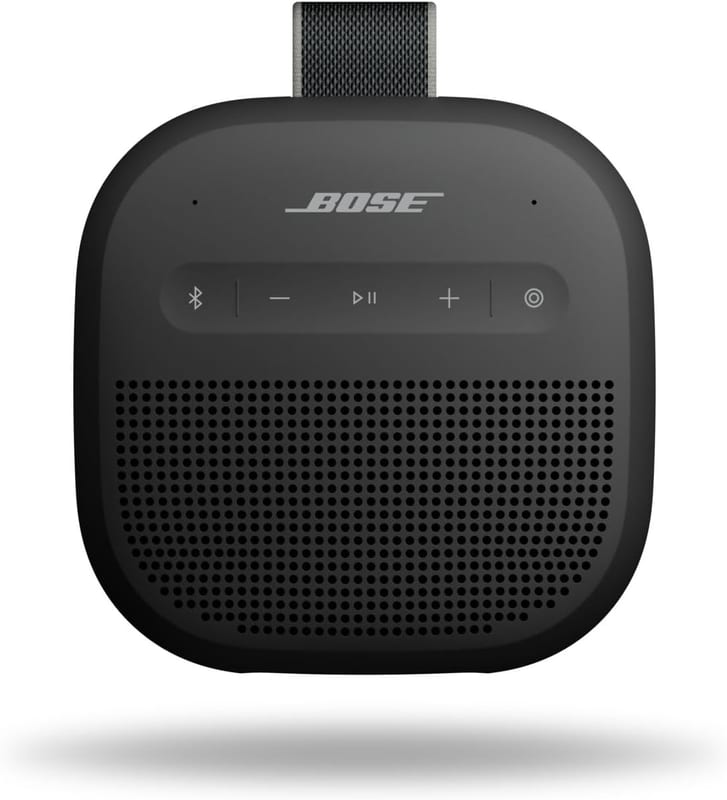
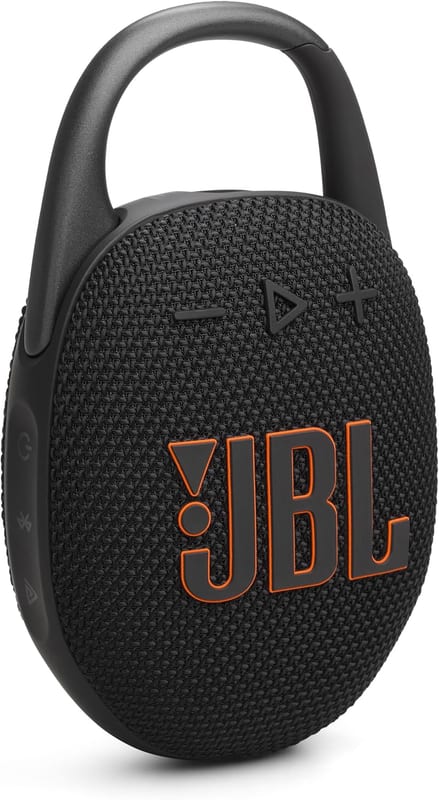
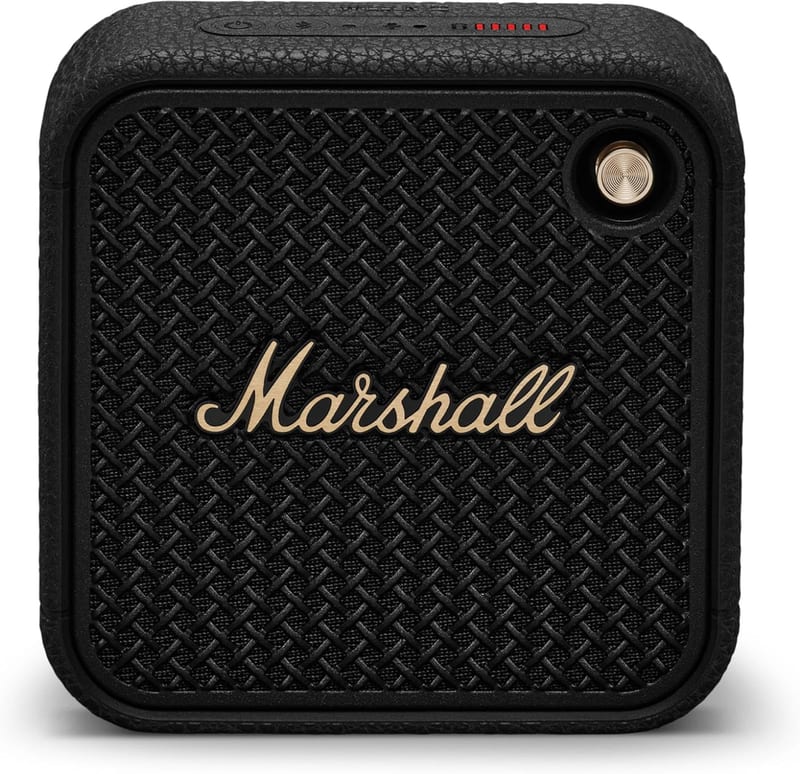
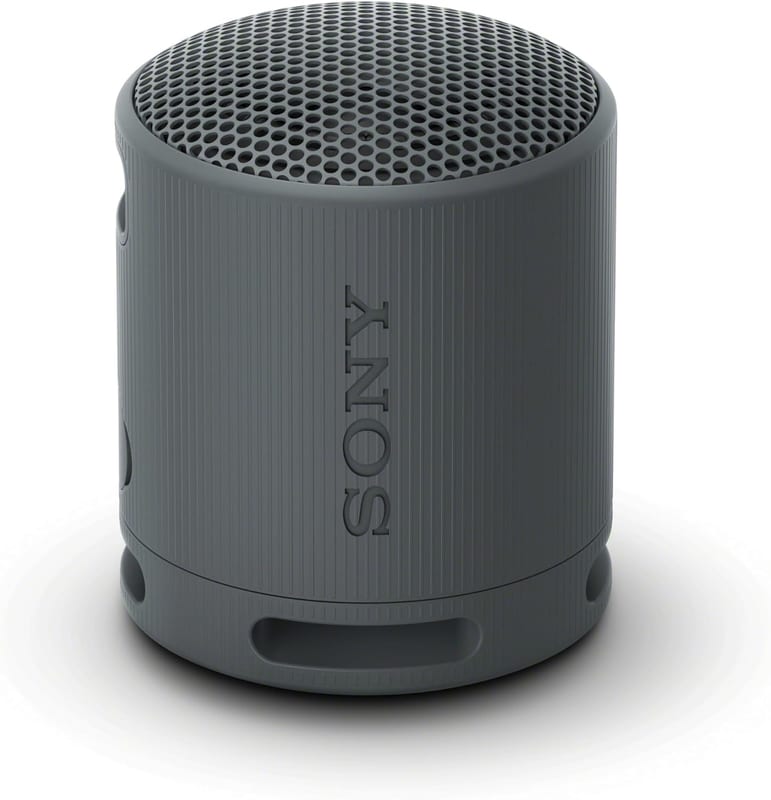
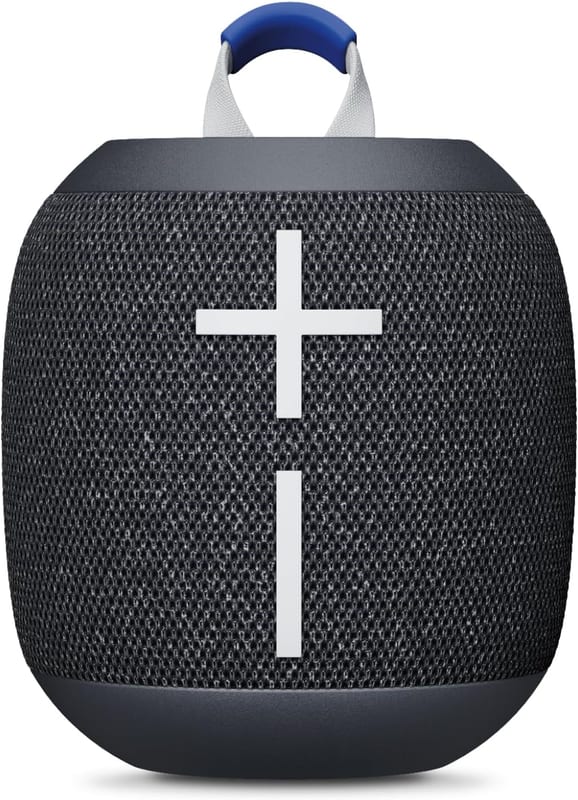
Under one pound is the clip-and-forget tier: the JBL Go 4 (0.42), the Anker Soundcore Select 4 Go (0.58), the Sony SRS-XB100 (0.6), the JBL Clip 5 (0.63), the Bose SoundLink Micro (0.73), the Marshall Willen II (0.79), the UE WONDERBOOM 4 (0.93), and the Sonos Roam 2 (0.95). These attach to a backpack strap and you forget they are there.
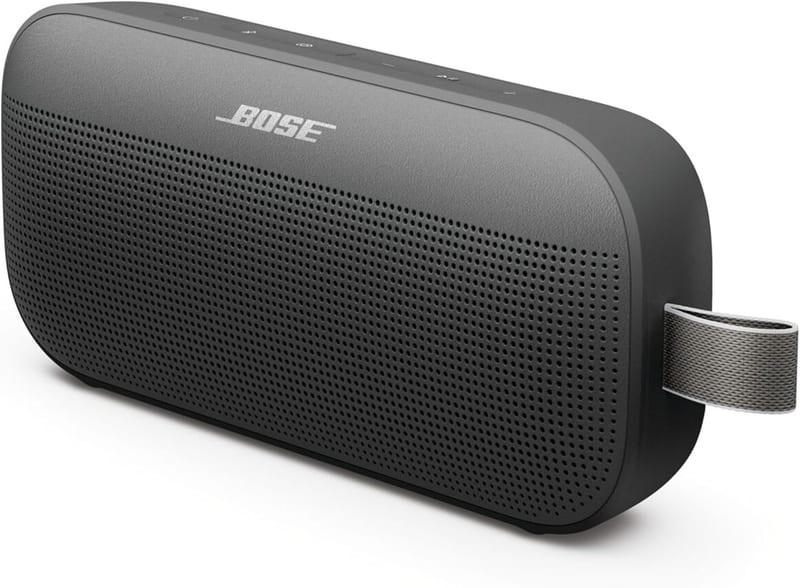
One to two pounds is the everyday tier and it is the most crowded: the Bang & Olufsen Beosound A1 (1.27), the JBL Flip 7 (1.23), the Bose SoundLink Flex (1.29), the UE BOOM 4 (1.37), the Sony ULT Field 1 (1.43), the Marshall Emberton III (1.48), the Beats Pill (1.5), the Anker Motion 300 (1.71). This is the size that fits in a bag you were bringing anyway, which is why every brand ships one.
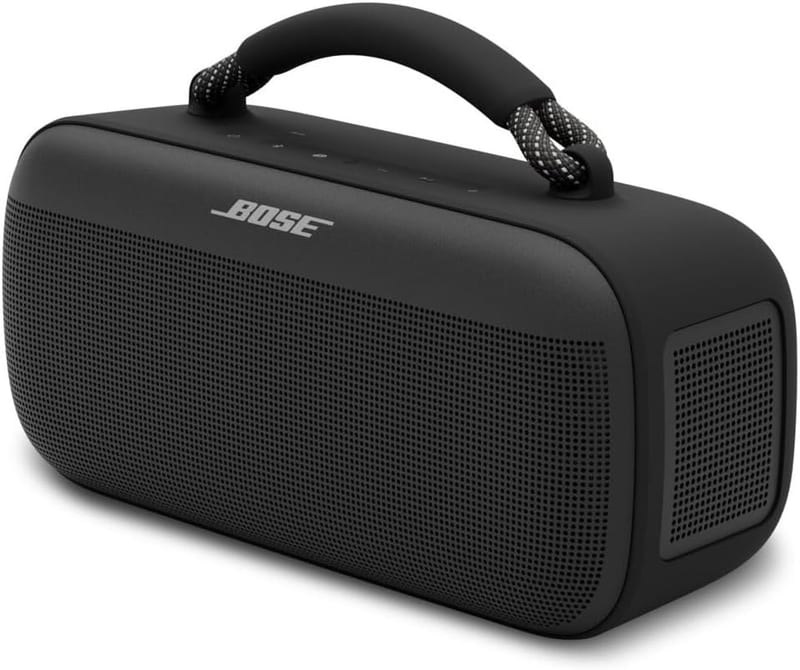
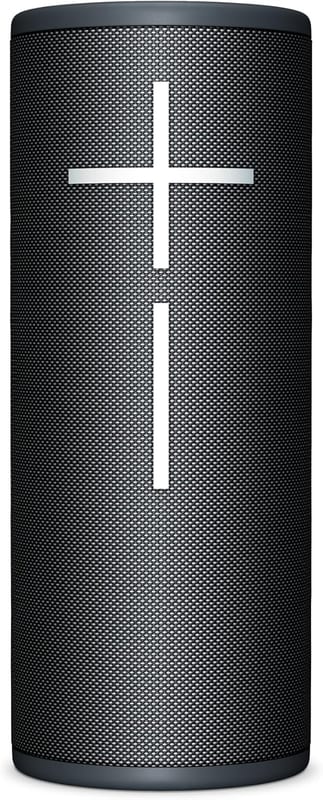
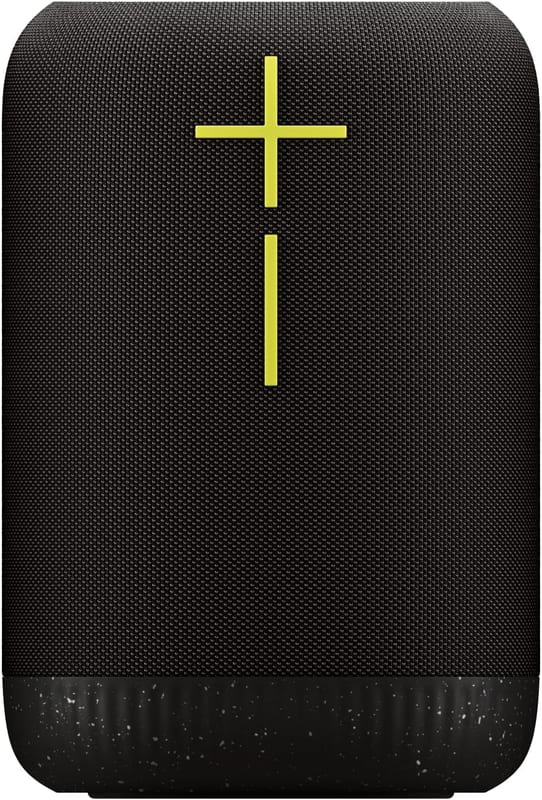
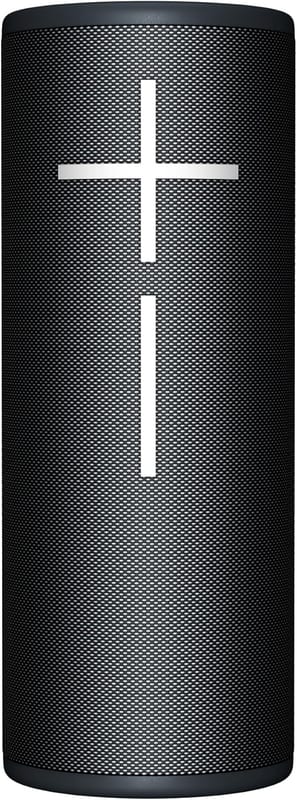
Two to five pounds is the deliberate-decision tier: the JBL Charge 6 (2.11), the UE MEGABOOM 4 (2.06), the Sony ULT Field 3 (2.65), the Marshall Middleton (3.97), the UE EPICBOOM (4.36), the JBL Xtreme 4 (4.63), the Bose SoundLink Max (4.9). You pack these on purpose, for a specific afternoon.
Above five pounds they are luggage: the Sonos Move 2 (6.61), the Sony ULT Field 5 (7.28), the Anker Boom 2 Plus (8.38), the JBL Boombox 4 (13), the Tribit StormBox Blast 2 (15.76). The Boombox 4 and the Blast 2 both ship with carrying handles because straps stop being credible around ten pounds.
One warning on published weights generally: manufacturers and Amazon listings frequently disagree because one is quoting the speaker and the other is quoting the shipping box. Every figure in our table is the speaker alone, converted from the manufacturer's own metric mass where one exists.
The catch: Buy for the bag you already carry, not the party you are imagining. The 1 to 2 lb tier is where the category has concentrated its engineering, and the honest reason is that it is the only tier people take outside more than twice.
Linking speakers together: Auracast, PartyUp, and Marshall's quiet retreat
Twenty-six of the 28 speakers here can link to at least one other speaker. That sounds like the column does no work, and then you read what "link" means in each ecosystem and it turns out to mean five different things.
All six JBL units support Auracast, the Bluetooth LE Audio broadcast standard, which is the only genuinely cross-brand mechanism in this list. Ultimate Ears runs PartyUp across the BOOM 4, MEGABOOM 4, and EPICBOOM, chaining upwards of 150 UE speakers, though the WONDERBOOM 4 is limited to doubling up with a second WONDERBOOM 4. Anker's PartyCast 2.0 links the Boom 2 Plus across the wider Soundcore range, while the Motion 300 and Select 4 Go only manage true wireless stereo with an identical twin. Sonos groups its units over Wi-Fi, which is a different and much more capable thing than any of the above, and also the reason the Roam 2's battery is what it is. Bose, Sony, and Beats each run their own closed pairing modes.
Pairs with other speakers: 26 of the 28 here can link to at least one more.
"Link" means five incompatible things, almost all locked to one brand. Auracast is the only cross-brand route, and two Marshalls dropped multi-speaker pairing altogether.
The two speakers that cannot do it at all are the Marshall Emberton III and the Marshall Willen II, which is a downgrade Marshall does not advertise. Marshall's own support documentation states that Stack Mode, its multi-speaker feature, works on the Emberton II, the first-generation Middleton, and the first-generation Willen. The third-generation Emberton and second-generation Willen dropped it. Both are marketed as Bluetooth LE Audio capable, which is a plausible route to Auracast in a future firmware update, but firmware that does not exist yet is not a feature you can buy today. The Middleton in this table is the first generation and does still have Stack Mode.
What the box won't tell you: If you already own speakers, this column is really asking which walled garden you are standing in. If you own nothing yet, Auracast is the only answer here that is not a bet on one brand, and JBL is the only brand in this comparison shipping it across its whole range.
Charging your phone: eleven of 28 can, and one of them cheats
The USB-C port on the side of a speaker is doing one of two jobs, and the manufacturers are not always eager to tell you which.
Eleven speakers here can push power back out to a phone: the JBL Charge 6, Xtreme 4, and Boombox 4, the Bose SoundLink Max, the Sony ULT Field 3 and ULT Field 5, the Marshall Middleton, the Anker Boom 2 Plus, the Sonos Move 2, the Tribit StormBox Blast 2, and the Beats Pill. On the Charge 6 this is close to the entire product thesis, and has been since the Charge line started.
The Boombox 4 is the one to read the footnote on. It charges your phone over USB-C, but it cannot be charged over USB-C itself, it takes AC in. That is a fine trade for a 13 lb speaker that lives near an outlet, and it is invisible in any comparison table that renders this column as a checkmark, including ours.
The rest, including every speaker under a pound, treat USB-C as an input only. The JBL Flip 7 is a good illustration of how easily this gets misread: it has a USB-C port that handles both charging and lossless USB audio, and no charge-out at all. A port is not a promise.
Only matters if: This is a genuine tiebreaker on a camping trip and irrelevant everywhere else. If it matters to you, the Charge 6 is the smallest speaker here that does it well, at 2.11 lb.
Bluetooth version: mostly 5.3, and two speakers nobody will tell us about
This is the column with the least drama and the worst paperwork.
Twelve of the 28 speakers run Bluetooth 5.3, six run 5.4, and the rest scatter between 5.0 and 5.2. In practice the jump from 5.0 to 5.4 buys you connection stability and range rather than anything you can hear, so this spec is a tiebreaker rather than a reason to choose. The genuinely interesting entries are at the bottom: the Sonos Move 2 at 5.0 and the Marshall Middleton and Bang & Olufsen Beosound A1 at 5.1, all three of which are older designs still selling at full price.
What deserves more attention is how badly this spec is documented. Ultimate Ears does not state a Bluetooth version anywhere on its own product pages, which is why the BOOM 4 is the one cell in this entire table we have left empty. A single low-authority site claims 5.1 for it; that is not a source, so we did not record it. The MEGABOOM 4 has the same gap in the manufacturer's paperwork, and its 5.2 comes from TechRadar's review rather than from Ultimate Ears.
Two more cells carry a caveat rather than a hole. Sony's own regional spec pages list the ULT Field 3 at 5.2 while SoundGuys reports 5.3, and we went with the manufacturer. Beats publishes only "Class 1 Bluetooth" with no version at all, so the Pill's 5.3 comes from Apple's spec sheet by way of 9to5Mac.
Every one of those four cells is marked in the table, and clicking the marker tells you exactly where the number came from or why there isn't one. Nowhere in this comparison did we fill a gap with a plausible guess.
Don't overpay for: Anything 5.2 or later is fine and the differences above that are not audible. Treat this column as a proxy for how recently the speaker was designed, and treat a manufacturer that won't publish it at all as its own small data point.
What the table is actually telling you
Sort by battery and Marshall wins. Sort by weight and the sub-pound tier is dominated by Anker and Sony. Sort by ingress rating and JBL takes the top three. No speaker in this comparison wins two columns outright, which is the most useful thing the table says: the category has no dominant product, only a set of well-executed tradeoffs.
The Charge 6 is our overall pick because it is the only speaker that finishes in the top third of four columns at once without finishing last in any of them. That is not the same as being the best sounding speaker here, and we make no claim that it is. Sound quality is the one thing we deliberately do not put in the table, because there is no honest way to make it a sortable number, and the labs that do measure it properly are linked below.
Sources / further reading
- RTINGS, The Best Bluetooth Speakers, 194 speakers bought and measured in-house, the best source for frequency response and loudness data we deliberately keep out of our table.
- SoundGuys, JBL Charge 6 review and JBL Flip 7 review, objective measurement of the current JBL line.
- SoundGuys, JBL Boombox 4 review.
- SoundGuys, Anker Soundcore Boom 2 Plus review, the source for the measured 3.8 kg weight Anker does not publish.
- What Hi-Fi, Sonos Move 2 review, useful on where the Move 2 sits between portable and home speaker.
- Marshall support, How to use Stack Mode, the compatibility list that confirms which Marshall speakers dropped multi-speaker pairing.
- Ultimate Ears WONDERBOOM 4 and EPICBOOM product pages, manufacturer weight and playtime figures.
- Sony Help Guide, SRS-ULT30 specifications, including the USB-C power-out rating.
- Bose SoundLink Max, manufacturer specifications.