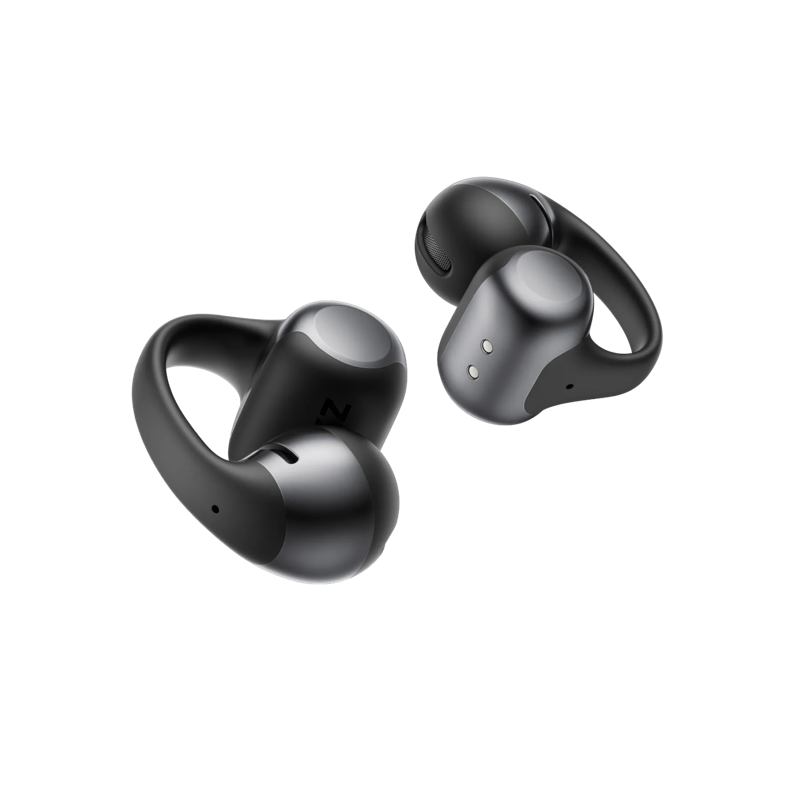
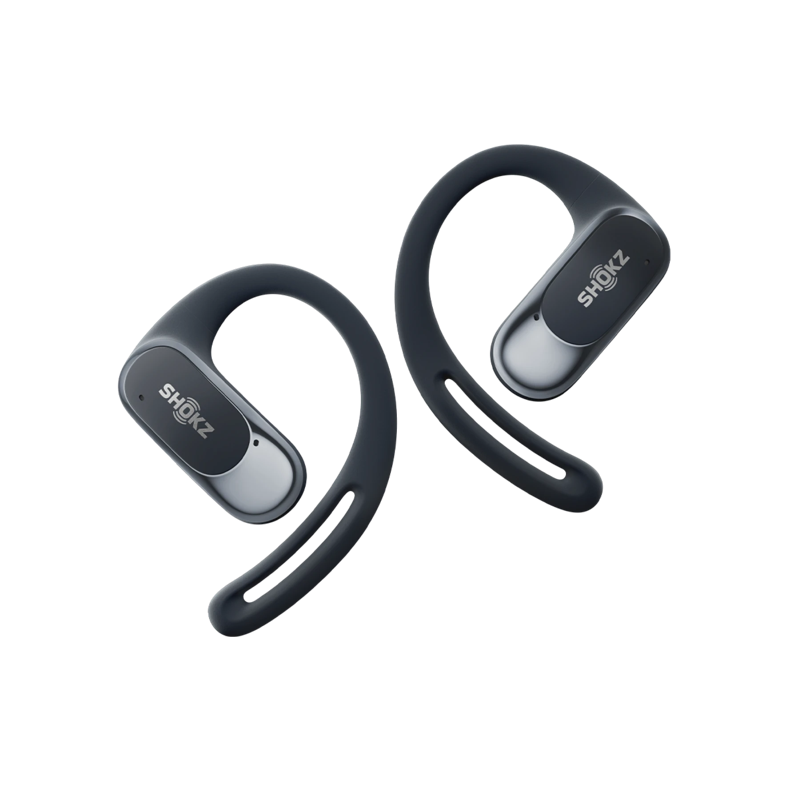
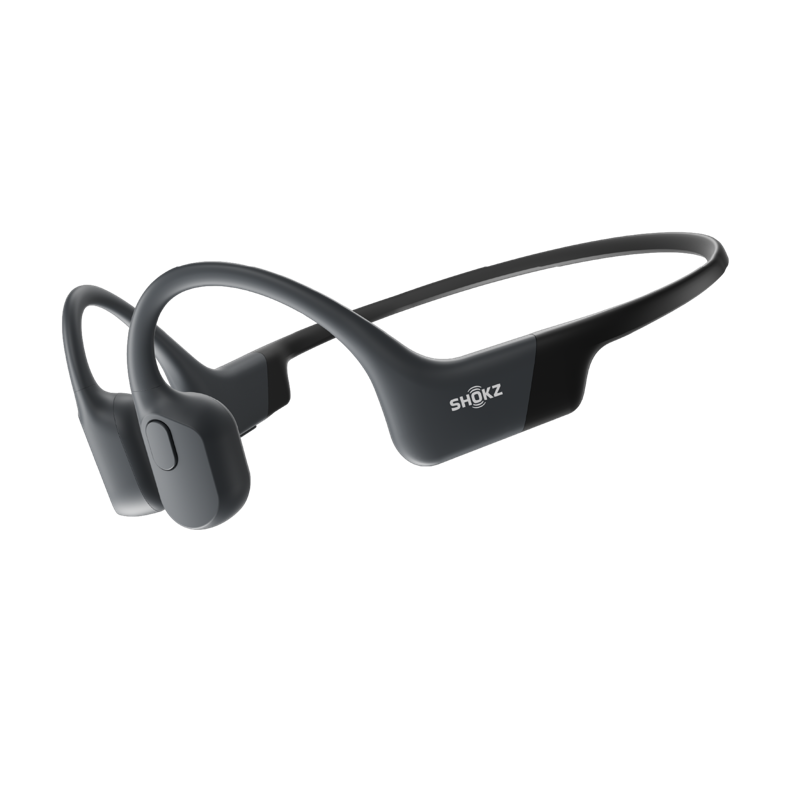
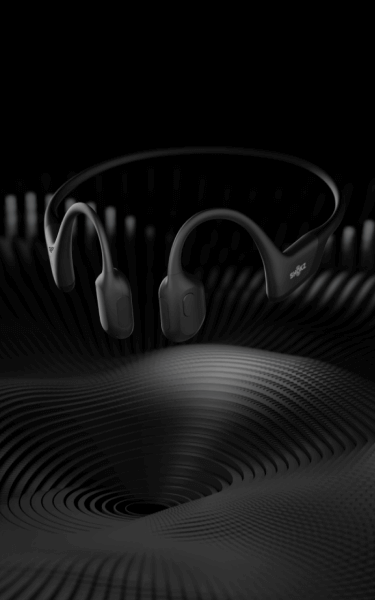
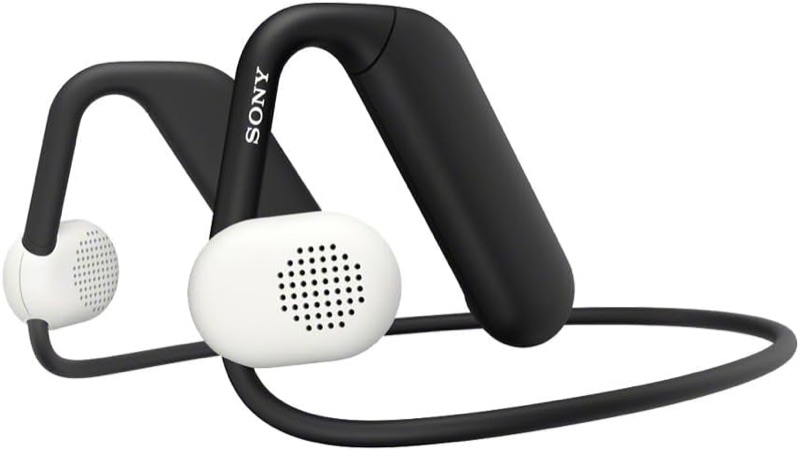
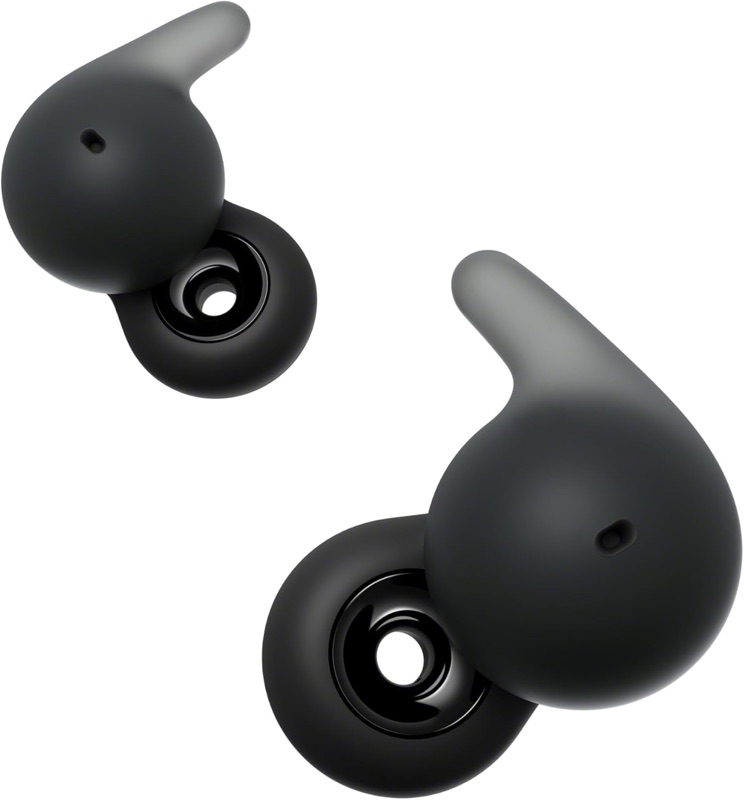
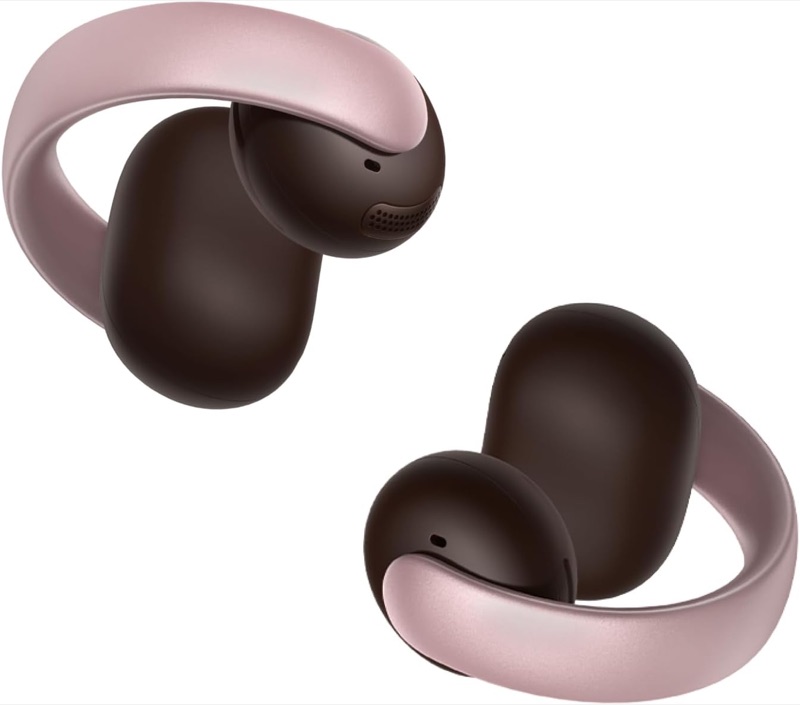
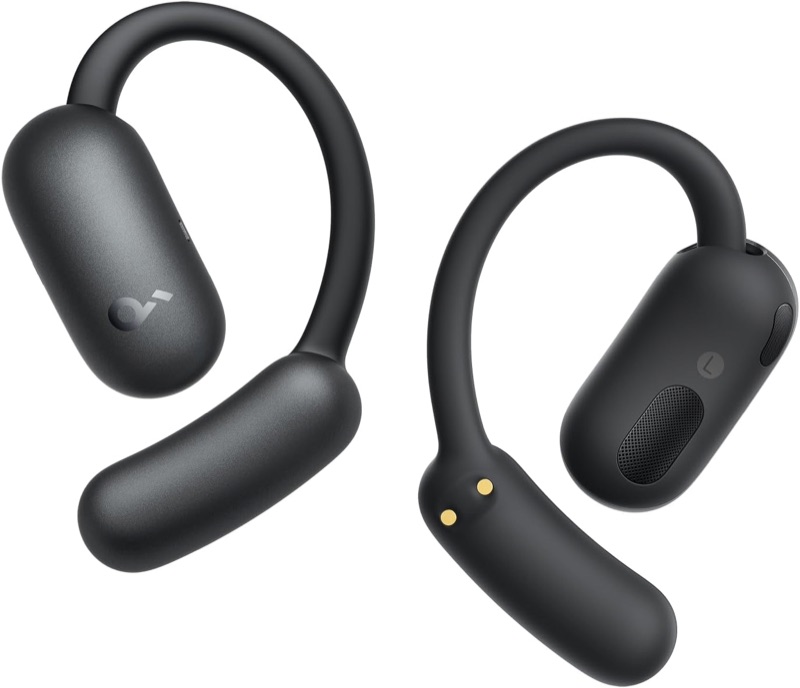
Eighteen headphones that all share one idea: leave your ear canal open so you can still hear the world. For a runner dodging traffic, a parent listening for a kid, or anyone who finds sealed earbuds claustrophobic, that open design is the whole point. But "open-ear" hides four genuinely different gadgets underneath the label, and they don't sound, fit, or survive sweat the same way. The sortable table and the check-price buttons sit above this article. Down here we turn the spec sheets into which one belongs on your ears.
The lineup: seven from Shokz, the brand that built this category (the bone-conduction OpenRun Pro 2, OpenRun Pro, OpenRun, and swim-focused OpenSwim Pro, plus the open-ear OpenFit 2, OpenFit Air, and clip-on OpenDots One). The Bose Ultra Open Earbuds. Four from Anker's Soundcore line (AeroFit 2, AeroClip, C40i, and V30i). The JBL Soundgear Sense. Two from Sony (the LinkBuds Open and the Float Run). The Nothing Ear (open). And two from Huawei (the clip-on FreeClip 2 and the hooked FreeArc).
Fit type: the four designs hiding under "open-ear"
This is the first fork, and it decides almost everything else. As SoundGuys and The Gadgeteer both stress, open-ear splits into distinct shapes that solve different problems.
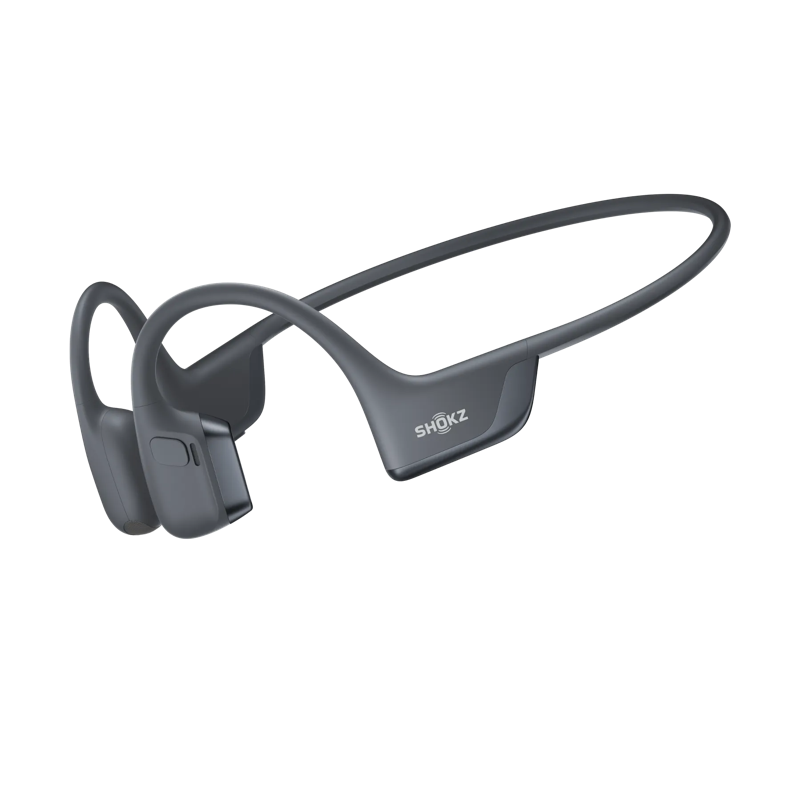
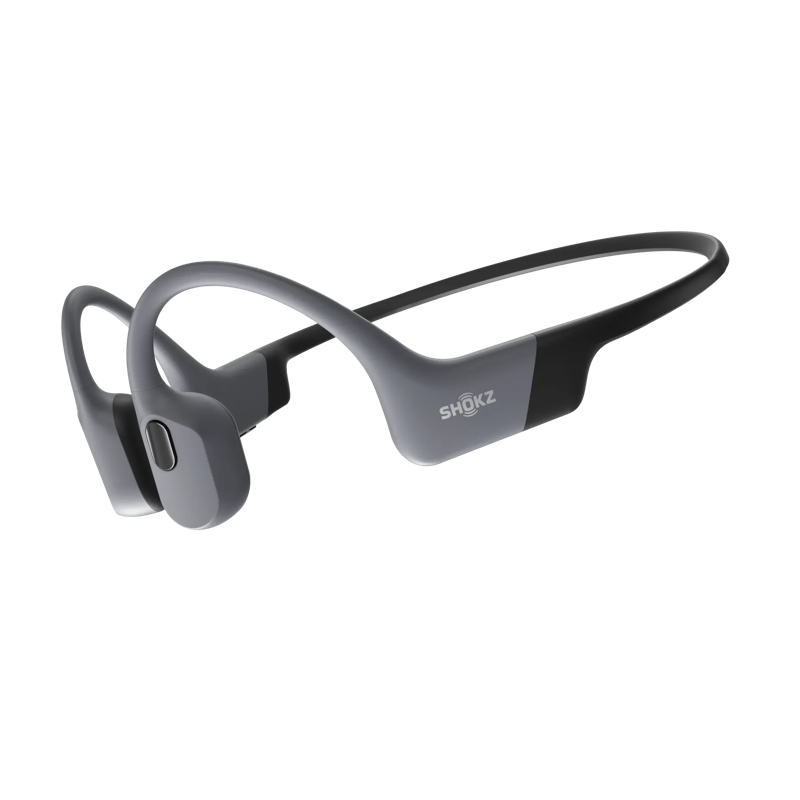
Bone conduction is the original. The four Shokz OpenRun and OpenSwim models sit on your cheekbones, in front of the ear, and send sound in as vibration. Nothing goes near the canal at all, which leaves your hearing totally unobstructed, the safest option for road running and the only kind that works underwater. The tradeoff is sound: bone conduction is thin on bass, though Shokz's newest OpenRun Pro 2 adds a small air-conduction driver to claw some back.
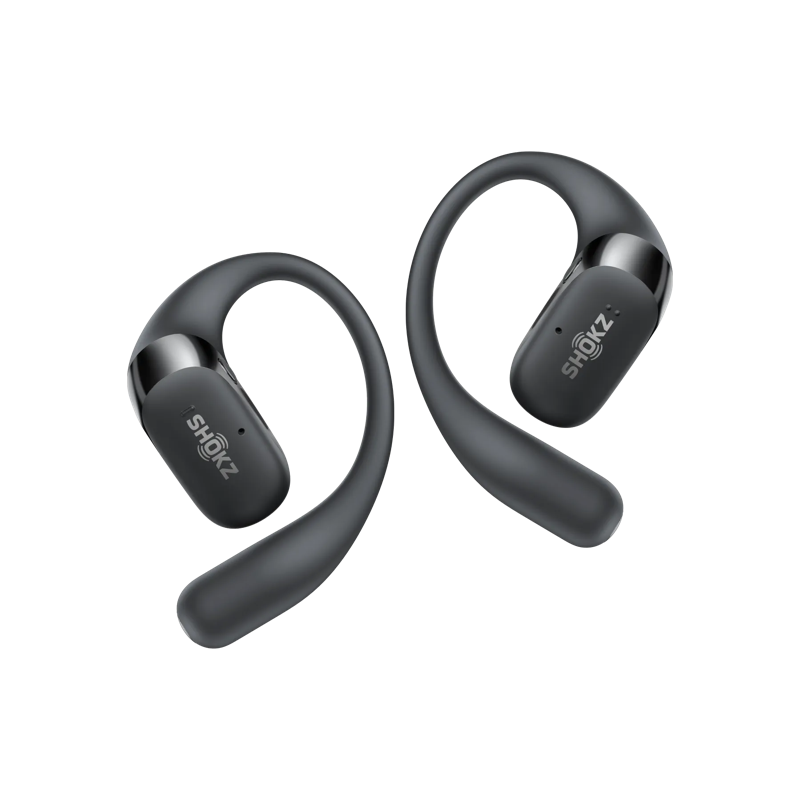
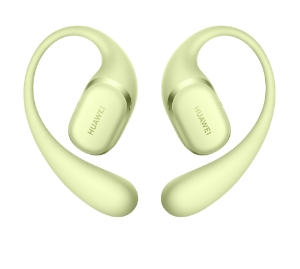
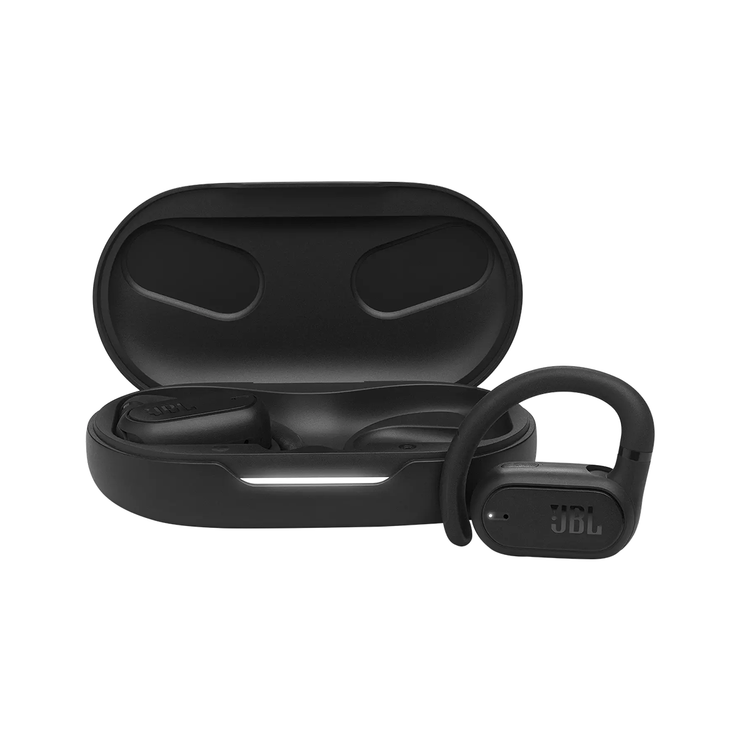
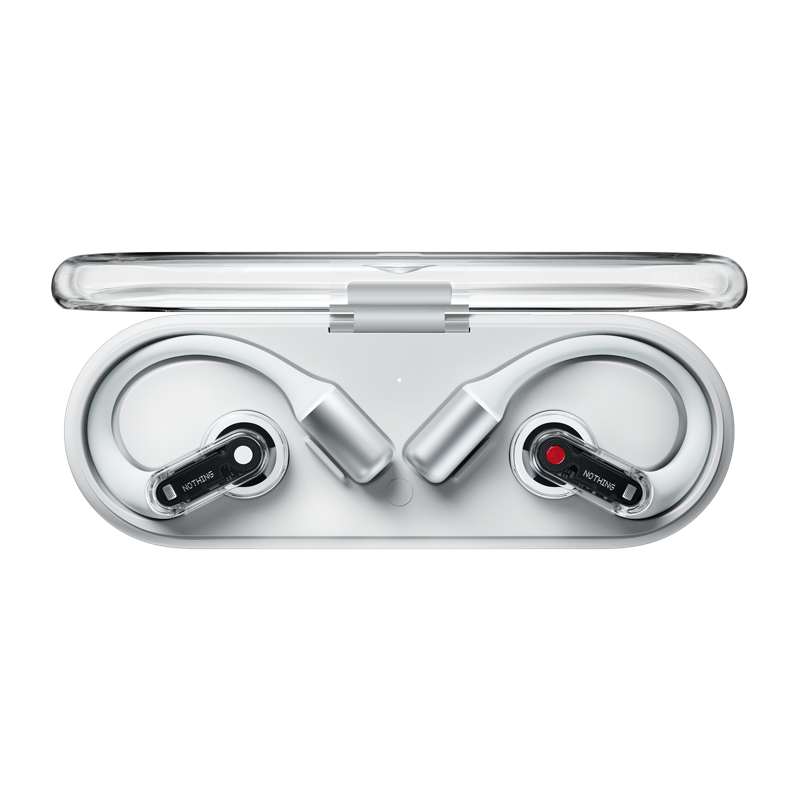
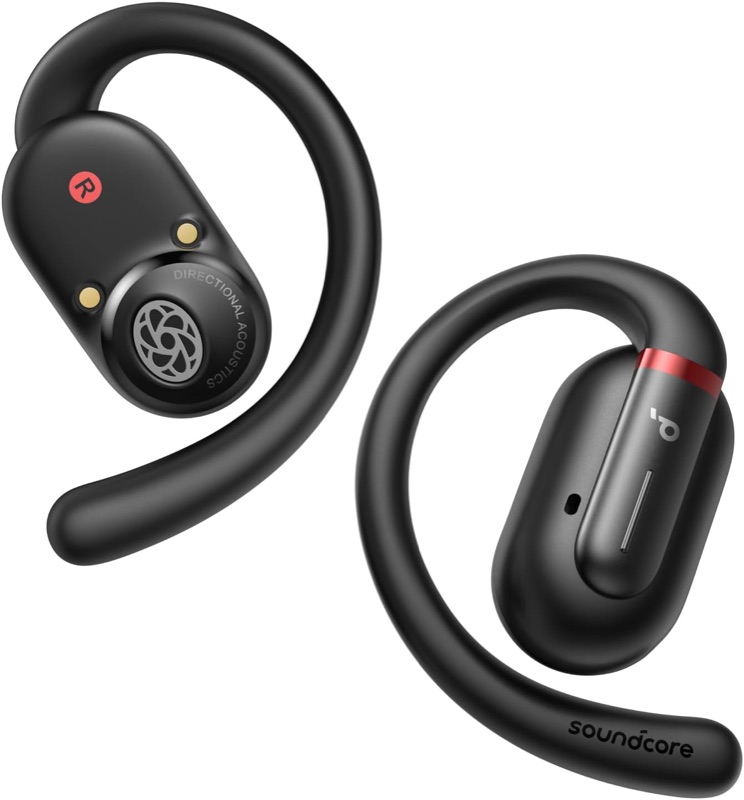
Hook models are the biggest group here: the Shokz OpenFit pair, Soundcore AeroFit 2 and V30i, JBL Soundgear Sense, Sony Float Run, Nothing Ear (open), and Huawei FreeArc. An arm loops over the top of your ear and holds a speaker just outside the canal, firing in. These grip hardest, which is why the running-focused models favor them, and they sound the fullest of the open styles.
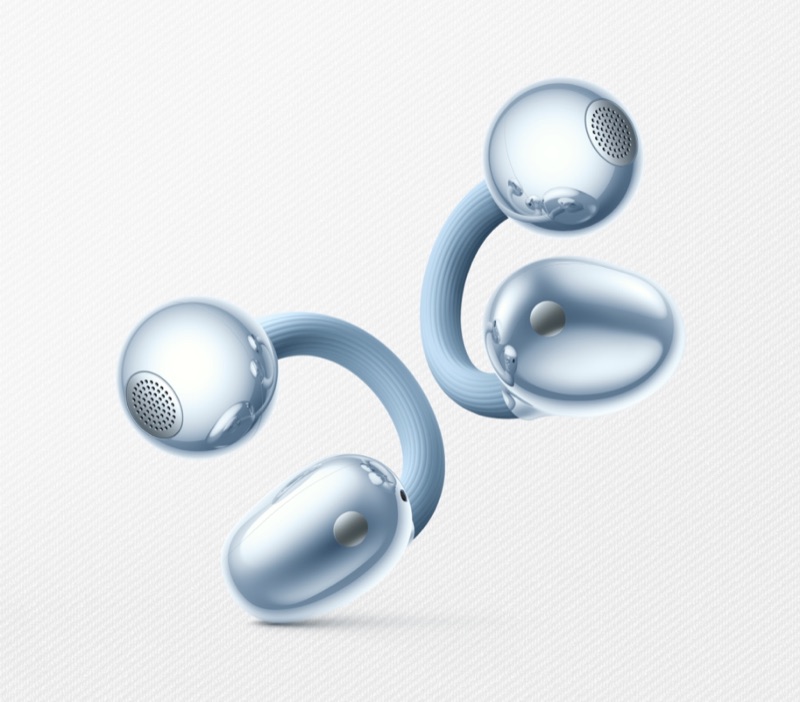
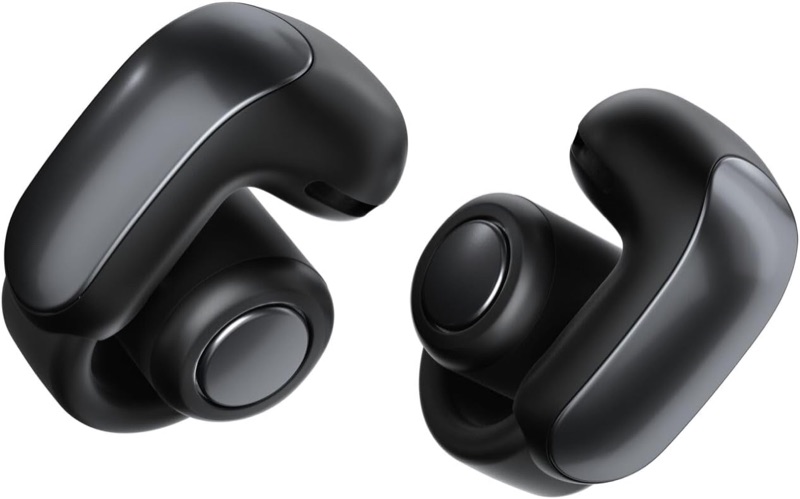
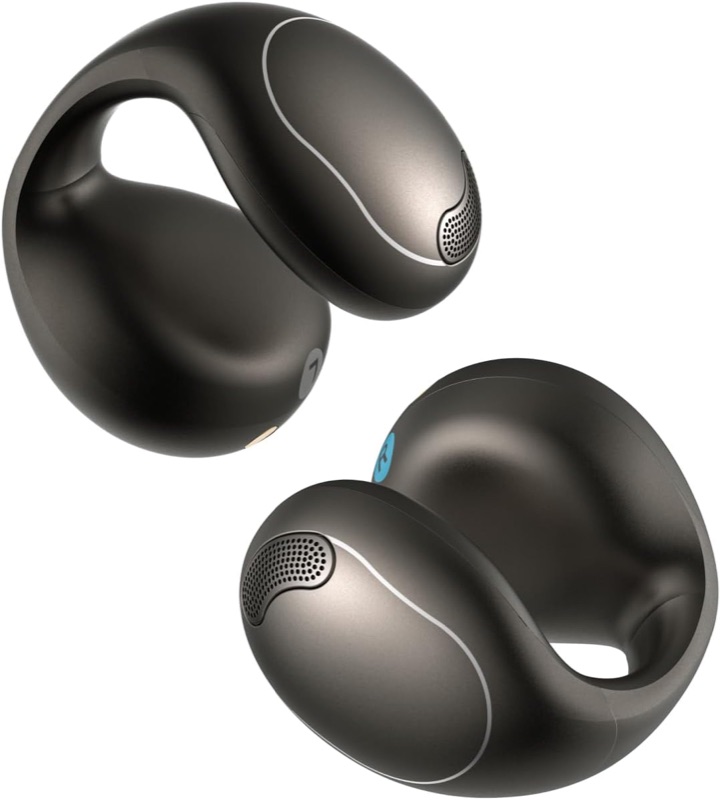
Cuff designs are the newer fashion-forward answer, the shape Bose popularized. The Bose Ultra Open, Shokz OpenDots One, Soundcore AeroClip and C40i, and Huawei FreeClip 2 clip onto the ridge of your ear like a small earring. RTINGS, which rates the Bose the best open-ear it has tested, notes the cuff spreads its weight along the cartilage and skips the pressure headache a hook can cause over a long day.
And then there's the lone ring: Sony's LinkBuds Open uses a doughnut-shaped driver with a literal hole in the middle that sits in the ear without sealing it. It's nearly invisible and disappears on the ears, at the cost of the least secure grip for hard exercise.
Slopsheets says: Pick the shape before the brand. If awareness or swimming is the job, bone conduction is the only real answer and you accept weaker bass for it. If you want the best sound and a secure fit for workouts, buy a hook. If you want something you'll forget you're wearing through a whole workday, a cuff or the Sony ring is the comfortable choice. The other specs only matter once you've settled this.
Worn weight: what actually sits on your ears
The weight in our table is what you wear, the pair of earbuds or the headband, with the charging case left out, because the case never touches you. Read it with the fit type next to it, since these numbers are not measuring the same kind of object.
The featherweights are the ring and the cuffs. Sony's LinkBuds Open and Huawei's FreeClip 2 both land around 10 grams for the pair, and the Soundcore C40i, AeroClip, and Bose Ultra Open all sit between 11 and 13. You stop noticing these within a minute. The hooks weigh a little more once you count the over-ear arm, from the Shokz OpenFit line near 17 to 19 grams up to the JBL Soundgear Sense at almost 26.
The genuinely heavy entries are a different shape entirely. The bone-conduction Shokz headbands run 26 to 30 grams because they're one continuous piece that wraps behind your neck, and Sony's Float Run is the heaviest thing here at 33 grams for the same reason. That weight is spread across your whole head rather than pinched on one spot, so a 30-gram band can feel lighter in practice than its number suggests against a 13-gram cuff.
A 13-gram cuff must be more comfortable than a 33-gram band, because it weighs less than half as much.
A band spreads its 30-odd grams across your whole head, while a cuff pinches its weight on one spot, so the heavier number can wear lighter over a long day.
The catch: Don't rank these on grams alone, because a headband and a clip carry their weight completely differently. For all-day desk wear, the sub-13-gram cuffs and the Sony ring are the comfortable picks. For a run, the extra grams of a hook or a bone-conduction band buy you a fit that won't bounce loose, which matters more than shaving ten grams.
Battery on a single charge: how long before you plug in
This is the number that matters for one long session, a marathon, a full workday, a flight. It's the listening time from the buds or band alone, before the case tops them up.
The endurance leaders cluster around 10 to 12 hours. Soundcore's V30i and the Shokz OpenRun Pro 2 both claim 12, the Shokz OpenFit 2 does 11, and the Soundcore AeroFit 2, Sony Float Run, and Shokz OpenDots One all reach 10. Any of those covers a full day without a thought. The shorter-lived ones are the Shokz OpenFit Air and JBL Soundgear Sense at around 6 hours, with the Bose Ultra Open, Soundcore C40i, and Huawei FreeArc near 7. Those are still fine for a workout or a commute, but they want a mid-day recharge if you wear them open to close.
Bone conduction is the quiet story here. Because those Shokz bands have no case to fall back on, their single-charge figure, 8 to 12 hours, is also their total. There's no pocket-sized reserve, so you charge the band itself.
The shortlist: If you do genuinely long sessions off one charge, the 10-to-12-hour group (V30i, OpenRun Pro 2, OpenFit 2, AeroFit 2) is your shortlist. If you're a charge-in-the-case-between-uses person, a 6-to-7-hour bud is no handicap, and you should look at the total number in the next section instead.
Battery with the case: total endurance between wall charges
For everyone who tops up in the case throughout the week, this is the honest measure of how often you actually hunt for an outlet. It only applies to the true-wireless models, since the bone-conduction bands have no case.
The Shokz OpenFit 2 runs away with it at 48 hours total, with the Soundcore AeroFit 2 at 42 and the Shokz OpenDots One at 40 close behind. JBL quotes the Soundgear Sense at 24, and What Hi-Fi flagged its case as one of the longer-lasting in testing. Huawei's FreeClip 2 reaches 38, the Soundcore V30i 36, the AeroClip 32, and the Nothing Ear (open) 30. The lowest totals belong to the Soundcore C40i at 21 and the Bose Ultra Open at roughly 26, which is the price Bose pays for such small, light cuffs.
What the box won't tell you: If you hate charging, the OpenFit 2, AeroFit 2, and OpenDots One give you the better part of a week of workouts before the case itself needs a wall. Just remember the bone-conduction models sit this one out entirely: what you see on their single charge is all there is, so factor that in if you were cross-shopping a Shokz band against a set of buds.
Water and sweat rating: sweat, rain, and the pool
Every one of these will meet sweat, so the IP rating is not optional reading. The table sorts them worst to best, and the gap between the ends is bigger than it looks.
At the strong end, only the Shokz OpenSwim Pro carries IP68, the rating that means real submersion, and it pairs that with onboard storage so it plays underwater where Bluetooth signals die. The standard Shokz OpenRun is IP67, also fully submersible for rinsing under a tap. Huawei's FreeClip 2 and FreeArc reach IP57. A large middle group, the Shokz OpenRun Pro and Pro 2 and OpenFit 2, plus the Soundcore AeroFit 2 and AeroClip, sits at IP55, which shrugs off heavy sweat and rain.
The weaker ratings are worth catching before you buy. The Bose Ultra Open, both Sony models, and the Soundcore C40i are only IPX4, which covers sweat and light splashes but nothing you'd call waterproof. That's the usual tradeoff for a premium sound or a tiny cuff, and it's fine for a gym, but it's the wrong pick if you train in real rain or want to rinse them clean.
The one rule: For swimming, the OpenSwim Pro is the only genuine answer here, with the IP67 OpenRun as backup for open-water without music files. For sweaty road running, aim for IP55 or better and you'll never think about it. Treat the IPX4 models (Bose, both Sonys, the C40i) as gym-and-dry-commute headphones, not foul-weather gear.
Multipoint: switching between your laptop and phone
If you'll wear these at a desk, multipoint is the small feature you'll miss the most without it. It lets the headphones hold a connection to two devices at once, so a call on your laptop interrupts the music from your phone without you re-pairing anything.
The good news is that most of this group has it: all seven Shokz, the Bose, three of the four Soundcore models, the JBL, the Sony LinkBuds Open, the Nothing, and both Huawei sets connect to two devices at once. The two exceptions are worth knowing. The Soundcore V30i, the budget hook of the bunch, drops multipoint to hit its price, per Soundcore's own specs. And the Sony Float Run only offers a manual split between two phones, not true simultaneous switching, so we mark it as lacking it.
Skip it if: If these are purely workout headphones tied to one phone, ignore this row. If they'll live between a work laptop and your phone, multipoint is the difference between seamless and annoying, and it quietly rules out the otherwise-capable Soundcore V30i and Sony Float Run.
So which open-ear headphones should you buy?
- Best all-around open-ear: Shokz OpenFit 2. The most secure hook here, 11 hours a charge and 48 with the case, an IP55 rating, and multipoint. For most people who just want a great pair of open earbuds, this is the answer.
- Best for running and road awareness: Shokz OpenRun Pro 2. Bone conduction keeps your ears fully open to traffic, the added driver finally gives it usable bass, and 12 hours covers any race.
- Best for the pool: Shokz OpenSwim Pro. IP68 and 32GB of onboard music, the only set here built to actually swim with.
- Best clip-on for all-day comfort: Huawei FreeClip 2, one of the lightest and best-rated cuffs, with IP57 and 38 hours total. Bose's Ultra Open is the pick instead if sound quality is your top priority and you'll accept an IPX4 rating and shorter battery.
- Best value hook: Soundcore AeroFit 2. Ten hours a charge, 42 total, IP55, and multipoint for well under the flagships, per SoundGuys' review, though the fit isn't quite as locked-in as the Shokz.
- Most invisible: Sony LinkBuds Open. The ring design all but disappears on your ears, which What Hi-Fi rated five stars, as long as you don't need a tight workout grip or better than IPX4.
The pattern across all eighteen is the same. Decide the fit type first from how you'll use them, running, swimming, all-day wear, then let the sweat rating and battery narrow what's left. Sound quality tracks the fit more than the brand, so a hook will out-sing a bone-conduction band nearly every time, and that's the tradeoff you're really choosing.
Frequently asked questions
Is open-ear the same as bone conduction? No, and the difference matters. Bone-conduction headphones like the Shokz OpenRun line vibrate sound through your cheekbones and leave the ear completely untouched, which is the most aware and the weakest on bass. Open-ear earbuds (the hooks, cuffs, and the Sony ring) fire sound into your open ear canal without sealing it, which sounds noticeably fuller. All of them let you hear your surroundings; only bone conduction keeps the ear entirely open.
Which open-ear headphones are best for running? For pure road-safety awareness, a bone-conduction model like the Shokz OpenRun Pro 2 is the safest because nothing sits in your ear. If you want fuller sound with a secure grip, a hook style like the Shokz OpenFit 2 or Soundcore AeroFit 2 stays locked on through a hard run. Look for an IP55 rating or better so sweat is a non-issue.
Can I swim with any of these? Only the Shokz OpenSwim Pro is truly built for it, with an IP68 rating and 32GB of onboard storage so it plays without Bluetooth underwater. The IP67 Shokz OpenRun can survive submersion but has no music storage, so it's not a swimming solution on its own. Every other model here is IP57 or lower and should stay out of the pool.
Do open-ear earbuds leak sound to people around me? More than sealed earbuds, yes, because they don't plug your ear. At low and moderate volume in a normal room most are discreet, but at high volume in a quiet space a neighbor can hear a faint version of your audio. It's the built-in tradeoff for keeping your own ears open.
Which of these work with a laptop and phone at the same time? Most of them. All seven Shokz, the Bose Ultra Open, the Soundcore AeroFit 2, AeroClip, and C40i, the JBL Soundgear Sense, the Sony LinkBuds Open, the Nothing Ear (open), and both Huawei models support multipoint. The Soundcore V30i and the Sony Float Run do not.
Sources / further reading
- RTINGS, the best bone conduction and open-ear headphones
- SoundGuys, the best bone conduction headphones
- SoundGuys, Shokz OpenRun Pro 2 review
- SoundGuys, Shokz OpenFit 2 review
- The Gadgeteer, best open-ear earbuds of 2026
- Shokz, OpenSwim Pro
- Bose, Ultra Open Earbuds
- SoundGuys, Soundcore AeroFit 2 review
- What Hi-Fi, Sony LinkBuds Open review
- RTINGS, Sony Float Run review
- TechRadar, Huawei FreeArc review
- SoundGuys, Huawei FreeClip 2 review
- GSMArena, Nothing Ear (open) review
- Tom's Guide, JBL Soundgear Sense review