Sixteen massage guns, and the marketing wants you to shop on the wrong number. Every brand prints a percussion-per-minute figure the size of a headline, because a big fast number sells. The two things that actually decide whether a gun does anything for your muscle are how far the head travels and how hard you can lean on it before the motor gives up. The sortable table and the price links sit above this article. Down here I go through the columns one at a time and tell you which ones you feel on real tissue, because putting these on real tissue is what I do all week.
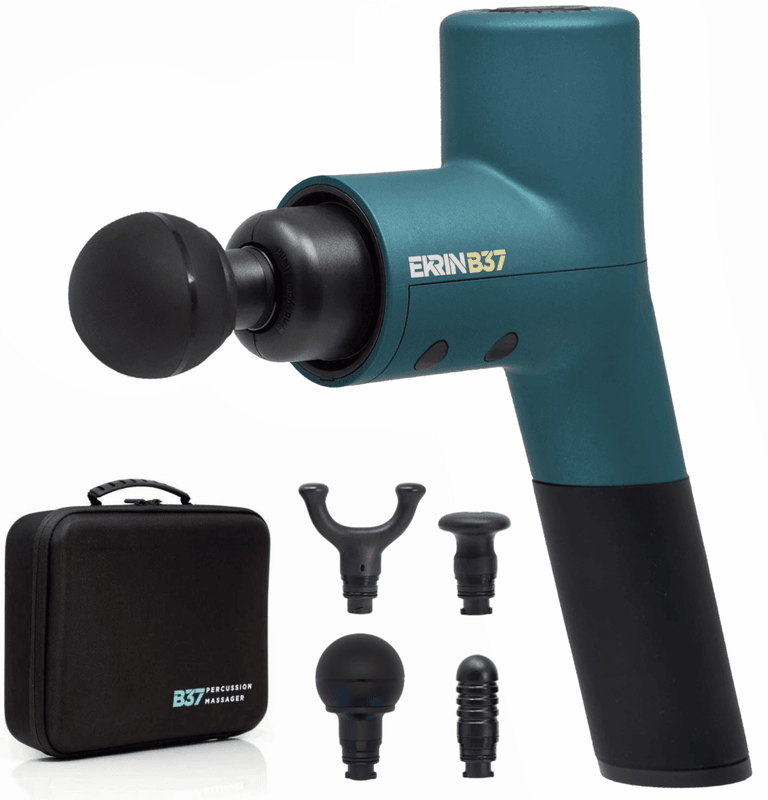
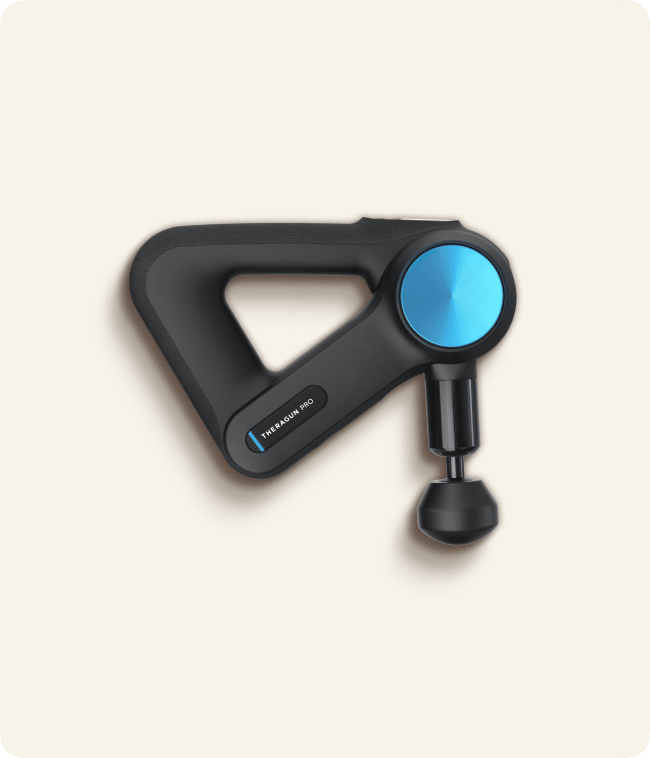
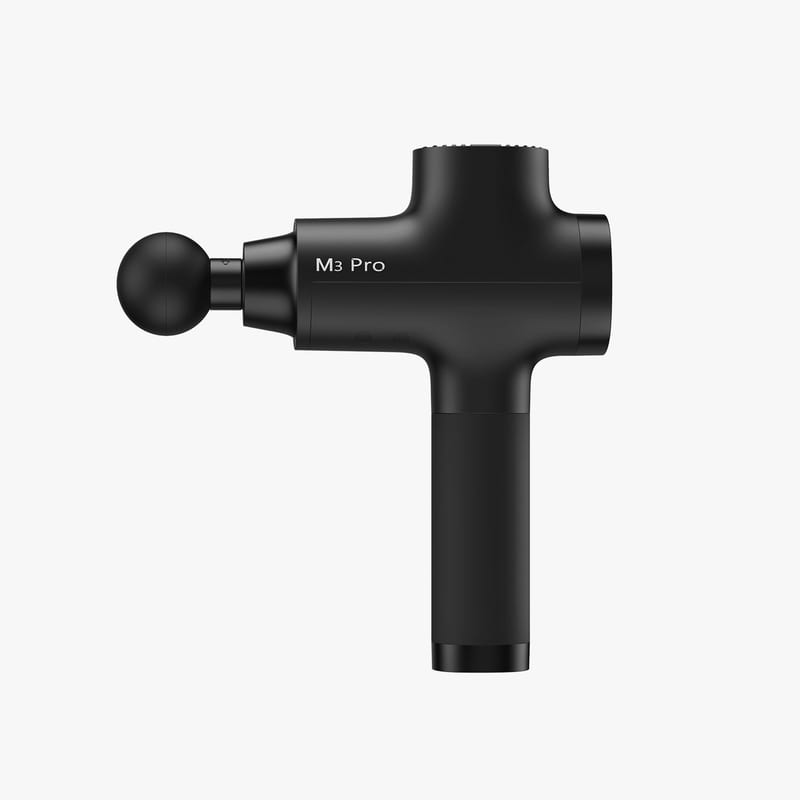
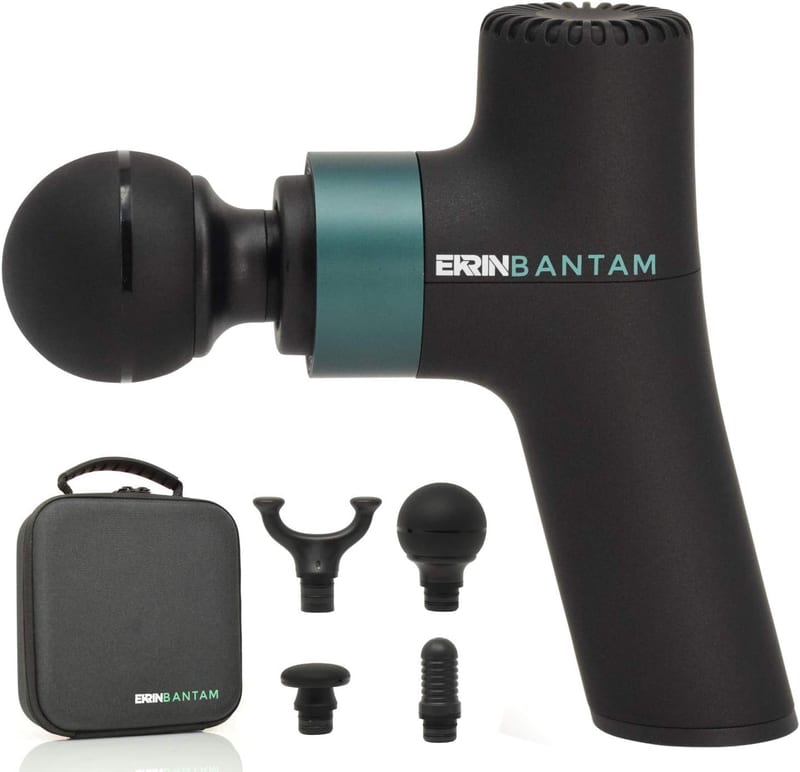
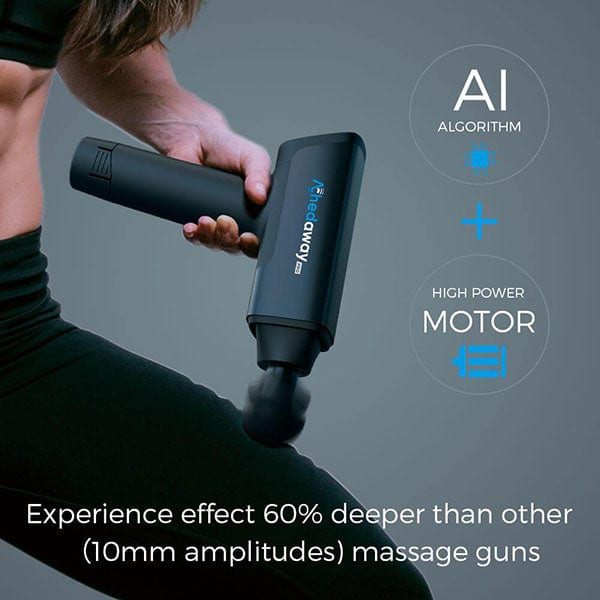
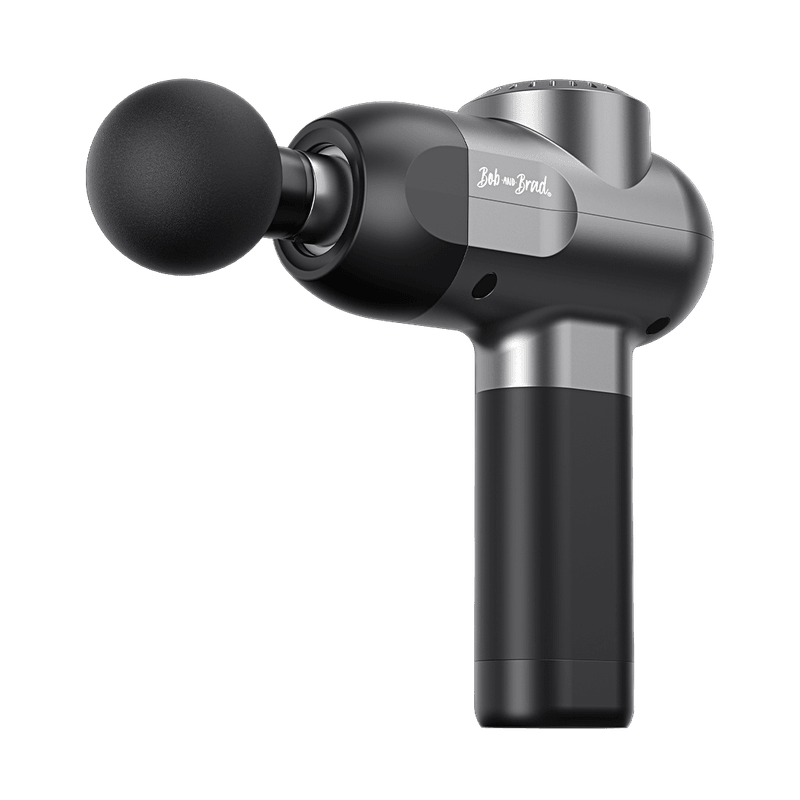
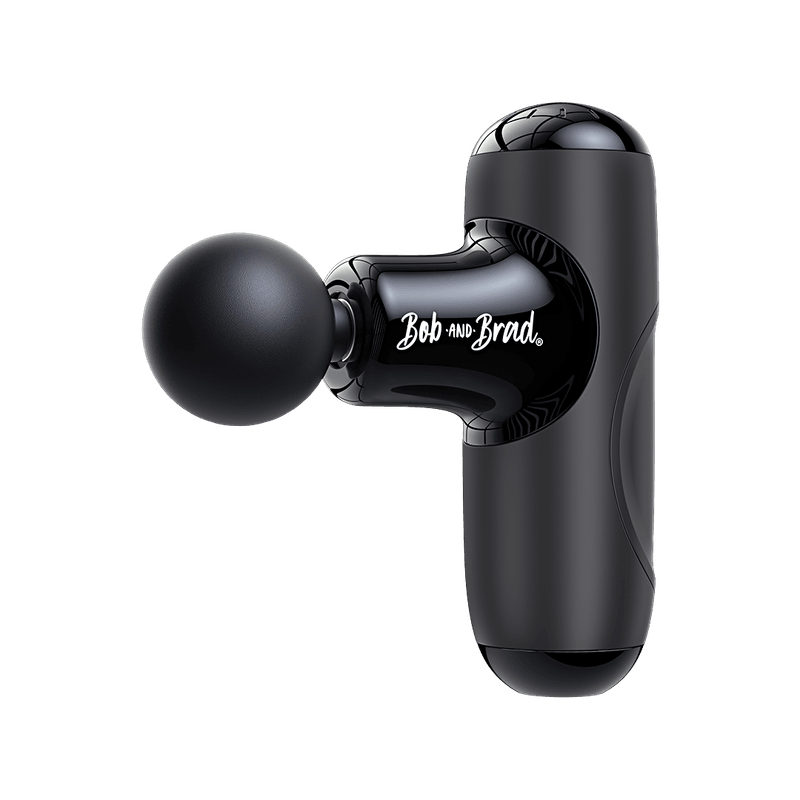
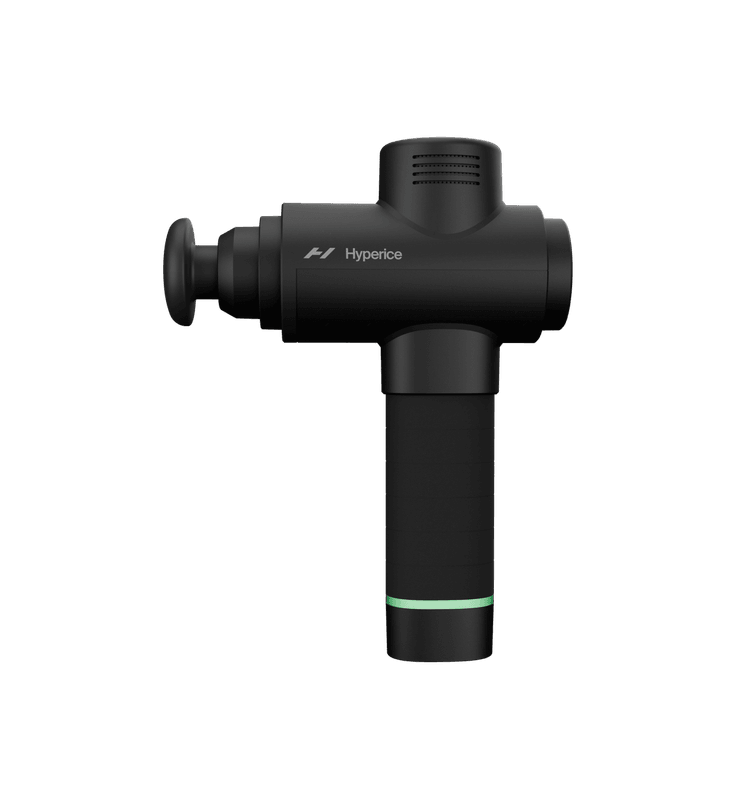
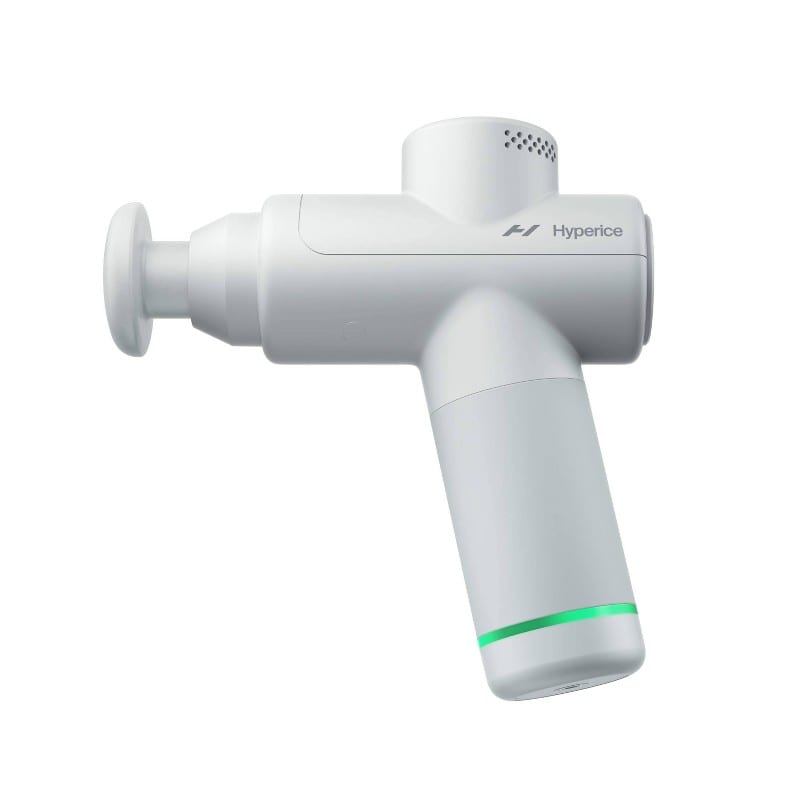
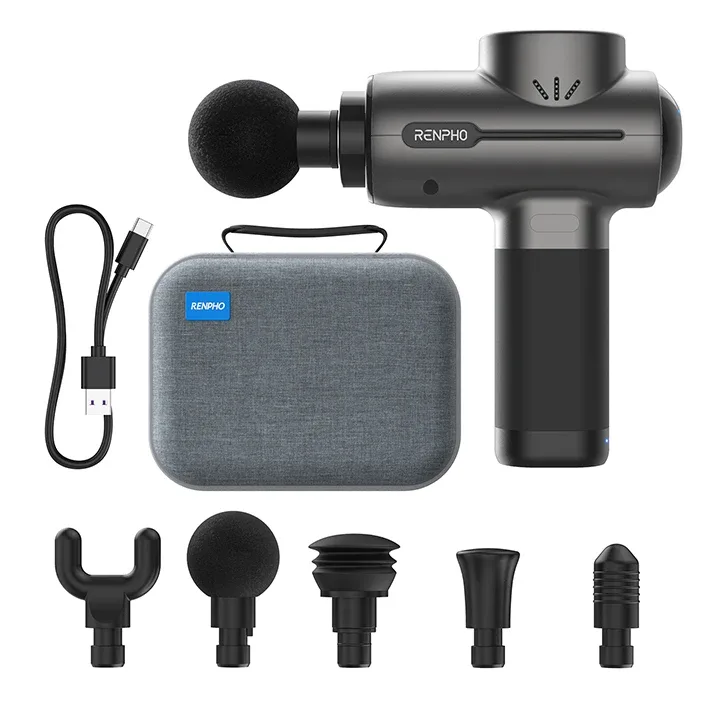
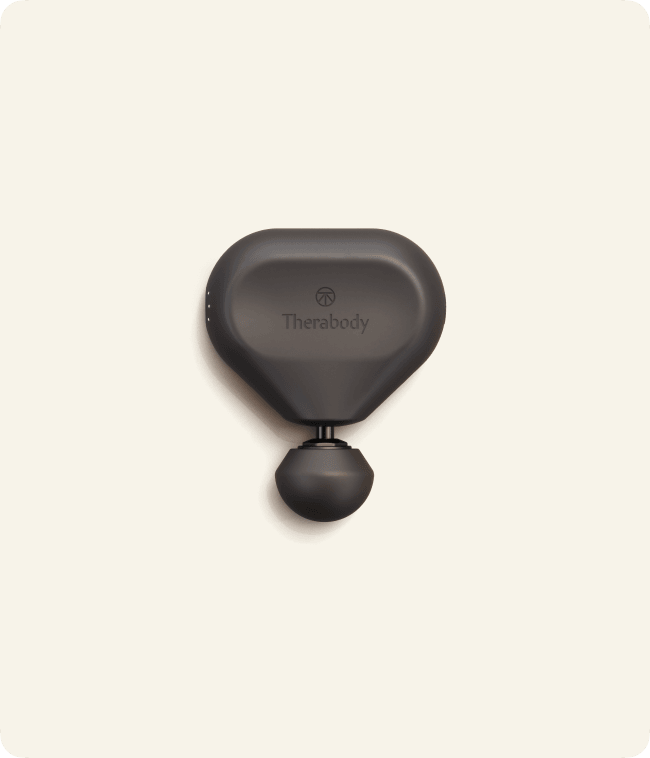
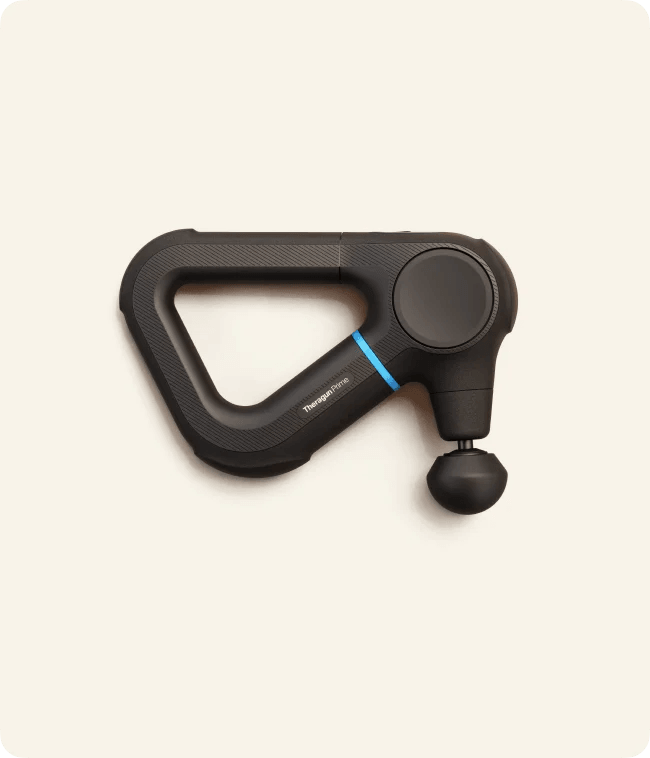
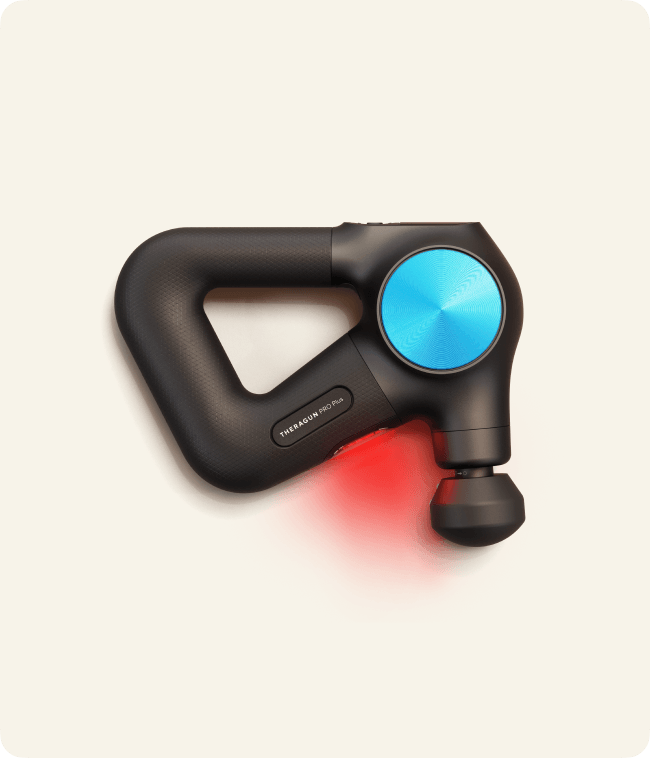
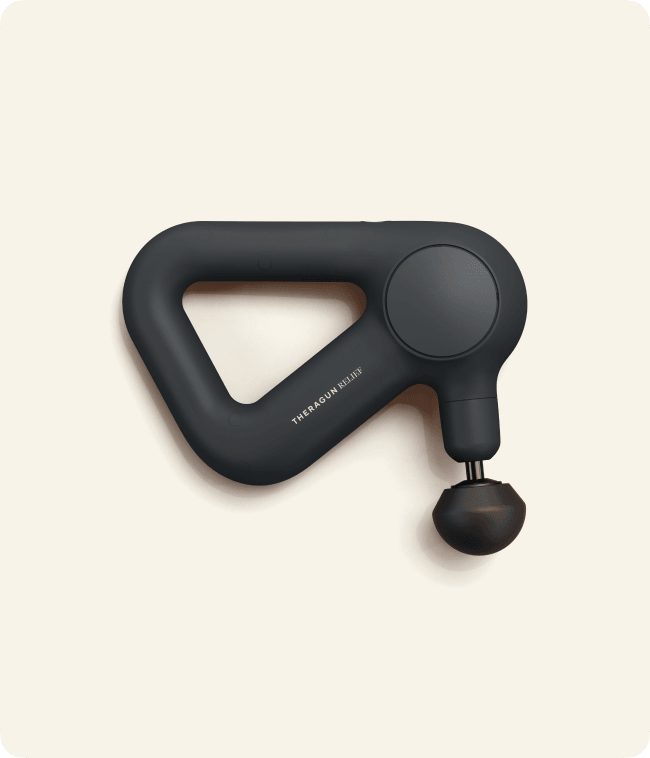
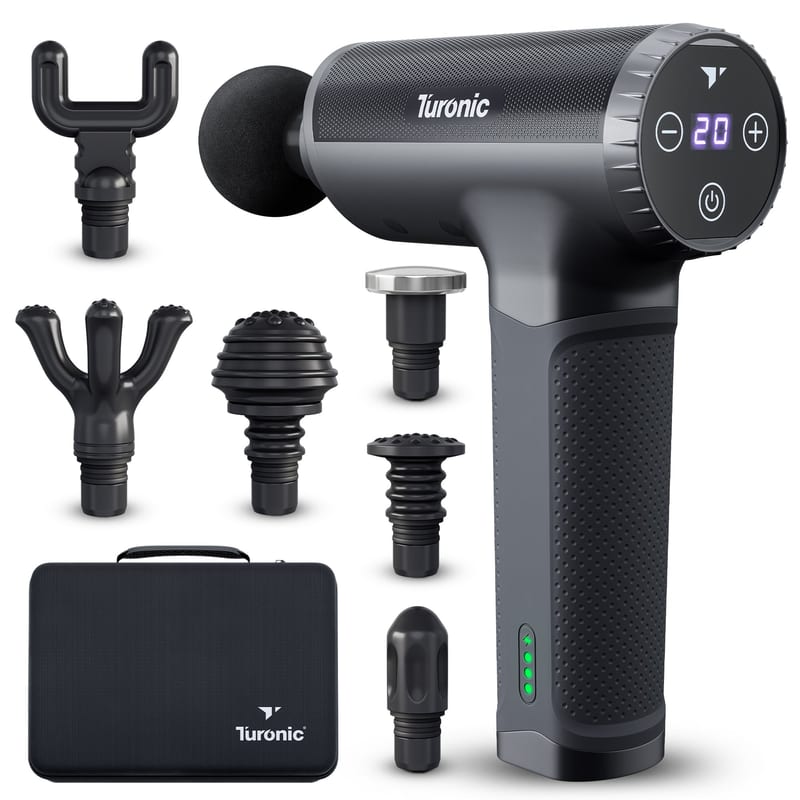
The lineup: the full Therabody range (Theragun PRO Plus, PRO 5th Gen, Prime, Mini, and the entry Relief), two from Hyperice (Hypervolt 2 and the travel-size Hypervolt Go 2), both Ekrin Athletics guns (B37 and the pocket Bantam), the two physical therapists' Bob and Brad C2 and Q2 Mini, two from RENPHO (the app-connected Power and the budget Active), the deep-tissue Achedaway Pro, the long-battery Turonic GM5, and the opove M3 Pro.
Amplitude: the only spec that decides if it reaches muscle
Amplitude is how far the head punches out and back, measured in millimetres, and it is the single number I would shop on. A long stroke pushes into the belly of a large muscle. A short one taps the skin and the top layer of fascia and calls it a day. Sort this column first and half the table sorts itself.
The spread runs from 7mm at the bottom to 16mm at the top, and the gap is not subtle in the hand. Four guns hit the 16mm consumer ceiling: all three full-size Theraguns (PRO Plus, PRO, Prime) and the Achedaway Pro. That is proper depth for glutes, quads and a thick back. The Ekrin B37, Hypervolt 2, RENPHO Power and opove M3 Pro sit at 11 to 12mm, which is the honest sweet spot for most people, enough to work into a muscle without rattling your fillings on a shin. Everything at 10mm and below (the Theragun Relief and Mini, the Hypervolt Go 2, the Bantam, the RENPHO Active, the Bob and Brad pair) is a surface-and-travel tool. The Q2 Mini's 7mm is the shortest here, and you feel exactly seven millimetres of it.
One warning about this column, because it is the one brands lie about most. The figures I have listed are the manufacturers' own, and MassageGunAdvice, who strip these down and measure the stroke on a rig, regularly catch guns running shorter than the box claims, especially at the budget end. Treat 16mm from a premium brand as trustworthy and a big amplitude claim on a no-name gun as a starting bid.
There is a second half to "power" that is not in the table on purpose: stall force, the pressure it takes to bog the motor down. Amplitude gets you deep, stall force lets you stay there when you push. I left it out because there is no honest way to compare it across a table: manufacturers measure it however flatters them, and a $70 wand can quote a bigger number than a Theragun by measuring something different. The people who measure it properly on a load cell, MassageGunAdvice and TechGearLab, are worth reading before you spend real money on a "professional" gun.
Slopsheets says: Sort by amplitude and ignore the percussion-per-minute headline entirely. Want to work deep muscle, buy 16mm (a Theragun or the Achedaway Pro) or at minimum the 12mm of the Ekrin B37 or opove M3 Pro. Buying a sub-10mm gun for a bad back is buying the wrong tool, however good the brand.
Speed: two numbers, and both mean less than you think
Two columns cover speed. Max speed is the top percussions per minute; speed settings is how many steps it offers between slow and fast. Neither is the spec the marketing implies.
Faster is not deeper. The top speed here runs from 2400 to 3300ppm, and the interesting part is that the guns with the biggest strokes have the lowest top speeds. Every full-size Theragun caps at 2400ppm, and that is deliberate: a long 16mm stroke moving fast would be brutal and would strain the motor, so Therabody pairs a big stroke with a slower cadence. The 3200ppm guns (the Ekrin pair, the Hypervolt Go 2, the Bob and Brad C2, the Turonic, the RENPHO Active) hit that number with a shorter stroke. A high number next to a short amplitude is a fast, shallow buzz. Wirecutter's testers make the same point in plainer terms: past a certain speed you are feeling vibration, not percussion.
Speed settings are convenience, not capability. The count runs from three (the Theragun Mini and Relief, both Hypervolt models, the Bantam) up to a marketing-flavoured twenty on the Turonic GM5, with most guns landing at five or six. You do not need twenty. You need one low setting gentle enough for a calf or anywhere near bone, and one high setting for a glute or a quad. Anything past about five steps is a spec-sheet flourish. The Theraguns technically expose more granular control, but only through the app, which brings us to a column further down.
The one rule: Do not let a 3200ppm badge talk you past a gun with more amplitude. Read the two speed columns together with the amplitude one: high speed plus short stroke is a surface tool, moderate speed plus a long stroke is what actually loosens a knot. Three good speed steps beat twenty pointless ones.
Battery life: the number every brand rounds up
Battery is quoted in hours here, and every figure in the column is a best case measured at the lowest speed. Run the gun hard on a tight muscle and you will see a good deal less. That is not one brand being dishonest, it is all of them, so read the column as a ranking rather than a promise.
Even discounted, the spread is real. The Ekrin B37 and opove M3 Pro top the table at a rated eight hours, the Turonic at seven, and those genuinely go a week or more between charges for a normal person. The other end (the entry Theraguns, the Bob and Brad Q2 Mini, the RENPHO Active) sits around two to two and a half hours rated, which reviewers who actually time it, like Garage Gym Reviews, tend to find is closer to ninety minutes in real use. For most people that still does not matter: a session is a few minutes, and everything here charges over USB-C now, which was not true a couple of years ago. The one place it counts is if you share a gun across a household or a team and nobody remembers to charge it.
Up to eight hours on a charge, printed big on the spec sheet.
Every figure is a best case measured at the lowest speed. Run a gun hard on a tight muscle and the entry models rated two-plus hours land closer to ninety minutes.
Two hardware notes the hours column hides. The Theragun PRO takes swappable batteries, so a busy user keeps a charged spare in the case and never stops. And "hours" tells you nothing about charge time or whether it holds a charge sitting in a drawer for a month, which the cheaper cells here do not do as well as the premium ones.
The catch: Ignore the exact hours and treat this as three bands. Eight-ish (Ekrin B37, opove, Turonic) means forget the charger exists. Three to four (most of the mid guns) is fine for one person. Two-ish (the entry and pocket models) is fine solo and annoying if shared. Only the swappable battery on the Theragun PRO changes the maths, and only for someone using it all day.
Weight: the spec you feel after thirty seconds overhead
Weight looks boring in a table and matters more than almost anything once you are holding the gun against your own upper back with your arm bent behind you. The column runs from under a pound to well over three, and that is the difference between a comfortable two minutes and an aching forearm.
The full-size guns mostly sit between 1.5 and 2.6 pounds, which is the sensible range: heavy enough to feel solid, light enough to hold at arm's length. The outlier is the Theragun PRO Plus at 3.6 pounds, and there is a reason. It carries a heated head, cooling, and the biggest battery here, and all of that is mass you hold up. It is a superb device on a treatment table where I am holding it, not you. It is a lot of gun to point at your own shoulder. At the other end, the minis (Theragun Mini at 0.88lb, the Bantam, the Q2 Mini) are the guns you will actually keep in a bag and therefore actually use, which counts for more than a spec sheet admits.
Do not read heavier as more powerful. The lightest serious gun here, the RENPHO Power at 1.9 pounds, works deeper than several heavier ones because amplitude, not mass, does the work. Weight is a comfort spec, not a performance one.
The honest tradeoff: If you are treating your own back and shoulders, weight is a real buying reason, not a rounding error. Keep a full-size gun under about two and a half pounds unless someone else is holding it. And if the honest answer is that a heavy gun will live in a cupboard, a 1-pound mini you carry everywhere does you more good than a 3-pound flagship you don't.
App control: genuinely useful for beginners, a gimmick for everyone else
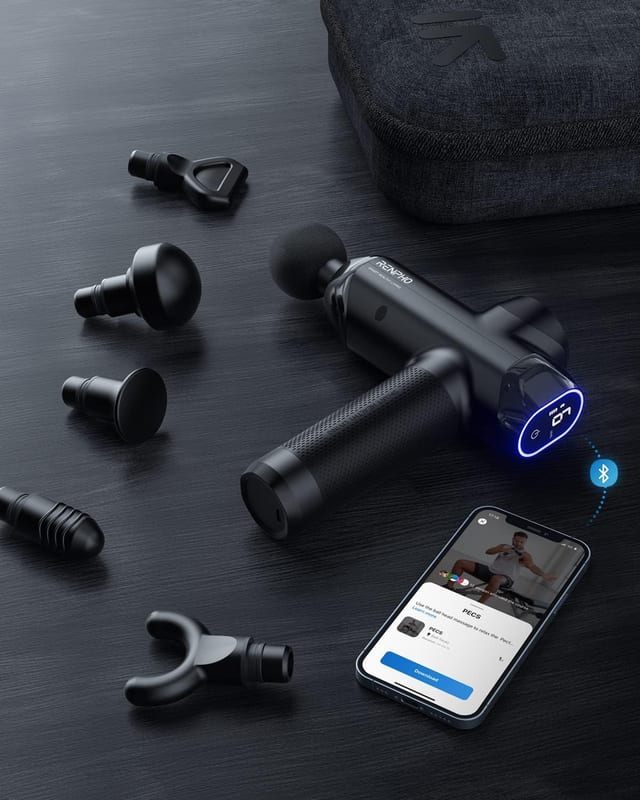
Only a handful connect to a phone: the four app-enabled Theraguns (PRO Plus, PRO, Prime, Mini) and the Hyperice Hypervolt 2 and RENPHO Power. Everything else is buttons, and that is the column with the least to say and the most marketing behind it.
What the app does is coach. It suggests routines, tells you where to move the gun and for how long, and on the Theraguns it can drive the speed for you and nudge you when you are pressing too hard or too soft. For someone who has never used percussion and has no idea how long to sit on a muscle, that hand-holding is worth something for the first month. Cleveland Clinic's take on percussive therapy is a fair reality check here: the evidence for these guns is real but modest, mostly around short-term soreness and range of motion, and no app changes what the motor is doing to the muscle. Once you know that a tight calf wants ninety seconds on a low speed, you will never open the app again.
Two of the premium brands quietly drop the feature to hit a price. The Theragun Relief and the Hypervolt Go 2 both wear a premium badge and both leave the app off, so if connectivity is why you are paying up for the brand, check the specific model rather than the logo.
Don't overpay for: Pay for the app if you are new to this and want guided routines, and otherwise treat it as a tie-breaker worth nothing. It is not a reason to choose a connected gun over a better, cheaper one with buttons. The muscle cannot tell whether your phone was involved.
What this table actually tells you
Two columns decide almost every sensible purchase here, and the loud one on the box is neither of them. How far does the head travel, and (from the reviewers who measure it) how hard can you push before it stalls. Amplitude and stall force are the gun. Battery, weight and the app are how pleasant it is to live with.
Sort by amplitude, shortlist the two or three at the depth you need, then let weight and battery break the tie. Do that and sixteen guns collapse into about three real choices, which is what the sortable table above is for.
Sources / further reading
- MassageGunAdvice - independent bench testing that strips these guns down and measures actual amplitude, stall force and speed against the marketing claims.
- Wirecutter: The Best Massage Guns - hands-on picks and the case against chasing high percussion-per-minute numbers.
- TechGearLab: The Best Massage Guns - load-cell stall-force and sound measurements across premium and budget models.
- Garage Gym Reviews: Best Massage Guns - real-world battery timing and durability notes from repeated testing.
- Cleveland Clinic: Do Massage Guns Actually Work? - a clinician's view on what percussive therapy does and does not do for muscle.