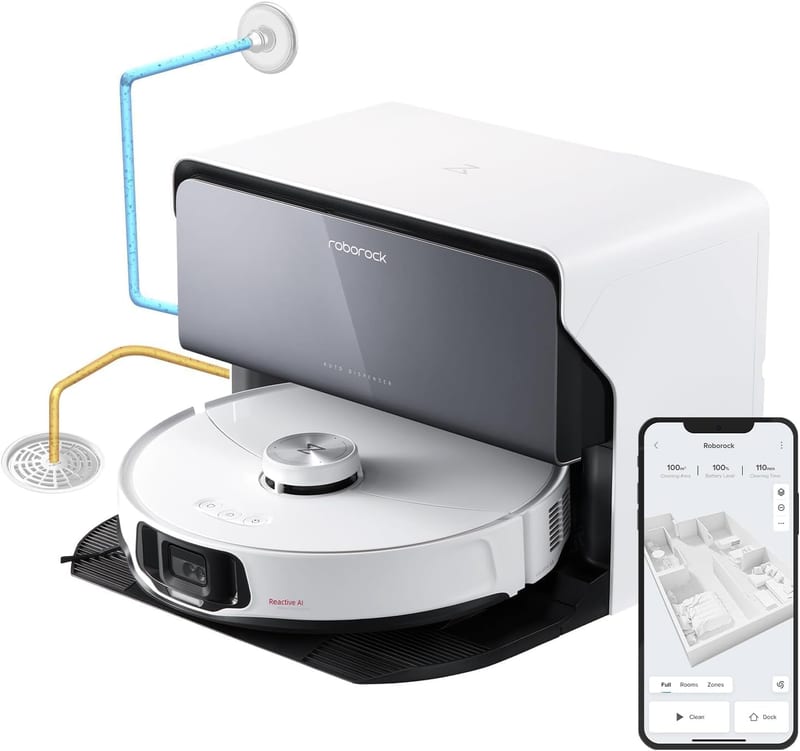
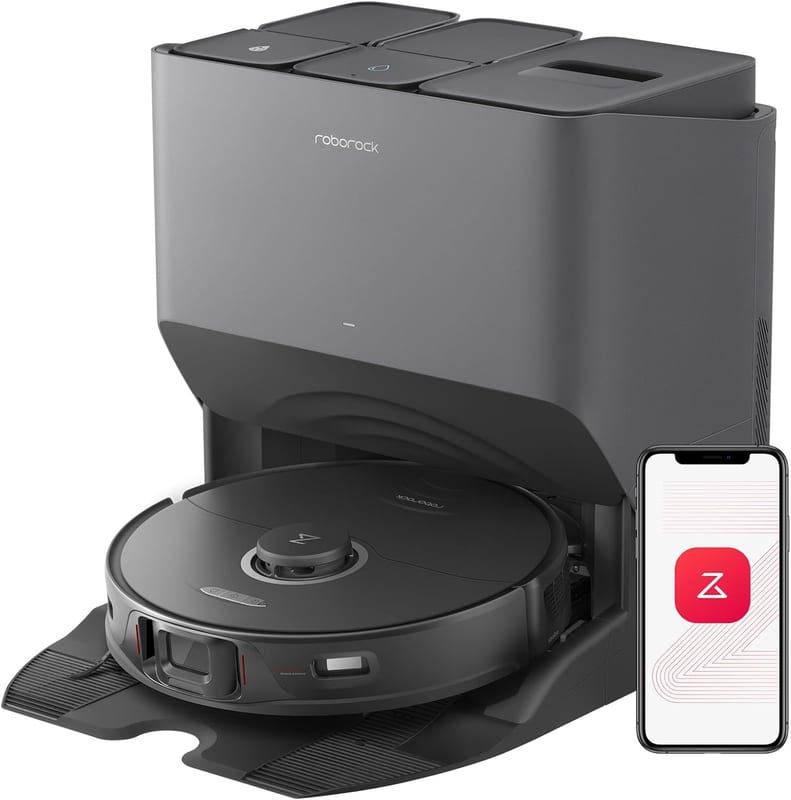
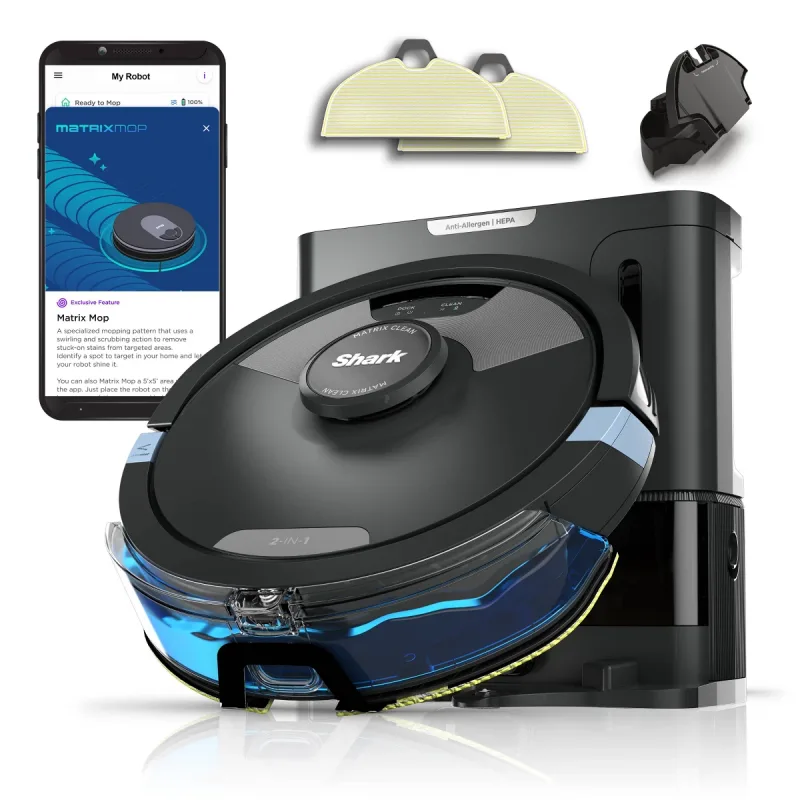
Best robot vacuums of 2026, compared on suction, runtime, self-emptying, and mopping
Every robot vacuum sells the same fantasy: clean floors you never think about. The spec sheet is where that fantasy meets reality. A robot's real character shows up in four numbers and facts you can actually check: how hard it pulls dirt out of carpet (suction, in pascals), how long it runs before it slinks back to the dock, whether that dock empties the bin for you, and whether the thing mops as well as vacuums. This page lines up 19 brand-name robots across those four attributes, using manufacturer-published specs and independent lab testing. No prices, star ratings, or review counts live in this text; the sortable table and the "check price" buttons above handle those. What follows is the spec-level reasoning underneath them.
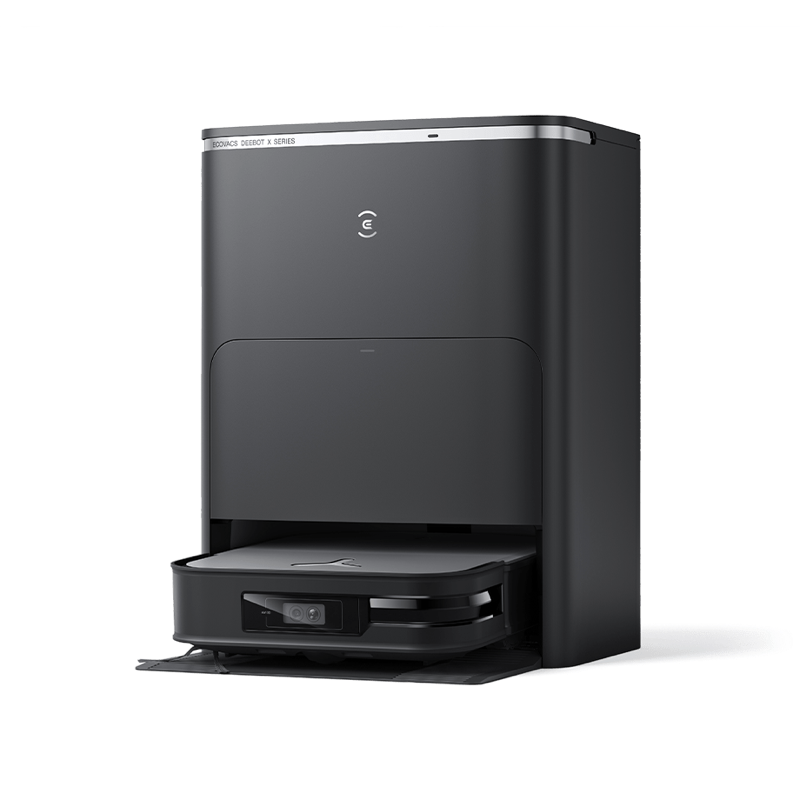
Quick answer: For raw suction, the Roborock Qrevo Curv (18,500 Pa) and Ecovacs Deebot X8 Pro Omni (18,000 Pa) top the field, with the eufy Omni C28 (15,000 Pa) close behind. For runtime, the Deebot X8 Pro Omni leads at a rated 291 minutes. For hands-off maintenance, 18 of the 19 robots self-empty; the lone holdout is the older eufy RoboVac X8 Hybrid. And 17 of 19 mop and vacuum in one body, the two exceptions being the vacuum-only Shark IQ and iRobot Roomba j7+. Three robots (the Shark Matrix Plus, Roomba Combo 10 Max, and Roomba j7+) ship with no published pascal figure at all, so they sit out the suction ranking rather than get a made-up number.
Max suction power (Pa): the widest gap on the sheet
Suction is measured in pascals, and this is the attribute where the spread is almost comical. The strongest robot here is rated eighteen times the weakest.
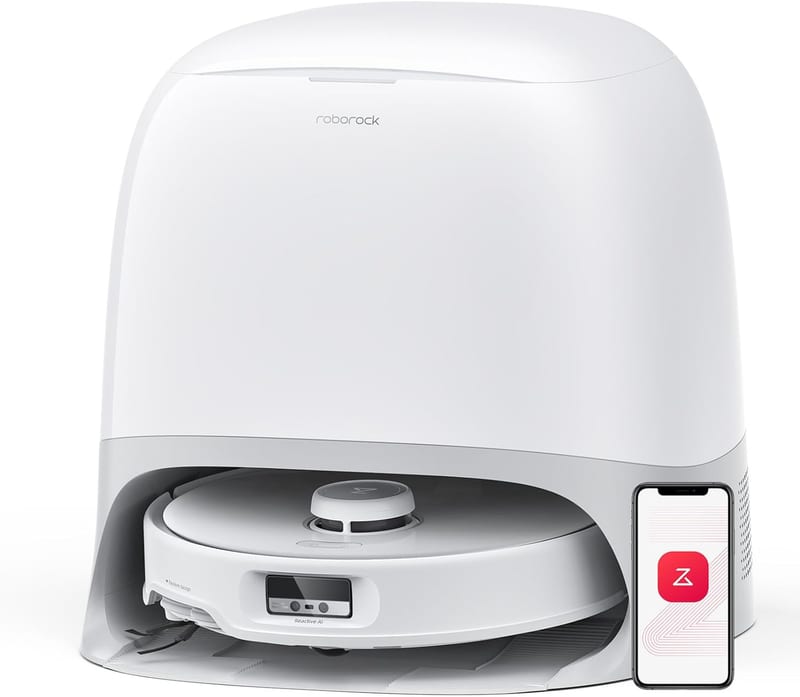
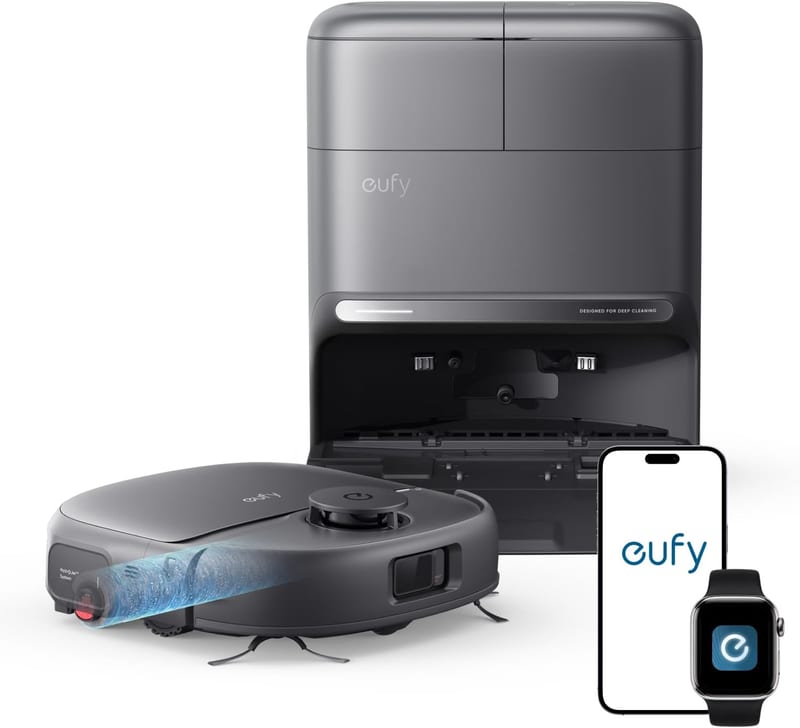
At the top, Roborock rates the Qrevo Curv at an "industry leading 18,500 Pa," a figure it prints right on the official product page. The Ecovacs Deebot X8 Pro Omni sits a hair behind at a manufacturer-listed 18,000 Pa; Vacuum Wars measured its max-power suction as "higher than average," a top-ten result out of more than a hundred robots they have tested, in their X8 Pro Omni review. The eufy Omni C28 claims 15,000 Pa, which eufy frames as roughly 1.8 times the suction of its own popular X10 Pro Omni on its product page.
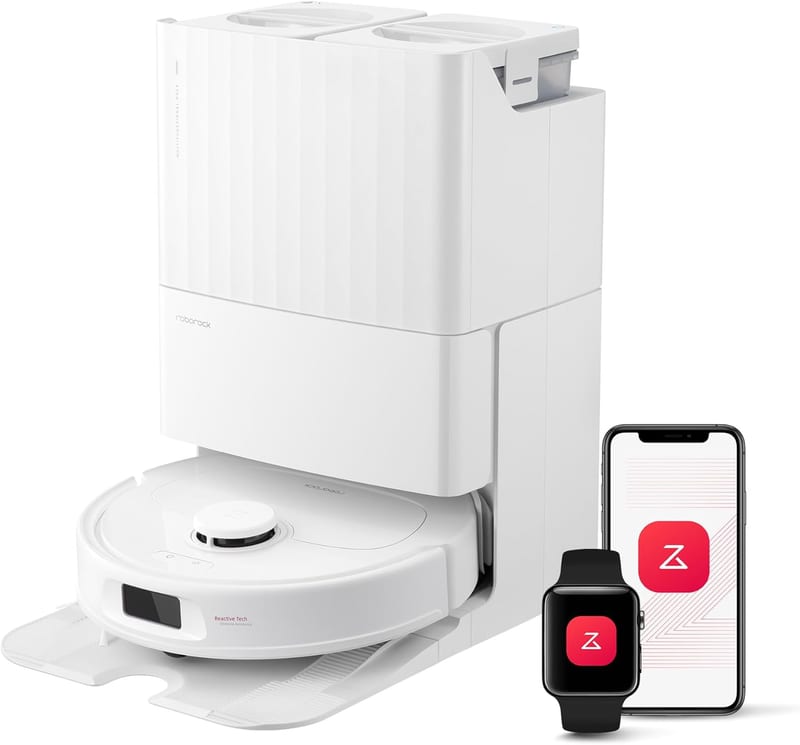
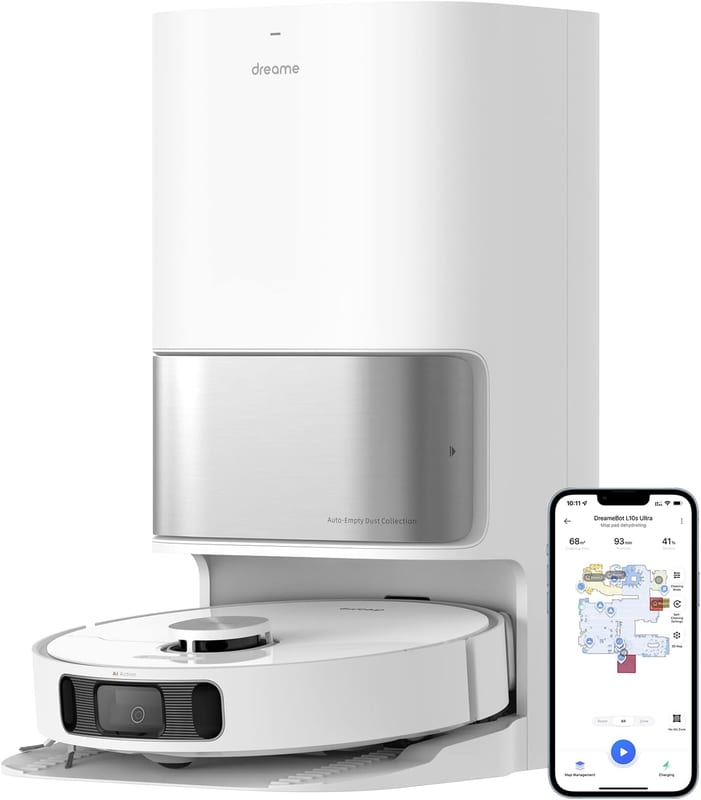
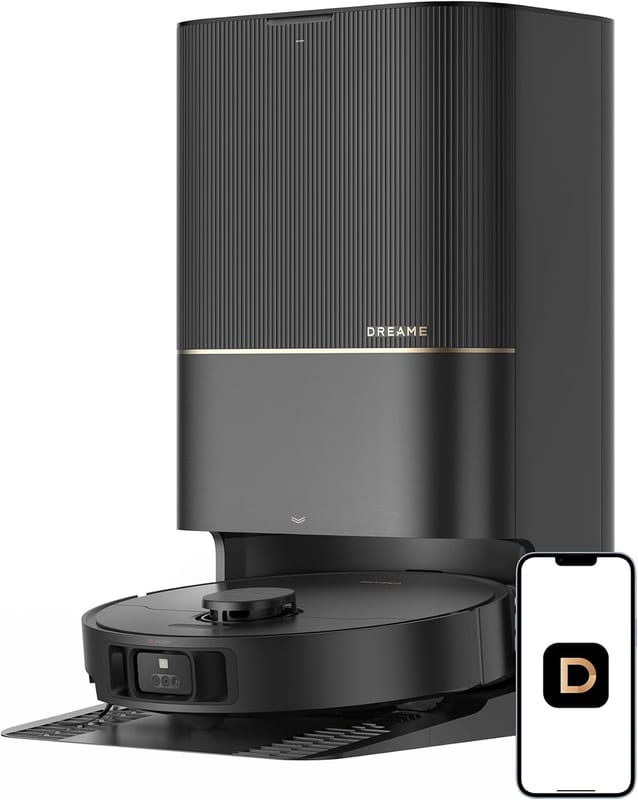
The rest of the flagship pack clusters lower but still high: the Dreame X40 Ultra at 12,000 Pa (confirmed alongside a carpet-cleaning score that "surpassed the average" in Vacuum Wars' testing), the Dreame L40 Ultra and Ecovacs Deebot T30S Combo both at 11,000 Pa, and the Roborock S8 MaxV Ultra at a listed 10,000 Pa of HyperForce suction per Roborock's own page. Below them, the Narwal Freo X Ultra (8,200 Pa), the Ecovacs Deebot X2 Omni and eufy X10 Pro Omni (both 8,000 Pa), the Roborock Qrevo S (7,000 Pa per IEC 62885 testing), the Roborock S8 Pro Ultra (6,000 Pa), the Roborock Q5 Pro (5,500 Pa), and the Dreame L10s Ultra (5,300 Pa) fill out the middle. The eufy RoboVac X8 Hybrid (4,000 Pa) and the older Shark IQ (1,000 Pa) bring up the rear.
Then there are the robots that refuse to play. Shark does not publish a pascal figure for the Matrix Plus anywhere, marketing only relative claims like "ultra-powerful suction." iRobot is the same with the Roomba Combo 10 Max, citing "100% more suction power" versus its older Combo i-series rather than an absolute number, and Vacuum Wars simply listed its suction as "Unknown" in their hands-on test. The Roomba j7+ carries the same "10x" style relative claim and no raw figure. We are not going to convert a marketing multiplier into a fake pascal rating, so all three are unranked on suction.
More pascals means cleaner carpet all the way up the range, so an 18,500 Pa robot must clean nearly twice as well as an 8,000 Pa one.
Above roughly 8,000 Pa, real-world carpet results plateau faster than the number suggests. Treat the top figures as headroom, not a linear promise.
Slopsheets says: If you buy on suction numbers alone, the Qrevo Curv and Deebot X8 Pro Omni are in a tier of their own. Just know that above roughly 8,000 Pa, real-world carpet results start to plateau faster than the spec sheet suggests, so treat the top figures as headroom, not a linear promise.
Battery runtime: minutes per charge
Runtime decides how much floor a robot covers before it needs to recharge, which matters most in larger homes where a mid-clean pit stop means the job drags across hours.
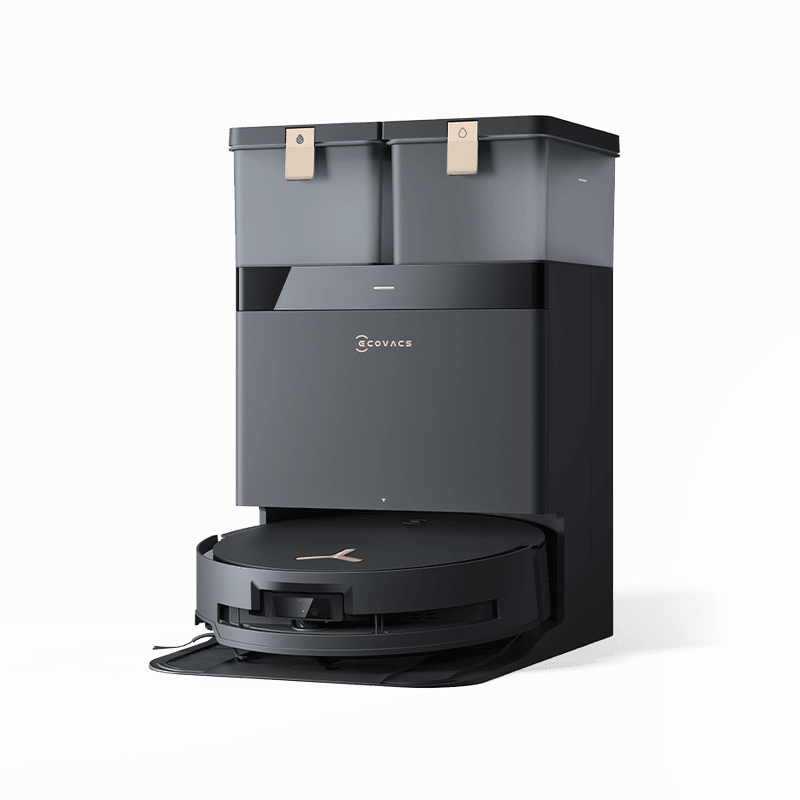
The Ecovacs Deebot X8 Pro Omni leads outright at a rated 291 minutes in its quiet, vacuum-only mode, a figure that drops to roughly 145 minutes at full power per Ecovacs' spec sheet. Behind it, the Roborock Qrevo Curv and Roborock Q5 Pro both claim 240 minutes, and the Ecovacs Deebot T30S Combo claims 220. The eufy Omni C28 rates 216 minutes vacuum-only (about 123 when it is also mopping), the Ecovacs Deebot X2 Omni 212, the Dreame L10s Ultra 210, and the Narwal Freo X Ultra an advertised "up to 208 minutes on low power," a claim Vacuum Wars quoted directly in its Freo X Ultra review.
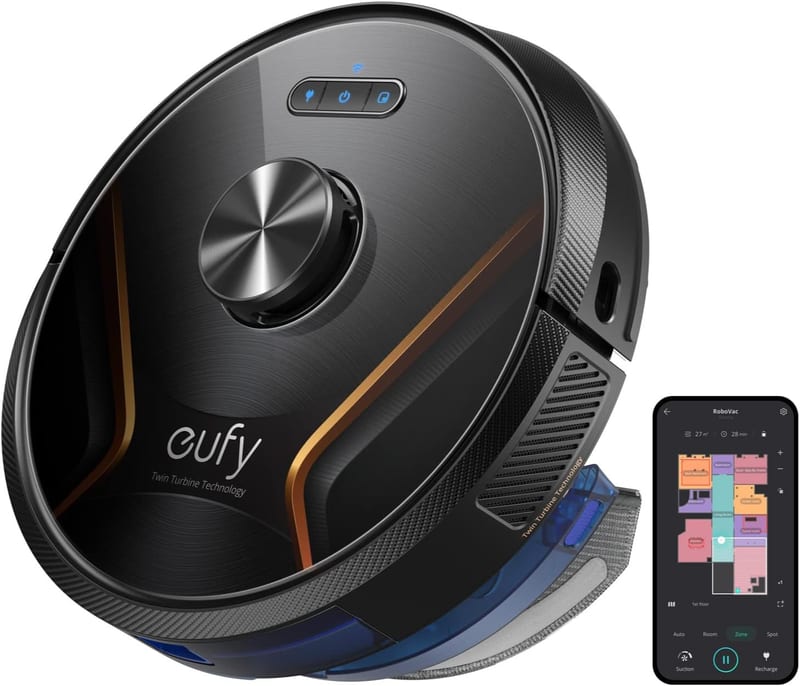
The Dreames land mid-pack on paper but punch above it on efficiency: the X40 Ultra at 198 minutes and the L40 Ultra at 194, where Vacuum Wars measured "the highest score we've seen yet" for battery efficiency, roughly 2.2 minutes of cleaning per percentage point of charge, in its L40 review. A cluster of capable robots sits at 180 minutes: the Roborock S8 MaxV Ultra, S8 Pro Ultra, Qrevo S, eufy X10 Pro Omni, and eufy RoboVac X8 Hybrid. Independent testers tend to shave these figures in practice; hands-on tests of the S8 MaxV Ultra clocked closer to 165 to 175 minutes at standard suction and about 60 at maximum, which is normal, since the rated number is always the gentlest mode.
At the bottom, the Roomba Combo 10 Max carries a 120-minute spec on retailer sheets (iRobot omits it from its own page), the Shark Matrix Plus is rated 110, and the vacuum-only Shark IQ trails at 90. The Roomba j7+ has no manufacturer runtime figure in the sources here, so it goes unranked on this axis too.
Size it to your floors: For a small apartment, anything here clears a full clean on one charge. For a house over about 1,500 square feet, the 200-plus-minute robots (the X8 Pro Omni, Qrevo Curv, Q5 Pro, T30S Combo) save you from mid-job recharges, though every one of these can resume after topping up.
Self-emptying bases: which robots skip the weekly bin dump
A self-emptying dock lets the robot pour its own dustbin into a larger bag or bin at the base, stretching the gap between manual emptying from days to weeks. It is the single feature that most changes how "hands-off" a robot actually feels.
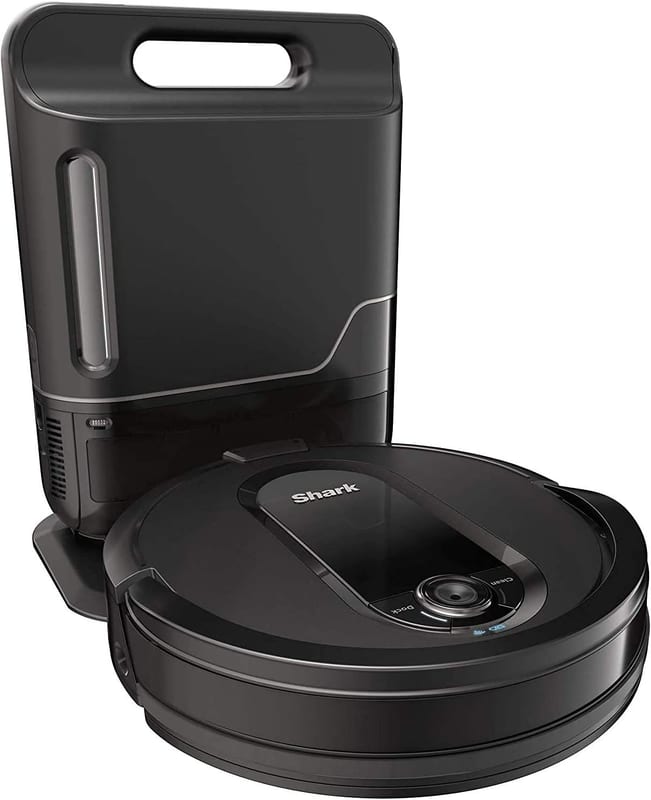
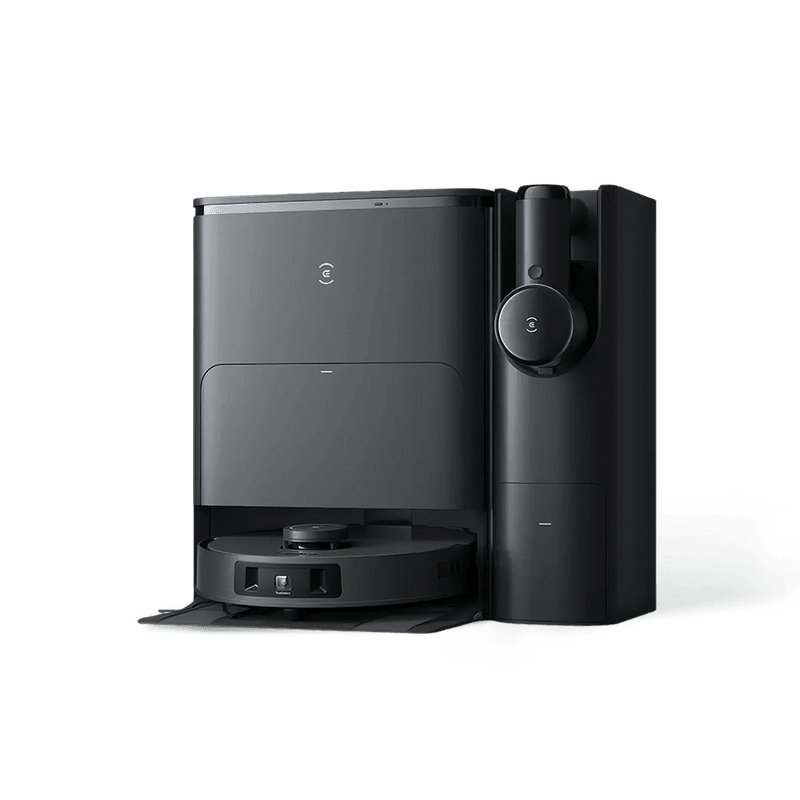
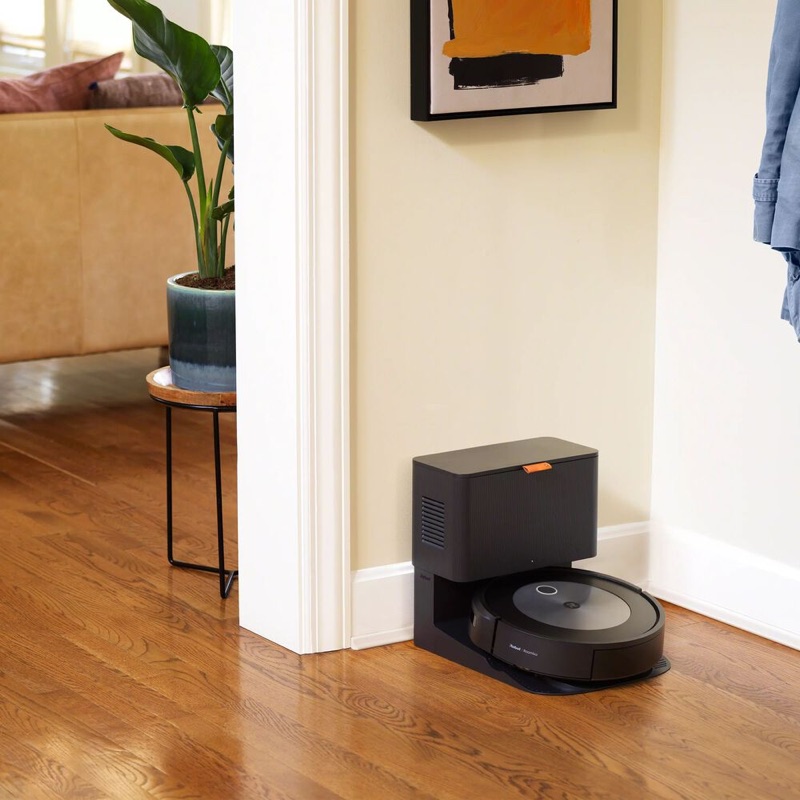
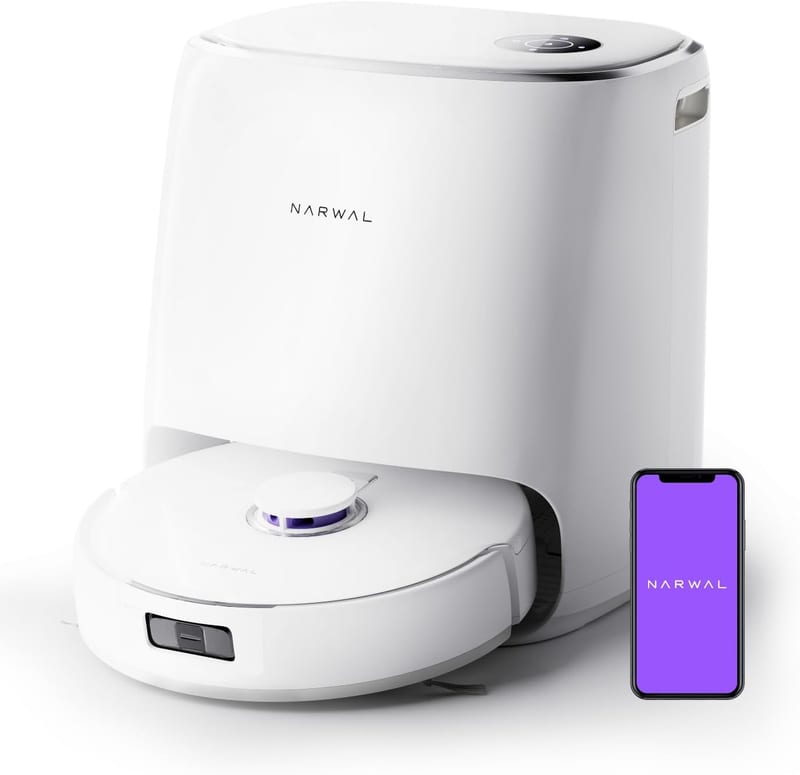
This is close to universal now. Eighteen of the nineteen robots here dock into a base that auto-empties. That includes every flagship in the group and even the budget-tier Shark IQ, whose base holds roughly a month of debris before it needs attention, according to Modern Castle's testing. The premium docks go further: the Roborock S8 Pro Ultra and Qrevo Curv, the Ecovacs Deebot X8 Pro Omni, the Dreame X40 Ultra, the Narwal Freo X Ultra, and the eufy Omni C28 all also wash and dry their own mop pads and refill the robot's clean-water tank. CNN Underscored described the S8 Pro Ultra's dock as handling "everything from emptying the dirt and dirty water from the robot" to refilling clean water in its full review. The Ecovacs Deebot T30S Combo adds a twist, its OMNI station also empties a bundled handheld vacuum, which TechRadar singled out as a genuinely useful "fuller cleaning solution" in its T30S Combo review.
The one exception is the eufy RoboVac X8 Hybrid. It docks to charge and nothing more, a limitation TechGearLab flagged directly, noting the model "doesn't have a tower dock to help gather the day's collected debris" in its X8 Hybrid review.
The lone holdout: If auto-emptying is the whole reason you want a robot, the X8 Hybrid is the only model here that still hands you the bin. Everything else buys you weeks between chores.
Mopping: hybrid wet cleaning vs. vacuum-only
Seventeen of the nineteen robots vacuum and mop from one chassis. The two that do not are the older single-taskers: the Shark IQ and the iRobot Roomba j7+ are vacuum-only.
Among the hybrids, the mopping mechanism is where the money goes. The Ecovacs Deebot X8 Pro Omni uses a self-washing OZMO roller mop that scrubs continuously rather than dragging a damp pad. The Shark Matrix Plus leans on "sonic mopping" that vibrates its pad about 100 times per minute, though TechRadar found the wet cleaning light-duty in its Matrix Plus review. Roborock's newer machines lift the mop off the floor automatically when they detect carpet, a trick AndroidPolice highlighted on the S8 Pro Ultra as letting the robot "intelligently lift its mop or roller brushes according to the cleaning mode and surface" in its review. The Narwal Freo X Ultra built its whole reputation on mopping; Vacuum Wars ranked it third overall among robot mops it has tested. At the simpler end, the eufy RoboVac X8 Hybrid uses a basic reusable cloth that TechGearLab said needed frequent hand-rinsing.
The Roomba Combo 10 Max is the interesting straggler. It is a true vacuum-and-mop with an AutoWash dock that rinses and dries the pad, but Vacuum Wars scored the whole package a middling 2.70 out of 5, praising deep-clean pickup while flagging real weaknesses. iRobot's older j7+ takes a different route entirely: it can hand off to a separate Braava jet m6 mopping robot through Imprint Link, which is clever but means buying and running two machines instead of one, per iRobot's product page.
What actually scrubs: Roller mops (the X8 Pro Omni, eufy's HydroJet models) and spinning dual pads (Roborock, Dreame, Narwal) genuinely scrub. A flat vibrating or dragged pad, common at the budget end, mostly wipes fresh spills and freshens a floor rather than lifting dried-on grime.
Navigation and obstacle avoidance: what the four numbers miss
Suction and runtime say nothing about whether a robot eats your charging cable or paints a stripe of dog mess across the hallway. Navigation is the attribute that separates a robot you trust to run unsupervised from one you babysit.
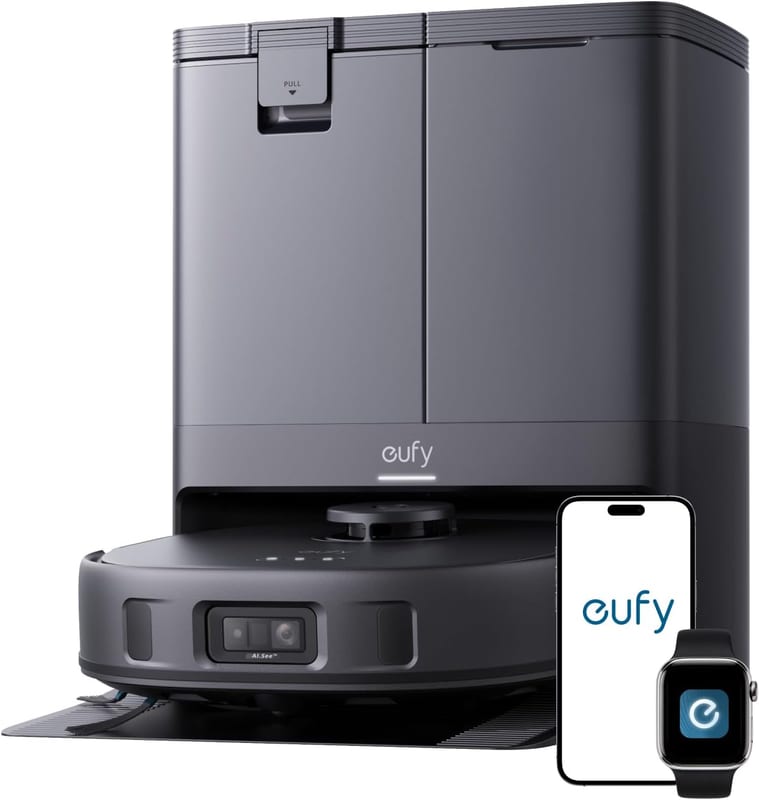
The camera-plus-LiDAR flagships handle this best. The Ecovacs Deebot X8 Pro Omni and X2 Omni pair laser mapping with an AIVI 3D camera system Ecovacs says spots objects up to 10 meters out. Dreame's X40 Ultra, eufy's X10 Pro Omni and Omni C28 (with its AI.See sensor), and the Roomba j7+ all use forward cameras trained to route around cords, socks, and pet waste; iRobot's PrecisionVision even snaps a photo the first time it meets a new obstacle, per its product page. The Roborock S8 Pro Ultra skips the front camera and uses infrared imaging instead, a choice Vacuum Wars called "exceptional" for fast, efficient mapping in its S8 Pro Ultra test.
The value models map fine but see less. The Roborock Q5 Pro and Qrevo S, the Dreame L10s Ultra, and the eufy RoboVac X8 Hybrid navigate by LiDAR without a dedicated obstacle-recognition camera, so they clean efficient paths but are likelier to bump or nudge clutter. TechGearLab found the X8 Hybrid "does not avoid pet accidents well," a gap shared by most camera-less robots. And the older Shark IQ still leans partly on physical boundary strips to block off rooms, a dated approach Modern Castle noted alongside its onboard mapping.
How to choose, by what you actually care about
- You want the strongest, most automated robot and will pay for it. Look at the Roborock Qrevo Curv, Ecovacs Deebot X8 Pro Omni, or Dreame X40 Ultra. Top-tier suction, self-washing mops, and docks that do nearly everything.
- You have a big home. Prioritize runtime: the Deebot X8 Pro Omni (291 min), Qrevo Curv or Q5 Pro (240), or Deebot T30S Combo (220).
- You want flagship features without flagship pricing. The eufy Omni C28, Roborock Qrevo S, Dreame L40 Ultra, and Narwal Freo X Ultra bring roller or dual-spin mopping and self-washing docks down a tier.
- Mopping is the point. Roller-mop and dual-spin robots (Deebot X8 Pro Omni, Narwal Freo X Ultra, the Roborock and Dreame flagships) scrub; budget vibrating pads mostly freshen.
- You just want auto-emptying on a budget. The Shark IQ gets you a self-empty base for the least, as long as you do not need a mop.
- Pets and cords everywhere. Favor a camera robot: Roomba j7+ or Combo 10 Max, Ecovacs X8 Pro Omni, or eufy X10 Pro Omni.
Frequently asked questions
Which robot vacuum here has the strongest suction? The Roborock Qrevo Curv, at a manufacturer-rated 18,500 Pa, just ahead of the Ecovacs Deebot X8 Pro Omni at 18,000 Pa and the eufy Omni C28 at 15,000 Pa. The Shark Matrix Plus and both Roombas publish no pascal figure, so they are not ranked on suction.
Do all of these robots mop? No. Seventeen of the nineteen vacuum and mop in one unit. The Shark IQ and the iRobot Roomba j7+ are vacuum-only, though the j7+ can pair with a separate Braava jet mopping robot.
Is a self-emptying base worth it? For most buyers, yes: it turns bin duty from a near-daily chore into a monthly one. Eighteen of these nineteen robots include one. Only the eufy RoboVac X8 Hybrid docks for charging alone, per TechGearLab's testing.
Why do the Shark Matrix Plus and Roombas have no suction number? Shark and iRobot do not publish suction in pascals; they market relative claims ("ultra-powerful," "100% more suction") measured against their own older models. Rather than invent a figure, we leave their suction cell blank. Vacuum Wars did the same, listing the Roomba Combo 10 Max's suction as "Unknown."
Does a higher pascal rating always mean cleaner floors? Not linearly. Above roughly 8,000 Pa, gains on carpet taper off, and brush design, mop type, and navigation often matter more than the headline number. Use suction as a tiebreaker, not the only axis.
The bottom line
No single robot wins all four categories. The Roborock Qrevo Curv leads on suction and pairs it with a fully automated dock. The Ecovacs Deebot X8 Pro Omni matches it on features and takes runtime outright. The eufy Omni C28, Dreame L40 Ultra, Roborock Qrevo S, and Narwal Freo X Ultra deliver most of the flagship experience a tier down. The Shark IQ remains the budget door into self-emptying, and the camera-driven Roombas trade published power specs for obstacle smarts. Sort the table above by whichever column decides it for your home: suction, runtime, self-emptying, or mopping.
Sources / further reading
- Roborock Qrevo Curv, official product page
- Roborock Qrevo Curv Review, Vacuum Wars
- Roborock S8 MaxV Ultra, official product page
- Roborock S8 MaxV Ultra Review, RTINGS
- Roborock Qrevo S Review, Trusted Reviews
- Roborock S8 Pro Ultra Review, CNN Underscored
- Roborock S8 Pro Ultra Review, Vacuum Wars
- Roborock S8 Pro Ultra Review, AndroidPolice
- DEEBOT X8 PRO OMNI, ECOVACS official product page
- Ecovacs Deebot X8 Pro Omni Review, Vacuum Wars
- Ecovacs Deebot T30S Combo Review, TechRadar
- Dreame X40 Ultra Review, Vacuum Wars
- Dreame L40 Ultra Review, Vacuum Wars
- Dreame L10s Ultra Review, RTINGS
- Narwal Freo X Ultra Review, Vacuum Wars
- eufy Omni C28, official product page
- eufy X10 Pro Omni Review, RTINGS
- eufy RoboVac X8 Hybrid Review, TechGearLab
- Shark Matrix Plus Review, TechRadar
- Shark IQ Review (RV1001AE), Modern Castle
- iRobot Roomba Combo 10 Max Review, Vacuum Wars
- Roomba j7 Robot Vacuum, iRobot official product page
- Best Robot Vacuums of 2026, Vacuum Wars