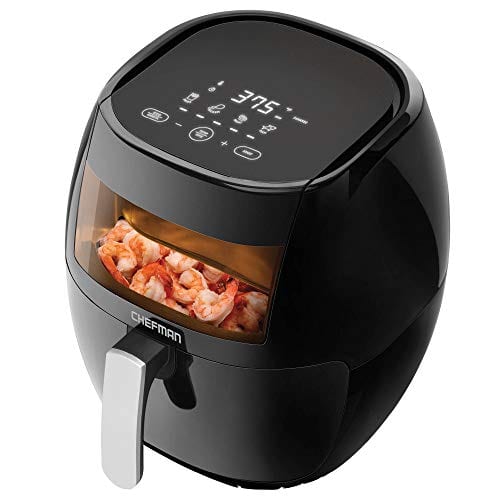
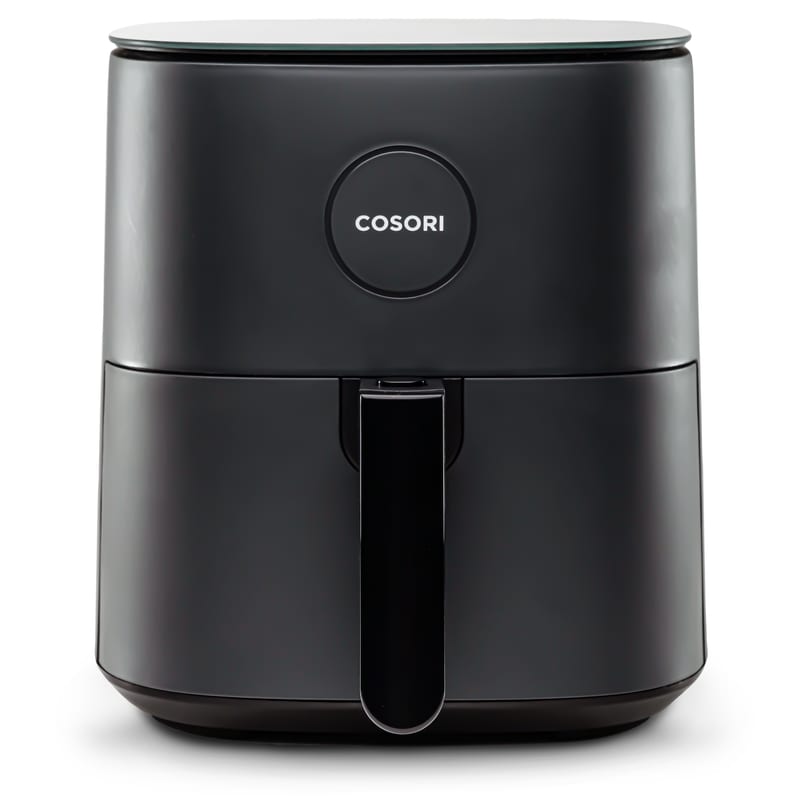
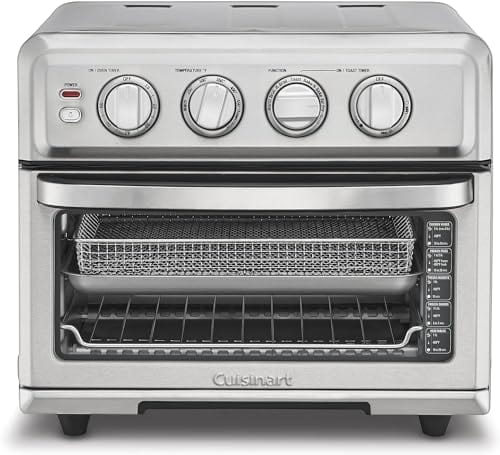
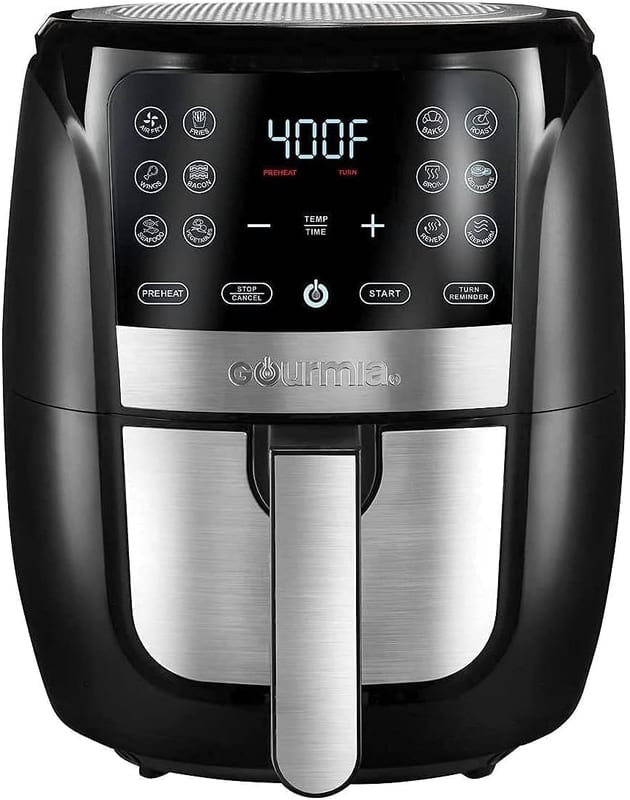
An air fryer is a small convection oven with an aggressive fan. That is the entire idea. A heating element sits close to the food and a fan whips the hot air around fast enough to crisp the outside the way a deep fryer does, minus the oil. Once you accept that, most of the marketing falls away, because the things that actually separate one air fryer from another are boring, physical, and easy to compare: how much food fits, how hot it gets, how it is shaped, and how annoying it is to clean. This comparison ranks 20 popular models on exactly those, and ignores the "N-in-1" sticker doing the heavy lifting on the box.
The trap in this category is capacity. Every air fryer is sold on a quart number, and that number is the total volume of an empty basket, not the space you can actually cook in. Air frying needs airflow around the food, so a single layer with room to breathe is the whole point, and a crowded basket steams instead of crisps. The practical rule the testing sites converge on is that you get roughly 60 to 70 percent of the advertised capacity as usable cooking space. An 8-quart drawer is a 5-quart drawer once you cook the way the machine wants you to.
Slopsheets says: Buy for the food, not the quart number. A 5 to 6-quart basket is the honest sweet spot for a family of four, a 2 to 4-quart unit is a one-or-two-person machine, and an oven-style box trades crisping speed for the ability to fit a pizza. The wattage and the "10-in-1" preset count are the two specs people overweight the most.
Capacity: the one spec everyone reads wrong
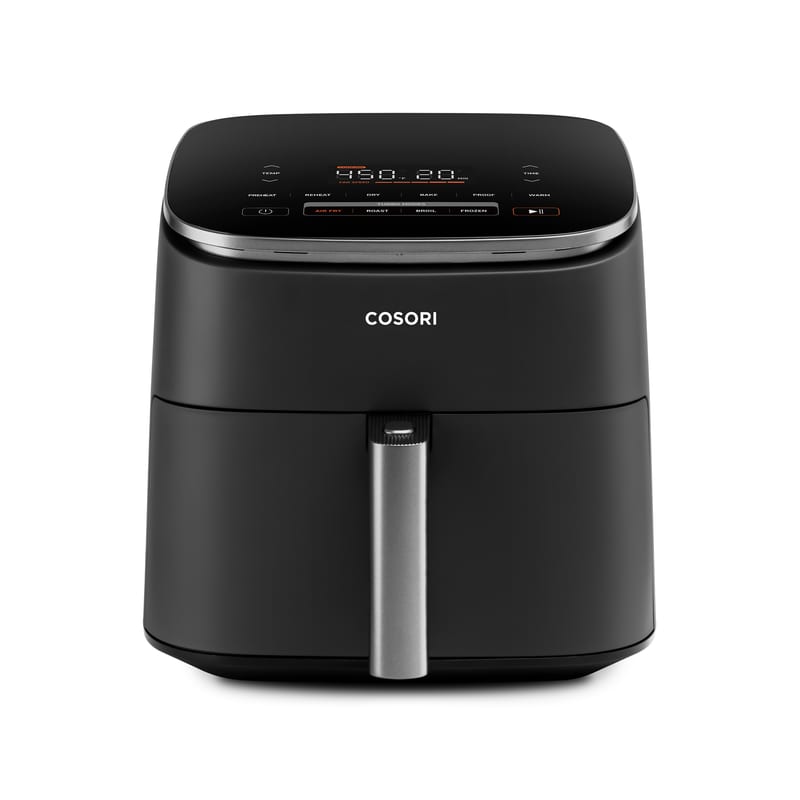
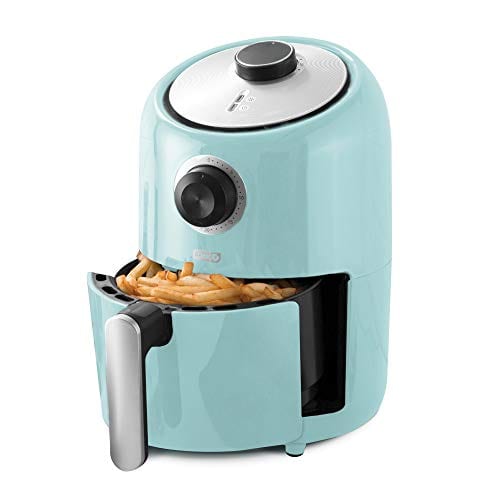
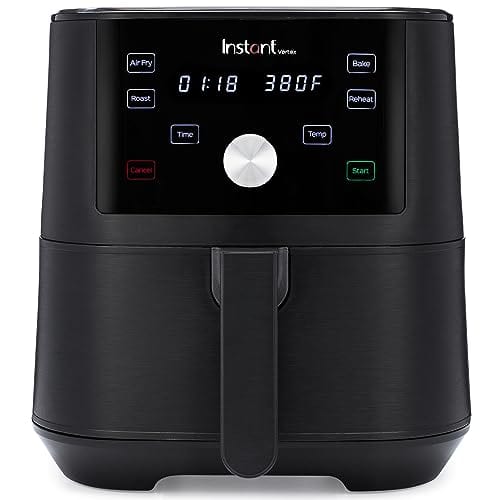
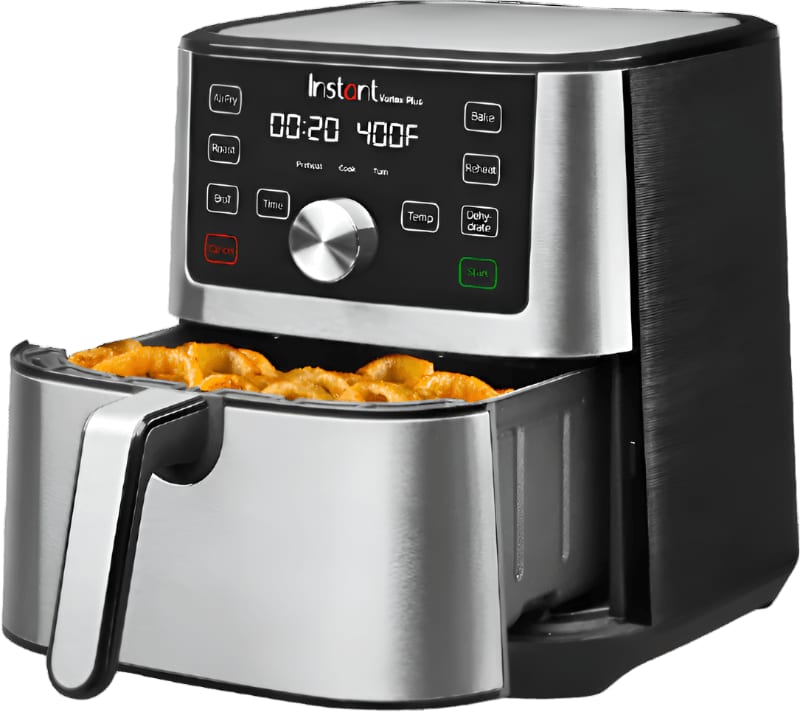
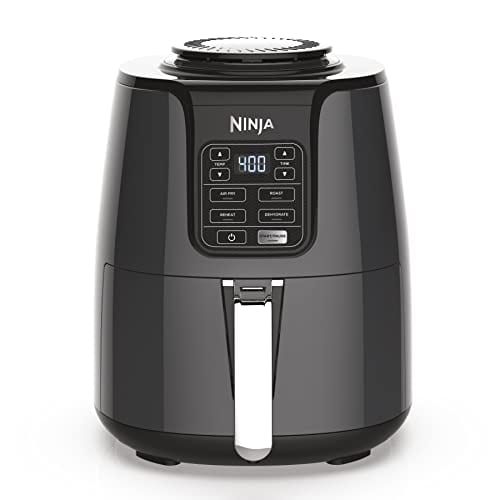
Match the basket to how many people you feed, then knock off a third for airflow. A 5 to 6-quart single basket cooks for a family of four in one go, which is why the Cosori TurboBlaze 6-Quart, the Ninja Air Fryer Max XL, and the Instant Vortex Plus 6-Quart sit in the meaty middle of this group. Drop to the 4-quart Ninja AF101 or Instant Vortex 4-Quart and you are cooking for one or two, or running a second batch. The 2-quart Dash Compact is unapologetically a single-serving machine, and that is the point of it.
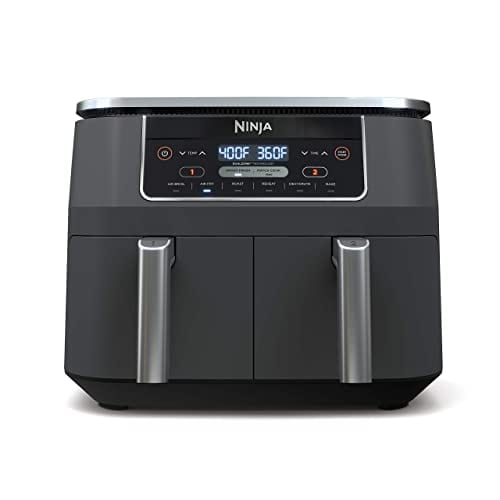
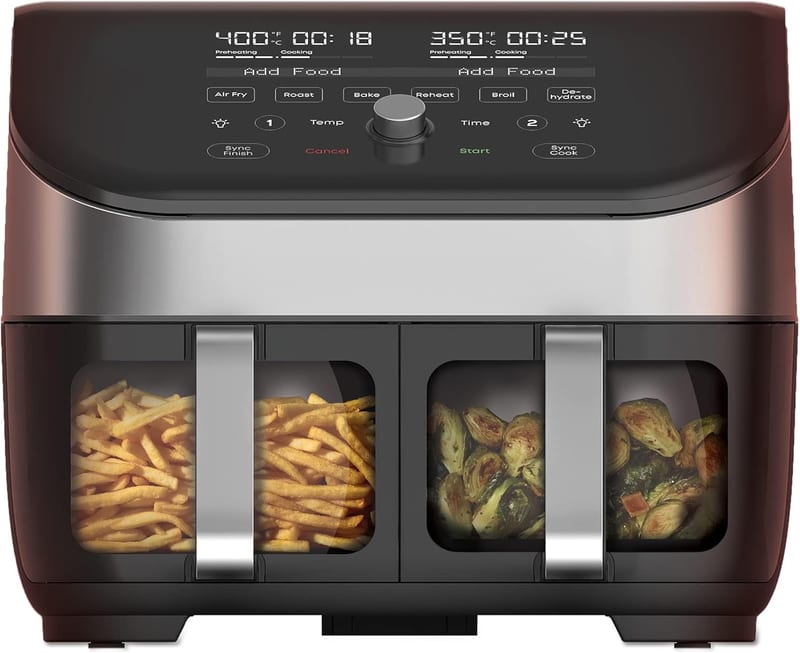
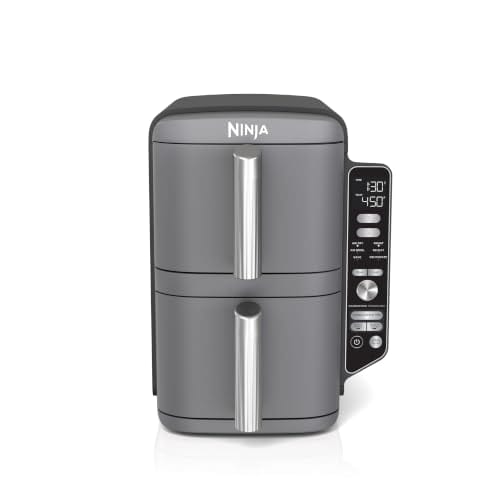
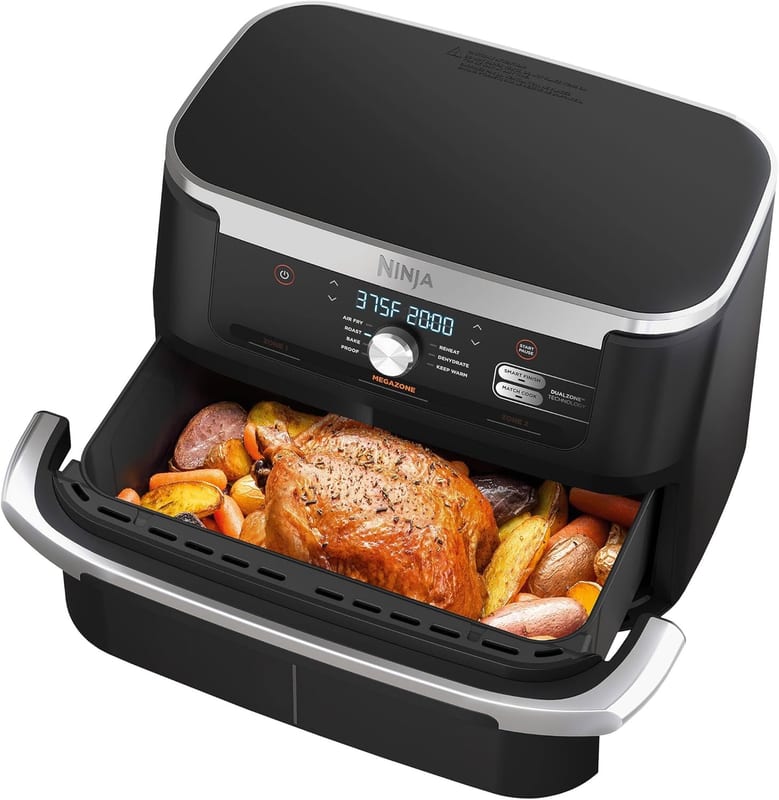
At the top, "capacity" stops meaning one thing. The 8-quart Ninja Foodi DualZone and Instant Vortex Plus Dual split their volume across two separate baskets, so you never actually get 8 quarts of single-layer space, you get two 4-quart zones. The Ninja DoubleStack XL stacks two 5-quart baskets vertically to save counter width. The Ninja Foodi FlexBasket goes the other way, one 11-quart MegaZone that a removable divider can cut into two 5.5-quart halves. And the oven-style machines play a different game entirely: Cuisinart, Breville, Ninja, and Instant quote interior volume in the high teens to mid-20s of quarts because you are measuring a box you can fit racks into, not a basket. Consumer Reports weighs usable capacity rather than the label figure for exactly this reason, and it is the single most useful correction you can make before buying.
The catch: A dual-basket 8-quart is not a big air fryer, it is two medium ones that finish together. If you want genuine single-layer room for a whole tray of wings, an oven-style unit or an 11-quart FlexBasket does it, a split 8-quart does not.
Power: watts matter less than the number suggests
Wattage sets how fast an air fryer preheats and how well it holds temperature when you drop cold food in, but past a point it is not the spec that decides your dinner. Most of this field lands between 1,500 and 1,800 watts, which is the range the buying guides point to, and the rough guideline of 250 to 300 watts per quart of basket is a decent sanity check. The Dash Compact runs 1,000 watts, but it is only pushing a 2-quart basket, so the ratio still works.
1,800 watts, so it must preheat faster and crisp harder than any 1,500-watt fryer on the shelf.
Airflow and basket design decide the crust. A well-built mid-wattage fryer routinely out-crisps a cheap high-wattage one.
The reason to hold the wattage number loosely is that airflow and basket design matter as much as raw power. Tom's Guide, after a long stretch of testing, makes the point that a well-engineered mid-wattage fryer routinely out-crisps a cheaply built high-wattage one, because heat you cannot move evenly around the food is wasted. The Cosori TurboBlaze is a good illustration: at 1,725 watts it is not the highest-powered unit here, but its DC motor is built to move air quietly and evenly rather than just loudly. Watts tell you what the element can draw. They do not tell you how the machine spends it.
Max temperature: the crisp ceiling
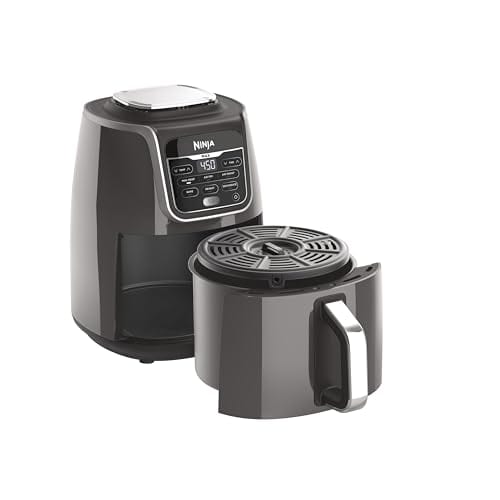
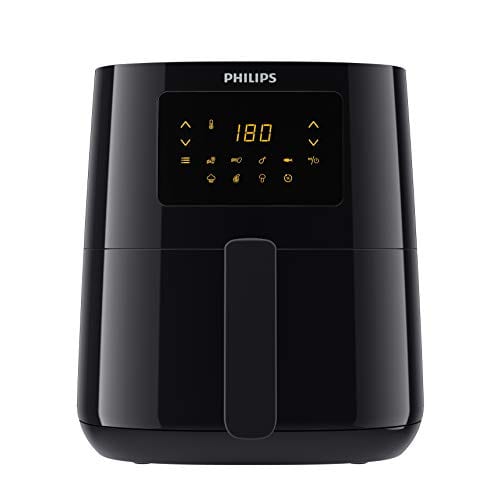
The top temperature decides how hard a machine can sear and brown, and it splits this group into clear tiers. A large part of the field, including both Instant Vortex basket models and the Chefman TurboFry Touch, tops out at 400F, which is enough for everyday fries, wings, and reheating. Step up to 450F, where the Ninja Max XL, both Cosori models, the Ninja DualZone, and the Typhur Dome 2 live, and you get faster browning and a better crust on steak or roasted vegetables. The Philips 3000 Series is the odd one out on paper at 392F, because it is a 200-Celsius machine converted to Fahrenheit, not a genuinely cooler cooker.
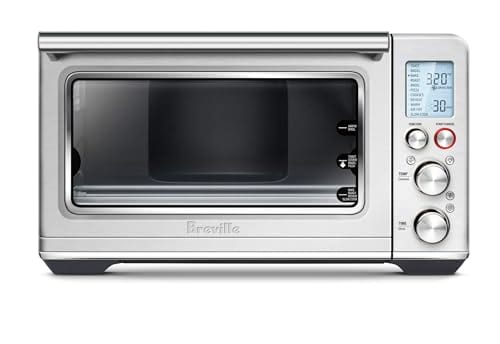
The genuine outlier is the Breville Smart Oven Air Fryer at 500F, and that gap is real: RTINGS' testing consistently rewards higher-heat machines for crisping performance, and 500F is the difference between browning a pizza and merely warming it. It is worth being honest about the tradeoff, though. Higher ceilings mostly help with searing and speed, and for the bulk of what people actually air-fry, 400F does the job. Read the top-temperature column as "how aggressively can this thing brown," not as a pass-fail score.
Pay up only if: 400F cooks everything on the weeknight list. Reach for 450F or 500F only if you sear steak, roast a lot, or want a real crust on pizza, that is where the extra heat earns its keep and nowhere else.
Basket versus oven: the design fork that matters most
The shape of the machine changes what it is good at more than any number does. Basket-style fryers, the drawer you pull out, crisp fastest and are the least fuss for everyday cooking, because the food sits in a tight, high-airflow space right under the element. That covers most of this list, from the little Dash up through the Cosori and Instant single baskets. RTINGS and Wirecutter both treat the basket format as the default for a reason: it is the most convenient way to get the crispiest result.
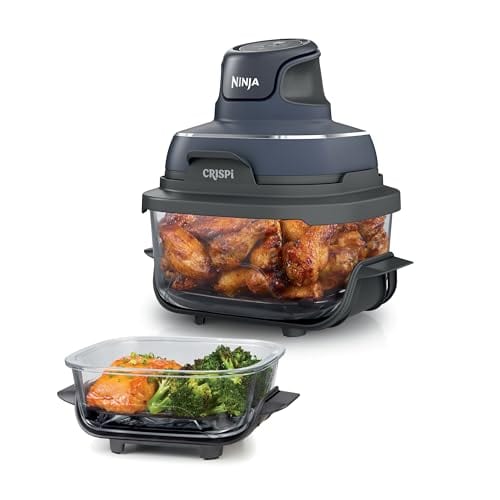
Dual-basket units solve the one problem a single basket cannot, cooking two different foods that finish at the same time. The Ninja Foodi DualZone's Smart Finish mode runs two baskets at different settings and syncs their end times, so the fries and the chicken land together. The Instant Vortex Plus Dual does the same across two drawers, the DoubleStack XL stacks them to save space, and the FlexBasket lets you choose between one big basket or two divided zones. The Ninja Crispi is its own thing, a portable pod that heats one borosilicate glass container at a time and travels, which makes it a single-basket unit in a lunchbox format rather than a countertop fixture.
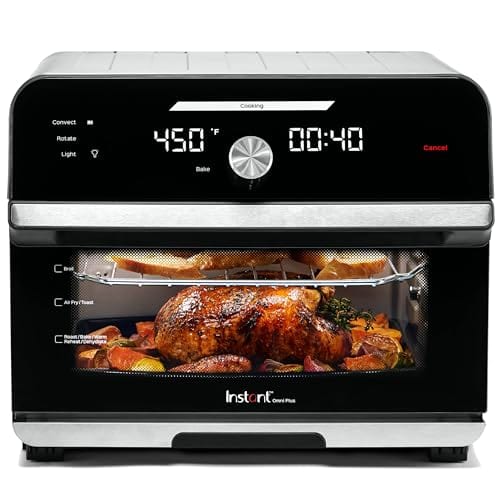
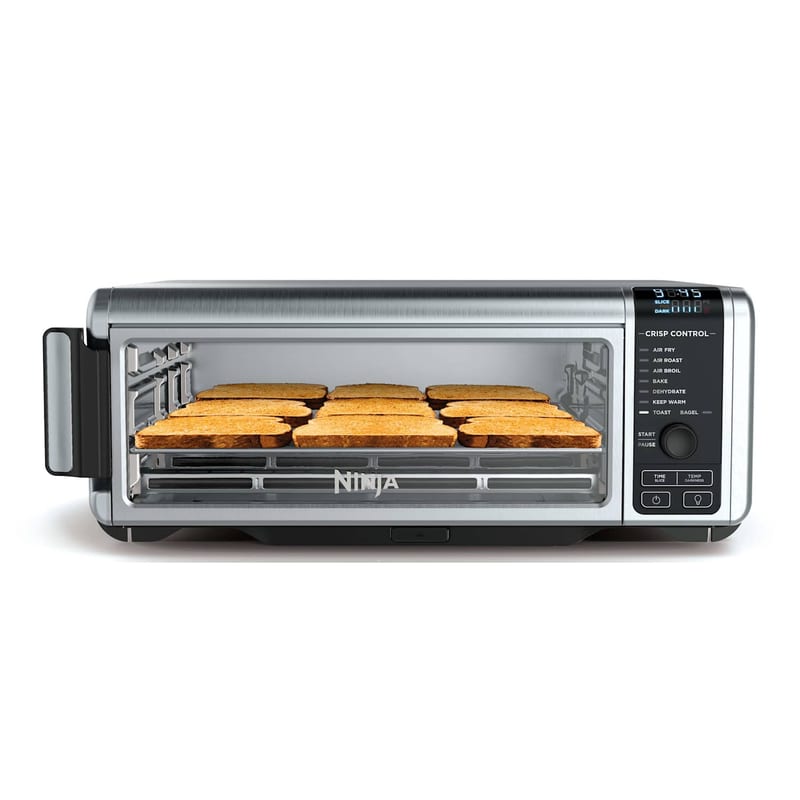
Oven-style machines, the Cuisinart, Breville, Ninja SP101, and Instant Omni Plus, give up a little crisping speed for versatility. They fit multiple racks, toast bread, bake a real tray of cookies, and swallow a 13-inch pizza, and the Instant Omni Plus even includes a rotisserie spit. Good Housekeeping's kitchen testing frames this as the core tradeoff: a basket wins on speed and convenience, an oven wins on capacity and doing more jobs. Pick the format first, then compare within it, because a 6-quart basket and a 24-quart oven are not really competing for the same counter.
Cooking programs: mostly a sticker, occasionally useful
The "9-in-1" or "13-in-1" badge is the most oversold spec in the category, because a preset is just a saved temperature and time. The Gourmia GAF698 advertises 12 one-touch programs and the Typhur Dome 2 lists 15, but under the hood a "wings" preset and a "fries" preset are the same fan and element set to different numbers you could dial yourself. The clearest proof is the Dash Compact, which has zero presets, two analog knobs, and still air-fries exactly as well as anything here, because the presets were never doing the cooking.
Where the function count earns a second look is when it unlocks a genuinely different job, not just a relabelled temperature. Dehydrate modes run low and long in a way a standard timer will not, proofing and slow-cook settings on the oven-style units hold gentle heat, and the Breville and Instant Omni add baking and toasting that a bare basket cannot do. So read the number, but read what is behind it: 15 presets that are all variations on "air fry hot" is marketing, while a handful of settings that include real dehydrate, proof, and rotisserie functions is actual added capability. Treat presets as convenience, never as performance.
Cleaning: the dishwasher-safe basket you will thank yourself for
Whether the basket goes in the dishwasher is a small spec that hits you every single day you cook. Nearly every model here has a nonstick basket and crisper plate that are dishwasher-safe, including all the Ninja baskets, the Cosori and Instant units, and the Dash, which is a big part of why basket fryers feel low-effort to live with. It is the difference between rinsing a drawer and scrubbing baked-on grease off a fixed tray.
The one asterisk in this group is the Cuisinart TOA-70. Its factory pan, basket, and rack are aluminum, and Cuisinart recommends hand-washing them rather than running them through a dishwasher, which is a fair tradeoff for a metal oven-style build but worth knowing before you buy. Oven-style machines in general clean up more like a toaster oven than a drawer: removable racks and trays come out, but the cavity is a wipe-down job. If daily convenience is what you care about, a dishwasher-safe basket beats a big versatile oven you dread cleaning.
So which air fryer should you buy?
Start with format and capacity, use max temperature and cleaning to break the tie, and let the preset count be the last thing you look at. Our four picks:
- Best overall, Cosori TurboBlaze 6-Quart. Six honest quarts for a family, a real 450F ceiling for browning, and a DC motor that runs quieter than most of the field. It is the right amount of air fryer for the most people, without paying for an oven-style box you may not need.
- Best for cooking two things at once, Ninja Foodi DualZone DZ201. Two independent 4-quart baskets that run different foods at different temperatures and still finish together, the one trick no single basket can match. The honest catch is that 8 quarts here means two mediums, not one large.
- Best compact and budget, Dash Compact 2-Quart. Two dials, no presets, one job done well for one or two people, in a footprint small enough to leave out. It proves how little of the spec sheet you actually need to eat well.
- Best oven-style, Breville Smart Oven Air Fryer BOV860. A full countertop convection oven that air-fries, hits 500F, and fits a 13-inch pizza, the pick if you want one machine to retire the toaster oven too. If you want the format for less, the Cuisinart TOA-70 does the oven job for less money, just plan to hand-wash it.
Frequently asked questions
What size air fryer do I actually need? Size to your household and subtract for airflow. A 5 to 6-quart basket feeds a family of four in one batch, a 3 to 4-quart unit suits one or two people, and a 2-quart machine like the Dash is a single-serving tool. Remember that only about two-thirds of the advertised quarts are usable single-layer space, so a "large" 8-quart split into two baskets is really two medium zones.
Is a higher-wattage air fryer better? Not on its own. Most good air fryers run 1,500 to 1,800 watts, and airflow and basket design decide the result as much as raw power. A well-built mid-wattage fryer routinely beats a cheap high-wattage one, so treat wattage as a rough guide, roughly 250 to 300 watts per quart, not a ranking.
Do I need all those presets and functions? Rarely. A preset is just a saved time and temperature, and the analog, preset-free Dash Compact air-fries as well as anything here. Functions matter only when they do a genuinely different job, like dehydrate, proof, toast, or rotisserie, which is where the oven-style Breville and Instant Omni Plus add real capability over a bare basket.
Should I get a basket or an oven-style air fryer? Pick a basket for the fastest crisping and the least fuss on weeknights, and an oven-style unit if you want to fit a pizza, use multiple racks, or replace a toaster oven. Basket fryers heat a tight space quickly, oven-style machines trade a little speed for a lot more versatility and capacity.
What is the difference between a dual-basket air fryer and one big basket? A dual-basket model, like the Ninja DualZone, has two separate drawers so you can cook two foods at once and sync their finish times, but neither drawer is full-sized. One big basket, or an oven-style cavity, gives you more continuous single-layer room for a whole tray, which is better when you are cooking one thing in quantity.
Sources / further reading
- RTINGS: The Best Air Fryers, independent lab testing of crisping, capacity, and ease of use.
- Consumer Reports: Best Air Fryers of 2026, lab-measured usable capacity, noise, and cleaning.
- Wirecutter: The Best Air Fryer, long-run testing across basket and oven-style formats.
- Tom's Guide: The Best Air Fryers, hundreds of hours of hands-on testing and format comparisons.
- Good Housekeeping: The Best Air Fryers, kitchen-lab testing and the basket-versus-oven tradeoff.